Unheeded Prescience

In my 18 year history of blogging and writing essays on socioeconomics, most of my analysis details a contrarian view on contemporary society and what is and has gone wrong, often with a warning on what is likely to happen if authentic corrective measures are not taken.

My choice of ‘homes4aussies’ as my website name and blogging ‘handle’ in 2007 is instructive. Some have confused my intention as nationalistic, but anyone who read my material from then or since will know that it is hugely out of character and inconsistent with my views on the value and importance of the global village and immigration and multiculturalism in Australia.

The simple truth is that I chose ‘homes4aussies’ as the name for my blog as a warning to the newly installed Labor federal government under Kevin Rudd that this is the direction that the debate over housing affordability will inevitably take if left unaddressed. 

My mistake then was in thinking that Labor authentically supported multiculturalism.

Almost 18 years later Labor is dog whistling xenophobes in seeking to introduce foreign student caps as a measure to address a housing affordability crisis now well into its third decade!

My most recent writing on Xcaps might come across to some readers as a step up in emotion … even angry. In truth it is probably a return to the level of emotion I put into my ‘homes4aussies’ days as well as the first year of the COVID-19 pandemic when I argued on MacroEdgo for the primacy of protecting human life.

The reason for that is that I am genuinely deeply concerned for where our society is heading – I think that any close observer feels the same, and that was heightened this week in seeing how the general public, and very much including the young, had a more nuanced view on the murder of Brian Thompson CEO of a large US health insurer by ivy league graduate Luigi Mangione ranging from seeing equivalency in his murder to the preventable deaths of very many clients of health insurers denied access to life saving drugs in the name of profiteering through to outright praise for Mangione’s actions in an ‘eye for an eye’ biblical sense and calls for his release.

For an especially well-rounded discussion of the state of the medical system and health insurance in America I recommend this article by Dhruv Khullar in The New Yorker (h/t Bob Sutton for posting the link on BlueSky).


In my earlier article defining the term Xcap (Exreme capitalist) and explaining how they have come to control almost all political power in our societies I included a popular cartoon that circulated in the days after the event.

Here is another possibly even more popular cartoon which captures the essence of the moment in a broader way as I have also done in my writing. The cartoon captures how this moment is really about inequality and how Xcaps were up till a week ago salivating at their continued agency at capturing most of the benefits of the dawning of the 4th industrial revolution (through AI) with recent extra surety provided by the imminent return to power of alpha Xcap, President-elect Donald J Trump.

Cartoon circulated widely (this one alone reposted 3,000 times garnering 17,400 likes) on BlueSky on 14 December

In my essay from 12 January 2024 “The Great Reset: Investment implications” I explained the current state of manipulated markets especially in the US as the cause of growing inequality and what are the factors that will allow Xcaps to continue to grow their egregious privilege:

[Market dynamics are based on] pure speculation because the most important consideration relates to the degree to which the system will be gamed in the future. Will this extreme form of capitalism, or indeed technofeudalism, persist into the future or will society resist the trend and if so, do ordinary people collectively have the power to turn the system towards one fairer to all?

As the cartoon and my posts over the past week illustrates, the public reaction to Mangione’s murder of Thompson increases the perception that ordinary people are so angry with the Xcaps for their domination of our socioeconomic system – through trickle down economics –  that they will resist, and potentially in dramatic fashion.

Before moving on, however, and going further than saying just that I am a pacifist and believe in non-violence even in the face of oppression, I want to be very clear that I feel extremely sad that Brian Thompson will not see his two sons’ lives unfold, and that two young boys will not share their lives with their Dad.

That is extremely sad. It is extremely sad whenever it happens through any cause, and there is not ifs, buts or maybes – no qualifications.

One of my earliest essays at MacroEdgo.com entitled “The Authenticity Piece For Leadership Is Right In My Wheelhouse“, in part inspired by the many shocking stories that emerged from the Australian Royal Commission into Misconduct in the Banking and Finance Industry, discussed how insurance workers must gradually compromise themselves and lose their authenticity, concluding with:

What concerns me most when the Royal Commission is discussed is that there does not seem to be enough accountability directed towards the lower levels. Sure the highest levels should pay a price – a real price – not a golden parachute out. Anybody involved with treating others so despicably really should receive a punitive action which makes them reflect on the poor decisions that they too made.

It is simply not good enough to say it was the company that made them do it – it was many human beings doing bad things to other vulnerable human beings.

The full text of that section is reproduced below.*

Of course COVID-19 was the ideal cover for Xcap politicians to conveniently forget about this Royal Commission which unearthed so much harm done to people in the name of corporate profits, and with most recommendations still unactioned, given that the banking and financial industry is one of the most politically powerful lobbies in Australia, there remains little hope for meaningful reform to stop egregious profiteering and mistreatment of vulnerable people.


Now I am going to turn to talk about something that I mentioned in a comment to a post on BlueSky in recent days – and which is a key difference between my writing and the cartoon above – that being the cartoon referring to ‘wealthy elites’ and my writing over the past week talking about Extreme capitalists, Xcaps for short.

Steve Rattner, a very well known veteran of the US fund management industry, and currently managing the philanthropic fund of Michael Bloomberg, showed a graph of corporate profits versus Americans’ income as a reason – correctly – for their growing inequality saying this is why many Americans are ‘unhappy’. Of course my substantive point was that the social media outpouring showed Americans were more than ‘unhappy’.

Concluding my comment I ‘teased’ that I would be writing again on Xcaps, in part to explain why not all wealthy Elites are Xcaps, and why not all Xcaps are wealthy.

In my writing, too, I have frequently used the general term of ‘wealthy Elites’ extensively, but over the past week I decided now is the appropriate time to differentiate and be more specific in referring to Xcaps.

As early as May 2020 when talking about insufficient responses to COVID-19 by especially conservative politicians in an essay entitled “Your Life: Something the elites have always been prepared to sacrifice for their ends” I felt the need to clarify that there are wealthy Elites whom I do respect. These people I described as:

those who authentically understand the privilege that they have enjoyed, usually from birth by virtue of the luck of being born in a developed country or into middle class even if they consider themselves ‘self-made’, as well as respect and appreciate relationships with other human beings especially the people who loved and guided them.

In another essay later in 2020, “How Might Milton Friedman Respond To The COVID-19 Pandemic“, I elaborated on this in detail and that discussion is reproduced in full below.^ 

Though among the wealthy Elite they clearly are outnumbered, there are people who have become wealthy in this period of Extreme capitalism who are good and decent and who try to do good by (all?) other human beings 

For a start, any wealthy Elite prepared to point to growing inequality in America must have an open enough heart to have a mind willing to recognise and acknowledge it.

Most Xcaps deny inequality or justify it on the basis of their desire and aggressive advocacy for increasingly Extreme capitalism.

The greatest capitalists of the Extreme capitalism era, Warren Buffett and Charlie Munger, are two of the most decent, authentic, and warm-hearted human beings of any era. Warren has long argued to pay more tax noting that he pays a lower percentage of his earnings in tax than the people who work in his office, and he is giving away the majority of his wealth in a manner – unlike Xcaps – where he is not seeking to acquire additional privileges or influence from it. Charlie, who passed last year, was so aggrieved at the poor state of the American medical industry that he got personally involved and tried to sort out chronic problems.

Charlie’s hilarious take downs of another alpha Xcap in Elon Musk was another service to all of humanity that has left a void even if many others on social media now are doing a great job at it.

The simple reality is that the voices of the fair-minded wealthy Elite are largely drowned out by the aggressively outspoken Xcaps, and that is magnified by their owning of the majority of politicians, and especially the power brokers, who must also be considered Xcaps.

Now anybody who supports the continuation of Extreme capitalism, who shouts down on social media or in person attempts to strengthen meagre social safety nets with rhetoric that such measures are socialist or even Marxist has to be considered an Xcap.

Yes, many of these people are foolishly supporting a system which has hurt them and they are unwittingly supporting the continuation of their own vulnerability, but they are doing the work of embedding Extreme capitalism and the privilege of Xcaps.

Wealthy Xcaps want their gravy of obscene privilege from their wealth to continue flowing and will go to extreme measures to protect and grow their privilege. Xcaps that are not wealthy have been brainwashed over their lifetimes into a deep belief and support for a system that offers a level of privilege beyond their wildest dreams to the few who somehow ‘hustle’ ‘enough’ to make it into the 1% of wealth in society, and they are prepared to defend that ever-shrinking chance while narrowing their sense of civic fairness in doing so.


We human beings are imperfect but I steadfastly retain an enormous optimism in the goodness at the core of the human condition which with quality leadership could build such a beautiful and kind global society.

Xcaps and their conservative news media chastising ordinary people for lacking compassion to people who have lived increasingly comfortable lives by profiteering from the misery of others, while themselves creating division and promulgating a less compassionate society where selfishness is not just excused but venerated, is rich to say the least.

Xcap exuberance at the incoming XXcap White House administration was not so much shattered by a brutal and calculated murder but a more jarring public response in support of those actions.

Everyone would do well to note the signs inherent within the events of the past week and a bit.

The difficulty is that when so much populism and division is created within societies, as the Xcaps have generated as epitomised by the January 6 2021 insurgence of the US capitol, the path of least resistance – the path that cold and calculating politicians will always choose – is to continue to drive people further to the extreme.

If Xcaps do that then civil war is not just a possibility it is the most likely outcome. This conclusion disturbs me and I hate saying it – in fact I feel like Mel Gibson’s character in the motion picture “The Patriot” – but sadly my logic leads me to that inescapable conclusion.

In fact, the cold civil war that has been raging in the US and other Western nations turning into a hot war is more likely than the same happening between America (and allies?) and China, according to my uncanny prescience …


*What I have come to realise is that most of us from our earliest times are taught what is ideal behaviour for the society in which we live, and co-operation and generosity is universal in human societies.

At some point in a person’s development, however, we begin to understand that not everyone behaves in an ideal manner. And we notice that, whether it is when they are driving or while at sporting events, even our own parents do not always behave in a manner consistent with those lofty ideals that they espoused when we were younger, and most likely they still encourage them from us.

We all learn, some earlier than others, that those who “get ahead” often compromise on these ideals. And gradually we become desensitised to those little compromises and deviations from the ideal that we all make.

So let’s imagine one day you join an organisation, and maybe that is an Australian bank, perhaps in the insurance arm which has developed a culture of selling some policies which are essentially worthless as they are almost impossible to claim on, and delaying on legitimate claims by terminally ill patients thereby decreasing the probability that the claimant will live long enough for an automatic policy reset to occur so that the estate can claim under the death benefit. These are all issues that were raised during the Royal Commission with the terribly sad stories attached. 

After a while you realise what is occurring and you have a moral dilemma on whether you will continue on with the employer or leave. Now this is a large organisation, one of the best-known companies and one of the  largest listed on the Australian Stock Exchange, and you enjoy a good remuneration and other benefits which make you feel secure. You decide to stay.

After a while you move into an area that is selling the worthless policies which is an open if infrequently discussed secret. You’ve already made compromises in staying with the employer because you realised that what the business is doing is not consistent with your morals when you joined. You have told yourself that others are doing it – and they seem like good people, so it cannot be that bad what you are doing, right? – and anyhow, what good would you be doing in making a moral stance by leaving, especially when that would decrease the security of your own family? Afterall, the experience has already taught you that there are unfortunates in our society and you really would not want to fall into the have-not category. But you are not an executive anyhow – it’s they who are making the decisions and must take the majority of responsibility for the actions of the organisation.

You notice a creep in how you feel at work, and you have a few drinks most nights with your partner to take the edge off, and are a bit more snappy with the children, but you generally feel (mostly) proud when you explain your career progression in your social circles.

Then you get a tap on the shoulder and are promoted to be a manager in the claims department. The claims department is quite separate from the sales department, so you were not all that familiar with how things worked there, but it became clear in the first few weeks that upper management is forcing on you and your subordinates a go slow on claims by seriously and terminally ill people. You manage people who have to deal with claimants on the phone and it’s a high stress position. But they are well paid, relative to remuneration from other employers, to compensate them for the stress and you all share in a generous bonus pool which is related, either explicitly or implicitly, to how well the flow of claims is slowed.

You realise that sleeping well is a thing of the past and it takes a little more alcohol to take the edge off these days. But you rationalise in the same ways as earlier – and if you did not do the job then somebody else would only be too keen to step up and take it on, and you have those school fees and the mortgage to pay. Honestly, would it really be any different for those claimants regardless of whether you are in that position or somebody else? Your employer is just going to keep on doing the same thing anyhow.

I have no experience of working in a bank or for an insurer, but the actual progression for the human beings who were the employees who carried out the actions which were detailed in the Royal Commission had to be something along those lines. At least it would have been for the ones who possessed some sort of moral compass when they joined the organisation – the completely inauthentic psychopaths, the scoundrels, did not have the empathy and compassion to give a second thought right from the start.

What concerns me most when the Royal Commission is discussed is that there does not seem to be enough accountability directed towards the lower levels. Sure the highest levels should pay a price – a real price – not a golden parachute out. Anybody involved with treating others so despicably really should receive a punitive action which makes them reflect on the poor decisions that they too made.

It is simply not good enough to say it was the company that made them do it – it was many human beings doing bad things to other vulnerable human beings.

Moreover, the authentic whistleblowers should absolutely be venerated and celebrated!


^I do not identify with those who list very wealthy individuals saying that it is obscene that they have accumulated such wealth. If they hurt people, either knowingly or by choosing to remain ignorant to it, in accumulating that wealth, then I would certainly consider them as deplorable. 

Of course I prefer that everybody on this Earth does what they can to assist other people, so obviously I would hope that people of greater means undertake genuinely significant philanthropic activities aimed at making a difference for others (rather than just promoting themselves in social circles, or only engaging in egotistical and vain projects with lesser returns to humanity, or to gain goodwill which will be cashed in later for personal advantage.) I must admit, however, that in my day to day life in the suburbs I regularly encounter people who say that they can not afford to donate to charities or give of their time or in some other capacity.

I believe that giving is relative to what you have, and I have learned many times over through my life and on my travels, especially in developing countries, that one has something to give as soon as one has something, and even before that we have ourselves to give.

While perhaps it is a greater pity that somebody with means to make a more significant difference, whether that is due to their wealth or their public profile or position, declines to do so, I do not care for any mean-spirited person irrespective of their means.

Foremost among the many undeniable elites who I admire would be Warren Buffett and Charlie Munger, Bill Gates, and George Soros. I also know, for certain, that there would be many, many more who I would like and respect if I were to know them personally or observe them often and closely enough to be able to develop an informed opinion.

As I look at that list it strikes me that they are all white American men. There are some Australian men I might include such as John Hewson (I mentioned my admiration before on these pages) and probably Mike Cannon Brookes (but I do not really know that much about him).

Interestingly much of the elite political leadership that I admire presently are women including Jacinda Ardern, Christine Lagarde, Ursula von der Leyen and Kristalina Georgieva – so mostly white European women.

I also have to say that I have been impressed by some more of these individuals, who belong to a very fortunate and privileged group within society, in how they have responded to the outpouring of emotion and drive for societal change through the Black Lives Matter protests following the murder of George Floyd. Here I would make special mention of the African-American businesswoman Ursula Burns, the former CEO of Xerox, who I knew little of before but who I found extremely impressive. But there were also other white men whose response was impressive and suggested that real, durable change is finally possible.

The truth is that I like people, and I want to believe the best in all people, so it fills me with pride when I see good people stand up to be counted and try to be the best version of themselves to the benefit of humanity. And I tend to be fiercely loyal to someone once they have shown themselves to be authentic.


Gained value from these words and ideas? Consider supporting my work by contacting me on LinkedIn.


© Copyright Brett Edgerton 2024

Xcap

A social media post widely circulated and garnering many ‘likes’ on 11 December 2024

Noun. Short for Extreme capitalist. Antonym of woke. Someone with an unshakeable faith in and support for: manipulated markets to transfer wealth from the poor and vulnerable to the wealthy Elite; small government and thus limited to zero social safety nets and social justice programs (such as universal health and DEI initiatives); greed and selfishness being the prime human driver instead of collaboration and inclusion, to justify and perpetuate the trickle down system that sustains the privilege of the 1%; other humans being commoditised machines (interchangeable and disposable) only necessary in the production of wealth unless or until actual machines and/or AI can replace them; the natural world and resources only having value when used to enrich the Elite irrespective and in spite of consquent harms including to broad humanity; and the drive to win at wealth accumulation justifying any and all behaviours.

Xcaps thus typically exhibit anti-social traits and prejudicial behaviours ranging from unconscious bias to overt bigotry on the basis of class, race, gender, sexual orientation, etc, and sew seeds of populism and division. 

Even when belonging to one of those marginalised subgroupings themselves, Xcaps hate of wokes and ‘wokism’ overpowers their broader sense of social justice.

Xcaps have succeeded in having their system of Extreme capitalism entrenched in former liberal capitalistic democracies by corrupting the political system, buying the major political parties and their power brokers on either side of the former political divide, thereby pulling the political centre to the right. 

Xcap politicians conflicted by donations to their parties, and by their self-interest in extracting rents (wealth and privilege) from their position of political power, argue in support of Extreme capitalism; that contemporary markets are best able to lead and solve the problems collectively faced by humanity with inequality an unavoidable byproduct. 

Xcap politicians have not, however, answered the question of why their roles remain necessary in a system where they have abdicated their responsibility to lead, instead focusing efforts on consolidating their own power – from those who would disrupt the cosy relationship between narrowing dominant political parties – thereby increasing their agency to extract additional self-interested rents from their political power.

The late 2024 murder of Brian Thompson, the CEO of a major American health insurer, by 26 year old ivy league graduate engineer Luigi Mangione was the first challenge to the Xcaps’ domination.

Instead of condemnation for murder, many American citizens took to social media to condemn the actions of health insurers,  considering their executives guilty of murder, and valorising Mangione for his actions. 

As 2025 draws near, along with it the commencement of potentially the most oppressive US Government since slavery was abolished, led by an alpha Xcap Donald J Trump, Xcaps are faced with a choice between continuing along their path of being confined to ever-shrinking islands of egregious prosperity guarded more and more aggressively from the tired and poor whose ranks grow in size and desperation, leading to a Mad Max Darwinian state and potentially civil war(s) which will likely bring a violent end to the era of Extreme capitalism …

OR

Xcaps can voluntarily relinquish their power in a safely controlled manner, and co-operate in instituting genuine social justice with compassionate inclusion the overriding imperative.

Possessing all of the political power at this present moment, Xcaps can collectively and individually argue their own utility and co-operate in The Great Reset to place all of humanity on an optimistic and sustainable path, or continue to live selfishly in the moment in a world decreasingly hospitable especially to Xcaps until their inevitable demise …


Gained value from these words and ideas? Consider supporting my work by contacting me on LinkedIn.


© Copyright Brett Edgerton 2024

Shrinking Islands Of Prosperity

Dall.E AI-generated image from the following word prompt: Draw a pencil sketch of wealthy people flying between islands of prosperity that are guarded by heavily armed gunships to keep out the tired and poor.

I wrote the following article a fortnight ago and, as I do sometimes, I sat on it to ponder whether I might just be going ‘too’ far and that I might be seen as ‘extreme’ … and then news of this breaks on 6 December Australian time …

Brian Thompson’s killing sparks outrage over state of US healthcare

In the aftermath of the killing of United Healthcare CEO Brian Thompson, while Thompson’s colleagues grieve and politicians decry his murder, some online discussion has shown little sympathy for Thompson or the industry he represented.

Instead, social media has been in engulfed in expressions of anger at many Americans’ dire experiences at the hands of health insurance companies and outrage at the large profits that they generate.

My article drafted 26 November follows …

Already in America there are people deeply afraid of political persecution in ‘Trump 2 (infinity)’ which Trump asserted throughout his campaign would occur. These are not aggressive people but activists for a more compassionate and fairer America and American leadership of the ‘free’ world. 

These apostrophes deliberately point at all of the things that we took for granted about our ‘liberal’ ‘capitalistic’ ‘democracies’ and which have unraveled.

The continual demonisation of ‘wokes’ for daring to aspire to a more sustainable humanity through inclusion, equity, and above all else compassion, has led to them (us) being enemy number 1 to the ultraconservative Trumpist mob.

Two points.

1) what happens in America flows here to Australia quickly, and the – increasingly ultra – conservative elements in Australia are keen to make opportunistic use of the political division and tumult their American ideologues have sewn; and

2) in history there have been periods, sometimes long periods, where human beings have had their commonly accepted rights and freedoms oppressed, but no regime lasts forever, and the violence of that repression is often visited upon the oppressors when that regime changes even when the oppressed are justice-seeking, fair-minded, compassionate people.

Change will be met with a mix of ‘turning the other cheek’ and ‘an eye for an eye’; in what proportion and exactly how justice is meted out at such moments is unpredictable and indeterminable in advance.

On thing is for certain – those who expressed their power and privilege most conspicuously in the oppressive regime attract most attention for retribution.

I am a pacifist and believe deeply in non-violence.

I also believe deeply in goodness and kindness at the core of the human condition. 

Dall.E AI-generated image from 27 November 2024.

But this is not what Extreme capitalism preaches, and there are consequences to decades of telling people that it is both natural to be selfish and to return to a primitive caveman state when pushed because that narrative suits the Elites feeding at the table of over-abundance and gluttony while the majority of humanity are meant to be satisfied with struggling to gather what little trickles down to them.

Thus far the pervasive propaganda machine of the right has succeeded in convincing many of those who would benefit from social justice initiatives ending that trickle down system, especially related to health, DEI and broader ESG issues, to reject and protest against these initiatives.

However, there will come a day when even those vulnerable to believing in saviours will see that their ultraconservative emperors have been deceiving them.

I realise that it is a stretch to expect the small and extremely privileged group of Elites who benefited so greatly from this trickle down system to give up even a little of their privilege – after all the mere threat of it is what provoked them to begin culture wars  – and suddenly adopt altruistic behaviours, so I will use the ultimate self-interest argument.

It would pay all of you Extreme capitalists to ponder on where the polarisation that is being caused by inequality and popularism is leading us. If this period of Extreme capitalism ends not in a Great Reset as I have written, but by the Extreme capitalists pushing society even further to the extreme causing an even stronger snap back when that power derived from wealth is no longer sufficient to constrain it, who do you think the mob will go after?

Already things have been extreme enough in the US for the mob to go after politicians.

If the pendulum is pushed even further, regardless of whether Trump and his closest allies are seen as the ultimate swamp dwellers they are, wealthy Elites who have brought a lot of attention onto themselves through their conspicuous consumption and other expressions of their privilege may come to regret their greed-filled actions.

Globally there is a shrinking of ‘islands of prosperity’, due to inequality and the climate crisis, which to be secured must be guarded more and more forcefully by the global ‘haves’ from the ‘have nots’. The ongoing issues in the Suez canal is just one example.

The same will happen within those generally prosperous islands as inequality continues to grow. 

I explained all of this in simple terms in my earliest writing at MacroEdgo including in “Investment Theme: Defense and Military Spending” and “The Conundrum Humanity Faces: But nobody admits“, and it has been restated throughout much of my writing, most recently in “Reset: Chapter 5“.

Sure, the privileged Extreme capitalists will have the wealth to pay for protective security which will work… for a while … 

But even then their privilege really must be blinding them if they believe it is a worthwhile life they are leading on shrinking islands of prosperity as the throng ‘outside’ grow in number and desperation …

Addendum: Below is the Dall.E image that I generated on 26 November for this post – I’m glad I went with the shrinking islands of prosperity prompt … I hate conflict and gun violence, especially, and this does jar my PTSD … but if we are clear on where this is all heading there is a chance we will not repeat our mistakes … the solution, of course, is connection and compassion, not domination and inequality …

Word prompt: Draw a pencil sketch of modern day civil war in New York with one side wearing business suits, the other wearing baseball caps and old, frayed clothing.

Gained value from these words and ideas? Consider supporting my work by contacting me on LinkedIn.


© Copyright Brett Edgerton 2024

Australia’s Housing Crisis Is No Black-eyed Swan Event 17 years In The Making

AI generated image of an arrogant but powerful man with a huge jaw standing over another who is trying to put forward his reasonable point of view.

How would it play out, in the media, and I guess I’d better include the courts, if a bloke at a community gathering with senior politicians – cabinet ministers – did a Ron Casey on one of them?

See, I nearly did this in 2008. I REALLY nearly did it!

I was recovering from a nervous breakdown which I had after quitting my career as a world-renowned research scientist. I had returned from 2 prestigious international fellowships and couldn’t get a job, and wanting to start a family before the biological clock took that chance away from us, and with house prices having over doubled in the short period we were away and resettled after returning, and then our rent being increased by 30% in one year taking home ownership further away from us, I had quit my career to become a stay at home dad… and did I mention by this time our second child was on the way …

And, well, I was really vulnerable, to say the least.

And that powerful politician answered to my face the question that I had posed to him as the Treasurer of the country, along with Prime Minister Rudd, and Anna Blye (then Qld Premier, now head of the bank lobby, of course) in a letter as to whether negative gearing might be restricted to new builds before being eliminated.

I had really soaked up the “bringing back the fair go” message from their recent election and I thought they were fair dinkum.

Boy was I wrong to believe them!

As I approached Wayne Swan to request a direct conversation, from a metre away I was taken by how his oversized mandible was even larger in real life…

and when he looked me in the eyes and said, “you’re dreaming if you think negative gearing will ever be ended”

his huge jaw was all I could look at as my mind had already calculated that he was within easy reach of my right hook.

At that split moment my mind shifted from the controlled (but feeling much smaller) man in the above AI generated image to another (former) version of myself (below) …

AI generated image of angry men fighting

Keep in mind that I grew up in a culture where my parents’ school friend Warwick Crossland, a really nice bloke, was widely admired as the “King of Kurrumba”, the best bar brawler in the Gulf.

Somehow I stopped myself from reacting to Swan’s vile taunt.

Honestly I still don’t really know how I did.

As I walked away from the throng of people surrounding him and the others I was in a state of anxious shock – at what was said to me and at what I actually contemplated in a split moment of my life when so much could have changed depending on my reaction.

I literally shook all of the half hour drive home and the first thing I said to my wife is that I nearly punched the Treasurer of the country.

Over the past 17 years I’ve often deliberated about that moment in 2008 when I almost lost control and punched Australian Treasurer Wayne Swan in the jaw, and it still brings echoes of the strong anxiety I felt then. But the overriding question remains what might have happened because the court of public opinion would have been critical, not just the judicial court, in what happened.

Now as a lad from the country, not a faux larrikin as all those pollies become outside of the CBD, I well know the Aussie pub test goes along the line of …

“Well Swan was being a prick, and Edgo just dropped one on his jaw – he gave him what he deserved just like anyone being a goose around here on a Friday night would get”.

Don’t agree? What did Mick Dundee do to the arrogant New Yorker who took him and his ‘sheila’ to a swanky Italian restaurant to show him up? Mick gave him a quick chop across the jaw, politely out of sight of the lovely lady so as not to embarrass her.

And didn’t we all love it!

So I ask again, how does this play out?

Because, to be honest, it’s a question I’ve asked myself a lot over the years. I even wonder whether it might not have been such a pivotal moment that maybe the whole history of the Australian housing bubble might be very different if I did not manage to control myself and show the decency that Wayne Swan arrogantly failed to show me …

I do pride myself on being a thought-leading progressive man and exemplary role model to my sons.

But like all human beings I do try to calculate the pros and cons to my actions which flow from my values …

And, after all, the same narrative that excuses selfish behaviour as human nature also says we will revert to our primitive caveman state when provoked sufficiently …

So maybe, just maybe, on that one occasion the ends may have justified the (aggressive and uncontrolled) means.

Rest assured, President (of federal ALP) Swan is well aware that he has an open invitation from me to step outside and settle things the way men from the country do on occasions. I know for sure that I’ll enjoy the support of generations of young and not so young Aussies that have been deeply hurt by another 17 years in the squeeze of entirely unnecessary atmospherically high housing prices.

But I’ll settle for a public apology from Swan and a commitment from the Labor party to be authentic and ensure their actions mirror the values they spruik …


Gained value from these words and ideas? Consider supporting my work by contacting me on LinkedIn.


© Copyright Brett Edgerton 2024

Time To Drain The Billabong

AI generated image

The factor likely the most important in the US election result is also the most unlikely to be discussed – because it suits neither major party nor powerful interests to highlight it.

You see when I talked about the West led by America moving towards fascism in “Reset” I was not only talking about (far) right major parties.

The dragging to the right of politics means that most major parties are to the right of centre by the standards of 50 years ago.

It was, after all, a progressive right wing (Republican) President in Nixon that put a great deal of political effort into introducing the equivalent of a universal basic income (UBI) which just fell short!

Now there is essentially no progressive right wing Government anywhere, and most major parties of the former progressive left are not very progressive and not actually left.

How has this happened?

Very simply. The wealthy elite have bought both sides of politics. And our permissive systems of governance just allowed it to happen.

So no matter who wins Government, the same people have ultimate influence over decisions made.

Recall ‘Trump 1’ was built on the motto “draining the swamp”, his argument being that he is so wealthy (and virile) that all the vested interests and hangers on will be stripped of their influence.

That did occur to an extent, but then again he has lived his entire life among that group of people – the wealthy elite – and his narcissistic nature meant that winners and losers were based on his transactional viewpoint with the main aim to advance Trump himself, and certainly not the people who elected him.

This election he was surrounded much more closely by wealthy elites indicating they have learned how to play him like Putin and Kim Jong Un. But standing up to powerful interests is now deeply embedded in the personal brand that Trump’s fanatical supporters accept without question.

Note also that JP Morgan CEO Jamie Dimon was widely discussed as potentially being offered a high level position with ‘Trump 2 (infinity)’ even though he is a Democrat, supporting what I am saying herein and have said previously that this is how all major major parties are all influenced by wealthy elites. Bill Ackman who was instrumental in having Claudine Gay sacked as President of Harvard, and who has spoken harshly against DEI, also has been a significant Democrat donor.

Clearly there is little significant ideological differentiation, not in the eyes of wealthy elites who donate to so-called left political parties as well as to their historical allies on the right, nor in the eyes of the electorate.

That’s why Trump 1’s message “draining the swamp” was so very powerful and important to his election win. This time around the ‘anti-politician’ factor was very strong again, even if it went largely undiscussed.

This is not, however, only about America.

With a looming Australian federal election it would be a miscalculation to see it only or even mainly in terms of a weigh-off between the negative of incumbency in a cost of living squeeze Vs our historic reluctance to vote out a first term Government.

Albo’s re-election chances must also be seen through the lens of how differentiated Labor is from Liberal/Nationals, and he from other politicians.

The more Albanese’s Labor Government:
– grants approvals to fossil fuel extractors while trying to paint themselves as climate crisis proponents;
– fails to seriously address 2 decades of Government inaction on housing while the PM straddles the line of appearing empathetic because he grew up in housing commission while having just bought a multi-million dollar home, and while most politicians own investment properties; and
– pesky journos like Joe Aston highlight the perks which self-interestedly selfish politicians avail themselves of from businesses …

the more they show themselves to be just like any other selfish, self-interested Government to which we have been subjected for decades now.

Obviously it’s a bit late on that front and that is really why Albo is in trouble.

While the Queensland election gave Labor some hope they can repel the Greens surge from the left, and that might be enhanced by the warning to genuine left voters concerned at our drift towards ‘Trump 2 (infinity)’, the signs are more ominous than comforting given the loss of support in the regions including coal mining regions (mirrored in the US election).

The best strategy, perhaps the only viable strategy, for an incumbent one term Government in a cost of living squeeze to differentiate itself and win re-election comes down to one word:

AUTHENTICITY

The truth is it is impossible to remain authentic when you are so conflicted by self-interest and the continual demands of vested interests. There is only one real solution …

Drain the billabong!

Fess up. Politics has been corrupted by the wealth of the elites, and that can only be addressed by severing the link between wealth and influence.

Introduce fair dinkum donations and sponsorship laws that go well beyond political donations but to advertising and the myriad ways wealth buys influence.

And set out a program of review followed by reform to incentivise politicians to act in the long term interests of the people not themselves, their parties and their donors.

From gambling/fossil fuel advertising, to Qantas lounge and fare upgrades, to a Royal Commission into misconduct in the banking and finance industry conveniently forgotten, there is so much to work with that it will grab the narrative immediately, leaving the conservatives completely flat-footed, and …

most importantly, it will actually leave the people and the nation better off in the long run!

Addendum: Since posting this on LinkedIn last week Labor’s hasty attempt to change donation laws have been introduced to parliament which will do nothing to address these concerns, in fact they will deepen the billabong by entrenching the power of the two major parties. Even the progressive left-leaning Australia Institute is opposed – that should tell you how far off course are Albanese and Labor … as I said, they long ago became not very progressive and not at all left … head to Australia Institute to sign their petition to force a parliamentary inquiry to these proposed changes …


Gained value from these words and ideas? Consider supporting my work by contacting me on LinkedIn.


© Copyright Brett Edgerton 2024

Applying The Unity Bell For Cohesion and Productivity

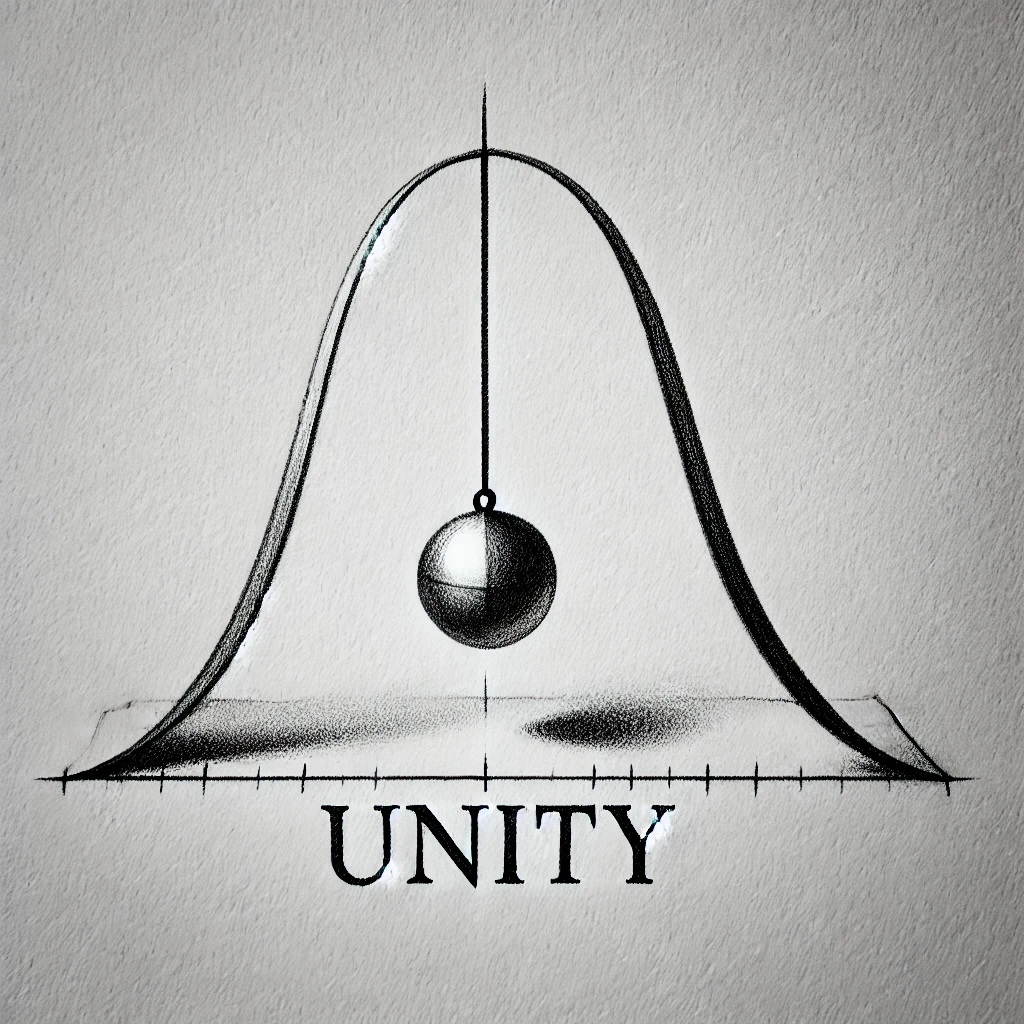
In “The Unity Bell” I discussed how the forced grading of employees’ work performance into a normal distribution bell curve to reward and punish the few deemed by their managers at either end of the distribution is well known to demoralise the majority thereby worsening productivity instead of improving it.

Moreover, I stated that a very obvious implementation of the bell curve within organisations to actually improve productivity is to apply it retrospectively to the tasks that each employee does to eliminate the many ‘just in case’ tasks required of them that have caused high levels of burnout through overwork and demorilisation as they know that these tasks – many of which would also fit the definition for ‘bullshit jobs’ as described by David Graeber – do not add value to the ‘bottom line’ or mission statement/vision of the organisation.

I discussed the reasons for the proliferation of ‘just in case’ and bullshit jobs through this long period of increasingly Extreme capitalism in “The Unity Bell” and also “If Quiet Quitting Results In Reduced Productivity – A Big ‘IF’ – Then It Was Production That Was Never Paid For” as well as through much of my writing relating to the Great Reset.

‘Just in case’ and bullshit tasks are created by self-interested managers intent on using the resources available to them to ‘win’ status by advancing in their careers and attaining other status rewards including remuneration. The implementation of a ‘Unity Bell’ and other bottom up feedback channels are resisted in many organisations, or when implemented are usually perfunctory and ineffective, because they run counter to the top down direction of power and authority in Extreme capitalism.

Through these past five decades of increasingly Extreme capitalism the drive for worker efficiency has been relentless with nowadays most organisations remaining in an almost perpetual state of restructure and head count reductions. It has been collectively assumed by executives that their top down drive for efficiency will force that prioritising of tasks so that pointless or low return ones are eliminated as employees have already been pushed to their limits on how much work they can perform. However, as I discussed in “Reset” Chapter 4: “A future of our own making“, the experience of the past few decades has been that workers have been the pressure valve that has had no choice but to absorb more and more pressure as they are squeezed between the top down drive for efficiency from executives and the upward drive of aspirational bosses. Consequently, the actual number of tasks performed are little reduced even as employee numbers are reduced.

Consequently, real productivity is little improved but worker burnout has gone through the roof.

Workers are effectively treated like machines and are noticing – especially with the pause for reflection that occurred during the COVID-19 pandemic – that the meagre rewards on offer come with significant costs to wellbeing living in this system of increasingly Extreme capitalism.

This is the basis for my thesis that we have entered a new paradigm, which I refer to as ‘The Great Reset’, whereby many are re-evaluating what it is that is truly important to them in their lives.

This push back by employees is creating tension within organisations where executives and/or their boards refute the desirability of adopting a more compassionate and balanced work culture. There is a gap opening up with more progressive organisations driving change such as fully flexible working conditions and reduced work hours including moving to a routine 4 day work week at the same remuneration after being stubbornly stuck at a 5 day work week for almost 100 years.

Implementing a’Unity Bell’ involves a systematic process to prioritise actual work tasks completed in a manner where all are accountable to eliminating ‘just in case’ and bullshit tasks so that all effort goes towards tasks benefitting bottom line organisational goals.

Whether explicitly outlined or not, prioritisation of work tasks is the essential process implemented in organisations that authentically seek to drive efficiency through reducing work hours.

I chose to name this process the ‘Unity Bell’ as a pointer that it is a process to create unity and team work to improve productivity in contrast to the division and competition created by applying a bell curve to perceived employee performance in a harmful and self-defeating manner.

Herein I give a high level outline on how the ‘Unity Bell’ can be implemented in all organisations.


In Extreme capitalism the link between worker tasks and bottom line outcomes of the organisation are corrupted by self-interest of those who have immediate control of those labour and other resources. Of course the degree of this (mostly) legalised but highly inefficient corruption is dependent on the nature of the workplace – likely far more common in white collar settings – and in the overall culture of the organisation.

This corruption produces a positive skew to the tasks performed by the average worker in an organisation where the typical few tasks performed which adds very significant value for the organisations bottom line or mission statement/goals are dwarfed by the very many tasks that are unlikely to add very much real value if any (Figure 1).

Figure 1: Positive skewed distribution of tasks performed by a typical contemporary white collar worker – the X access is likely impact on organisational goals of tasks performed (decreasing to the right) and Y axis is time spent performing tasks.

In especially inefficient or toxic workplaces this large right tail to the distribution comprising of tasks unlikely to add real value to the organisation requires workers to consistently work beyond their normal and legislated reasonable work hours (Figure 2).

Figure 2: Same positive skewed distribution of tasks with the typical fulltime 5 day mandated work week of 37-40 hours and also a 4 day work week indicated.

Being required to consistently work unreasonably long hours is damaging to wellbeing even when fully engaged within the role and the vision of the organisation, but knowing that that extra work is essentially pointless is especially damaging to wellbeing.

It is in this long thick tail where employees’ wellbeing is seriously harmed. They first lose their ability to clearly see how they can improve efficiency in their role – in all of their tasks including the critical ones that do actually add real value – and have no bandwidth left to bring about change even if through the cognitive fog they manage to recognise potential improvements. They then develop a sense of helplessness and go into survival mode feeling utterly and continually fatigued.

They have been burnt out.

Implementing the ‘Unity Bell’ process requires ordering on a retrospective basis those tasks that were performed in order of those that created most value to the organisation through to those that created the least thereby allowing workers and managers to work together to cull and minimise the low reward tasks.

Tasks are recorded in real time by an employee in a diary with the amount of time spent on each task and who initiated the task, along with the employee’s immediate assessment on the likely impact of the work (an assessment on likelihood that the work will find it’s way to the bottom line of the organisation and how much potential impact it will have). There is another column for outcome assessment if the outcome is soon apparent. Work that was dropped through change of mind or drafting out, etc, would most often have a near zero impact.

Note that this can be a personal diary as employees can feel insecure about being specific about exactly how much time they spend on particular tasks which is natural especially with the threat of AI hanging over (almost) everyone these days. The data should be collated in relative terms, i.e. in percentages, such as “this week I worked 43 hours in total and 10% of my time was devoted to X which I assessed had a likely impact of very high” – with 100% of their time accounted for and presented in tabulated form. The detail required should be, in their confidential diaries, down to the 6 minute segment as for professional billings to provide sufficient granularity. This would force, for example, an assessment of how much value was added in tasks that consist of many small repeated subtasks, such as reading and addressing emails, where the entry might be “reading emails – low impact (all largely irrelevant)” which if a common entry would point to a need to improve communication standards.

The manager would have a chance to record their own assessment of the likely impact of the work, which in some cases may carry higher credence if it relates to higher order strategy that the subordinate may not be privy to, but this should be rare as in well functioning teams the import of strategy and consequent work should be understood by all.

Over a month or more of ordering these tasks from highest (likely) impact to lowest these data will allow the filling out of a distribution curve which will reveal how much time was actually spent on high, medium and low impact work and where, how and why low impact work is being generated so that it can be eliminated.

What will be found is that once low impact work is peeled back and employees feel engaged and empowered to contribute to improved efficiency and productivity, that space will provide them with extra bandwidth in a virtuous cycle of improving efficiency.

Instead of the distribution curve of tasks having the fat right tail simply cut off, what will happen is that this virtuous cycle of improving efficiency will push the distribution of tasks into a true normal distribution bell-shaped curve where the great majority of tasks are flowing significantly through to the bottom line outcomes for the organisation. It will enable significant reduction in work hours – allowing a reduction in work days to a 4 day work week – with at least equivalent work output at likely a higher quality level ensuring that remuneration is maintained on the same trajectory. And, critically, that thin right tail will not consist of low likelihood of low impact work – it will consist of ‘moonshots’ – ideas that are unlikely to work out but will have a hugely positive impact if they do (Figure 3).

Figure 3: By implement the ‘Unity Bell’ process the distribution of tasks becomes a true normal distribution with the thick right tail of low likelihood of low impact tasks replaced by a thin tail of tasks that have the potential to pay huge dividends to the organisation.

It is these creative moonshot ideas, that are unlikely to ever be replicated by AI, that bring real value to organisations and turn them from ordinary into extraordinary.

The cohesive and collegial work culture will improve employee wellbeing and produce significant additional benefits flowing through to the bottom line organisational goals through greater employee retention and engagement producing a win-win-win situation for all stakeholders.


Gained value from these words and ideas? Consider supporting my work by contacting me on LinkedIn.


© Copyright Brett Edgerton 2024

Make Rugby League Great Again: A proposal to the NRL and RLPA

The Problem:

Administrators see Rugby League not as a game but as a ‘product’ to be commercialised and monetised. To appeal to the marginal viewer rule changes have made Rugby League manically fast with homogenised over-coached touch-footballised style of play with homogenised powerful ‘athlete’ players.

Rugby league is being commoditised in an international market for sports viewing and gambling and has moved away from its traditional style of play.

Rugby league is losing its DNA developed over a century of play.

The Consequences:

Opponents of this campaign will say that evolution in a sport is natural and that many advances, for example in sports science, are good for the players and spectators alike.

Not all evolution is good, however, for players or fans, especially when it occurs in conjunction with and/or as a consequence of rule modifications which change the style of play away from the traditions of the game. 

In modern day Rugby League the style of play now strongly favours attack over defence and it favours power over endurance of players.

While faster play may seem superficially more appealing, it actually makes the games boring as a spectacle.

Speeding up the game has meant that, to the experienced viewer, attack has become monotonously predictable. The risk-reward in attack has been shifted in favour of conservative low-risk – i.e. very simple mistake-free – football because attacking teams do not have to earn the right (gain field position through tough and/or creative play) to be within striking distance of the try line by the end of the set. The new rule-set almost hands the attacking team that opportunity from early in the contest. As such, creative play makers are afraid to chance their arm even mid-field because a turnover will lead to the opposition pressing their line within a tackle or two. In other words, the reward from creative play is reduced but the punishment (when the play does not work) has increased. Creative coaching is also greatly reduced with play from all teams homogeneous, e.g. the unique set play pieces which so entertained us in the 80s have been lost from the game.

Favouring attack over defense leads to many tries being scored which decreases their significance (value) in the game and results in a very stop-start game (which provides stoppages for advertising and suits gambling).

Then greater scoring leads to a higher likelihood of one-sided contests which rapidly lose their appeal through the second half of the game.

In short, while a brief clip of play may seem exciting, more often than not the game itself is boring and rapidly loses interest through scoring blowouts even though we also live in the era of the salary cap which should result in closer games through talent being shared more evenly than in past eras.

The following point should be made early before the sceptic turns off – those who want to point to the quality of game 3 of State of Origin this year in support of the strengths of the modern game should realise that the game was played at a significantly slower ruck speed than even the typical NRL game. This is in direct contrast to virtually every high profile game which came before it where the high profile games were always faster than the weekly club games, and this most likely is an indication that there was an experiment to see whether there was anything to this campaign that I have been mounting.

I would suggest that that outcome – a low-scoring, engrossing and dramatic game – proved my point in spades.

There are other consequence to the way the style of the game has changed since around the commencement of the ‘Super League War’ for the (commercial) control of Rugby League which specifically affect the players.

The increased speed and power through the whole game increases the chances of more frequent and more severe head injuries (concussion) which has the potential of shortening careers and causing long-term health issues for players and their loved ones to confront.

Furthermore, the changed style of play suits a different type of player and thus changes the market value of those players and affects the lifetime earnings potential of those people and their families; e.g. older props (30+ years) are struggling to prove their value in the modern game, and the skill of genuine ‘footballers’ and playmakers is lesser valued in comparison to powerful athletes, in fact Rugby League immortal Wally Lewis probably would not have had the impact that he did on the game if he played under current conditions.

Note also that this year we saw the ridiculous situation of the NSW State of Origin male captain spending on average 52 minutes of games 1, 2 and 3 rotated off the field onto the bench having played only the first 28 minutes of each game (averaged).

The Detail:

Now I know that the commercial interests in modern Rugby League are going to roll out all sorts of people in support of the modern game, and they have the power to give them voice. From what I have been seeing I would say it is already happening.

That’s good. I’m glad that I’ve concerned the commercial interests and that this is stimulating conversation even if it is one-sided.

I am also certain that very many old players agree with what I am saying, and I’m not talking about the ones who (are paid to) go on TV and talk about how good ‘the product’ is (hand me the vomit bucket!)

In fact, the first old coach I heard talk about how these rule changes would affect the game in a way he did not agree with was Graham Lowe back in 1996 when he was coach of the NQ Cowboys, as I said in my first article on the topic “On the 25 Year Bastardisation of Rugby League To Appeal To People Who Do Not Love The Game” in 2021.

Following are the specific changes.

10m rule with increased ruck speed

Two factors control the speed of play at any moment in the game, those being how far the defense must retreat each tackle and how quickly the attacking player is allowed to play the ball to start the next play. (The level of genuine fatigue will affect speed through the game). It was not so much the move to the 10m rule that sped up the game to manic levels but it was the determination to speed up the play the ball by ensuring defenders roll off the attacker extremely quickly (especially when the attacking player has ascendancy). This is the greatest factor in turning the style of play touch-football-like and it is the reason why defensive players are now taught to condense when attackers are coming off their own line, and tackle high first and then wrestle to tangle the attacking player up while the defensive line resets. This wrestling and other defensive tactics to slow the attack down under these rules has necessitated additional rules to try to stop the wrestling and the strange techniques, such as ‘chicken wings’, ‘crusher tackles, ‘canonballs’, ‘hip-drops’, etc, that have stemmed from it, to reduce the risk of injury.

The manic speed that the defensive line must maintain, its condensed nature, and the high tackling technique also increases the likelihood of head injury to both attackers and defenders.

Prior to the introduction of the 10m rule and the speeding up of the game (i.e. ruck speed) causing the condensing of defense lines in an attempt to prevent the attacking side getting a roll on, it was not uncommon for there to be 3 lines of defense – instead of the 2 of front line and the fullback – where a smaller half would roam a few metres behind the front line and close down any half-breaks. Teams could afford to do this because attack was not favoured so greatly over defence.

It might even be reasonable to say that at times in the past defence was over-favoured. But, to the enthusiast, there was always interest and value in a low scoring, tough, chess-match/arm-wrestle game of field position.

Clearly things have gone much too far in favouring attack over defence now.

Zero tackle/rapid restart from quarter line

With the manic speed in the game, the opportunity to have a rapid restart from the quarter line (after the ball goes out in the in-goal area or is caught on the full in there) gets the attacking set off to a flyer, and might even result in a (boring) solo length of the field try if the defensive line is slow to reset. Moreover, together with the minimum (see ‘tackle count resets’ below) 7 tackle set, the roll on this provides means that very often the offense will be attacking the try line by the end of that set.

Again, gaining field position so easily is the antithesis of Rugby League DNA.

Interchanges instead of replacements

Through the early history of club Rugby League in Australia the team consisted of 13 fresh players with replacements permitted if they played already in the lower grades. In 1981 the number of replacements permitted in a game was increased from 2 to 4, and then in 1988 up to 2 fresh players of the total of 4 replacements were allowed. Note that replacement means just that in that the player replaced did not participate further in the game and the replacement remained on until the end of the game unless they were also replaced. 

Remember, however, that this was the era of the AIDS pandemic so there was initial confusion on how to deal with bleeding of players. In 1991 unlimited interchange (bench of 2 fresh players and 2 who had already played earlier that day) was permitted to address this but a fan outcry led to the number of interchanges being capped at 6 excluding players sent to the ‘bloodbin’.

Then in the Super League war the Australian Rugby League moved to unlimited interchange in 1996, which in the NRL era was wound back to 12 interchanges in 2001, 10  in 2008, and the current 8 in 2016.

It is clear that prior to the extreme commercialism of Rugby League kicked off by the Super League War, the game was more about endurance than power. Afterall, even the replacements permitted through the majority of the history of the game had to be somewhat fatigued already from having played earlier that day.

With full time professional athletes, interchanges still being abundant since some forwards will only play just over half the game with a huge rest between, if coming on for a second stint at all, and with frequent breaks in play for the many tries scored, power has predominated over endurance to a point so much so that fans often express frustration at how fresh their team players appear at the completion of the game as if they have not given their all.

They express this frustration because, again, this is not what Rugby League is.

6-again, tackle count resets

Tackle resets were implemented to prevent defensive teams from slowing down play by intentionally infringing so that prior to implementation the referee would stop play for the penalty. Players knew that, especially in high profile games, referees were loath to stop the play too much for penalties and could push the limits of the rules in order to slow the game one way or another. 

The sin bin for repeated infringements addressed this successfully. The implementation of repeated tackle count resets, marked with the chiming of a bell on broadcasts to alert viewers, in addition to the shaking of the arm by the referee, has probably been the step too far for many fans leading to the realisation that administrators have taken the speeding up of the game to ridiculous levels.

While incessant 6-agains exemplifies the speeding up of the game and favouring of attack over defense in defiance of the DNA of Rugby League, the reality is that it is just the straw that broke the back for many and it is the full suite of rule changes that got us to this point that needs to be examined.

Taken together this continual speeding up of play through rule changes and refereeing/adjudication of play has turned a deeply tactical game into a try-a-thon.

This speeding up of play promotes simplistic one-out running off dummy half to create a roll on, much like touch-football, with a potential wide movement late in the set with players running block plays and fast players running in an arc around the defensive line, so it diminishes the value of playmakers able to play what is in front of them in an off-the-cuff, split-moment decision (i.e. ‘x-factor’).

If a referee from the 70s or early 80s were transported to ‘the bunker’ today to watch tries from ‘block plays’, nearly every one of them would be ruled a ‘shephard’ (or obstruction). And even though many are still denied through video referee analysis, causing much confusion and complaining, block plays are still used so extensively because it is worth risking the try being disallowed because opportunities to attack the try line are nowhere near as precious as they were in the past. 

Tries are simply not as valuable as they used to be when they were rarer!

Following is what I consider the best form of Rugby League play.

The ideal Rugby League game, which respects traditions, favours fit but not overly muscled footballers over power athletes so that all of the great players of the game, including forwards, can and do play over one half of the game continuously if not the whole game.

Bill Harrigan is commonly said to be the best referee ever, and as such was recently inducted into the Rugby League hall of fame. While this recognition was very well deserved, it should also be noted that he was fortunate to referee in a period where the game – as it was played – was at its peak (and so soon after its peak that the decline was not yet widely apparent).

Bill Harrigan’s interview on Channel 9’s “Sunday Footy Show” ahead of his induction was especially interesting and he supported many of the points of this campaign. He spoke of how he opened up the game by taking the defense back 8 to 10m, even when the 5m rule was still in effect, and he made the point that it is the defenders trying to slow down the ruck speed in the modern game that is leading to wrestling and twisting of players causing injuries. Bill also highlighted the importance of players being made to play the football like Rugby League players not just rolling it through their legs like touch football players.

Almost all of the change required to achieve greater balance in the game can be achieved by refereeing which allows defenders more time to get off tackled players so that ruck speed is reduced, and by restricting interchanges to a set number of replacements/substitutions (though potentially needing additional players on the bench for head injury assessment).

The 10m rule can be kept, even in standard – i.e. lower intensity – club matches as long as the ruck speed is controlled according to the standard of the game. Ruck speed should be much slower than the current speed for typical club matches, and it is natural that it would be faster in higher profile games, to around the speed of game 3 of State of Origin 2024 (again,  it was significantly slower than is usual in the NRL now).

In preliminary rounds of  the NRL season the same can be achieved by setting the 10m at around 8m, in a similar way to how Bill Harrigan set the 5m at 8-10m when ruck speed was kept that much slower. 

Either way the balance of ruck speed and where the defensive line is set must be altered to slow down play and eliminate the touch-football style of play from Rugby League.

This will give the bigger bodies playing in the middle of the field time to defend properly with good technique (reducing high impact head injuries) and make advancing down the field more challenging and rewarding to tough and skillful play. The forwards will relive the lost era of a softening up period where they vie for dominance which was one of the most eagerly anticipated aspects of games in the golden era of Rugby League. As players fatigue opportunities for attacking players increase giving excitement to the ends of each half of the game. And as exhausted players late in the halves have lost much of their power, tired off-target tackling technique will cause less severe impacts.

The ultimate goal should be to return Rugby League to a game where:
– defense is more in balance with attack so that we have fewer tries and closer games, more entertaining creative rugby league rather than one-out touch-footballified style play;
– there is none of this ridiculous wrestling (spawning phenomena such as the ‘chicken wing’, ‘crusher tackle’, ‘hip drop’, ‘Canon ball’);
– there are ‘softening up’ periods at the start of the half where the forward packs struggle for domination;
– there are few over-coached, highly choreographed block plays which continually stretch the interpretation of what is a shephard or obstruction;
– where players run straight into and through defensive lines not in an arc (like in under 9s) around highly compressed defensive lines;
– where endurance in our players is as highly valued as power, and where the stars of our game play 80 minutes or near to it;
– where coaching of tackling styles is not done with the aim of keeping the attacking player off the ground and wrestling with defenders as long as possible, requiring defenders to be more upright in defense which increases the chances of more frequent and more severe head injuries (concussion), so that instead players are taught and coached to tackle low first; and, for the good of our players
– high tackles are punished very severely.

Following are a few other suggestions which mainly surround guarding against head injuries.

Very many head injuries occur during powerful collisions into compressed defensive lines. Often they are described as gang tackles involving one attacking player running full-pace into 3 or even more (mostly) upright defenders. It is usually a ricocheting/pinball effect off several defenders that causes the head injury to occur and it might just as likely be a defender as the offensive player who is injured. This is commonly from kick offs but gang tackles also happen in general play.

There are a number of issues with gang tackles most notably that it will almost certainly involve an outlawed shoulder charge by at least one of the defenders since it is virtually impossible that three or more defenders all impacting high simultaneously could all be seeking to wrap their arms around the ball runner.

So gang tackles should be removed from the game where possible by rules such as enforcing the shoulder charge law whenever one occurs and potentially with new rules.

In general play, condensed defensive lines are most common when attempting to slow the progress of attackers coming out of their own half. To prevent compressing of defensive lines there could be a rule that said that when the attacking team plays the ball in their own half there must be at least one defender within 10m of both sidelines at the play the ball. This should force the whole defensive line to spread out across the width of the field, as it is when defending their own half, rather than compress up to allow gang tackling.

The most discussed time for gang tackles has been the run back from the kick-off. Just as backs taking the first 3 hit ups off their own line is a relatively new style of play to counter the fast moving, compressed defensive lines nowadays, the front rowers taking that long run off the kick-off came into the game in the 90s. Before that it was the back rowers or the backs who typically received and ran the ball back from kick-offs (front rowers lined up on the 10 yards line from placed and drop kick restarts). 

So while everyone wants to say this can’t be changed, and that this is a long standing tradition in the game, that is simply untrue. Moreover, it certainly can and will change if coaches see an incentive to do so or if they see a disincentive if they are not to do so.

Finally, when we think about the iconic collisions of the big, powerful players off the kick-off, more often than not they are for the injury done to the players, e.g. the knocking out of Paul Harrigan from contact with Mark Carroll, or the breaking of Sam Burgess’s jaw in the 2014 Grandfinal. These are the incidents we are actually trying to protect the players from.

And as this whole discussion shows, contrary to the rubbish some current and recent ex-players go on with, it is not the managed reduction of head knocks that has turned rugby league into touch football, it is the manic speed and the favouring of attack over defense in the rules and adjudication of those rules that has done it.

I would also scrap the top 8 which frankly is a joke that a team that has squeaked into the 8 by winning barely more than they lose has a chance of winning the Premiership and going down in history as the top team for that year. This is clearly all about commercialism – bums on seats, eyeballs on TV screens, and betting on more games – and it adds nothing to the game.

Opponents will say no team outside the top 4 has ever won the Premiership. That just proves the point! This year I don’t think anyone seriously gives any team outside the top 2 a chance. Personally I dislike my team scraping into the 8 because I know it is wasted emotion.

We should go back to a top 5 final series. If acceptable to the fans, instead of a single Grandfinal there could be a best of three series to determine the Premier. This would give at least one if not two extra games and it would be a more fitting way to determine the best team for the year.

The undeniable conclusion:

The strategy for playing Rugby League has always been simple: Send strong players up the middle to wear down the middle defenders and punch a hole through, as defenders tire, for the fast players to go through and score, or at least drawing in edge defenders so that the ball can then be sent wide where the spaces have become wider for attacking players to go through and score.

That has not changed.

What has changed is that the speed of the game has been continually increased over an almost 30 year period of intense commercialism to intentionally tilt the game in favour of attack over defense so that with the game now manically fast this strategy achieves success very early in most games leading to many tries being scored and frequent score blowouts even though a salary cap to even talent between clubs has also been in place.

As just one of very, very many examples, at the 5 minute mark of an NRL game the week before the 2024 finals, 4th v 7th, the attacking team progressed the length of the field in 7 tackles to score (zero tackle from 20m line, tackle reset on 3rd tackle). Then the opposition scored a few minutes later.

That is not the Rugby League I knew as a young person. That is not the game I loved.

For many of us who have observed as our game was changed to this style of play – essentially touch football with collisions and wrestling – this is not attractive or entertaining because the style of play is predictable, simple and boring, and contests are rarely genuine arm-wrestles as they once were when the forwards battled through a ‘softening up’ period for supremacy to lay a platform for a win.

Even fans who do not fully understand how this style of play has changed the game express their discontent with it in other ways, for example the way in which they complain that players don’t seem to care enough about the result and are all smiles talking with the entertainers (i.e. players) from the other team after the game. 

Rugby league has always been a game where mates become enemies during the game. If the fans saw the players go through a ‘softening up’ period in an arm-wrestle style of game where attack is not greatly favoured over defense this feeling of the contest missing heart and meaning would not exist.

It’s not the ‘biff’ nor the ‘head-highs’ the fan wants back. It’s the genuine grind of a hard and tough-fought contest where their heroes are exhausted to the point of being totally spent at its end.

As the style of play has become homogenous, the style of player has become homogenous with most player positions interchangeable with just a few specialist positions in the ‘spine’.

Scoring even more tries than the opposition is often the name of the game as defense takes a back seat to attack. The top teams do understand that defense can still win matches so that the style of defense has changed radically in an attempt to counter the manic speed of attack spawning all sorts of strange and dangerous tackling techniques which increase the likelihood of soft tissue and skeletal injury as well as high impact head injuries.

Short-sighted administrators and ex-players profiting from the commercialism of the game seem unable to see past the revenue streams and their own high salaries to understand our once great game is being ruined.

Vulnerable players who have the potential to earn regular income massively beyond what they otherwise would, and that their non-Rugby League peers do, but for only a short period of their lives (getting shorter for many ‘types’ of players), have little choice but to go along with what the administrators want.

I say enough is enough.

It’s time to make Rugby League Great Again for the sake of genuine fans and the players before it is damaged beyond repair!


Gained value from these words and ideas? Consider supporting my work by contacting me on LinkedIn.


© Copyright Brett Edgerton 2024

Queenslanders Better Hope Billy Be Woke

Preface: I wrote this article while overseas when I left the country two days after the failed Referendum. In saying that I am well aware of my privilege in being able to escape the issues that lie behind the failed Referendum, not only in being fortunate enough to afford to travel, but also in not carrying intergenerational trauma from Australia’s racist history extending into modern reality which left the great majority of First Nations Australians in despair.

This article has been sitting in ‘drafts’ since that time while I wondered whether I should even release it.

The events stemming from the NRL opening round, including Jonathan Thurston’s emotional allyship of Ezra Mam who was deeply impacted through retraumatisation from a typical racist slur, has convinced me that I should publish it.

I did not change a word from how I left the article over 4 months ago.

Instead I say here in this brief preface that I believe that Ezra’s and JT’s strong reaction is in part a response to the still raw feelings of rejection that almost all First Nations Australians felt as the results of the Referendum rolled in, and it just underlies the points I make in this article.

We need to recognise this. We failed First Nations people in the Referendum, and that leaves question marks over our nation and us that will never be right until we have the courage to face them honestly.

(I intended to release this 13 March. Even though this is not at all critical of Billy, I opted to hold it back a few days. My thoughts are with he, Nicole and their families.)

This is a post that starts out about rugby league, but blossoms out to a much broader conversation which is so necessary post-referendum. Please consider.

In my YouTube video “Alter Edgo’s TED talk with Billy the Woke Kid and JT’ abone“, my racist alter ego – Alter Edgo – not as much a character I developed as a version of myself I would have much more closely resembled had I dropped out of university at the age of 17, gets to the heart of issues that the Queensland State of Origin teams will need to address if their success is to continue.

The key question is this: will a team that prides itself on fighting for everything until the death for the pride of Queenslanders continue to feel the same way when many in that team will feel that the Queensland people, whose non-First Nations people voted in the greatest proportions against constitutional recognition and voice to First Nations people, did not reciprocate in kind and ‘show up’ and fight for them?

In that TED Talk special, where JT’s character is a teddy bear dressed in a Cowboys jersey, obviously modelled on Johnathan Thurston, and Billy (the woke kid) Slater is a stuffed toy elephant with maroon shirt and beanie, both voiced over by me, Alter tells JT that he has his back because when First Nations players have a maroons jersey on, they’re HIS abbos.

This was intentionally written to be jarring and confronting because that is the reality of racism which I was exposed to and learned in my formative years growing up in the township of Innisfail which claims the Queensland men’s SOO coach Billy Slater as their own, and even gave him a ticket tape parade after scoring a try in a 90’s SOO game, and where the Tabone family is also well known for developing a crocodile farm which after many years, and many photos of Mick Tabone sitting atop his mate Gregory, a giant reptile, was sold to Louis Vuitton.

My learning racism started early, even before I learned to say the “N word” in rhymes in the playgrounds, or when I was teased from 6 years of age for sitting next to a First Nations child in my Year 2 school photograph.

That special episode from the first series of “Alter Edgo and His Bloody Woke Kid” was inspired by insights given by a First Nations elder on the local radio station 4KZ many years ago when he talked about his confusion and trauma as a young man at being the hero of the town on Sunday after playing a pivotal role in a great rugby league victory, either for his club or for the whole town in the Foley Shield, even being shouted drinks by the white men of Innisfail and surrounds in their own intoxication from alcohol and high on the win, but then on Monday once again being a “no-hoper abbo” up town and ignored by the very same people. 

I suspected that attitudes had not changed much in Queensland from my early years. And I felt it would be intellectually dishonest if the discourse around the referendum did not reflect these truths. Equally I knew that if the targets of that racism were forthright about it in the lead up to the referendum, then there would be a backlash – involving all the usual tropes around angry black people especially men – that would lessen the message and potentially impact the outcome.

So I took the job on myself – a white, middle-aged man raised in the privilege of a colonial family deeply ensconced in the sugar industry of North Queensland, raised on the property my Great Grandfather owned from around 30 years after the rainforest MaMu-speaking people were driven from their lands.

I did so willingly and in full knowledge that it would probably be the final straw that estranged me fully from my family, a process that began over 30 years earlier when I fell in love with a woman of colour who migrated from Asia as a small girl. Though undoubtedly loved, now along with our sons, my family’s connection with her and ultimately with me was never strong enough to overcome the deep-seated racism that runs through our familial and societal culture so that their need to connect with others in the community I left was more important than their connection with me and my family.

When I was 17 and in my first year away at uni I developed a crush on an older college friend. I asked if it would be okay if I (fell in love with and) brought home this First Nation’s girl, and the response was devastating but unsurprising: “Obviously, we would prefer it if you didn’t”.

I never allowed it into my foreconscious, but I always feared – and deep down knew – that the girl I did fall in love with and bring home was only more ‘preferable’ in their eyes.

But I digress because while it was a little about me and us, it was always about the big picture. I know that people learn best when they can relate so I hoped that my experiences and those of my family might open just a few eyes. In the early days of the Yes campaign – when I wrote to First Nations friends explaining my intentions and hoping for their support, which I was gratified to receive – I dared to hope Alter Edgo might help secure a victory for the Yes. However, I knew mostly this is a process with a very long lead time.

And so it must go on now, irrespective of the referendum which revealed our greatest anxieties.

We must look forward and to do that I feel I am about to go out on a limb and say something potentially controversial, but that’s what I do and it’s why I will always be an ‘outsider’.

It will jar with key Yes allies who argue so strongly for stories of trauma from racism being centred on black or otherwise minoritised peoples because their stories are under-represented as another consequence of the racism that has caused that trauma.

I understand that entirely, but there is a really big BUT and it should be obvious to everyone. 

The answer is above and in my video series and some other specifics of my background and life circumstances. However, firstly I must explain that I understand it is absolutely imperative that I differentiate my argument from an instance of “all stories matter”.

About the only criticism of the Yes campaign that holds any credibility for me is the “preaching to the choir” mantra. And now in the post referendum washup we have First Nations leaders talking about the real issue – racism – in a manner they could not during the campaign after we saw a taste of that ridiculousness in the discussion over Prof. Marcia Langton’s comments.

My videos were unapologetically directed straight into the racist den that I knew so well in my upbringing and I put whatever privilege I had in my home community on the line to authentically show the truth of the racism I was taught growing up there and what have been the consequences of that racism on my families – the one I was born into and the one I created with my beautiful wife – and thus on communities and me, personally.

I knew that for very many non-First Nations people who were raised in the culture in which I was raised, with hushed conversations in the main street of town about Aboriginal “advantage” when their disadvantage was patently around us, and listening always to the racist anthem “Livin’ Next Door To Alan”, and when in recent years I had a story repeated multiple times with righteous indignation about how they with others had objected so forcefully to the commencement of a meeting with acknowledgement to country that the speaker was made to cry, it would be too big a leap to show empathy and compassion to First Nations people and Vote Yes without having their eyes opened some way to truth and to acknowledging past wrongs.

I felt that the only chance of reaching some, in full knowledge that many never will be capable of that personal growth and decency, was to make the consequences of racism relatable to them, and that is why I spoke up so strongly willing to expend whatever remaining ‘social capital’ I still retained from being born into one of the best known pioneering and colonialist families in the town.

Now I can’t even offer any anecdotes, and I certainly have no capacity to search for evidence of a measurable impact from my campaign through polling booth analyses, which will struggle to disentangle proportions of First Nations people’s votes in any case, and ultimately I have to admit that I did not have a lot of social capital left in any case since I went to university in my late teens and had little contact with the township from my mid 20’s when I finished studying for my PhD in nearby Townsville and then especially as connection with my family broke in large part because of racism.

Sadly in the electorate of Kennedy along with the other north Queensland electorates south of Cairns the Yes vote was a measly 19%, which, allowing for above average representation of First Nations people who have been shown to have voted overwhelmingly Yes, means that certainly less than 1 in 6 and perhaps less than 1 in 7 non-First Nations people voted Yes.

Surely you see the issue for the Queensland SOO teams?

But I digress again, or do I? Because there’s another middle-aged, white man whose contact with Innisfail reduced through life circumstances similarly to mine but whose social capital is out the wazzoo, in technical terms – I have a feeling you might know his name. And most towns have similar heroes.

I totally get the immense pride and desire of having wonderful First Nations sporting heroes such as Johnathan Thurston and Cathy Freeman headlining the promotion of this important reform for First Nations people. That was absolutely the way it should be.

But I do consider it a mistake to centre the official campaign only on these First Nations heroes if the aim of the Yes campaign was to win by maximising their chances of speaking intimately and honestly with the majority of Australians.

Moreover, we all knew racism was a huge factor, and if there was to be success – especially in the absence of the bipartisan support which would have acted to quell somewhat the conservative racist element – then a more realistic strategy to counter the formidable racist undertow was vital.

Given that white people turn off to discussions of racism when it is black and otherwise minoritised people speaking their truth, even though it is not the ideal we all want for the future, it was always necessary that strongly allied white Australians carried the torch on that one, as I did.

A group of very high profile white Australians – heroes to the nation and in their communities – should have been formed and have been central to the campaign to reflect that truth of underlying racism back on white Australians, which would have had the added benefit of informing newer migrants of that patent truth.

Now I have zero idea whether Innisfail’s Billy Slater would have agreed to be a part of such a group. I have no idea, really, whether he would say the words I wrote in the script for Billy the woke kid for Alter Edgo’s TED Talk special,  but I do know this: If Billy authentically followed the Ubuntu philosophy which formed the basis of the cohesive Queensland men’s SOO winning culture, then he absolutely would have and what’s more he would have stood strongly on the side of right – Yes – in the referendum. He would have even used his enormous political capital in our shared home community and spoken truth to community that in massive proportions remains resistant to hearing it.

Would it have been enough to sway the referendum. I don’t know. Nobody does because these strategies are as much about timing and momentum as anything else. It would have been more difficult for the No campaign to tear them down, however, especially if they were in large numbers.

These questions around authenticity of allies and loyalty to a disloyal public are the questions that the Queensland SOO teams – especially the First Nations players – will be asking themselves until the next series when we will all will get our first indications of what was the result of those deliberations. 

The implications of this question are far-wider reaching than rugby league, however.

I believe that this is a moment where all Australians working to create anti-racist and inclusive culture must think very deeply on what are the messages in the referendum for them.

It would be a great pity if they failed to see they need to centre more real allies in this work so that relatability to those we need to convince is enhanced, and I feel I must say, if their trauma leads to trust difficulties, then it is my solemn wish that watching “Alter Edgo Finale: Exclusion” might help to bridge those feelings.

And the recently released video by Arnold Schwarzenegger, where he strongly speaks out against his own father who was a Nazi, should also be taken as a support of this contention on the direction we must take if we really want to have a world free from hate and prejudice.

Racism, prejudice and hate lessens and hurts all of us, that is the simple truth.

We on the right side of history, who understand that humanity’s true nature is always desirous of true progress even when change can at first appear daunting, need to stop imitating the other side who stir up those anxieties only to protect their privilege in perpetuity.

We cannot fall into the trap of creating our own echo chambers for ours is the voice of reason and love, and we must sing loudly, clearly and widely so we echo through the gorges and canyons, welcoming it’s bouncing off walls, and carrying on through the ages. We will continually weaken the barriers of those gathered together in the long but very narrow echo chambers where the wily but weak try to shepherd the fearful into that backsliding on progress.

We must not choir to a few, but encourage all to sing freely so that our choir grows broader, surer and evermore welcoming.

Next June, being a lifelong rugby league fan and ardent Queensland supporter, I will be observing closely to see just how woke is Billy the kid, and for indications on whether he was able to look the young Queensland men – and especially the First Nations men like baby-faced and freakishly talented Selwyn Cobbo – in their eyes in a way that is possible only if he is truly authentic and a real ally, or whether like for so many others that allyship is entirely contextual as it was for Alter Edgo before his woke kid convinced him to start out on the path towards being a better version of himself. Whether Billy, too, has learned and risen above the hometown throng who adore him and have taken him in so close to their hearts yet whose hearts remain firmly closed to others with whom they have shared their whole lives – or co-existence? – through good times, triumphs and loss, simply because they were born blak.


Gained value from these words and ideas? Consider supporting my work by contacting me on LinkedIn.


© Copyright Brett Edgerton 2024

On DEI, You Are Very Wrong, Gentlemen

OK, it seems that you three gentlemen – Niall Ferguson, Bill Ackman and Elon Musk – have taken it upon yourselves to tear down diversity, equity and inclusion (DEI) measures on behalf of the conservative Elites as a part of this broad ‘anti-woke’ agenda so I will take it upon myself to respond to your faulty criticisms.

It is a task that is not especially intellectually challenging.

Now I do not suggest any of you lack the intelligence to figure these things out for yourselves, though I did enjoy the late, great Charlie Munger’s assessment of at least some of you as consistently over-estimating your IQ and/or value to society.

That many intelligent human beings could hold such flawed opinions against DEI and feel the need to viscerally voice harsh and aggressive retorts against measures to achieve – for the first time in human history – inclusive and sustainable societies naturally opens questions that will be answered over the decades and centuries ahead.

This essay will stand, amongst many other sources, as a line in history which aids in indicating how extreme right has become the politics of our so-called Western capitalistic democracies.

Before I begin I will also state that I have no intention of promoting your techno-fiefdom, Mr. Musk. This conversation, or my part of it, will only happen on LinkedIn and my blogsite MacroEdgo.

Dichotomous Decision Division Trees

It may be my training as a biological scientist, but this discussion will in many ways resemble a dichotomous key. It might also read as a type of decision tree. It will emphasise the logic behind the arguments in contrast with conservatives’ emotive and illogical viewpoints.

I understand conservatives’ main objection with DEI to be that it embeds systemic racism against, especially, Caucasians or ‘white’ people leading to the conclusion that it creates division within society.

Messrs. Musk and Ackman, you have both been most explicit as exemplified by these quotes:

Musk: “‘Diversity, Equity and Inclusion’ are propaganda words for racism, sexism and other -isms. This is just as morally wrong as any other racism and sexism. Changing the target doesn’t make it right!”

Ackman: “DEI is racist because reverse racism is racism, even if it is against white people (and it is remarkable that I even need to point this out).”

Professor Ferguson you described DEI as an ‘ideology’ which demostrated your scepticism of it following your long criticism of “the politicization of American universities by an illiberal coalition of ‘woke’ progressives, adherents of ‘critical race theory’, and apologists for Islamist extremism” where you compared in laborious detail the rise of ‘wokeism’ with Nazism.

It is a fine example of the polarisation of our society when essentially the same incendiary article could be written with just a few labels and names changed, i.e. from ‘left’ to ‘right’ and inclusion of the name Donald Trump and ‘copycats’, and a large slice of the population would agree with the polar opposite position.* That is mainly because for emotional effect you mostly talked about Nazism which we all agree is abhorrent. But let’s move on.

To hold a view that DEI is divisive one must believe either: 1) that society is united or cohesive and that there are not already deeply entrenched divisions between Caucasians and ‘others’ in our societies; or 2) that if divisions exist already, then DEI measures will exacerbate them.

The first is clearly a ridiculous proposition which is easily countered by an enormous amount of data and analysis in historical context and modern socioeconomics including studies on inequality. Since I just happened by chance to read it in my email feed during a break from writing, I will include this excellent article as an example of this, but literally millions of articles could be consulted.

Anybody who fails at this level to agree can be considered to be so blinded by their bias as to be considered racist, regardless of whether they acknowledge it even to themselves or not.

Now I don’t say that as lightly or as flippantly as the reader might assume. If you are familiar with my extensive writing on this topic at all then you will be aware that I have discussed how I was raised to be racist within a deeply conservative family within a deeply conservative region of Australia, and many who were previously important to my sense of place within society are racist. I have seen all my life people say deeply racist things and then immediately deny being racist.

So I do know how bias and racism works within cultures, how much division it creates, and how blinded to their own racism are the majority of racists.

As personal examples, I was teased for several years by male mentors for sitting next to a First Nations girl in my year 2 school photograph when we were just 6 years of age, and the enduring consequence of that was that I was leery of developing connections with people of colour for fear of ridicule by the white majority. In that school ground we all said rhymes that included the ‘N’ word which divided the white children from those of colour. And when I moved away to university at 17, to the shock of other young students I repeated some vilely racist statements relating to genocide of First Nations Australians that I had witnessed all of my life being spoken by my male mentors within our conservative society without challenge.

Of course I do not suggest that everyone is racist, but I do know that very many are, and I know that it is the dominant majority within society that truly knows the breadth if not necessarily the depth of prejudice and racism even though most will never acknowledge it. Moreover, I am unafraid to state it as a matter of fact.

This point is not up for negotiation or debate as it would be equivalent to arguing with a toddler that black is white, just as I said years ago in my writing that racism is wrong. Many conservatives might like to open all of this up for debate, but that is clearly a waste of everyone’s time as that was settled centuries ago.

So then we arrive at the second point, that DEI worsens divisions that already exist.

Two Wrongs Don’t Make A Right

This clearly harks back to a piece of morality taught to every toddler, of anglo-saxon background at least, that two wrongs don’t make a right. It follows the view that even if we accept that there are divisions in society caused by racism and bias it is not appropriate to introduce another bias into the system because that will exacerbate the pre-existing division.

Now that’s a fairly comfortable position for those on the side that perpetrated the wrong on the others, not so much for those who have suffered centuries of wrong against them and their ancestors and carry all of the intergenerational trauma and socioeconomic consequences from it.

Privilege certainly does equate to not being burdened with these consequences.

This, however, loses sight of the fact that DEI measures are not adding a second wrong, but are done to ‘right’ that wrong by countering racism’s consequences.

If you do not deeply connect with the truth of the consequences of racist bias at the social and systemic level, then it will be difficult to see this as righting a wrong instead of compounding the wrong, which you only superficially accept as being wrong in any case, with another one which you definitively and deeply consider wrong because DEI measures reduce opportunities for the historically dominant group.

Explaining this is best done by analogy. If you have ever watched a car wheel/tyre being balanced then you will have seen it being placed horizontally on a spinner which diagnoses the bias and tells the operator where and how much weight must be tacked to the rim to counter that bias for the optimal and efficient use of the tyres.

That is precisely what DEI is doing – countering the imbalance – the bias – that already exists and is factually and obviously apparent within society.

For a while we acted like that bias and racism could be just clamped down upon by making racism illegal as a basis for decision-making when it comes to a host of policy areas. But what was learned, not unexpectedly to anyone who truly understands how pervasive and pernicious racism is in societies, is that this is akin to clamping down on a section of a long sausage balloon where the air bubble just moves around but never shrinks.

This is essentially equivalent to the backlash against ‘political correctness’ where people object even to society exerting on them a morality of not being offensive to others, which nowadays has been subsumed into the anti-woke agenda.

The better analogy is actually one of a wire with retained shape memory so that when a bend is pressed upon the bulge simply shifts along the wire. If a straight piece of wire is needed it must be repeatedly and enduringly bent back in the opposite direction or regular kinks must be put in the wire to correct for that memory to achieve the optimal outcome. The defect, the deviation from optimal, always was the bend and the kinks were corrective because they would not have been necessary had the wire been straight.

Bias from racism, or any of the other ‘isms’, is that defect.

DEI measures are a critical part of the process necessary to correct those biases that already exist, and have existed for centuries in many cases, as a result of deeply ingrained and systemic racism.

Bias is a consequence of racism. 

Countering that bias is not racism, it is simply decent and moral.

And it truly is remarkable that this even needs to be pointed out!

Now I realise that conservatives, once they lose the argument over the need for DEI measures, as eventually they must because the lack of logic behind their position eventually will make it untenable, will move on to arguing about the specifics of DEI measures.

As I have explained previously in detail, I favour quotas as a critical DEI measure but many approaches must be considered and enacted.

DEI measures will need to be continually assessed, fine-tuned, and ultimately phased out as biases are gradually eliminated from society, but given that these biases have built up over centuries, we should expect that DEI measures will be necessary for several generations. This is where much of the great unacknowledged anxiety resides.

The Underlying Fear Of An Actual Second Wrong

I have written extensively on my view that one of the great weaknesses of humanity has been an inability to recognise that our progress resembles the path of a swinging pendulum bob where the pivot point is on a gradual incline. Even though standing back we can appreciate that over long periods we have progressed – and obviously it is a very strong drive amongst human society to achieve progress – our experience is that there are periods where we perceive that our progress has stalled or even gone backwards. That seems to me to be what Prof. Ferguson is expressing in his essay “The Treason Of The Intellectuals”.

This is due to the wide, sometimes wild, swing of the pendulum and because humanity has generally failed to recognise when a ‘sweet spot’ has been reached so that we might stop the pendulum from swinging or at least dampen its swing so that it oscillates around the optimal or relatively stable and sustainable state. For this reason we swing to and from extremes. It is my belief that if we can manage to dampen the pendulum’s oscillations then we will speed our ascent, or our rate of progress, but note that I am talking in a broad sense and certainly not just about economics.

The reason why humanity fails to recognise that sweet spot is because it is the politically astute individuals amongst us that vie to lead in those Resets, or course corrections in the swing of the pendulum, and as they achieve that success they either lack intellectual ability or morality to shift their position to a more moderate stance that is required to settle the swing of the pendulum. Just as the pendulum has maximum energy when it reaches the point at which it would rest if only under the force of gravity, i.e. hanging straight down, political operatives who have had success are captivated by the power that they have achieved from it and instead of seeking a steady state for the good of people they use that momentum in their own political power to acquire more privilege and influence. I have written about this in relation to conservative views over the past half century surrounding the teachings of Milton Friedman.

Moreover, I believe that this is something that most human beings understand intuitively even if they are not necessarily consciously aware of it.

In Australia we often talk about a societal characteristic which we refer to as ‘the tall poppy syndrome’ meaning that just as someone is becoming confident in their social standing and status, historically we Australians have ‘cut them down’ like a tall poppy standing out above the rest. It occurs essentially because we become subconsciously irked by them getting ‘too big for their own boots’.

So what does this have to do with racism and DEI?

Another analogy in the form of a personal anecdote. My brother is 8 years my senior and he was a bit of a bully so that I would often tell him that when I grow up I will be bigger than he and I will get him back. I did get bigger, a lot bigger, so much so that he would tell people that we were twins, but I was Arnie (Schwarzenegger) and he was Danny Devito. I didn’t follow through on my threat.

I cannot speak to the feelings of disempowerment and traumatisation of being a member of an oppressed peoples, and to attempt to would be completely inadequate and inappropriate. But I listen intently whenever I hear such people bravely speak their truth.

The consequence of intergenerational trauma and inequality at pivotal moments in American history has been displayed, as in other colonialised nations, and for me one of those moments was encapsulated by the powerful words of Kimberley Jones during riots following the murder of George Floyd.

Kimberley’s final words would have rang loud and long in the ears of many white Americans and invoked a level of fear and anxiety:

“…they are lucky that what black people are looking for is equality and not revenge!”

The same anxiety about the potential for revenge is no doubt held by many in societies where a dominant group has severely oppressed others, and that is certainly true of my country Australia and the oppression of especially Aboriginals and Torres Straight Islanders.

Given that humanity has been poor at Resetting to achieve an optimal state, besides the immediate self-interest of Caucasians not wishing to lose any privilege at being presented with opportunity within society – opportunity that has not been equally accessible to ‘others’ within the same society – subconsciously they also fear that the pendulum might swing past the steady state and momentum builds such that circumstances become extreme in the opposite direction and the historically oppressed become the oppressor in vengeance.

And realistically you do not have to look hard to see this in the dog whistling inherent in the writing of conservatives.

For this very reason there is a limit to how much privilege many from the side of the historical oppressor will accede to being imparted to the oppressed, and often it is very little if any.

It’s Anything But The Economy, Stupid

Finally, I will state a degree of agreement against the economic justification for DEI, but not for the same reasons as conservatives.

It’s not unlike the ‘need’ to provide an economic justification for saving the planet from the fossil fuel burning-caused climate crisis. What value do we place on the health and quality of life of future generations and the natural world? Why would we even try?

As social beings we have always appreciated that some things are just right – moral – like being kind and decent to others, typified by how we teach children to play nicely together and share, and there is no need to justify it. If we do justify to our children, it is on the basis of morality and that this is how we develop a society in which we feel safe and where we belong.

This need to provide an economic justification for everything is symptomatic of our increasingly Extreme capitalism that has meant that the social aspect of socioeconomics has been almost forgotten.

Extreme capitalists’ disagreement with economic justifications for DEI relate to scepticism of the arguments or analysis, and I note that you, Mr. Musk, also linked the well-publicised engineering issues at Boeing with their DEI policies.

This effort to economically justify DEI measures is a direct consequence of Extreme capitalism’s deleterious knack of turning any thing or deed into a saleable commodity, in this case the deed of teaching corporate leaders and staff to be aware of their and others’ unconscious bias. In other words, because an industry has developed around DEI, to present a business case for a corporation to pay for such services it became necessary to put dollars and cents figures to costs and returns.

This opens up the opportunity to argue over those analyses of dollars and cents, inputs and outputs, and return on investment, which dilutes intent and threatens progress.

In reality it is simply a matter of fairness and decency, and for healthy and cohesive – sustainable – societies we must stay the course on DEI until our compassionate collective humanity makes specific measures redundant.

100+ years of White Australia Policy in Australia, and other instruments of systemic racism in other countries and regions, has left racist biases and prejudices deeply scarred into the systems that underpin our societies, and these will not be removed by chance even with time, or by the free hand of the market (which instead of being free is controlled by those with deeply entrenched privilege in this age of Extreme capitalism).

That final quote is from “Woke AI” at MacroEdgo.


* For example Prof. Ferguson, I would write this paragraph, the hook to your article:

“A century later, American academia has gone in the opposite political direction—leftward instead of rightward—but has ended up in much the same place. The question is whether we—unlike the Germans—can do something about it.”

…in this manner which I am certain would strike an accord with a very large slice of Americans, including some Republicans who fear the consequences of another Donald Trump Presidency, along with many others in western society and including European leaders:

A century later, American [society] has gone in the [same] political direction— [extreme] rightward—[and is at risk of ending] up in much the same place. The question is whether ‘we’—unlike the Germans—can do something about it.

Note: I said “at risk” because I am more measured in my analysis and words because I am sensitive to the power and the dangers of incendiary language. If actually writing that passage I would probably also make the point that this is the nation that saved the world from, and presumed to lead it away from, fascism and communism only to lose its way and lead the world back to the former as I discussed in depth in my “Reset” writings.

I would then conclude making the point that if that is to occur – the rightward slide be arrested – then the best hope lies in the progressive-minded university communities because they are the last areas of resistance in American society, and that is why they are under such vociferous attack from the conservatives where the prefix ‘ultra’ has become redundant…


Gained value from these words and ideas? Consider supporting my work by contacting me on LinkedIn.


© Copyright Brett Edgerton 2024

Woke AI

I only learned about the latest anti-woke attack by the Technofeudalist Elon Musk Tuesday evening as I watched Jonathan Ferro and Lisa Abramowicz on Bloomberg.

Ironically a few days earlier I had decided to interrogate Open AI’s Dalle 2 about wokes by asking it to draw “a pencil sketch of a person being ‘woke'” which I had hoped to use in my T-shirt design. Some generated results are above and suggest, along with the results of slight modifications on the query, that the software struggled. The results were, however, suggestive of a level of stereotyping of what is a ‘woke’.

Honestly I hoped it would express a modern interpretation of what it is to be woke by representing diverse people being compassionate to each other, but I feared it might already have been biased by inputs and showed angry people.

And it has incorporated ‘passionate’ activism to a level with some characters that could be interpreted as depicting anger, but most responses also centred the meaning of the word as it relates to waking from sleep.

Musk’s latest salvo in the conservatives anti-woke agenda (this week) was complaints that Alphabet’s AI tool Gemini produced ‘woke’ results that reflected the company’s “insane racist, anti-civilizational programming” echoing similar comments he has been making of late as I read in the press (I do not use his platform/fiefdom and refuse to promote it by mention).

But Musk was far from alone in the online mob ready to pounce on this story.

The example given by Jonathan on Bloomberg, and mentioned widely online, was that when asked to generate images of Nazis Gemini incorporated diverse peoples which was interpreted as woke through the assumption that the imperative to incorporate diversity overrode historical fact, that being that because the Nazis were white supremacist Aryans they would not and could not be inclusive of ‘others’.

If it weren’t for the repugnance of Nazism, Musk’s and other conservatives complaints would be comical.

An organisation formed out of the underlying premise of white supremacy and vile racism towards others is misrepresented by including those ‘others’ and that apparently is more evidence of racism… against white people!

Seriously, you couldn’t write this into sci-fi because it is beyond warped!!

A little mind test for readers – others can instead focus on the Allied forces’ D Day landings in WWII, but I will ask Aussies to visualise in their mind Australian soldiers at Gallipoli in WWI.

Did you have included in visualisation people like Billy Singh and Harry Freame, Australian war heroes of Asian descent, or any of the 1000+ Aboriginals and Torres Straight Islanders who fought to protect England and the Commonwealth but were not even counted as human beings by the Australian Government for another half century? Or what about the Indian battalion that freed swathes of the Abruzzo region of Italy from under Nazi tyranny in WWII?

The sad reality is that popular culture – through systemic racism – has tended to omit these people from the way these events are ‘popularly remembered’, as if they were airbrushed out. That is precisely why people like author and Labor parliamentarian Tim Watts spend time and effort in reminding us of their efforts, achievements and sacrifices which is necessary to airbrush them back in through books like “The Golden Country: Australia’s changing identity“.

They should never have been brushed out, but 100+ years of White Australia Policy in Australia, and other instruments of systemic racism in other countries and regions, has left racist biases and prejudices deeply scarred into the systems that underpin our societies, and these will not be removed by chance even with time, or by the free hand of the market (which instead of being free is controlled by those with deeply entrenched privilege in this age of Extreme capitalism).

With this new technology, it is critical that the mistakes of the past are not repeated and compounded. For the sustainability of humanity, it is absolutely necessary that effort is made to prevent these systemic biases being incorporated in AI learning, a bit like from the outset ensuring that years – following the Gregorian calendar, no less (yes people, other cultures follow different calendars) – are presented in 4 digit form.

This whole strawman debate makes me wonder how AI might draw a crowd of people attending a Trump rally, and whether the result may be a crowd of diverse people. You could not blame any AI software if it did because visual media records of the crowd behind the lectern where Trump speaks can almost be guaranteed to contain a level of diversity belying the written accounts from those rallies – in publications that know the importance of reporting this as an aspect of balanced coverage – which usually highlight the over representation of Caucasians in the crowd. (It’s a little like how the Liberal party strategically places women in the television frame at parliamentary question time and in pressers to counter their ‘women problem’ – an impression reached from these images alone would lead to a belief that female Liberal parliamentarians outnumber males by 2 to 1 when in fact the opposite is true!)

So let’s not pretend that even actual images that we are presented with always tell the full facts and are never misleading to the point of being incorrect.

Anyone truly concerned about addressing the underlying causes for the emergence of Nazism or similarly divisive ideologies would recognise the need for AI to avoid stereotyping and include diverse representations of humanity in its output.

These example highlight that AI still leaves a lot to be desired, and that it’s a long way from fulfilling the potential that is now the primary narrative driving the crescendo melt up phase of the bubble in US stock markets especially in tech (which has benefited Musk enormously). 

That’s been my experience with AI, also.

That is hardly surprising, though, and objectively – stepping outside the febrile anti-woke environment – it will likely in the fullness of time prove to be less of a hiccup than ‘shatter-proof’ windows on the Cybertruck in fact shattering during a live demonstration broadcast around the world.

How embarrassing was that! 

If Alter Edgo the woke slayer ever went on his fiefdom he would probably ask Musk whether that was why he was so against DEI (diversity, equity and inclusion) – whether he “had a sheila in charge of that shattering ‘shatter-proof’ glass project?” as he will ponder aloud when the second series of “Alter Edgo and His Bloody Woke Kid” goes to air on YouTube in the near future.


Gained value from these words and ideas? Consider supporting my work by contacting me on LinkedIn.


© Copyright Brett Edgerton 2024