[RESET]> The ‘Great’ Australian House Price Bubble

A 20 year perspective

In my “Open to Offers” post I gave credit to Jeremy Grantham of GMO for much of my understanding of bubbles.

While accurate, absent context this gives a false impression of my own evolution.

The truth is I have always been naturally contrarian. In reality I think all authentic contrarians are that by nature. 

I have often pondered on why this is and I consider it, like most character traits, a product of nature and nurture. I have a cautious innate nature mixed with a learned anti-authoritarian streak from my father both as a result of his comments when I was young and as a consequence of major setbacks he suffered which I witnessed (as I have discussed on my ‘About Me‘ page and in other posts on MacroEdgo).

My father’s parents were adults with young children in the Great Depression and his comments to me as a young boy about bank and national finances not being as certain as many assume remained with me.

I understood very early that few people understood risk, or even tried to, so it was wise to approach commonly accepted ‘truths’ and consensus with a degree of scepticism.

I became interested in economics, finance and investing in 1996 when I was 26 as I approached the completion of my PhD. Having become acutely aware of just how much income I had forgone until then to become a research scientist, and understanding the impact of that on my future family with my wife, I had a strong drive to learn as quickly as possible how to use our savings optimally to give us financial security.

I began reading weekend newspapers mainly for business and economics coverage. And soon I began reading books. Even though share market participants were almost unanimously exuberant, the first book I chose to purchase was “How To Handle A Bear Market” by Bill Harper which was published in 1998.

Choosing to read that book at that time was no more by chance than it was for Bill writing it then.

Besides the typical general financial planning books by Paul Clitheroe amongst others, I read Robert Shiller’s “Irrational Exuberance” and did so soon after its release in 2000. Moreover, after reading it I wrote to Robert Shiller from Germany in 2002 when I was there on a Humboldt Fellowship, asking Prof. Shiller for some reprints of his papers.

So even though I have tried to read everything Jeremy had to say over the last decade, I already had a natural interest in learning about speculative manias and bubbles well before I knew of Jeremy or GMO, the funds management firm he co-founded. 

I wrote most of the content on the Australian house price bubble on my former blogsite homes4aussies before I began reading Jeremy’s writing, and my commentary at Bubblepedia, at Steve Keen’s blog ‘debtdeflation’, and at many other places, was influenced from my broad reading on speculative manias, though I instantly recognised much of my own viewpoints in Jeremy’s writing (and even his writing in his Latest Viewpoints reminds me of what I was saying back 15 years ago – that ‘analysts’ countering the bubble viewpoint always insist on the identification of a catalyst or pin prick, but that the dynamics of bubbles create conditions so a pop is possible without an obvious catalyst).

Soon after, Jeremy commented on the Australian house price bubble in one of his famous quarterly newsletters which led one member of a (friendship?) group of economists – who gave all appearances of being very protective of the bubble – to attempt to ensnare Jeremy in a wager, which I presumed was to counter the negative publicity around such a highly regarded ‘bubble-spotter’ highlighting it and that being presented to the Australian public through the press.

Another member of this group, who had been described publicly by the above almost as Australian economists’ answer to Crocodile Dundee (pig hunting, rodeo-riding, etc, etc – CRINGE!), had publicly ambushed Steve Keen at a speaking event apparently because he had dared to point to the house price bubble. I listened to a recording of the engagement and it sounded to me like Steve was embarrassed into the wager.

I, myself, tried to establish a wager with someone who gained broad media coverage in releasing ‘research’ which simply applied the recent exponential growth in Brisbane house prices in perpetuity to forecast a $1 Million median price by 2015. Even though that market displayed several more periods of irrational exuberance, in concert with the broader Australian housing market as a result of repeated Government interventions whenever housing markets looked shaky (discussed below), till this day (now double the forecast period) the Brisbane median house price has not gotten nearly that ridiculous to reach that level, although the most recent bout of craziness through the pandemic years was impressive (see graph at end). *

This article about that bet with Steve Keen gives a flavour of the strength of opinions around Australia’s house price bubble, and the prolonged nature of the debate. Note also that the economist who initiated the bet with Steve Keen had a very high profile at the time and was frequently on television, but his public-facing profile fell shortly afterwards and has remained that way over the intervening decade which may or may not be indication of the consequences of behaviour which I, personally, feel fell short of professional within the public eye.

In writing this account I conducted a brief search to learn the extent of my digital footprint from this period and was surprised by how little is available, at least to the broader public. That’s a shame. If the reader ever happens to see the ABC footage of the first day of Steve Keen’s walk from Canberra to Mt. Kosciuszko, after losing that bet, you will see a balloon inflating until it busts with someone’s voice saying “negative gearing… capital gains tax discount… first home owners grant… first home owners boost….” – that’s my voice 🙂 

These other bits and pieces should give a fairly clear view of what my activism was then about:

  • This article in the Sydney Morning Herald was inspired by my questioning of recently installed Prime Minister Rudd at a community cabinet meeting in northern Brisbane, and was entitled “Rudd Grilled On Housing“. The article at the header of this post was then published in the South East Advertiser on 16 April 2008. What these reports do not capture, though I have stated it online on occasion and in my submission to the banking royal commission, is that at the same meeting the then Treasurer Wayne Swan looked me straight in the eyes and said that I was dreaming if I thought negative gearing would ever be ended. Given my vulnerable state at that time, it literally took every ounce of restraint that I could humanly muster to control my emotions and not react to his arrogant provocation;
  • This is a comment on Open Forum in response to an article by Stan Small, an Anglicare outreach co-ordinator who worked with disadvantaged and/or homeless young people, which explains much of my motivation to help the broad community; and
  • My submission to the ‘Henry Tax review’.

Still, that Australia’s housing bubble has not yet popped has confounded many of us contrarians, and it really is worthy of discussion. I will share my own thoughts based on 20 years of observing it, partly in hope that it might encourage Jeremy to do likewise.


In my submission to the ‘Henry Tax Review’ I gave a detailed account of the early period of the Australian house price bubble, both in the body of my submission and in the appendices including the paper “Anatomy of Australia’s Housing Bubble” which I wrote in 2008 and which I consider stands as a very good record of what had occurred to that point.

It is fair and accurate to say that in 2007-08 I thought that the chances that Australian house prices would not drop back to more normal levels, i.e. a price to income ratio of near 3x, over the following decade were extremely low.

(In my defence, nobody foresaw such ridiculous central bank shenanigans as the quatitative easing and negative interest rates that we became desensitised to over that period, and which further lifted global debt levels.)

Nonetheless, we did personally buy our one and only family home in 2011 during a lull in the market, not because we thought it was a smart financial decision, but because it was at a period of least financial disadvantage relative to the emotional premium gained from raising our (then young) family in our own home. With over a decade of hindsight we will freely confirm that emotionally we gained everything that we had hoped and probably more. 

I do not consider that decision to have been especially financially advantageous, because I still expect that long term price correction, even though financially it has not been as disadvantageous as it could have been – i.e. had the market correction occurred early in our ownership and through misfortune in employment and/or health we became so vulnerable that we needed to sell. 

It is equally important to note, however, that even though several specific events/factors have allowed us to pay out our mortgage recently, including the windfall capital gains from positioning for strong falls in the sharemarket as the world was shocked by the challenge posed by the COVID-19 pandemic, these have served to make me realise just how challenging it was to pay out such a large debt with a young family, wanting to provide life-enriching experiences for developing young children, even when we had a very large deposit (40% of the purchase price – almost half of that a windfall from a property sale that was never intended to be an investment), and borrowed significantly less than lenders would have given at the time, for a significantly more modest home than we could have purchased if we borrowed to the max.

In this sharply rising interest rate environment I truly feel for those who were naive and believed lenders when they told them that they had the capacity to pay back mega mortgages and so mortgaged themselves to the max. Our experiences suggest that even people who borrowed a decade ago, irrespective of whether they are well into positive equity, will find it challenging to pay down their debt.

That is the main problem with house price bubbles – the market price of the asset is ephemeral and set based on the transfer of a small proportion of the market, but the debt is constant and is only reduced by paying down principal on top of the interest.

Therein lies another major vulnerability with Australia’s house price bubble. Many small scale Australian property investors don’t pay, and never intended to pay, any of the principal back to the lender. They have been sucked into the market by Government incentives known as negative-gearing (borrowing heavily so that costs including interest and property maintenance outweigh earnings with the deficit claimable as a refund through the personal income tax regime) combined with capital gains tax concessions such that in the bubble many have increased their book wealth by borrowing to the maximum through interest-only loans to buy multiple investment properties.

Look at my submission to the Henry tax review to see an example of how schemes to buy an investment property annually to maintain leverage were spruiked to Australian property speculators who considered themselves investors.

I’ve seen the excitement grow in the eyes of recent arrivals to Australia as I’ve explained these tax perks to them, but the problem is immediately apparent to non-Australians – what happens when prices fall and/or, even worse, stagnate over a prolonged period?

This has become the ultimate weakness of the Australian economy in this new millennium.

The truth is that this serious vulnerability to the Australian economy has long been identified by international investors. In the period after the GFC there was much discussion about the potential for our housing markets to implode taking down our economy and banking sector like the bursting of the US house price bubble. In the face of these persistent questions from the international investment community, which RBA officials and bank executives frequently admitted, the CEO of Australia’s largest bank took it upon himself to do an international roadshow with the aim of soothing these concerns. When the slides of that presentation were released to the public an eagle-eyed contrarian in Australia noticed how the data that were supposed to ‘prove’ that Australian property prices were just high, but not in a bubble, appeared to be cherry-picked in a less than ethical manner to support the claim (i.e. house price data were used inconsistently which had the effect of lowering price to income multiples). 

The intended takeaway from that presentation, which was dutifully reported in the Australian press, was that although Australia indeed had very high house prices relative to income by both global and historical standards, the supply of new housing was constrained such that demand for its actual utility – as shelter – continually outstripped it, and since that situation appeared intractable, it could not be a bubble because the price would never strongly correct downwards.

If I was an intelligent analyst at those presentations I would also have reflected on the concentration of banking in Australia, noting that the small number of major lenders to house buyers were also major sources of funding to developers.

In other words, the businesses and their self-interested executives that have the most to lose from the house price bubble popping have had an enormous level of control over all of the supply and demand levers of relevance, as long as the supply of capital remained unconstrained. Even then the RBA used the cover of the GFC to provide funding to the banks and it was only with that period distant in the rear view mirror that the public was informed about near collapses amongst our smaller banks that had been rapidly growing market share selling mortgages.

What about the regulators, you say…. 

Well I think the abundant systematic biases which create enormous asymmetry – and disadvantage – in Australian housing markets are well inferred to this point, but if we fast forward and concentrate on the period from 2017 until now a very clear picture of it emerges.

An interesting year in the Australian housing market was 2017 because one member of our quartet of heads of financial bureaucracies (which together make up the Council of Financial Regulators) actually admitted that we had a bubble in housing markets, and another essentially admitted it in all but name.

I have been saying for a while that I thought it was a bubble and other people are catching up now,” was what Greg Medcraft, head of the Australian Securities and Investment Commission, said.

Wayne Buyers, head of the Australian Prudential Regulation Authority, clearly had similar concerns when he was asked whether he thought it was a bubble and responded, “I don’t use the B word. I refuse to use the B word. It is superficial.

Clearly these very senior bureaucrats had become spooked by the sheer level of irrationality in the exuberance that had been reached surrounding our housing markets for a decade and half. 

APRA then enforced tighter lending standards especially on interest-only loans which some fretted might – in itself – cause a ‘US-style meltdown’. Capital city housing markets weakened. Mortgage stress also rose and commanded attention.

Let’s recall, then, that 2018 was the year of the Royal Commission into Misconduct in the Banking, Insurance and Financial Services Industry. The public push for a banking royal commission was prolonged but resisted by the political class until ex-investment banker Prime Minister Malcolm Turnbull was left with no alternative but to give the go ahead in December 2017.

The banking royal commission ran through 2018 and the banks finished up the year on the ropes. 

My own submission centred on expanding the Terms of Reference to look at the roles of the financial regulators in perpetuating the housing bubble and especially the RBA, mainly discussing events that happened under the leadership of Glenn Stevens.

The year was literally full of the most shocking revelations – just when you thought you had heard the worst possible ways in which people would mistreat others on behalf of organisations, another even worse revelation was unearthed. Truthfully I don’t want to be reminded of them by searching, so I would suggest the reader google “banking royal commission” for the period 2018 if they wish to be ‘sold’.

For me the real low point, however, was the pompous testimony of the National Australia Bank Chairman Ken Henry, who had left his post as head of the Australian Treasury early in the decade as one of Australia’s most highly regarded economic bureaucrats. Both he and CEO Andrew Thorburn resigned their lucrative banking executive positions in February 2019 as a direct consequence of revelations and their perceived lack of contrition displayed when testifying.

All through 2019 there was much discussion of which of the royal commission’s 76 recommendations would be enacted.

It seemed that, finally, the stranglehold that the banking industry had over the political system in Australia was utterly broken, and along with it the preferential place that property speculation had in our economy. It seemed that the housing bubble could no longer be perpetuated by vested interests.

It is accurate and fair to say that, given the sheer shock and outrage at the bankers, most in the public expected significant actions to be taken.

The banks and their lobbyist clearly had a different viewpoint, unsurprisingly.

In May 2019 the failure to elect a new Labor Prime Minister, in Bill Shorten, who had struggled with personal popularity, but who ran strongly on clamping down on inequities which favoured those with asset wealth, by dismantling negative gearing and other tax advantages, showed that those in the financial services industry could still influence political outcomes.

Then, less than a year later, the first fast-moving global pandemic in a century provided distraction so that the public lost focus on the issue altogether. As we all know, nothing much else at all mattered more than whether we were entering or exiting lockdowns, and what was the current situation for mask mandates.

By January 2021 less than half of the recommendations of the Royal Commission had been enacted. Worse still, in September 2020 the Morrison Government sort to loosen responsible lending laws by removing the obligation on the lender to check the capacity of the borrower to repay the debt.

Of course, the instruments of political interference in markets go beyond those made explicit in policies, laws and other official documents.

When the pandemic began to bear down on our economy, it was hardly any surprise that the first thing the Morrison Government sort to do was stimulate the housing market, as had been the economic ‘playbook’ in Australia for the past 2 decades of the bubble. The HomeBuilder grant was spawned and announced to the public on 4 June 2020.

The curious thing for me was that already by August, a family member who is in the building industry – a co-owner of surveying businesses that had been in business for over 25 years – was telling me that June 2020 was a record month for them, that was until it was beaten by July, which was on course to be bettered by August! And they did not know what do with the piles of money they were given for the JobKeeper program (though their accountant thought it a good idea to keep it in the bank for the moment, just in case they were asked to pay it back!)

The point is that it was clear to me that such a rapid activation was not by accident or chance, and it would seem highly likely to me that bankers were told (by Government representatives) to shovel money out the door without fear of reprisal for how exactly they did it!

Now we have even more heavily indebted young households that are extremely vulnerable with interest rates rising, still heavily indebted less young households that have planned for continual price appreciation to numb the sensation of standing in debt quicksand increasingly stressed, older Australians who have realised that there is more to life than working into old age to accumulate even more housing ‘wealth’ after their own mortality was highlighted in the pandemic, and we have several generations of Australians tired of being told they should go without ‘luxuries’, such as smashed avocado, to enter a lifetime of debt servitude and financial vulnerability to buy a home while being afraid that they will not have a home to rent because $billions given to ‘investors’ over decades has failed to deliver sufficient supply of new homes… because it was never meant to!


So what are the lessons here?

For me it is very simple. No matter what we are told, the answers to this apparently intractable problem have always been easy to determine in big, empty Australia (the words of Sir David Attenborough – see here in “The Conundrum Humanity Faces But Nobody Admits“).

The problem is the politics amongst our elites who have grown fat on power for the sake of self-interested influence rather than doing good, or even leading.

The general public must also share blame because enough have allowed themselves to become deluded that they have become wealthy, far more than genuinely are, while others have become fearful that their poor financial decisions will haunt them, such that many are willingly complicit in the increasing entrenchment of a two-tiered society of owners and vulnerable renters.

But why has the bubble not popped?

Because what happened in the US forewarned the elites that our even larger housing bubble needed to be managed as an utmost priority at all times.

Thus successive Governments and economic bureaucrats, not wanting it to pop on their watch, became stewards of a house price bubble not a national economy. That is why genuine economic reform has been off the table for over 2 decades!

The US economic bureaucrats were (almost comically, if not for the harm done to everyday Americans) blissfully unaware of the risks that had been allowed to build in their housing markets and broader economy before it popped in 2006.

On the other hand, RBA Governor at the turn of the millennium, Ian Macfarlane, has on occasion indulged himself with a congratulatory lap of honour for taming an early period of irrational exuberance in our house price bubble in 2002/03, which in that 2020 interview he put down to “something that was really harmful, which was pure speculative activity, particularly through negatively geared acquisition of second, third, fourth, fifth properties [so much so that] it was starting to get pretty crazy then and it was starting to get pretty close to a bubble.

It has been clear since this period that confidence at the RBA runs high at being able to repeat such ‘feats’.

I guess they now have some reason for that confidence, but I do wonder whether it really is something of which to be proud. Moreover, I do wonder whether the ‘Tin Tin’ that emailed me at homes4aussies all of those years ago with a research paper empirically proving the extent of distortion in housing markets caused by negative gearing and capital gains tax concessions would be satisfied with what has occurred over the intervening period. For those who do not know, the little known nickname of the current RBA Governor Phillip Lowe is ‘Rin Tin Tin’, and to be clear, yes, from the moment I read a biography on him when he assumed the position of Governor, I have believed it was he that emailed me.

The really interesting thing is this. The debate the RBA was involved with 20 years ago, and by the way, which ‘Tin Tin’ wrote on during his time at the Bank For International Settlements, if I recall correctly, is whether a bubble can be leant on to prevent damage to an economy when it busts.

What the RBA has proven is that a bubble can be perpetuated a very long time. In doing so, I would suggest that as much damage to the economy and society has been done, perhaps even more.

Will the price of Australian houses ever be around 3x earnings again, the commonly accepted level for affordability?

Yes!

When?

When will we have a prolonged period of quality political leadership? Okay, I did answer with a question, but if you know the answer to that one, let me know.

The current Government looks good, but with so much work to be done, will they be able to progress a full program without losing electoral favour – just out of the whims of a general public that struggles to hold its attention on much any more – and how high up the order of priority will fair housing policy be placed?

Sometimes I do wonder whether the Whitlam strategy is not better, even if it takes 50 years for the broad public to catch up with what an enormous achievement it was to heave the nation through major roadblocks.

Then again, if we get really bad bubble managers and/or a confluence of difficult to manage factors, which might just prove to be the current situation, more the latter than former, then the once in a generation bust that would ensue will wring out the exuberance for generations such that homes will cease to be valued as casino chips and will be priced again based on their utility… probably around 3x annual earnings.


*For those inclined to be sympathetic to the realestate agents’ ‘optimistic’ forecasting, and might point out that my own forecast made at a similar time (that I published within my Tax submission – to hold myself accountable, I might add) proved to be too ‘pessimistic’, I will point out the Australian Bureau of Statistics measure for the median priced Brisbane house was $483,500 in the March quarter of 2016. So my forecast was 30.9% less than the actual, whereas the realestate agents’ forecast was more than 100% above the actual median price! The wager that I had proposed was for $20,000 to the winner (him if median price was over $1million, me if less) and $10,000 for each complete $100,000 over/under as the case might be. I was, however, prepared to negotiate and use the average of our respective forecasts at $667,000, though with some modifications of amounts and increments. If the realestate agent accepted the challenge I probably would have used the wager as a ‘hedge’ and gone ahead and bought then. Finally, remember who got the publicity of having their forecast published in national newspaper, whereas the editor of the paper that I contacted to help establish the wager was not at all interested in the story… lest they promote someone providing an alternative view to the bubble spruikers.


Postscript: I leave the reader with a graphical representation of all of this – a graph of the Brisbane median house price over the total time that I have observed it… This picture tells a million or more words, not a thousand… The ABS series was ceased after the December 2021 release… nice to end it on a bubble high… in a once in a century global pandemic!

Finally, just for fun, here is my forecast (as available in my submission to the Henry tax review, available for download above) overlayed over a graph of actual, with the ‘actual’ part of my forecast (solid black line) aligned so scaling is correct…


Edit: Two paragraphs dealing with when I began reading Jeremy’s newsletter were edited significantly within a few hours of posting because a reader, clearly familiar with my work, viewed the file below which showed that I began reading Jeremy’s newsletter in late 2008 (I believe it was likely the newsletter of his that I discussed in the paper that led me to become a regular reader).


Gained value from these words and ideas? Consider supporting my work at GoFundMe


© Copyright Brett Edgerton 2023

The Great Reset: Investment implications

The investment strategy is the same irrespective of whether our socioeconomic system is now ‘Extreme Capitalism’ or ‘Technofeudalism’

The vacuuming up of wealth resources to extreme capitalist and technofeudalist elites

In founding MacroEdgo my intention was that investment analyses and macroeconomics would be major themes of my writing along with general observations on socioeconomic and broader philosophical themes.

COVID-19 changed that as investing took a back seat to my writing to influence public biosecurity policy to elevate the primacy of protecting human life which, even though conservative politicians preach this when it comes to immigration and firearms policies, etc, was very much their secondary consideration during the COVID-19 pandemic.

The Great Reset became a major theme of my writing underpinning my view of how humanity would emerge from COVID-19 when I turned my mind towards it in March 2020 earlier than just about any other commentator. I was earliest because I did not suffer from the dissonance most others did in February 2020.

To be succinct, COVID-19 did not cause this Reset, humanity was due – in many ways overdue – for such a Reset as occurs periodically through societies as if our progress were delineated by the path of a swinging pendulum, but with it’s pivot point on a relatively steady upward trajectory.

COVID-19 was a catalyst that ensured Reset occurred at this moment in human history, and the shock to global humanity associated with it ensured that the Reset would be significant in magnitude.

(Note, I have always accepted – and acknowledged – that other and/or future analyses may time the Reset at 2008 after the Global Financial Crisis, but in that case COVID-19 was certainly a very significant accelerant).

My use of the adjective ‘Great’, however, does not only relate to the magnitude of the Reset but also to the potential for it to be great for humanity if quality leadership and broad engagement puts humanity on a more optimistic and healthy path towards truly inclusive global societies with equal opportunity to experience a reasonable standard of living in close connection with a healing natural world.

I was always clear that this outcome is far from certain.

High quality, effective leadership will nurture [The Great Reset] so that the best outcomes are realised to the benefit of humanity. Scoundrels will try to harness it to bend society to a more warped and less inclusive version. We all must show leadership and engage with the process to achieve the best outcome for ourselves and those we love, and those who succeed us. And we should all prepare to be flexible and supple in thought to make the best decisions that we can with the information that we have as we emerge from the shock of our altered existence and as our future comes into clearer focus.

How Society Will Change If a COVID-19 Vaccine Is Elusive” 17 July 2020

Although I have devoted most of my time to thinking about how these changes will affect societies, and trying to play a thought-leadership role in helping to ensure the Reset is indeed Great for humanity, by necessity I have been contemplating broader impacts on those closest to me ranging from purely social through to financial.

Obviously a significant Reset within society has significant implications for investors. That includes every Australian due to our world-leading defined contributions retirement savings system.

In late 2023, after much internal processing, I decided on my own investment strategy and began implementing it.

Then I purchased a copy of Yanis Varoufakis’ latest book “Technofeudalism: What killed capitalism” and as I read it I found so much commonality with my own thinking that I became even more certain in my strategy.

Before I explain my strategy, however, I need to restate the salient points that I have already made in my various articles and writing including on LinkedIn, delving a little more deeply in places, and comparing and contrasting with Yanis’ thoughts.

As I have said previously on occasion, historically I have found much commonality between my investing views and those of Jeremy Grantham, so I should declare up front (again) a natural inclination to contrarianism, and I will discuss where I believe Jeremy’s base framing for bubbles is being and will increasingly be challenged.


Like Yanis, I have been observing strange movements in markets, and the actions of those in both private and public sectors integral to their function, with increasing suspicion over the previous decades. I need to say upfront that as an Australian our residential property markets have for all of that period been especially irregular such that we have probably the biggest ever national property bubble that has been maintained by intense management that has confounded even the great bubble spotter, Jeremy Grantham (more on this later).

I, too, decided through the pandemic that our economies were now underpinned by entirely gamed markets. I had increasingly realised over those decades that our markets were far from ‘free’ – and Australia’s residential property market is a classic case in point where both public and private interventions for two decades have been aimed at keeping homes unaffordable to the detriment of anybody who did not own property before the new millennium and including, obviously, future generations – but actions became so extreme in the pandemic that it was clear that our system could not any longer be considered true capitalism.

First I must be clear that in early February 2020 I anticipated central bank interventions which I said in my Coronavirus Update of 11 February would constitute “absolutely extraordinary actions (as opposed to the already “extraordinary” actions that we have become desensitised to over the last decade)“. Moreover, in “Repeat After Me, This Is NOT Sars: COVID-19 is much worse” I was clear that such efforts were reasonable on this occasion as “a financial panic on top of a growing panic about an increasingly obvious pandemic will be devastating” and that this is “why Governments, even though they always prefer to egg on markets, will be right in trying to prevent it from happening“.

However, to a wary contrarian those measures clearly went much further than were openly discussed within the broader market, and in Australia this likely involved making sure that banks lent heartily, generously and without fear of future reprisal for speculators to continue their two decade-long obsession with residential property, and in early February 2020 I even suggested that public and private institutions were at work preventing (or delaying) corrections in stock markets in less than transparent fashion.

For me the strange stock market behaviours in February 2020, when participants stubbornly refused to recognise and price in what should have been obvious to anybody with even a basic undergraduate understanding of epidemiology and biosecurity, was the final piece to the puzzle. I am certain that internally and within the investment banking industry there were many keyed into what was heading our way which I likened to an impending tsunami on a well-known Australian fund manager’s blogsite on 18 February 2020 with links to my “Coronavirus Updates” page where on 12 February I had explained the tsunami analogy.

At that moment in time, however, I was caught up in the emotions I drew on in my (ultimately reasonably successful) efforts to get politicians to act in the interests of broader humanity, exemplified by how I allowed my frustration to get the better of me in “Politics Vs Society In The Coronavirus Outbreak” and ‘wonder’ aloud whether we were already living in an “Idiocracy”.

Thus my processing of the socioeconomic implications of these odd market behaviours was more gradual than an actual ‘Eureka’ moment as Yanis described for himself. However, in the following months I came to realise that this was the definitive evidence that I had been looking for of the totally gamed markets I had been increasingly observing over the previous 2 decades because the only viable explanation was that elites who ran the market required a period of time to get their affairs into order prior to the sharp market correction commencing so the music was made to continue until they were ready. My insignificant affairs, on the other hand, only required me to buy regular put options which I had done by 7th of February (and I made 30x on the $5K I spent on them which amply covered the cost of provisions should things really fall apart, e.g. a generator – remember in those early months the best available data yielded a potential mortality rate range north of 2% – and provided a level of surety against lost family income if it came to that).

The evolution of my thoughts on contemporary markets,  especially Australian residential property, are available in my electronic footprint including on my former blogsite homes4aussies and on the discussion board Bubblepedia, whatever remains of them, and over recent years at MacroEdgo where in May 2020 I described stock markets as uninvestable as they had been overrun by short term speculation, a view I reiterated in brief updates a year later and again in January 2022 where I spoke about other peculiarities such as SPACs – special purpose acquisition companies – and cryptocurrencies.

Another issue worthy of mention is that so-called private markets have expanded, one consequence being a drastic reduction in opportunities for everyday investors to buy early into new and emerging listed businesses whereby wealthy investors are holding these businesses longer to extract greater investment returns when they publicly list (through an initial public offering or SPAC) later at much higher valuations in large part because risk has increasingly been downplayed and underpriced.

It is true that the opportunities to invest in private markets have increased via private equity fund offerings, but this is little more than Visa and Mastercard extending conditions on platinum cards so that the ‘aspirationals’ feel special while these businesses clip the extra fund flows from expanding eligibility. Meanwhile, the truly elite clients have long moved onto other much more exclusive and rewarding product offerings.

This is also reminiscent of the situation with the private schooling market in Australia where many ‘aspirationals’ use up so much of their time and energy,  and most importantly their emotion, earning additional income to pay for middle-class private schools that offer no real benefits above (almost) free public school education, other than self-perceived status benefits.

All of these ultimately are representations of the same pervasive phenomenon – the vacuuming up of financial resources to the truly elite in society, and when it comes to private markets, it is simply an additional channel by which naive funds flow is created which can be clipped providing real and enduring privilege to the elite class.

So I have declared my hand and by now it should be apparent that I am highly sceptical of contemporary asset markets, especially those for US stocks and Australia’s residential property.

Once you consider a market totally gamed and manipulated, then you have to accept that if you allocate capital within it then your activity is not really that of an investor, and depending on what assets you buy, might in fact be outright speculation even if some are considered by many at the time to be the premier assets of the era. It is not dissimilar to gambling in a casino when you know that the odds are against you, but maintaining a delusion that you have special (legal) skills that can tilt the odds in your favour.

This is pure speculation because the most important consideration relates to the degree to which the system will be gamed in the future. Will this extreme form of capitalism, or indeed technofeudalism, persist into the future or will society resist the trend and if so, do ordinary people collectively have the power to turn the system towards one fairer to all?

In the final part of this essay I will give my views on the politics inherent in those considerations, but I do not need to do that prior to discussing the details of my investment strategy because it is just that – an investment strategy – and by definition that rules out speculation.


Many markets are entirely gamed and overrun with speculation, and thus are massively overpriced, and chief among them in my sphere of observation are American stock markets and Australian residential property. Of course there are always exceptions, and what makes them exceptions is that they do not fit the prevailing narratives and practices of the era. In America that is a corporate structure that actually allocated capital to growing real businesses rather than borrowing to pump up share prices in concert with the narratives that the Wall St salespeople promulgate to create churn, often referred to as ‘rotation’, to create a continual flow of fees from clipping fund flows. The best example of capital allocation agnostic to the whims of Wall St is Berkshire Hathaway, and after the passing of Charlie Munger I have re-instigated a small position with the view to increasing that position with another catalyst sadly inevitable (I suspect that some of their significant organically-acquired cash pool will also be deployed at that time).

The remainder of my strategy should be seen through the lens of overlaying my views of the socioeconomic system of the times as discussed above with the 7 investment themes that I laid out in my earliest writing on MacroEdgo, those being: Emerging Asia ex-China; Product and Food Miles; Defence and Military Spending; Autonomous Vehicles; Debt Monetisation; More Time for Personal Fulfillment; and Education Revolution. Those views are amply stated and remain in tact, so I will not restate them. To this list I now add minerals and resources required for the energy transition, but in countries with high environmental, social and governance (ESG) standards.

As I discussed in 2019, my moral compass (no doubt ‘anti-wokes’ would say my ‘virtue signaling’) prevents me from seeking to profit from factors with which I vehemently disagree, so I will not invest in military spending (in Australia, America, China, or wherever), just as I decided against shorting through put options retirement homes during the COVID-19 pandemic in early February 2020 (to me it was perfectly reasonable to seek to profit from the inevitable massive impacts on entertainment, travel and general economic activity, but I did not wish to profit from the misery of vulnerable elderly people in society – I shorted Crown Casinos, Qantas and Macquarie Bank).

So my strategy is to invest heavily in equities (all with 10 years+ horizons), especially in 1) resources required for the energy transition in regions with high ESG compliance; 2) in Asia, especially developing Asia ex-China, but with more strategic allocations to China and Japan, with close observation of developing geopolitics; 3) slower-paced allocations to Australian and European equities when value relative to economic circumstances allow; and 4) very careful, very slow-paced allocation to US equity, but only when a history of capital allocation for growth rather than share price manipulation is apparent.

These investments are primarily through the lowest cost possible index tracking exchange traded funds (ETFs) with an ESG overlay. However, I do agree with the barbell approach advocated by many in that I have a ‘scattergun’ approach to making small allocations to highly speculative recent IPOs consistent with my long term investment themes in the understanding that many – perhaps most – will go to zero, but that even one that becomes a leader of future industries will have a very significant positive affect on the overall portfolio performance over a 20 year period.

I expect elevated inflation for at least the next decade, as central banks are well past their peaks in independence from prevailing politics of the day and will baulk at imposing the societal pain Volcker did to tame inflation, and will likely see positives to Government debt being monetised by a period of higher inflation. For this reason, and because I see bond markets as not far behind equity markets in the degree to which they are gamed, I am cautious of deploying capital to fixed interest and instead prefer allocation to precious metals to hedge against inflation and also against the potential for increasing civil unrest which is possible if this Reset is not great for humanity in that society becomes less inclusive and the climate crisis worsens with continued political resistance to implementing necessary responses.

This actually marks a change in strategy for me personally and that is primarily based on my views on the developing socioeconomic circumstances.

I was right out of the Jeremy Grantham mold of contrarian investing, alert to bubbles and prepared to wait out highly speculative periods to invest in the bust when better value emerges – even before I began reading Jeremy’s brilliant insights – e.g. I went to cash in 2007 and managed to get fully invested just a few weeks before the US indices bottomed in the GFC.

However, I have come to believe that markets have become so gamed that even the boom-bust cycle has been disrupted, as we have witnessed very rapid busts since the GFC when even Jeremy regretted not managing to get fully invested as markets did not get as cheap as he forecast. Since then the corrections have become shorter and shorter.

My belief that the nature of bubbles and their busts has fundamentally changed is heavily influenced by my observation of the Australian residential property bubble which has lasted two decades. Jeremy has never given an answer to why the Australian residential property bubble has lasted as long as it has. For one, I think he disliked being called out for his predictions of a bust by voracious local commentator, something that has been a feature of this bubble whereby self-interested individuals fiercely protected the bubble by trying to discredit and embarrass, often through challenging them to wagers, those who pointed to the irrationality of residential housing markets where median prices have consistently been 7 to 10 times median incomes in virtually every major city in a nation with so much available land that a historical national anxiety has been the low population density over the landmass. (These men, full of bravado, and lacking in self-awareness, also have a habit of tediously and immaturely labouring on about their ‘exploits’ even years later.) Perhaps, also, Jeremy didn’t like the only answer he could arrive at to explain essentially the only bubble that he has identified which has not returned to historical long-term relationships over a two decade period.

I explained my own views in “[RESET]> The ‘Great’ Australian House Price Bubble” which essentially boil down to it being a totally gamed market where the public and private sectors are hell bent on preventing the bust within a system of Extreme capitalism where society has been convinced that this is either the best situation for them (the ‘aspirationals’) or at least it is an insolvable problem (the ‘vulnerables’).

Importantly I pointed out the complicity of the highest financial bureaucrats, a major distinction from the US housing bubble where they were blissfully ignorant of the potential for and damage from a bursting housing bubble which caused the GFC. The most recent previous Reserve Bank of Australia (RBA) governor, Dr Phil Lowe, actually wrote a research paper when at the Bank for International Settlements, before the GFC, on the desirability of ‘leaning against’ property bubbles to reduce these risks and the RBA governor at the turn of the millennium, Ian Macfarlane, has bragged about using that approach to address a period of rampant speculation in 2003. Moreover, it is likely that it was Dr Lowe who wrote to me from an email account using his nickname of (Rin) Tin Tin to provide me with a paper empirically proving the degree of distortion to our markets caused by tax benefits to property speculators as he was rising through the upper ranks at the RBA and while I was blogging intensely on the housing bubble, suggesting that he had concerns then.

Sadly, however, that technique advocated by Dr Lowe of ‘leaning against’ – or slowing – the inflation of bubbles to prevent socioeconomic damage from a bust has been used, along with other activities by private and public actors, to perpetuate the bubble longer than any bubble spotter could have predicted, so that the socioeconomic damage to society has been far greater in terms of the inequality it has caused. Moreover, I recall that after the GFC many Australians senior within private and public sectors in the financial and real estate industry visited the US, as they were “feted by think tanks and idealized in the corridors of the Federal Reserve“, and it is my firm belief that much of that was to teach the Americans how to create and protect a housing bubble.

All in all, what has been perfected has been a set of practices, in conjunction with captured bureaucracy, that within an economic system driven by narrative-based speculation has managed to quell the busts so that the boom is perpetuated seemingly into perpetuity.

Now, I do not suggest that a bust will never occur. I strongly doubt that momentum ‘investing’ (i.e. trading) based on rotation following narrative creation and recreation can continue to carry assets prices forever beyond any relationship to their real value to human society. Even Australian residential property has a utility value, and even if Extreme capitalists continue to conspire to restrict its supply so that both renting and buying continues to become less and less affordable, at some stage people are going to realise that they can take their savings and emigrate to Italy, for instance, and buy a home for 1/20 the price, maybe with some land, and enjoy a quality of life far superior than in Australia struggling payday to payday to afford a roof over their heads.

In fact, I expect that a consequence of this gaming of markets is that busts when they do occur are truly historic, on the scale of those in 1929 and the 1990 Japanese collapse.

The simple reality is that bubbles, by their very nature in resulting from speculative euphoria tending to mania, are never accepted as bubbles until they bust. There is simply too much money to be made from denial or at least ignorance. Well-noted bubble spotters like Grantham and Yale Professor Robert Shiller have become known as ‘sages’ at spotting bubbles ahead of the bust only by being rapidly proven correct.

I suggest that the situation has changed, in no small part due to vested interests learning from the success of these two luminaries in particular, so that timing of the bust is far less predictable. I hasten to add that both Grantham and Shiller have always stressed that the timing of the bust is never certain, but both have been confident enough to speak up loudly and promote their views in the past. If I am correct and bubbles nowadays will behave more often like the millennium Australian residential property than the US housing or the NASDAQ dot-com bubbles, pronouncements of a bubble’s existence based on simplistic 2 sigma indicators of deviation from normal trends or relationships, while not incorrect in my view, will remain unproven by the bust for long periods which will allow the vested interests to undermine credibility and use the stopped analogue clock being briefly correct twice a day analogy more and more effectively.

Certainly global and regional events, and especially geopolitical events, will continue to cause reactions and even ructions in global markets just as COVID-19 eventually did. However, recent evidence suggests that the underlying market dynamics that I discussed above now act to reduce the duration, if not necessarily the depth of these ructions, so that confidence is rapidly restored to markets. Afterall, the worst outcomes for elites, and thus to be prevented at all costs, “is a dead market where nobody talks about asset prices and that will only be created by the depths of despair that are associated with a prolonged bear market“.

Others have and continue to take the opposite position to mine allocating to these momentum-based speculative markets, and have profited (at least on paper), so much so that the long record of price appreciation has reinforced the perception of the gaming of the system. For example, any deep discussion with an Australian residential property speculator will inevitably arrive at the underlying proposition that no government can afford for the bubble to pop on their watch so that it will be protected at all costs. In other words, in the speculators perception it is impossible for them to lose.

That clearly is not investing on the basis of the likelihood of future profits. That is speculating that the current inequitable system will be protected out of political and/or financial self-interest so that irrespective of profitability – and, in point of fact, because of Australian taxation laws, profitability of residential property ownership is actually discouraged – so that someone will pay more for the asset in the future.

That is not investing; it is certainly not efficient capital allocation; and thus, it is not authentic capitalism.

It seems appropriate, on many levels, to include here a favourite comment by Charlie Munger at the 2023 Daily Journal Corporation annual shareholder meeting when the then 99 year old legendary capital allocator (i.e. investor), and long time Republican supporter, highlighted just how far American politics and the socioeconomic system had shifted to the right in his lifetime. This is how I relayed it on LinkedIn:

In my opinion the best question asked of Charlie – on the basis that it elicited the most useful response from him, amongst a field littered with gold nuggets of valuable insights actionable to those able to decipher them – was sent in to Becky Quick from Peter Furland (?) from Oakville, Ontario after he had asked ChatGPT to devise the question:

“Mr. Munger, you’ve spoken about the importance of avoiding mental biases in decision-making. In your experience what’s the most challenging bias to overcome and how do you personally guard against it?”

Charlie answered, “denial”.

To prove his point on denial he used a common complaint from he and Warren Buffett; the example of fee collection by fund managers and other custodians of wealth.

His point was that 95% of money managers are “living in a state of denial”, “used to charging big fees and so forth for stuff that is not doing their clients any good” and he described it as a “deep moral depravity”

For me, however, the most critical point was made when he summed up by concentrating on how capitalism done properly is not selfish!

He highlights how he was careful not to misuse his various positions for personal gain, not even drawing directorship fees.

He and Buffett are famous for seeking to align their interests totally with those of the other owners of the business.

Furthermore he provided the example of how he provided an incentive share plan to employees of DJCO by providing his OWN stock, crediting the founder and Chairman of BYD [the chinese battery and electric car manufacturer] by saying he inspired him to follow his own generous actions.

Charlie concluded saying “so there is some of this old fashioned capitalist virtue left at Daily Journal, and there is some left at Berkshire Hathaway, and there is some left at BYD, but in most places everybody is just taking what they need without rationalising whether it is deserved or not

In other words, the antithesis of Extreme capitalism. But it is exceedingly rare…

In recent years Charlie frequently expressed doubt in his ability to outperform the market if he started out as a value investor under these market conditions, and while Warren Buffett disagreed slightly, he only did so on the basis that there are a lot more people doing dumb things now which is how opportunities arise. Both arguments actually support my argument in that I suggest that in this Extreme capitalism there is a well developed strategy that permits stupidity to run a whole lot longer, delaying the consequences of that stupidity being revealed, and that is why value investors have had difficulty in getting fully invested over now very long periods.

To conclude, and inspired by that late great man Charlie Munger, for the same reasons I did not short retirement homes leading into the COVID-19 pandemic, and I will not invest in military, I will not invest in technofeudalism, and I will not invest alongside and support someone who seeks to use their technology-derived privilege to gain a level of influence over humanity that has never before been possible.

And boy will I miss Charlie’s frequent cutting take downs of Elon Musk…

Now I have to admit that, like everything, the changes spawned in America are being exported within their sphere of influence, and also in the increasingly separate Chinese sphere of influence in a cold war (which I spotted earlier than many others, only 20 years into it!) for technological supremacy, so if this trend continues it will increasingly be a feature also in the equity markets in which I am allocating capital towards and technofeudalism will be increasingly difficult to avoid.

Thus I must now discuss what I sincerely hope will happen from here, and to do that I will critique Yannis’ thoughts on his alternative ‘now’ and contrast them with my own views in an extension on my “Reset” writings.


I commend Yanis for proposing an alternate ‘now’, a different reality had humanity taken different paths in our progress, as I did myself in “Reset“. Moreover, I applaud him for developing a new authentically left idea which I concur is absolutely critical to progress from here because our politics has been dragged so far to the right that many of the most influential contemporary actors who declare themselves on the left of politics, such as the famous banker Jamie Dimon (long time CEO of JP Morgan), in reality express views which may be considered further to the right of even luminary rightwing leaders Margaret Thatcher and Ronald Reagan.

Topically, another who very recently insisted their politics are not rightwing is Bill Ackman after he played a major role in dislodging the first black Harvard President Claudine Gay from that position, after which he wrote 4,000 words which he posted on social media and included a view that diversity, equity and inclusion (DEI) initiatives amount to racism because “reverse racism is racism, even if it is against white people.” (I apologise for not including the primary source but I do not use or promote that particular platform because I am especially concerned about the mental state and motivations of that particular technofeudalist.)

Of course, the lie of reverse racism is swiftly dismissed by anybody capable of a modicum of objective thought. That some implicitly understand the fallacy of reverse racism, while other intelligent individuals with broad life experiences do not, for me is patent evidence of the degree to which systemic racism blinds many in society to their own biased and prejudiced viewpoints, and often that is tied closely with aggression.

It is by no accident that there are just as many wealthy elites who declare allegiance to the left of politics, but I mention the JP Morgan CEO intentionally because I do consider it the main learning of JP Morgan Jr from his experience under President Franklin Delano Roosevelt that it is not good for business elites when their wealth provides influence over only the right of politics. If wealthy elites are to continually influence policy irrespective of which side of politics is in power then there must be many who support and favour either side of the political spectrum, openly with rhetoric, and explicitly through sizeable donations.

I enjoyed reading Yannis’ ideas, and while I advocate their wide dispersal and debate, ultimately I am not anti-capitalist and I don’t accept that capitalism is doomed.

I do, however, absolutely agree that people power is necessary to break the connection between wealth and political power – in fact, it is the key to stable sustainable societies – and I believe that this is possible with much simpler modifications to our socioeconomic systems than Yanis outlines.

Of course donation reforms must be a key focus. All donations by individuals or organisations to any organisation, from political parties to education to non-profit, should be limited to very reasonable levels (perhaps a certain percentage of the median income so that targeted donations are ‘affordable’ to the median income earner).

Note carefully, this does not limit the amount that can be donated to a particular aspect or issue within society. However, there is no justification for favouring one entity or organisation above another within a sector. Whenever a choice is made to favour one institution over another it is done for self-interested reasons such as to promote one self and/or to buy influence.

Those who believe in a functioning democracy and want to contribute to it should do just that rather than weaken it by self-serving donations.

Those who believe deeply in the value of education or research can support education and/or research, generally, but not use their privilege to buy influence and ego-driven rewards from targeting donations to achieve maximum return to them.

Large donations to particular aspects of society – a healthy democratic system through to NGOs – should be encouraged, but cannot be allowed to be directed at the discretion of the donor, but instead should be pooled and allocated to all relevant organisations on the basis of fair and objective criteria.

On such a basis, political donations will certainly take an enormous dive due to the lack of opportunity to extract a return to the donor, and no doubt vested interests such as media organisations will moan at the certain reduction in revenue from political advertising, which will serve to prove the point that such measures are critical to cut the link between wealth and influence.

The other great deficiency in modern democracies is the lack of leadership.

Around two decades ago political leaders in capitalist democracies began acting like the private sector could and would solve all problems and so they stopped leading and instead concentrated on winning the political battle which centred around a continually shortened news cycle – from daily down to instantaneous (as social media grew in prominence).

Surprisingly, former rightwing government Treasurer of Australia and Ambassador to the United States, Joe Hockey, likely to the chagrin of former colleagues, admitted as much in February 2020 in an interview with Leigh Sales on television on the Australian Broadcasting Corporation (ABC).

Of course this leaves plenty of time for politicians to attend lavish galas and cheerlead for billionaires who are inclined to support ultraconservatives (in this case, Trump in the US as well as ultraconservatives groups in Australia) in some sort of mutual lovefest.

Now it is increasingly clear that the rudderless ship creates anxiety within society due to its inherent directionless/meaninglessness – the gap filled by people who provide certainty and strength of viewpoint but absent logic – and societies are paying a very high price for that lack of authentic leadership over several decades.

At the same time it is entirely unsurprising that politicians numbers and remuneration have not declined commensurate with their self-perceived diminution of role in leading society.

In fact these politicians still argue for greater benefits to attract and reward their individual ‘talents’, but it is not clear to me on what basis many of these individuals are talented. For example, if we look at the Australian treasurers over my lifetime – from the 70’s – I would suggest that the best by far was Paul Keating in the 80’s (others rode the coattails of his reforms and were more fortuitous with their timing than skillful). Keating is the only one among them to have not been university educated, in fact he left school at 14 and was a pay clerk for a utility company prior to entering politics.

It simply is untenable that we continue to accept ‘followship‘ from those we elect and pay to provide leadership to society. It is time that society imposes real key performance criteria on these individuals, beyond the ballot box, which are linked over the short, medium and long term to performance and outcomes, thereby aligning their self-interest fully with that of the society that elects them to privileged positions of influence.

To do this politicians generous benefits and privileges acquired both during and post their political careers should be closely linked to the outcomes experienced by broader society and those especially related to the affairs over which they had greatest influence. For example, all of those politicians who had influence over housing policy would be assessed on criteria relevant to outcomes in housing over the medium and long term, as well as to other areas of responsibility, and to a broad measure of societal welfare which would extend to all members of parliament.

Since this would necessarily encompass income and privileges received in their post-political careers – which in itself is more often than not directly linked to the privilege and influence that was enjoyed during their political careers – all income above that which sitting members of parliament receive would be paid directly into their ‘superannuation account’ where the balance would be adjusted on the basis of assessment of societal outcomes against those KPIs.

I am certain that such a plan would result in a great deal of complaining by current parliamentarians. I simply say that we will quickly learn who truly thinks they have talent and something to offer society as those who are there mainly out of self-interest will recognise that only those who achieve outcomes for broader society will be well rewarded, and even that will be assessed over the long term.

Let me be clear, in conclusion, that I really do mean well rewarded for achieving KPIs. For example, one of the most intractable problems in Australian society is disadvantage of our First Nations peoples which results in wide gaps in life expectancy and other life outcomes relative to non-First Nations people. Who really could argue that a group of people who came together and made a real contribution towards closing that gap do not deserve to be well rewarded financially for that? Certainly not me.

The reality, however, is that those who will achieve real progress will be driven by much more than financial rewards. But the simple fact is that having long-term rewards linked to long-term outcomes will decrease the likelihood of individuals driven by self-interest occupying positions which would be better held by individuals not driven primarily by self-interest, thereby creating conditions conducive for achieving inclusive progress.

We need to free our members of parliament from any whiff of impropriety, of any potential links between views they express and positions held by major donors to their electoral campaigns which leave them open to insinuation that they would support actions causing human suffering over doing right by those who elected them, or for broader humanity including groups on the other side of the world, such as the linking of higher levels of political donations to those who have supported actions which have led to over 23,000 innocent victims in Gaza, which some are labelling genocide and arguing as such in the United Nations International Court of Justice.

The only real way to protect parliamentarians from such poor perceptions of acting with callous disregard for human rights and societal wellbeing is to definitively and explicitly cut the link between wealth and influence over their actions.

If the ideas laid out above were our ‘now’, there would be no opportunity to suggest a level of self-interest by parliamentarians in supporting actions which hurt so many innocent and vulnerable human beings. Moreover, the longer these links remain eminently plausible without these reforms, the more trust in elected officials and bureaucracy will continue to erode thereby undermining social cohesion and, ultimately, the health of our democracies.


I cannot leave this discussion without picking up on one major point that Yanis misses – besides his decision to sidestep providing views on the personalities of high-profile technofeudalists and on whether the irregular market behaviours of 18 September 2022 perhaps were a part of an agenda to out a newly installed Prime Minister and at the same time elevate an elite of their own (a former investment banker) to the most powerful position in the UK – and this one is absolutely critical in this contemporary world.

In “Technofeudalism: What killed capitalism” Yanis essentially infers that capitalism, prior to being killed itself by technofeudalism, largely killed off the authentic left via the continual weakening of collective actions by workers. While that is correct, it lets the left off much too easily in terms of the major issues it chose to leave unaddressed.

Chief amongst those issues the left refused to address is racism, prejudice and bias.

Today this inability of the left to lead towards diverse, equitable and inclusive workforces in a globalised world is it’s major historical shortcoming, and this deficiency has left humanity weak and vulnerable to opportunism from the extreme right which is further eroding the left’s blue collar base. So in Chapter 7 ‘Escape From Technofeudalism’, where Yannis says “bigotry is technofeudalism’s emotional compensation for the frustration and anxiety we feel in relation to identity and focus“, he sidesteps the truth that the left put leading on diversity in the too hard and too risky basket and thereby sowed the seeds of their own demise. Earlier in Chapter 5 Yanis does express regret that “solidarity between the workers of the North and the South remains an entirely unfulfilled dream“, but he fails to identify the real cause – the workers of the North had no interest in global equality if it meant any reduction in their privilege.

The unavoidable sad reality for humanity is that xenophobic populism has been a force too tantalising in rapidly globalising societies for almost all political actors to resist and all too often it has been harnessed by the left to achieve political ends, also, from labour relations to trade to environmental issues (even in “big empty Australia“, in Sir David Attenborough’s words)… and even with regard to, you guessed it, Australian residential property.

The left needs to learn this lesson for once and for all and provide authentic leadership within this continual race and inclusion vacuum, and never sidestep or slide back from leading on it.

Yannis is entirely correct that the left has been an utter disappointment over the past half century. As strange as it seems to me, the political centre of most democracies has been pulled so significantly right of the 1960s/70’s centre that it has unleashed even more radical actors amongst the far right whose rhetoric suggests that the opposite has occurred, that our democracies have moved dramatically to the left. These actors have then used this political momentum to create coalitions of ultraconservative interests to attack ‘lefty woke agendas’ in a fear-riddled campaign with an underlying message that white masculinity is in a battle not just for relevance but for survival. Their campaign is so broad and clever to appeal superficially to large groups brought into this ‘anti-woke’ movement, for example black men concerned about a perceived challenge to patriarchy, without noticing that they, themselves, are hurt by the attacks on DEI measures to address inequality which is another aspect of the anti-woke agenda.

My prediction from the moment that I realised that we were in a Great Reset has proven accurate to a greater degree than I could foresee at the time, that the battle for hearts and minds would be incredibly intense. I have written optimistically that the goodness at the core of the human experience would triumph over hate and division, and my concept of how Resets occur in society being like the change in swing of a pendulum allows for a period where all seems uncertain as the direction appears undetermined.

I am concerned, however, that those of us on the left who love and believe in inclusive and open-hearted humanity perhaps have too much optimism in it so that we almost believe it is inevitable that it will endure and overcome. While I have a deep belief that goodness always prevails, we also need to recognise that humanity has shown on innumerable occasions that it is capable of inflicting untold sorrow upon itself before enduring progress is achieved.

The far right is well organised and has an enormous head start in the tussle for hearts and minds, and if it weren’t for the goodness at the core of the human existence, we would be in so much worse a position.

But it is time that we stop taking for granted the triumph of good over bad, love over hate, and unity over division.

It is time that the left coalesces and develops a grand coalition that will dwarf the true ultraconservatives – which is really only limited to the minority of human beings belonging to the straight white male demographic group who choose to remain closed off to connection with themselves let alone broader humanity and the natural world – and lead humanity towards that more inclusive and compassionate future that offers the only real chance at achieving stable and sustainable lives for ourselves, those we love, and those many beautiful human beings yet to enter the world we leave for them.

Each day many more understand the interconnectedness of all of these issues and, while it is critical that responsible traditional media shares these critical insights, the net actions of every individual living human being will determine just how Great this Reset is for humanity!


Gained value from these words and ideas? Consider supporting my work by contacting me on LinkedIn.


© Copyright Brett Edgerton 2024

Don’t COP It Any More: Make 2024 count!

This graphic demonstrates why each COP must be evaluated relative to the task or effort required from that moment, NOT by a simple comparison to previous COPs.

And that is why it is ridiculous to listen to self-congratulations about the first admission of the need to transition from using fossil fuel in energy systems in the COP28 text. 

Humanity has consistently failed to put in the effort to respond to climate change, thus what we have created is now a planetary crisis.

Today the response effort required of humanity is much greater – magnitudes greater (as indicated by the relative sizes of the red arrows) – than if we had genuinely begun responding after the first IPCC report was released in 1990 (left-most graphs) which underlined the global consequences of climate change and clarified our collective challenge, and it is significantly greater than at the time the Paris agreement (middle graphs) was struck to strive to limit the global temperature increase to 1.5C.

The delay has been in large part due to the fossil fuel industry always seeing those red arrows as too great a negative impact on their businesses so that the human beings having influence over their actions have used their accumulated privilege in society (through wealth and political connection) to delay and reduce the response effort enacted.

And that is the one thing that has not changed over these decades!

It is imperative that each of us see the situation for the way it is, not the way fossil fuel interests are paying a fortune in spin doctoring to have us see it. 

It has been made especially clear in the past year that this industry will not act in the interests of humanity.

These holidays, when we spend time with those we love, and we reflect on all we have in our lives for which we are grateful, please spare a moment to deeply consider what it is we are leaving for those who must follow us, and make the decision to loudly express those concerns beginning in 2024 and beyond.

The power to lead really is within each of us!

Acknowledgements: Original graphs taken from the Copernicus global temperature trend monitor website.


Gained value from these words and ideas? Consider supporting my work at GoFundMe


© Copyright Brett Edgerton 2023

Spare and Little Brother

I’ve finished reading “Spare” by Prince Harry and I relate to his story so very well, although our lives are miles apart, literally and figuratively, even more than I did when I wrote “For A Moment Consider That Meghan Might ‘Complete’ Harry Not ‘Contaminate’ Him“.

I found the way in which Harry presents the dialogue between him and his older brother a little disconcerting – too close to my own deep scars – he referring still boy-like to “Willy”, and in return he always referred to in an authoritative tone as “Harold”.

I am the youngest of three with my brother eight years my senior. His names for me were, when I was pre-teen, blancmange, and then later, toadie. Both were slurs at my childhood weight.

Nowadays I understand that my brother was to me, most of the time, bullying both physically and psychologically, even though I chose not to dwell on it at the time. I still sort his approval and respect.

In my very early teens things went from bad to worse in our family, as the financial stress from trying to keep the family farm as we went backwards after commodity prices fell precipitously in the early 80’s continued to build, and the emotional stress was expressed in us as confusion, hurt and anger.

When I was 15 my then 23-year-old brother, almost out of control with rage, pinned me up against farm machinery and yelled in my face, “be careful, you’re still only a little boy!” We were doing a chore we both hated, but we had been witnessing a great deal of emotion in our home without any guidance on what was happening or how we might deal with these emotions as a family or as individuals.

When I moved away to go to university I saw that other people had lives not filled with stress. Nor were they obliged to return some weekends and every holiday to work for the family. Still I prepared to return to the family farm once I completed my undergraduate degree, that was until I met the love of my life in my final year while she was in her first. 

At that point there was sufficient reason to hurt my family and not return to the farm. 

For the first time, I chose me. I was not sorry.

I was made to feel guilty for not returning to the farm, however, by my parents, and especially by my brother who saw my return as his way out. My brother’s anger boiled over in the way he spoke to me, most often referring to me as “college boy” – after I started my postgraduate studies – with such a deep level of resentment that I would always see in my mind’s eye him sitting for hours on tractors frothing over my ‘good fortune’ and his torment.

During that first year after I had completed my undergraduate degree we had a family function and I was at the smorgasbord table with my brother. He looked at me and motioned at my plate saying that I was not the ‘bloke’ I used to be. I was then 21.

His words hit me in the gut. I explained that I did not have a lot on my plate because my appetite had not recovered after having Ross River Fever the year before (the photograph above was taken a couple of months after I had ‘Ross River’), and I explained that I had caught just about every bug that was going around since, even giardia which is normally only caught by immunocompromised patients.

After he left the smorgasbord table, I piled more onto my plate and over-eating became habitualised.

When I was 18 I had visible abs and I could lift 200kg in a deadlift. I wanted to compete at the university games in power lifting but did not have the money to travel, but when I saw the results I was lifting more in training than the winner of the 89kg class which I would have competed in. 

I was also considered one of the most talented young rugby league players in my home town – a place known to unearth a few stars.

That was the only period in my life that I felt my brother was proud of me… sometimes. We went out together a couple of times when I was an undergraduate and often people pulled us up and said we had to be brothers, to which my brother would say “yeah twins, he’s Arnie and I’m Danny Devito”.

Now he was disappointed that I did not have that same persona, that I had broken free of how many people saw me from my upbringing in my home town. He told me that he would have done anything to have the talent I had at rugby league, yet I wasted it by ceasing to play while I began studying towards a PhD.

But, as the years went by, I gradually realised that his disappointment in me went even deeper, and he also saw me differently, because I was in love with a woman of colour, an Asian woman. I believe my whole family did.

I had been brainwashed with the family mantra that our life was all about the farm. As I explained in “How Farmers Lose Perspective“, it had become my family’s reality that the farm was more important than the family itself, certainly more important than any one member of the family, and all of our resources should go towards our common cause of keeping the farm.

When I did not return to the farm, I had a great deal of difficulty in letting go of the guilt that I was not using my resources for the highest family priority of keeping the farm. Being a postgraduate student with no scholarship, I worked some part time jobs to help my future wife and I get by, but we were just subsisting, while I was deeply committed to my research which was going so well that I was quickly on my way to becoming a leader in my field.

My sister, having completed university, was now back at home earning an income. I was resentful that she was earning an income and not sharing it with Mum and Dad so that they could survive while still on the farm. It was also my guilt driving me to think of ways for them to be better off while I was not working on the farm. I told my sister of my disappointment in her and we had a huge argument, me telling her that she was selfish.

How deluded was I?

Still that was how things were in our family, in reality.

On the back of 2 years of researching towards a PhD without any stipend I was successful in a grant proposal which provided me with a scholarship. A year later I proposed to the love of my life to become my wife. We had a short engagement.

Not only did we refuse a contribution from my parents towards the costs of our wedding, or for them to pay for an engagement party, as my siblings had had, I insisted on paying them back more money in addition to other money that I had given to repay them for helping me to get through the final 2 years of my undergraduate degree.

Moreover, soon after, when I was informed that things were especially tight, I insisted on lending Mum and Dad money, the same money we had earlier lent to my sister and her family to fly to America to participate in the first meeting of a group of children with a rare and newly described genetic disorder which my beautiful niece had just been diagnosed with. When Mum and Dad tried to repay that money I refused to accept it.

My beautiful, caring wife never once voiced objection to any of this, even though the disparity between our two families could not have been more stark.

I will always be proud that we were able to help my sister’s family in their moment of need.

But how deluded was I to feel so deeply indebted that I needed to pay all of this money back to my parents when I had seen so many helped much more by their parents, when they did not work every holidays from daylight to dark, 7 days a week, and had worked as hard as a man from early teens.

It was the first money that my wife and I managed to save, and we could have used to set up for our own family.

Oh guilt…

Worse still, when I sort for my family to at least acknowledge my hard work towards their cause, they laughed off my contribution to working hard on the farm, out of their own guilt or something. I had continued to respond to their annual request to come home and work for a month in the busiest period, leaving my wife and my research, into my mid-20’s. And the year I finally declined their request and told them I needed to concentrate on getting my PhD finished, well that was extremely difficult. I wished they had resisted the urge to ask and not forced me to into the position of having to say no to them.

Things went on in a tense and awkward manner. In relaying a story of grievance to extended family an ‘in-law’ called a shop assistant an “Asian-bitch” which deeply hurt my wife and I. Suddenly we were the trouble makers, however, for letting it be known that it was offensive. It was followed by the obligatory conversation over whether that really was a racist thing to say!

That night I received the most emotionless hug I have ever experienced in my life which let me know that my connection with all of my family will never be as close again, or as close as I had deluded myself to believe it once was.

So then, inevitably, something happened so that I became totally estranged from my brother and sister, which obviously had the effect of pushing me out of my family. 

Suddenly I was the one who was only concerned with money…

My brother did not even acknowledge the birth of my second son with flowers or in any way.

Things can be bad, but when you cannot bring yourself to acknowledge the birth of a family member, your nephew, then I don’t think there is any hope left.

We continued to send gifts to our 5 nieces for Christmas and their birthdays, my sister reciprocating, and my brother not.

After one Christmas my mother said that she did not know why I even bothered, which I took as an indication, from somebody who had observed how our gifts were treated, at least to my brother’s daughters, that it was utterly pointless.

So I phoned my sister and said we had considered everything and thought that it was probably best if we stop exchanging gifts for our children since neither side knows us.

Her response struck me the moment I heard it: In an even and calm tone she said, “I respect your decision”.

And there it was… “respect”… I felt like crying… one of my siblings, my big sister, respects me…

I have a PhD. I am considered a global expert in my field. I am a husband and a father. I am liked by many for being a decent and good human being.

But I never had the respect of my older siblings.

For the youngest sibling, the desire to be respected and loved is enormous. It is embedded deep in our psyche because it drives our behaviours from our earliest moments of life.

Conversely, the power to withhold that respect is the greatest power that older siblings will ever have over their younger siblings.

A little brother literally craves the acceptance of his big brother as much as depleted lungs crave oxygen.

That is one of the strongest themes that I observed in Harry’s narrative of his life. He knows it’s there, surely, but I suspect he does not yet fully understand the depth of it.

If only “Willy” could understand that enough for it to pierce his armour, layered with his ‘British’ fear of vulnerability, his experience of the events that shaped his life, and his desire to protect himself from hurt. I will also say this, with only judgment of my own in-laws not Harry’s, “Willy” will be aided enormously if his greatest support were able to do likewise.

If only “Willy” could really mean it when he says that he “respects” Harry… Then there might actually be hope, for both of them…


I have to admit that I am not a ‘royal watcher’ by any measure. I could not be bothered with such ridiculous soap operas, and I understand the complicity involved in actively engaging in the gossip. Almost all of what I read was new to me.

Perhaps one of the longest-lasting memories of reading “Spare” will be how we all absorb this stuff, however, even those who say they are uninterested by it, and that became apparent to me through many channels, especially reading social media, in the intensity of views towards Harry and Meghan held by so very many.

My observations from these interactions is that while ‘idle gossip’ was beneath all, especially about such ‘unworthy and privileged’ people, most emotion surrounded transference about what is appropriate to discuss publicly from and about personal family relationships.

This is a point I am sensitive to because, like Harry, I have shared much about my own upbringing and thus about the relationships that were most important to me when young.

I have occasionally shared stories with my sons and wife, sometimes sanitised to reduce hurt to them, less sanitised nowadays. Until recently, however, I had not explained to my youngest son the depths of my anguish about my upbringing as I had done at a similar age with my eldest son. 

I needed to explain how it felt as a 15-year-old to edge down a dark veranda, my terrified mother nudging me along and shielding behind me, and then into an even darker room, alone, to take my father’s pistol from his hands to stop him from ending his life if not first the life of everyone else in my family that was present that night (As I discussed in “How Farmers Lose Perspective” and “For The Sons Of Deeply Insure Men” amongst others).

I did not want to take the chance that his curiosity might cause my very intelligent and inquisitive son to look through my blog and read what happened without my guidance or without an opportunity to discuss any issues or questions it raised for him.

I believe that sharing this pain gives my sons a little of the experience, to learn the lessons from it, without suffering the trauma first hand. Moreover, it explains why I am the father I am – telling them constantly that I love them, frequently rubbing their arms and back, speaking to them gently, and always showing my emotions as openly as I can manage – even though this is the polar opposite to how I was raised.

It cut through for both of them to understand the importance of being brave and to show vulnerabity when it is appropriate and safe.

We spoke about why I chose to talk about it with him now.

I also told him that I had long planned to speak openly about my experiences in the hope that I might help other young men come to terms with similar upbringings and experiences, and I also said that I hoped it might help fathers to stop and think before they lose perspective on what should be the most important priority in their life…

Family.

(For those who do not understand that irony in the objections of many who talk about how Harry was disloyal to his family, yet miss the point that his greatest hurt is that others did not place their family as the highest priority in their lives, and objected to him then prioritising his own family with Meghan, then that just highlights the extreme degree of tainting by poisonous drippings from the soap opera, a real life Truman show.)

I told my son that at first I intended to write in detail about my upbringing after my father’s death, to not embarrass him, but then I realised that would be disrespectful, dishonest and dishonourable. I decided that I should write now in the knowledge that he may read anything or indeed everything that I wrote.

Unlike Harry, my words are not written for his benefit, though, because so very much time has passed that I know that none of it will make one iota of difference in my family.

Although I literally saved my family, I was cast out and I became the lightning rod for all that was wrong with the family and each of my sibling’s lives.

I have come to accept that has much to do with racism.

I believe Harry still carries the unresolved trauma of a man that hopes that he will somehow earn the right to feel the love and respect of his male mentors, while he knows deep in his heart – as it was for me, so deep that it hurt to acknowledge and then accept it – that is unlikely to ever be his lived experience.

Ultimately what I said to my sons is that all of this is simple – if we are all good human beings, good to each other and especially those we love, then we should not be afraid of any truthful account of our actions, and if there are things of which we are embarrassed, then we should have the decency, love and respect for ourselves and others to acknowledge these and seek to make good with those who were affected.

It’s really not that difficult to understand, and it has nothing to do with loyalty or absence of it.


As a final point, I held this back to post on R U OK? Day 2023 because I wanted to briefly touch on something extremely important.

Confusion, unsurprisingly, was one of the strongest emotions that remained with me after that terrible night when I was 15. I was confused, however, not just about the actions of my parents and especially my father, but my own. Actually it was my inaction that confused me. Why did I not react initially knowing that my father had gone into his room when I knew exactly what he would be doing there? Then after I had gone into his room and taken the pistol from him, and my parents were in the living room fighting, my father surging to go past my mother to take the gun back from me while she kept punching him to stop his advance, why did I just stand there crying holding the gun limply in my hand as if it were there for him to take back if he chose to?

It was not until my brother came up from the shower room that he took decisive action to take the gun away.

The truth is that through discipline and culture in our family I had come to accept that my life was at the control of my parents, and if my father should choose to take it from me, since he had conceived me, that was his prerogative. I felt I had no rights.

This was brought home to me when I saw my sons for the first time, each both around 5 to 6 weeks post-conception during an ultrasound of their mother’s womb. As soon as I saw them and saw their flickering heartbeats I had the overwhelming sense that already my sons have rights! I want to emphasise that – from the moment we knew of their existence, they had rights as human beings!

(Yes, the reader can read into this statement that I have very mixed feelings about abortion, but I do understand also that reproductive rights are a vexed and nuanced topic that is not advanced by extreme views.)

This is something that I have stressed to my boys all of their lives.

We owe our parents much, but not our lives.

Tragically every year in Australia there are still men who make the statement that they control their family’s lives, their children and their partner. Often it is their final statement, resulting in heart-breaking catastrophe.

The work of freeing men from the harmful chains of masculine pride will be long but incredibly rewarding for humanity, none more so than for boys and young men…


Gained value from these words and ideas? Consider supporting my work at GoFundMe


© Copyright Brett Edgerton 2023

Letter To First Peoples of Australia

I sent the below letter to First Nations friends, mostly from my youth, and asked they circulate it ahead of my launch of “Alter Edgo and His Bloody Woke Kid” as an attempt to minimise retraumatisation from the content in the series. I was deeply gratified to receive all supportive responses…

First Nations people in Innisfail, Queensland and Australia

Firstly I want to apologise for not being a better friend early in my life. To mates that I played footie with and went to school and uni with, at the time I did not deserve the respect and love you showed me because I was taught within my community to hold something back in that connection with you, which made that connection from my side inauthentic.

Yet the really sad thing is that I truly admired so many of you, and that is what is so deeply wrong and insidious about racism. Please try to accept my deepest apologies.

The reason I am writing this is because I am about to release a series of videos involving my experiences growing up in Innisfail and how that led to me having racist views when I was young.

To do that I will be ‘acting’ in a character that I have created – Alter Edgo – as in my alter ego, or other personality if I had returned to Innisfail instead of staying at university. I know that I’m going to cop a lot of flack for this but that is neither here nor there – it is nothing, absolutely nothing, compared with what First Nations people have endured.

My main concern is for First Nations people to understand where I am coming from in these videos. I also wanted to warn you so hopefully you will not be triggered by the content. The first few videos will be mild to build the character and audience, but I aim to get into the nitty gritty of racism, so some of the material will be confronting.

You can imagine Alter Edgo as a cross between Reg Reagan and Borrat (Sascha Barron-Cohen’s character that mocks redneck Americans), with content like Kevin Bloody Wilson where instead of insulting and being racist towards First Nations people, Alter (me) ends up the butt of the joke and looks like an idiot especially when his (my) ‘woke’ son keeps on proving how stupid are his (my) opinions.

My hope is that the humour and local context will open eyes to the truth of our history so that, most importantly, the connection within the community improves. Secondarily, I hope that this will happen in time that it might make a difference and help to secure a win for Yes in the referendum.

Now I know, not nearly as well as you do, that there are people who will never have their eyes opened, because they don’t want to and nothing will change that. But humour has been shown to be one of the best ways to break barriers and get people to reflect more honestly.

Also, I think it is wonderful all of the First Nations leaders in the communities talking and building support, and I am in no way suggesting that I am going to have a bigger impact. But I do believe that I can say things, with the background of my upbringing and experiences, and – sadly – since I am not First Nations, so that there is a slice of people that I may be able to reach who might not be so open to messages by others.

I think it’s worth a try, and I hope that you agree.

Now that I’ve explained all of this, it is my sincerest hope that I will have your support and I hope that, knowing my intentions, you might be able to enjoy these videos in much the same way that racists sat and laughed at Kevin Bloody Wilson (so much so that he was awarded an ARIA for the album that contained “Living Next Door To Alan”!)

With warmest regards
Brett Edgerton


Gained value from these words and ideas? Consider supporting my work at GoFundMe


© Copyright Brett Edgerton 2023

0.1%

Imagine you are a pilot – a good pilot – but you know next to nothing about the mechanics and engineering of a plane.

You are on a remote island which is the site of an airplane servicing facility with 100 airplane engineers and mechanics and one other pilot. 

A tsunami alert has been triggered and everyone must evacuate the island in under 5 hours as everything is certain to go under water. There are two planes on the island, both needing work to fly, but each has seating capacity for everyone.

The 102 human beings meet and every single engineer and mechanic, bar 1, agree that one of the planes is a much better option. In fact, they believe that choosing the other plane is an extremely dangerous option because radioactive material is certain to leak – and this cannot be repaired without new parts – and this will cause lasting serious health impacts on everyone.

The preferred choice requires everyone to pull together, but all parts are present and the team routinely completes this work within a few hours.

The team of 99 head off to work immediately while the other mechanical engineer seeks your support as they still back themself to have the other plane in a state to fly before the tsunami arrives.

You are a ‘salt of the Earth’ type, a bit sceptical of smart alec engineers, and you often support the underdog.

Do you support that one engineer, help them work on their choice while exposing yourself to radiation, and jump in the ‘hot’ seat to fly the plane❓

🚀Of course nobody in their right mind does.

That’s an example of 99 out of 100.

99.9% is 999 out of 1,000.

So when you hear people still wanting to argue against human-caused climate change, remember that they are supporting the 0.1%.

999 out of every 1,000 human beings who have chosen to spend their lives researching the relevant science have chosen the other plane.

👍🏼While I also respect that 0.1% of scientists because counter views must always be taken seriously, in fact it is critical for scientific progress like justice requires proper defense of even the most guilty, it is entirely foolish for humanity’s response to be any different to what our common sense tells us when only 1 in 1,000 hold a certain view.

In our day to day life, this ‘crash’ may appear to be happening in slow motion, but it is no less devastating to each of us, and the more we argue over our options, the more our response is delayed and the more devastating the consequences to everyone…


Of course the problem comes when both pilots are Tories and shareholders in the planes, and they refuse to fly only one plane insisting engineers and mechanics also work on the plane with leaking radiation putting in jeopardy the chance of the better option plane being able to fly. And yes, even though one of the pilots will also be badly impacted by leaked radiation, is it any different to the impacts from the climate crisis whereby we all feel its impacts no matter how rich we might be?

The really troubling possibility is that both pilots are deep down the QAnon rabbit hole and they consider the whole thing an elaborate conspiracy, in fact they reckon tsunamis don’t even exist, so neither will fly 😨

If only this were a pointless hypothetical…


Gained value from these words and ideas? Consider supporting my work at GoFundMe


© Copyright Brett Edgerton 2023

“Reset”: Chapter 6 – “Roosevelt Weather”

Elliott opened his eyes one final time, and looked at the world with a loving smile, no doubt noting the ‘Roosevelt weather’ being enjoyed by the bustling humanity outside the window of his Scottsdale home, long jet streaks visible across an azure sky. He gently squeezed Patricia’s hand before his own softened and his ultimate breath spilled quietly over his gaped bottom lip.

James Roosevelt died 10 months later.

Elliott Roosevelt was an enigma and there remains much ambiguity over his own legacy.

More critically, Americans and broader humanity are left wondering how it was that a political family that offered and gave so much allowed their influence and potential for leadership to somehow peter away. Was it that the political enemies of Franklin and Eleanor were so rabid that they would leave no stone unturned in ensuring that there would be no continuation of the Roosevelt political dynasty. Alternatively, perhaps growing up in the glare of the increasingly voyeuristic public eye created an ambivalence in their children that left them without the desire to endure the negative aspects of a public life to achieve for the greater good, especially if they considered that their Dad sacrificed his health and ultimately his life for the greater good when Elliott, at least, was disappointed that darker forces in American politics were able to subvert much of what FDR had worked and sacrificed for; an enduring global peace. Or was it that the egalitarianism that Franklin and Eleanor’s leadership fostered made the public more sceptical, continually cajoled by the media, which hindered their children in following in their footsteps, conditions that had either dissipated or were not applied to other politically dynastic American families that followed?

Then again, did the political dynasties that followed learn from the experiences of the Roosevelts knowing that they had to have a widespread and deeply embedded political network to protect them from political blowback even when it might have been valid?

Already understanding the significance of his Dad’s death to broad humanity within a year of WWII ending, in “As He Saw It” Elliott wrote:

“Now it must be obvious that no single individual, no matter how great a world leader, can by his existence or by his death influence world history for more than a few moments of eternity. But in this case, an individual’s death meant a consequent vacuum – for those few moments – in the force for progress, for moving forward, for making sure that the war was not fought, after all, just to preserve the status quo ante. And into the vacuum, the friends of progress being out to lunch, there stepped their opposites, the foes of progress, the proponents of the world that was, the advocates of reaction.”

It is time that we acknowledge that the ‘friends of progress’ never really came back from that lunch ‘four score years ago’ and the pendulum reached an extreme with only minor resistance.

If we are to progress, then we all need to lead towards it. And while we should all expect better of our elected leaders, we would be foolish to count on it.

Politicians will follow if we Reset our own behaviours!

It is far more important and rewarding to be of value to humanity than in a market….


Chapter 5 – “It’s Not Worth Going Through All Of This Crap If You’re Not Going To Enjoy The Ride” (Previous)


Gained value from these words and ideas? Consider supporting my work at GoFundMe


© Copyright Brett Edgerton 2023

“Reset”: Chapter 5 – “There is no point in going through all this crap if you’re not going to enjoy the ride”

In the movie “Along Came Polly” Rueben Feffer’s Dad did not say a lot, but when he did, he nailed it.

The question has always been how to establish a mindset whereby ‘the ride’ can be enjoyed because throughout human history it has been understood that some who would appear to have so little reason for happiness are the most jovial, yet those who apparently have so much should be happy yet appear so unsatisfied. The line works because there are many Sandy Lyles among us (sadly Philip Seymour Hoffmann, who so brilliantly brought Sandy to life on our screens, is no longer with us).

Now anxiety for humanity’s future is not just reasonable it is inappropriate to not be concerned. The pendulum has swung to such an extreme of late, and the consequences of it so apparent, that not many possibly could, and nobody should, ‘enjoy the ride’.

This is what a contact wrote when they read my movie treatment – bear in mind this person is one of the greatest economics minds in Australia, is a world-renowned author, and a frequently published economics commentator (on Bloomberg, The Guardian, etc):

“I don’t think it is possible to change anything as people are generally not interested, being preoccupied with the minutiae of humdrum trivialities. It is unwise to set yourself an Sisyphean (sic) task which you will come to regret and it will ultimately poison your life in ways you perhaps do not appreciate. I fully expect that in your children’s lifetime the world will become an unpleasant place- chronic food, water and energy challenges (sic), financial instability on a scale that is unimagined, climate change will make large parts of the continent difficult to inhabit, wars and conflicts of different sorts will proliferate. Australia -the Lucky Country-may find its good fortune does not last (without massive mineral exports Australian living standards would be 20-50% lower).  I am happily at the end of my life. I do not envy those who will have to deal with what is now inevitable.”

As someone who made the choice to bring life into this world, I feel that I do not have a choice but to do all that I can to make things better. The more of us committed to it, the better the world will be for those who follow us.

In “As He Saw It”, Elliott wrote that when his weary Dad was reunited with his Mum, Eleanor, after the Yalta conference – just a few months before he died, after FDR had led the most powerful nation, and consequently broader humanity, through one of its most turbulent periods in modern times – he warmly and proudly exclaimed:

“Look at the communiqué from the Crimea: the path it charts! From Yalta to Moscow, to San Francisco and Mexico City, to London and Washington and Paris! Not to forget it mentions Berlin! It’s been a global war, and we’ve already started making it a global peace!”

I can barely read these words without tearing, not just because I feel his pride as warmth in my own chest, but also because I – like Elliott did already in 1946 when he wrote of his experiences – feel the disappointment at the way humanity was turned away from the better path.

All too often we have been led by (mostly) men who have acted from self-interest in pleasing subsets of humanity, not just their own national electors, but even smaller subsets within their societies.

Rather than uniting people, these leaders seek to divide us for their own personal and narrow-interested gain, in doing so often giving the appearance of indifference if not visceral hate of those who they seek to subjugate.

Others take the idea of market-based capitalism to the extreme and suggest that political leadership is outdated and unnecessary in lieu of individual entrepreneurship. If it were in fact true, then this would invite the question for why societies should be levied to pay their expensive political salaries and for Government operation of an apparatus that has relinquished its role in leading, even if the greatest payoff to such self-interest is achieved in their post-public career when they really cash in on their political influence.

Of course, such contentions are absurd, and are indicative of an extreme form of capitalism where self-interest is not just accepted but is perversely applauded.

Moreover, the lack of leadership by those meant to provide it is in no small part the cause of the anxiety felt in many societies just as anybody aboard a rudderless vessel in a broad ocean would feel as they meandered directionless even in favourable ambient conditions, let alone when a squall arose.

Three decades of dereliction of duty to lead by our public leaders has occurred since the collapse of the largest communist state in the Soviet Union, and the adoption of ‘state capitalism’ in China which proved tentalising for Western businesses operating solely on the profit imperative and out of self-interest by executives and owners while that nation rapidly developed into the world’s second largest economy and became less ideologically-open since their current leadership came to power in 2010.

The truth, however, is that this dereliction is not just the fault of political non- or anti-leadership.

Where the individualism meme is correct is that we must all take responsibility for allowing these leaderless societies to have devolved from the 1980s, almost as if we had felt that a perfect state had been achieved, not considering all of the systemic bias that kept marginalised people and geographic regions (and nations) down, and at the same time being tantilised by the dream of wealth beyond imagination emanating from (the perception of) free capitalist markets even if it was at the cost of a hollowed-out middle class meaning that the probability of achieving social mobility upwards, or even maintaining it within the middle class, decreased.

Humanity now confronts our most serious challenge in our short history, compared with many other species, in the climate crisis from a position of compromise where we have traded away our innate and learned advantages – our social skills and empathy, and our technology to record, research, learn, and teach the lessons of history – for the chance at short term gains, and leaving ourselves more vulnerable than ever before to manipulation to create division.

We need leaders who actually want to lead within society, who share FDR’s love and optimism for humanity, and who seek to unite rather than divide both on a regional basis and globally.

Leadership must also be dispersed throughout society in the form of parents and other mentors.

The future of humanity is now too critical and too finely balanced to be allowed to drift directionlessly and remaining at the whim of random circumstance associated with the natural and anthropogenic realities of our existence, principally the life and death even of great human beings, and the potential for divisive people to ascend to positions of great power and influence. Here I am thinking especially of the impact of the timing of the death of FDR, and specifically about Elliott Roosevelt’s final sentence in ‘As He Saw It’:

“If Franklin Roosevelt was a great President, it was – in the main – thanks to the articulated intelligence of the American people during his terms in the White House.”

We know from history that there will always be those amongst us who have an unquenchable thirst for power, who will seek to drive the pendulum swing to extremes out of self-interest, so if we are to counteract their forcefulness then we need societies to be fortified by education and critical thinking skills, diffuse and inclusive leadership, and above all else, compassion from connection.

The key to human progress will always lie in the quelling of the amplitude of the pendulum swing so that more of our collective energy and capability goes into steepening the trajectory of progress, progress that is not measured in material wealth – though that will no doubt follow – but in societal advancement in terms of inclusion and contentment.

Humans, especially politicians whose main aim is to retain their grip on power, are very good at moving on and forgetting about ideas of the past, even those with significant merit. Politicians see an idea that was fostered but not quite accepted by the electorate as ‘poisoned’, something that political capital was risked for but ultimately wasted on. Thus, they are typically reluctant if not outright unwilling to again risk their political capital again for that idea or policy.

Especially in the developed world, Humanity was ‘stripped bare’ during WWII and that created a burning desire to rebuild global society, and the economy on which it depends, on sustainable foundations in the hope that mistakes leading to war would not be repeated.

Many ideas were debated, and institutions created, from the collective lessons. Compromises were necessarily made for reasons and conditions that may or may not remain valid.

One idea that has floundered is the idea of a world government, even though the solid reasoning behind it, enunciated by one of the greatest minds of the past century, Albert Einstein, remains as true today as ever because it is based on the nature of human behaviour over millennia, including over the past 80 years. This and many other ideas need to be revisited.

It might easily be said that this podcast is posing the question of what might have been made of the peace so bravely and catastrophically fought for in WWII had FDR survived. That certainly is true to an extent, but the underlying question is much deeper. Equally it is worth pondering what might have been our collective experience if more women – or even one woman – true to her/their individual nature/s rather than becoming masculinised to ascend to positions of influence within aggressively dominating patriarchal systems – were actively involved with negotiations for peace.

In truth, that one question can be extended ad infinitum to the full diversity of the human experience with its basis in one truth, that the character of society remains narrow-minded and non-inclusive.

The real underlying question is how might things have been different if the character of society were changed to not be based on dominating and discriminating, along racial and other lines, patriarchy but was based on deep appreciation, respect, and love for the full diversity of humanity.

To understand that this is indeed the question at the core of the issue we must acknowledge that we have failed to develop our societies to a level where we can be optimistic of addressing problems as they arise because society is not cohesive and cooperation is not only rare but it is actively discouraged!

If this is agreed, then it also follows that we have been stuck in a social stasis this past century where progress has been minimal and so weak that it is at continual risk of setback with the emergence of the next megalomaniac able to pull the strings of nationalism or religious extremism or racism to seize power out of self-interest.

I could easily be provocative and conclude this podcast series by saying that we, humanity, are almost out of time to get things right. That may in fact be the case – with the climate crisis and issues surrounding artificial intelligence and technology – but my opinion on that is no more valuable than that of many others.

What I do know is that it is past time that we do get back on the right track.

Moreover, we have certainly reached the stage of technological development where the odds have increased significantly that our collective actions or those of a small number can imperil us all and our way of life. We have lived in that knowledge now for ‘four score years’, long enough for humanity first to be numb to the reality of the risk of nuclear warfare, then become appropriately fearful, and back to ignorantly indifferent such that now all risks, including newly apparent or re-emergent ones, are typically considered by a majority as exaggerated.

Sleepwalking is a particularly apt analogy.

And yet the very plain truth is that the answer is really quite simple. In fact, it is one word.

Love. Love for ourselves and for all others.

We all simply must choose love over hate. When we observe ourselves being fearful at difference we need to remain calm and search our hearts first before withdrawing or responding with aggression and/or anger. When we see difference as interesting and exciting, not scary, then we appreciate the richness that variety adds to our lives. There is nothing inherently frightening about difference, after all we all appreciate choice in our consumer products, eliciting excitement when a new variety of one of our favourite products becomes available.

We must observe difference in our human form – in our appearance and our custom – for it is real and significant. Nobody wishes to be seen in a way that is not true to them, as others wish to observe them for their own benefit, or alternatively ignored as if they do not exist. Instead of becoming insular and retreating we must be curious and seek authentic connection, first with open hearts and then open minds for the latter is entirely contingent on the former.

Every individual human being continually makes decisions which determine their behaviours, and additively these decisions amount to either a good version of themselves or a less good version. These decisions are based on a personal value system – what is right or wrong, good or bad behaviour – taught to us by our mentors from our earliest existence. Thus, our value systems are deeply embedded in our psyche, but that does not mean that we all have the same values or that we each apply that system strictly. The degree to which we strictly apply our value system is itself related to those values. 

People more closely associated are more likely to share the same or similar values depending on the stage of life and related ‘impressionability’, the length of association, and the circumstances of their association. This is how cultures develop within groupings of human beings, from familial relations to geographical and now technologically, and biologists and anthropologists believe it to be an important aspect of our evolutionary biology through creating cohesion and co-operation to overcome adversity.

Circumstances and how closely they relate to the way in which we learned or previously applied our value system are important to deciding how we behave. If the circumstance is different to any which we have confronted we may feel anxiety at having to apply our value system to the new circumstance, and that will be strongly influenced by our perceptions of how other human beings are behaving, more so if we have some level of association with them.

Pride and shame are self-reinforcing elements in how we apply our value systems. While all healthy human beings have a predisposition to feeling pride over shame, shame is an emotion most human beings find challenging to consciously confront and so many will attempt to ignore those feelings, and thus memories of actions which trigger them, which then creates subconscious guilt. Guilt and shame work in a circuitous manner in the subconscious to disrupt our wellbeing, but their power in our psyche is such that we are likely to repeat those shameful behaviours in a vain attempt to prove to ourselves, and potentially to others, that our actions or behaviours ‘must’ have been right because otherwise, logically, we would not have repeated them, creating yet more subconscious shame and guilt.

Our modern understanding of neurodiversity informs us that some among us will have difficulty in making these judgements through benign autism, which must be respected, while others exhibit increasingly malign sociopathy, narcissism, psychopathy, or megalomania.

Absent these conditions, the great majority of human beings who behave in a non-cooperative and thus non-cohesive manner are well aware of it and in doing so have made an active decision to act without love in the heart and thus to not be the best version of themself.

This in no way suggests that we human beings would ever or should ever think or behave identically or programmatically like robots. It is the open expression of diverse ideas, which become increasingly broad with diverse experiences, that ploughs the field and plants the seeds for human progress.

However, it is only when our hearts are filled with love for others and the natural world that our minds can be truly open and we hear and properly consider those diverse ideas, so that those fields are the most productive possible.

No individual or society can ever reach their full potential – the best version of themselves and ourselves – until those hearts are filled with love. In a manner which is authentic to our infinitely diverse individual innate and learned personalities, and absolutely not in an inauthentic ‘Pleasantville’ or otherwise unrealistic utopian manner, this is the only way in which we need be consistent and uniform for humanity to progress inclusively and sustainably, best able to overcome any challenge which we confront.

As a professionally trained biologist I know that I would be disingenuous in the extreme if I were to suggest that climate change will lead to the extinction of all species including us human beings. Even though the accumulated effects of our activities on Earth is currently causing a mass extinction event, not all species will become extinct and life on Earth will go on. Nor will human beings become extinct over the next several centuries from the climate crisis.

Before the naysayers cheer and say “I told you so”, though, ponder for a moment what will that world be like if a lassez faire approach to addressing the climate crisis is taken (or continued?). I won’t detail it in scientific terms, I will simply state it in a way most will recognise. Humanity will increasingly take on characteristics inherent in a ‘Mad-Max-like’ Darwinian struggle for existence which, even if the physically endowed might pine for it believing that such conditions will favour them over the ‘intelligentsia’ elite, will leave nobody – not a single human being let alone a group of human beings based on geography of residence, for instance – better off than the fortunate human beings that lived especially in the developed regions at the end of the second millennium (of the Gregorian calendar). Some areas, however, will be even worse impacted than others, and in truth the signs of such a dystopia are already apparent to those with minds refractive of dissonance.  

Mass (illegal) migration is one such expression of Darwinian survivalism even if most often it is discussed from the perspective of it being a significant problem for the receiving country. By doing so the much more important issue is left unaddressed – why is there such an enormous disparity between their lived experience of life in their region of origin and their perception of how their life will be elsewhere that these people will risk everything, including their lives and the lives of those they love most, for a chance at that different life? Because it is a ‘problem’ for the receiving nation, in their literal islands of prosperity, my own country of Australia is teaching the strategies that have been so callously employed to keep out these desperate people. These are the strategies that made me feel so ashamed of my ‘home’ when I was living in Europe as an international research scientist.

Since we live in a world where aggressive patriarchy remains the norm, to produce rapid results it is justifiable that the masculinised analogy be drawn that we need to declare war on climate change if we wish for humanity to have semblance of a chance of enjoying that earlier standard of living enjoyed by the post-WWII generation through their, in the case of those in developed nations, fortunate lives. At the same time global inequality must be addressed so that quality of life is not determined by the lottery of life, that being the region in which one is born or is permitted to immigrate.

When in history a leader has progressed their society to a better position or place, it is understandable that they only, or predominantly, see this position in the context of that moment in time or the near future. When FDR set out his ideals for the post World War II peace, and as America being the dominating and discriminating force for that peace, he assumed America would stay in that image – or at least his perception of it. Little was he to know that he would not continue to shape American society and policy to the end of his 4th Presidential term.

The constant problems FDR faced in his tenure, while giving him experiences that few other Presidents could fully appreciate, were simply too great for him to fully contemplate the myriad challenges, and potential paths that follow consequentially, that might befall America and broader humanity in the decades that followed WWII. What he envisioned, and which he led a significant way towards, was a global system that had the best chance of facing humanity towards a sustainable and peaceful co-existence, with his greater conviction being power and prestige maintained by a benevolent America.

But human history has continually proved the saliency of Lord Acton’s statement, “Power corrupts, absolute power corrupts absolutely.”

Perhaps it is understandable that a leader of nation would have a predilection to optimism about the nature of the human beings they lead and thus the decisions they and their descendants will make in the future, and certainly trust that faith in deities of various kinds would hold man to a greater authority has continually been proven misplaced, or at least vulnerable to manipulation by human beings for their personal ends, but the events that have transpired over the 80 years since the end of WWII suggest to many that nationalism inherent with one nation being the most powerful over humanity is not in the best interests of that humanity.

Equally friction between powerful nations is not likely to provide the cohesion that leads to sustainable peace.

The point in our progress is here when commitment to humanity, to each other, is significantly more important than a commitment to a nation, or a religion, or any other grouping of human beings that can be considered.Our political leaders can certainly walk while they chew gum, and those that say that the issues are too big, that there are no ‘silver bullets’, and assorted other cliches justifying their inaction, need to adopt the attitude that FDR brought with him to the White House in 1932: Try!

Try with urgency, like lives depend on it, because they do!


Chapter 6 – ‘Roosevelt Weather’ (Next)

Chapter 4 – A Future Of Our Own Making (Previous)


Gained value from these words and ideas? Consider supporting my work at GoFundMe
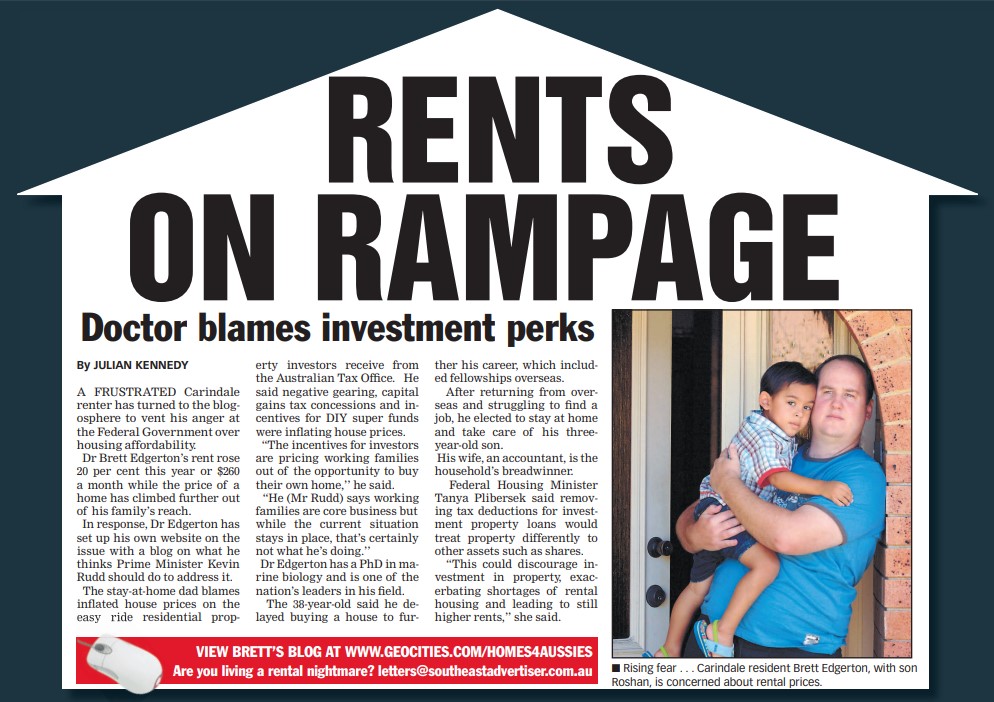

© Copyright Brett Edgerton 2023

“Reset”: Chapter 4 – A Future Of Our Own Making

A Father and Son Fireside Podcast

In a warm setting reminiscent of the sitting room in the Roosevelt’s Hyde Park estate, fire burning comfortingly behind them, a father sits talking with his middle-aged son, a conversation so evocative that occasional footage of actual recorded history or animation of concepts occasionally filters through their mind. The conversation ranges widely, but the tenor is one of general disappointment at the current state of affairs and concern that if things are not righted, and with urgency, then humanity will continue paying dearly.

Of course the father and son see the climate crisis as the most pressing issue that confronts humanity. But they recognise its origin, cause, and effect, and thereby its solution, lies within the greater realms and nuance of the human experience. In effect, the climate crisis constitutes little of what they discuss because the groundwork for action lies not in the science surrounding climate change, nor in the innovation to minimise it and ameliorate its affects, but in the social cohesion that is necessary to address it along with the next crises that humanity will undoubtedly face.

Following is a description of what is discussed.

Global inequality

There’s something about humanity at this point in our progress that limits our altruism and good will to other human beings.

Through guilt or empathy we in developed countries react to imagery of the suffering of poor people in poor nations. Some suggest that the reaction is less-so when the skin tone of those suffering is darker. Alternatively, the threshold for the suffering being experienced required to elicit the same level of response may be higher, roughly proportional to the darkness of the skin tone. Of course, a majority of lighter-skinned people refute this.

Nonetheless, that there is a reaction from people to the suffering of the poor, which invokes decision-makers to respond, is encouraging.

However, it must be said that the response tends to be limited to the feeling that all human beings should be free of suffering. For most in rich countries there is an indifference to the subject of whether all human beings deserve a certain quality of life. Often political activists couch this in the terminology of a ‘dignified’ or ‘decent’ standard of living with all the inherent subjectivity.

On thing is true of modern society – although they wish not to be confronted with the suffering of other human beings, to this stage, the majority of the wealthy amongst humanity remain resistant to the loss of any of their privileged quality of life so that all human beings might have a quality of life significantly above subsistence (i.e. mere existence).

Capitalism at an extreme

Elliott Roosevelt was quite right in complementing the sensibilities of the American people in supporting his father’s Presidency, and the pride that American people feel in what they all achieved under his leadership is rightful.

At the other end of the spectrum, Churchill expressed feelings of superiority and condescension when he suggested that the best argument against democracy is a 5 minute chat with the average voter, as he is widely attributed for saying.

There is surely some truth to the contention that in democracies the people get the political leadership that they deserve. Perhaps that even holds true in moderate autocracies, and the degree it holds true is related to the heavy-handedness and willingness of the State leaders to oppress the citizenry and assert a centralised will over them.

If we in the developed world have progressively experienced poorer political leadership since WWII – less proactive to the point where politicians stopped leading and simply became followers of the ‘free market’ while continuing to extract rents from their privileged position through legalised corruption of politics in the form of political donations and extremely advantageous post-political business and career opportunities – the obvious question is whether that is the fault of the people.

In the 80’s the movie “Wall Street” with Gordon Gekko’s famous quote that “greed is good” captured the mood of the period. It initially shocked, but in a manner that we now have come to understand well, it also began the process of normalising this in culture.

At the same time the middle class was hallowed out largely without people noticing that they had traded their comfortable and reasonably secure existence for a shot at riches beyond their wildest dreams. But there are only so many positions in the C-suites of major businesses that pay multi-million-dollar salaries, and not everyone else can work in hedge funds. Someone had to earn the everyday salaries that produced large aggregations of deposits which the Wall St sharks take a bight from as they funnel them through a system that does little more than provide the perception of activity, a thin justification for taking those fees.

This is well summed up in the words of Charlie Munger, who together with Warren Buffett is the consummate capitalist so much so that they have been asked for advice by US Presidents and have been called on to lend credibility to stabilise markets at times of vulnerability, speaking in 2023 just after his 99th birthday:

“So there is some of this old fashioned capitalist virtue left at Daily Journal, and there is some left at Berkshire Hathaway, and there is some left at BYD, but in most places everybody is just taking what they need without rationalising whether it is deserved or not”.

Incidentally, one of the examples given – in fact, the man he credited for inspiring the actions to which he had referred – was a Chinese businessman.

At the same meeting the previous year Charlie identified the real motivation behind greed, that being envy.

The normalising of greed within our capitalist system meant that it became synonymous with self-interest which had been a concept for several centuries since the grandfather of economics, Adam Smith, identified it as a critical factor in capitalist transactions. But this was a co-option because self-interest has far wider, long-lasting connotations and implications whereas greed is very short term.

Greed for short term gains became accepted and then increasingly venerated, hand in hand with extreme interpretations of the work of Milton Friedman from the early 70’s which said that the sole social aim of a business is to make profits. This was then used to justify an increasingly extreme form of capitalism producing inequitable outcomes, often referred to as ‘trickle-down economics’, which argued that it is beneficial for society that the rich become even richer because benefits trickled down to those below them in social status. Of course, as the inequity grew, most people felt their lives had come to resemble that of hyperactive hamsters on a treadmill working harder and longer to earn the right to squabble for meagre scraps that fell from the table of the societal elite.

Add embedded social immobility through generational privilege, and systemic and widespread social racism from unchallenged histories of colonisalism and/or slavery, into a system which is said to be based on merit, and there is a brewing social discontent seeking to apportion blame. With social safety nets in America significantly less supportive than in most other developed nations, there is a working poor that had not existed since before the Great Depression and does not exist in most other developed economies. Many of the most vulnerable within society resort to extreme survival measures such as selling their blood to the producers of high value blood products.

However, the elixir of extreme wealth as advertised through sophisticated dispersive media, which became omnipresent with the invention of the smart phone and augmented with almost unfettered influencers, has had an intoxicating affect selling American culture throughout the world, especially to the young.

Other anglophone nations, especially, have experienced this cultural drift which pervades society from families right through to business and politics with concomitant creeping up in hours spent working and increasing levels of materialism concomitant with decreasing levels of life satisfaction measured in surveys and decreasing mental health measures.

The COVID-19 pandemic put a punctuation mark in this progression, with surveys of people showing greater levels of altruism and levels of self-care, including seeking more flexible working conditions, but it is too early to know whether it will be a ‘comma’ denoting a pause, a ‘full stop’ indicating a prolonged pause which may or not be a true end, or an ‘exclamation mark’ – an emphatic rejection of the earlier period of extreme capitalism.

Through this phase of human development, the demands on personal time and energy have been unrelenting, and while technology has facilitated greater productivity, the cognitive ‘bandwidth’ of human beings available to process emotions, as well as make short- and long-term decisions, has not increased but has been challenged by the extra drains on energy from modern life.

Between those working day to day for their survival, and those who have been so influenced by the ‘materialism through winning’ elixir, there is significantly less collective bandwidth available for critical thinking. Even of those now looking for answers, many had not been taught and/or practised the skill of critical thinking and are vulnerable to believing dubious sources of information which are becoming increasingly sophisticated at altering facts and influencing opinions and actions.

Thus, to answer the question of whether the people have received the leadership they deserved, the answer must be that, in general, they have not.

Whether society can be blamed for prioritising the accumulating of material wealth over other less selfish pursuits, which also affect our individual and collective quality of life, is a matter of personal values.

What broader society must accept blame for, however, is a willingness to turn a blind eye to the fact and consequences of local, regional, and global inequality; that wealth and high standards of living were attained and maintained from the exploitation and pain of other human beings.

In that way, our contemporary societies are not as different from other or alternate harsh, oppressive, and dominating societies as we would like to believe.

Racism and prejudice – personal experiences

Sadly, my own experience of racism straddles both sides of the divide.

In 2002, with my wife of Asian descent, I lived in Munich as the recipient of a fellowship from the Alexander von Humboldt Foundation (AvHF), after spending the previous year in Montpellier on a fellowship from the French Government. Besides the normal language challenges faced by any non-Bavarian living there, whereby even Germans coming from outside Bavaria would try to disguise it from the famously (or infamously) patriotic Bavarians, I found it easy to live in Munich, in fact easier than in southern France the year before. For my wife, however, whether alone or when we were together, the feeling was very different to how she and we felt moving around in ambient society. She was frequently stared and snarled at while waiting for public transport, feeling unwelcome and unsafe when travelling alone, and conspicuous as a mixed couple when together. The righteousness of some to express the power and privilege in the expectation of others cowering for their very existence was something that she and we had never experienced.

On a train trip into Austria to celebrate our 7th wedding anniversary we were confronted by four middle-aged women snarling at us from the opposite seats as if were dirt. I turned to face off with them, eyeballing each one in turn rotating my head left to right, right to left, and back again, like a carnival game clown. The women chose to continue their vile and hateful stare for at least 5 minutes before in unison they gave a huff and turned their attention away to each other, no doubt to spew hate from their mouths to reinforce each other’s opinions of superiority. At least I stared them down and showed that we are proud and loved us and ourselves – a small victory which I felt we needed at the time.

I, too, soon ran into trouble with my research whereby through stepping on the toes of someone close to the head of my institute, in a truly surreal manner – I asked that the student not keep their dog in the office that we alone shared after it bit me – all of my research was confiscated and locked in a cupboard so that I could not work for the latter half of the fellowship period. During a strange meeting with the technician who had been instructed to confiscate my work and the head of the institute they denied it and undertook to look for my work. I had, in fact, already found my worked locked in a closet outside her lab, but there was no use in my liberating it until the final night of my fellowship as I could not access equipment necessary to conduct my research.

The institute head’s dictatorial manner was confirmed when he told me that I had come into “his house” acting as if I was God’s gift to science. Sadly, a man of Arabic descent who was head and shoulders the best researcher there was being deceived into thinking that he would succeed him and become the head of the institute. Even the students knew he had no chance of that, prejudicially saying that he could not hold such a high position in Germany because his language skills after 30 years of living there were not ‘good enough’. Instead, the much less-established female colleague that I was collaborating with informed me that she had been promised the job. This colleague also said to me on multiple occasions that she was dumbfounded how a mutual colleague, who was born in Germany and whom she had studied with for her undergraduate veterinary degree, could possibly hold the high position she held in the Australian public service.

On the one hand it made me realise that Australia had progressed significantly further than Germany, but I knew this was not the case if you incorporate colourism and that was underlined with what had occurred in Australia in the lead up to the 2001 Federal election, but I am skipping ahead.

I kept the AvHF informed of what had occurred and they were extremely apologetic. An officer’s handwritten note on the responding letter said that sadly this happens all too often in Germany and that they are attempting to lead change to address it.

Living in Germany was the first time I came to understand the waste of human capital that comes from the interaction of prejudice and migration. In my institute there were lab technicians that were doctors in their home countries in eastern Europe before migrating to Germany who would never practice medicine again. That is a loss for Germany as well broader humanity, not to mention for themselves and their families.

The visa that my wife was granted to accompany me did not give her the right to work in Germany. In France her visa did but language was the barrier there to her finding a job. With cosmopolitan Munich being the centre of multinational industry, language was much less an issue. However, my wife soon learned from human resources departments that she would not be considered for a job unless she already had a visa that permitted her to work, and she was told by the Germany visa authorities that she could not gain that visa unless she had a job offer. The perverse circularity of the situation was no secret to anybody.

As we came directly from France my wife had not worked for a year and the impact from feeling isolated threatened to shorten my fellowship period even before it started. In a stroke of luck, as well as resilience and ingenuity, however, my wife managed to bypass local HR staff to speak with a manager advertising for someone to work in his multinational team which worked in English on a pan-European project. After interviewing, she was offered the position and their HR department then had the job of securing the appropriate visa. We learned that this was an all too rare occurrence.

To concentrate on these negative events would be unfair, however, to the effect of leaving an inaccurate picture of our experiences in Germany. The AvHF was an incredibly generous organisation doing an enormous amount of good to progress global science and culture. All fellows and accompanying partners were taken on a 2-week cultural tour of Germany where we learned about German culture especially during the cold war, though less so about Nazism, perhaps understandably. After all, there is plenty from that era to visit and learn, and I personally visited Dachau multiple times ensuring that every visitor to our home that we had through the year also saw the concentration camp museum.

We were incredibly fortunate to be offered at a significantly reduced rent a nice apartment in a beautiful home owned by fellow academics in one of the nicest areas of town. We entered through a side gate and even today on Google Earth Street view detail of this street is blurred because the neighbouring property on that side is the residence of the US Consular General in Munich. Being early 2002, just after 911, there were machine gun-carrying guards outside their residence and I was always careful to slowly claim my keys from out of my pocket. One day, however, coincidentally just as my visa had expired, we were stopped by police after I had roused suspicions of the guards by taking a photo from outside of the corner of our apartment showing the bare vine that crept over our apartment while pristine white snow lay on the ground. Before my welcome was rescinded by the tyrannical institute head, I had the pleasure of walking daily through Bogenhausen and across the Isar River to the institute on the other side of the English Garden.

While there were those who showed their meanness, there were more very keen to show their friendliness and would help us by very willingly switching to English when it became clear that our German was still rudimentary  though my wife was sponsored by the AvHF to undertake language course and was becoming quite proficient. We have always remembered how even elderly people were keen to assist us in English, and now being aware of the story of Schacht and how he lived his final years in the area with his second wife, I cannot help imagine what if one of those lovely ladies that helped us on occasions might have been Manci Schacht, or the daughters she shared with Hjalmar, Cordula or Konstanze.

So too would it be unfair to only discuss our experience with racism and prejudice in central Europe, even though its relevance is clear and long-lasting given a world war was fought there ostensibly on the basis that racism and the consequences of it are evil, when we have lived the majority of our lives in a colonialised nation that has itself seen frontier wars against its First Nations peoples and where a migration policy of selecting only for ‘whites’ was maintained for over 100 years. I speak of course of Australia.

I was, in fact, deeply embarrassed to be Australian as an AvHF Fellow mixing with academics from throughout the global community in this period for our own latent racism had been highlighted for the world to see during the Federal election the year before. A deeply unpopular Prime Minister was able to turn the tide and win re-election by being seen to be tough on brown-skinned illegal immigrants who attempted entry on non-sea-worthy vessels. Almost to underline the lack of scruples by these brown-skinned ‘aliens’ who would do anything, use anything or anyone at their disposal to gain entry, including risking the lives of their own children by throwing them into the water to force the hand of the attending rescue ship, this story was maintained right up to the election even though it quickly was disproved and known to the government.

My simple response to other AvFH Fellows was to express my embarrassment and suggest that it reflected as poorly on Australian people as it did the conservative politicians who used the latent racist attitudes of white voters, and naivety of more recent migrants who were compliantly trying to assimilate, for if their hearts and minds were more open then they would have rejected the government for using such evocative and divisive tactics. This led to a period, which continues today, where illegal immigration is a ‘hot button’ topic that the political left lacks the courage to right out of fear implications at elections which has resulted in terrible treatment of people seeking a better life, many genuine refugees, often in contravention of their international human rights.

Of course, this issue is not now limited to Australia, but the ‘Australian solution’ of being so tough on the migrants to act as a deterrent has been exported to many other countries including in Europe.

I was born into a family with deep pride for its colonial history in the township of Innisfail in conservative rural northern Queensland, known for being a major centre for the sugar cane industry. I grew up around racism and was taught to be racist by my most important mentors and by the white-dominant cultural system that I was raised within. In school, even though we shared our classrooms and school grounds with First Nations children, the version of “Eenie Meanie Minie Mo” that I and other children taught each other to select who was ‘in’ included the vile racist ‘N-word’. I do not recall ever being reprimanded or corrected from using the word.

I never knew its meaning, but that is irrelevant, and I can only assume now that the First Nations children would have been taught that it was a deeply racist and hateful word.

I was only taught to be racist. I was not taught how not to be racist, and I certainly wasn’t taught how to be antiracist.

In this environment, it is hardly a wonder, then, that as a teenager it was a common occurrence when with extended family – camping or vacationing over Christmas – to listen to tape recordings of a famous racist comedian of the time, Kevin Bloody Wilson. His most memorable ‘song’ for my family was “Living Next Door To Alan” which captured the ill-feeling of the period towards the initial stages of reconciliation and restoration of the rights of First Nations people to access their lands which were obliterated by the British and the first migrants whose descendants, with some sort of romantic nostalgia, prefer to refer to them as colonialists.

The song told the story of a First Nation family that used these rights to claim land in the most expensive street in Australia next to the richest man in Australia then, Alan Bond. To evoke extra anger from his mainly white listeners, Wilson had the Aboriginal subject say that it was “Dead fuckin easy!” which I especially remember family members singing with vitriol in the ridiculous assertion that First Nations peoples are benefitting enormously from white colonisation well beyond that of white Australians, which contradicted the obvious reality which I had witnessed all of my life. The final line stresses the divisiveness and hatred in the lyrics where he sings, in first person voice of the First Nations man, “At least we ain’t got fuckin coons livin next door to us!” to stress how nobody would want a First Nations family living next to them, not even other First Nations peoples.

In my view you would be hard-pressed to find a more hate-filled piece of writing. This record was sold Australia-wide and for this album Wilson was venerated by the peak Australian music industry awards in 1987 receiving an ARIA for “Best Comedy Release” and was nominated for “Best Selling Album”. The song can still be downloaded from YouTube, and one version available there (last accessed 26 May 2023) – which advertises Wilson’s website address for the sale of his comedy and merchandise – includes a racist ‘joke’ told between lyrics that Michael Jackson took with him when he toured a monkey for spare parts!

The face of migration to Australia changed in the 80s, championed by a left-wing government, so that by the 90s there was a growing backlash against Asian migration and apparent ‘political correctness’ which said that the white majority should not be called out or made to feel immoral for objecting to the changing racial composition of the nation. Asian immigration has a long history in Australia, which even predates British ‘colonisation’, but the long-running White Australia Policy – which limited migration to essentially Caucasians – kept numbers low and the early Asian migrant families had very intentionally minimised their cultural difference, i.e. assimilated, to minimise offense and castigation.

The new migrants, however, were conspicuous in number and cultural influence, and soon the objectors found their ‘champion’ in the form of a fish and chips shop owner from Ipswich in Queensland named Pauline Hanson who told parliament in her maiden speech that “Australia was in danger of being swamped by Asians”.  

I had fallen in love with my wife at university and I knew that, because of endemic racism, our relationship would cause me to lose some of my social standing in my hometown and within my immediate and extended family given that she was both a woman of colour and of Asian descent. This was underlined for me, especially, because when I asked my mother three years earlier whether it would be okay with her and Dad if I brought home a girlfriend who was of First Nations background, whom I fancied then at university, she responded: “obviously we would prefer if you didn’t”.

In some ways I thought that my parents considered my wife being Asian was not as bad as could have been if I did marry a First Nations woman.

Over those early years of our relationship, sadly, we encountered racism constantly within my family. A cousin who I deeply admired said that he wouldn’t eat anything touched by a Thai person. Other cousins proudly told me they were Hanson supporters and denied that she or they were racist. That Kevin Bloody Wilson tape continued to be played every Christmas.

Racism is omnipresent in my family culture, it is systemic.

The most poignant event happened during a Christmas vacation just after we were married when my sister-in-law called a shop assistant who did not serve her promptly enough for her liking an “Asian bitch” when recalling the experience that evening to extended family. We walked out in disgust and what ensued showed that our family would never be the same again. My sister acknowledged it was racist but my mother denied it in a surreal debate which left my wife in our room crying wanting the conflict to be over, and me walking out of the house to be alone because that was how I felt stuck between realities that were supposed to love and support me. Then my mother, thinking that she needed to calm the situation, came to hug me and instantly I could feel her hard coldness and that she could not emotionally connect with what I was experiencing, her enormous heart which had nurtured me all my life completely blocked by bitter hatred, by racism.

The next morning my sister-in-law was deeply hurt at the suggestion that she was racist and was packing to leave. It threatened to ruin everyone’s Christmas and it was all our fault – we were too sensitive was the majority opinion. We were coerced to go and apologise to my sister-in-law for upsetting her in deference of staying together for a family Christmas.

It was to be one of the last Christmases we would spend together as a family as I realised that our relationships had altered irretrievably, that continued contact always involved the risk of my wife being hurt more by bigotry, which I really wanted to avoid when we had children, and that these tensions had joined together with deep pain and trauma at being brought up in a harsh family farm environment creating a family culture that was toxic. Truly accepting that, however, was a process that took many years of me learning to stop trying so hard to have them understand and accept us.

Although I face this issue less so these days from my family because of this distance from them, I still have some interaction with my parents which, sadly, always presents a challenging situation. In recent years they have said and done things which has and will remain with me. On a recent New Years Day they observed my sons carrying out a cultural ritual of bowing on the floor in front of my wife’s parents showing respect and I overheard their outraged discussion afterwards. They have told me a story on numerous occasions of how the President of a sporting association of which they are committee members started a meeting with an acknowledgment of country to pay respect to First Nations peoples, which is standard now throughout Australia, thankfully, but to which they objected indignantly with “we don’t want that shit here!” making the woman cry. Most cuttingly, my father rhetorically told me “Who would want to live next to Indians!” not long ago which really made me confront a truth that I had not been prepared to admit previously – that he must feel some level of personal shame when in public with my family, or with my wife’s family and many of our friends, as anybody who shared his views must when with people who most in our society would easily confuse for being Indian.

Overt events of racism are what we tend to remember most and what gains the most attention in the media. The truth is, however, that these are not the most common forms or incidents of racism.

In my experience, both when I was young and insecure trying to find my own safe place within society, while knowing I was well within the white majority, and as an adult as I became increasingly aware of its impacts on minoritised people and especially on my wife and consequently our family, most often racism is expressed in degrees or shades, whatever metaphor for subtly and nuance is preferred or meets the context.

I think the most accurate way to describe it is that racism, prejudice, and unconscious bias interact with ‘thresholds’ – thresholds in relation to stimulus – that determine whether a reaction or a response will be invoked. It even intersects with shades of skin tone based on the amount of melanin in the skin often referred to as colourisation. This is why the pervasiveness of systemic racism is so difficult to prove at an individual or case-by-case level yet it is clear in topline statistics in almost all aspects of society.

Consequently, the great majority of the individual acts of racism carried out globally on a daily basis is plausibly deniable.

In truth, many of these acts will be imperceptible even to the object of the bias, and the degree to which someone is perceptive of these biases directed at them is related to their prior experiences and teachings.

Their subtly, however, should not be mistaken for insignificance, for the worst effects of these racist acts are cumulative so that they build up in the psyche of those prejudiced against perniciously impacting feelings of fairness, belonging, and safety.

I will demonstrate with a personal experience, one for which I personally carried a great deal of shame over a prolonged period.

My wife underwent an emergency caesarian section during the birth of our first son. After 18 hours, 6 hours of active labour, the birth was not progressing and my wife was becoming exhausted. Past midnight we were in a birthing suite of a private hospital, my wife mostly asleep, and me sitting in the dim light listening to the faetal heart monitor attached to our unborn son which showed that he was in distress. With each contraction his heart rate would slow so much so that it sounded like a steam train struggling to pull over the crest of an incline. When it sounded to me like it was getting dangerously close to stalling, I went to speak with the head nurse at the front desk asking for confirmation that the sound that I had been listening to with increasing concern was that of our baby’s heart, showing my clear concern.

The nurse responded, “yes, I had been thinking about calling the doctor. I will do that now.”

The question that can never be answered, not even if the nurse were asked the next day, if she could get past the natural inference that her judgment might have been influenced by factors other than purely medical, so that she answered honestly, is whether a higher threshold to become concerned might have been applied because my wife is of Asian descent.

When the doctor came, I was given the choice and I consented to an emergency caesarian. Our son took a while to take his first breath while the paediatrician was attending him, long enough for the experienced midwife to show her anxiety and mutter quietly, “c’mon little fella, breath”. For those few seconds afterwards, I was terrified and was already kicking myself for not going earlier to speak to the nurse. That, however, is not the main source of my shame.

Our son was with us in my wife’s room for his first few hours, as is usual, but we were both exhausted and my wife had struggled in vain to feed our son. After an attempt to feed him, I placed our son in his crib and we both fell asleep. When we woke our son was not in the room and I was told that he was in heated crib because he had not been covered properly and his body temperature was low. My wife, also, had a low core temperature and was soon under an insulated blanket blowing warm air on her.

Until this day I carry the shame that our newborn son might have had a serious setback or even died for my mistake in not covering him properly when he was already weakened. It was not really until later years, however, when I truly began to understand how unconscious bias from racism happens in society that I realise we should have had more attentive care from the nurses given the complications in birth, especially since we were first-time parents and we had paid for that care in a private hospital.

Again, would they have been more attentive if we were not a mixed family?

What we also remember clearly from the period was how the nurses frequently commented on our son’s “lovely skin”, telling us that there was no chance of confusing him with the other babies in the nursery, yet to our inexperienced eyes the difference was imperceptible. The point is that to the nurses there was a difference the moment our son entered their care, and describing his skin tone in a positive manner is no indication of what effect, if any, that had on the care he and we received given their experience at dealing with new and vulnerable parents and knowing what were the right things to say to be seen as caring and attentive.  

It is all the more remarkable that we never really allowed ourselves to think of these events in these terms for such a long time since when we were in Germany a couple with whom we developed a friendship, after meeting them through the AvHF, had a truly frightening and alarming experience having their first child there. The Chinese mother and Moroccan father were given precious little assistance in the hospital after their baby was born. The nurses essentially poked their heads in the door and asked in German whether they were okay and were dismissive and impatient if they responded with anything other than a simple “yes”.  However, their baby barely fed for the first few days and things only turned for the better when the mother learnt how to breastfeed through a book that her husband bought in the library of the hospital. Being the years before ubiquitous internet, that book literally became their primary source for baby care.

Having these personal experiences, I am entirely unsurprised when I hear or read of statistics showing clear inferior birth and general health outcomes for minoritised people. At a personal level, I am also well aware that my wife and I were privileged to be in a private hospital.

How can one, therefore, apportion the impact of racism or colourism through their life?

What is an appropriate time to wait at a counter, what is the threshold for gaining the attention of a server, or how can anyone know whether the server noticed that you were waiting before others of lighter complexion?

Why is it that colleagues’ work is regarded more highly so that perception of cumulative impacts in workplace performance are not seen as valuable as those colleagues’ who received higher value rewards including bonuses and promotions?

Why was your application to rent a home unsuccessful when you are an executive with a high salary with a demonstrable history of continuous work and responsible rental stewardship?

Did Herr Hoffman, the head of my institute in Munich, develop an immediate dislike of me because of who was sitting next to me when we met for the first time, that being my wife? Did it lower his threshold for becoming aggravated with me, in conjunction with my other traits which he clearly disliked, and how did these intersect?

Once alert to and understanding of how racism and prejudice works, it can be seen everywhere, yet it is always impossible to know, and thus prove, exactly how, when, and where its impacts are at work.

Those who are subjected to racism are, at the same time, told that it is they who have been applying a threshold too low or inconsistently – that their threshold for sensitivity, to have hurt feelings or to become offended, is too low so that all in society has come to ‘pander’ to this too low threshold through a societally enforced ‘political correctness’ which only ‘woke’ individuals have the desire to abide by with ‘virtue signaling’ which is circularly reinforced amongst a community of ‘wokes’.

All of this ‘performative’ reinforcement is rejected, according to this mindset, by the shrewd conservatives – ‘salt of the Earth’-types that exist in the mythology of nearly all nations or regions – on the basis that ‘wokes’ are idiot do-gooders who have no understanding of the ‘true’ (usually harsh, often misogynistic) underlying nature of human societies so they will declare openly a refusal to expend energy caring about whether they emotionally offend or hurt others. This asserts a narrow vision of society within such people and leads to them acting with more prejudicial and biased behaviours, potentially even with an agenda to counter the efforts of the ‘wokes’.

There are always any number of reasons available to give for why daily decisions of relatively minor significance are made, and younger people tend to prefer to be optimistic and believe that intentions of others mostly are fair and reasonable. Moreover, younger people tend to be more gregarious and do not wish to dwell on issues which might be divisive, often because they do not want to feel different or excluded in any way. Young people, most of all, want to feel and believe they belong.

By the time a person who has continually been the subject of prejudice reaches middle age, however, the impacts of all of these continual decisions made upon racially dependent thresholds have accumulated and affect them in deeply impactful ways including career advancement and position within society, and ultimately affect feelings of belonging and safety stemming from how they perceive others view them and even how they view themselves. The latter is especially critical because with all these decisions, each one subjective, nebulous, and deniable, and often explicitly denied when concerns are raised formerly and/or informally, there is a continual voice in the back of their head saying, “Maybe it really is me; Maybe I’m just not good enough; Maybe I do not deserve… [whatever it is].”

Few human beings innately have or learn such extreme self-belief that they never engage in self-doubt, and most who do not probably have some form of psychosis. It is entirely predictable that the self-confidence of, and the trust in the system of, the majority of minoritised people will have been broken through a lifetime of living with racism.

This is the corrosion to society caused by racism, and its affects are profound and widespread.

In my experience, most members of the white majority in society fall within two camps – those who deny the racist character of society and thus, of themselves, and those who recognise that racism is a problem, many considering themselves sympathetic, but who believe it does not affect them because they consider they do not personally experience racism. However, I take issue with that view because I have come to realise that I have more experience of overt racism living in a white-dominant colonialist nation than my wife of Asian descent, and if most other Caucasians stop and think they will realise that they have a broad experience of racism, also. The point being that one does not have to be the object of hatred or prejudice to experience racism.

I realise some might prefer or consider it more appropriate that a Caucasian use the phrase ‘experience with racism’ above ‘experience of racism’, but in truth I think it is unnecessary and unhelpful semantics.

I will share one of the most overt acts of racism that I have experienced. In my first professional job immediately after completing my PhD I worked for a public service organisation. One day walking with a senior colleague, second highest in the hierarchy at this facility, I was expressing concern for the local inhabitants of a Pacific island who were receiving the full brunt of a category 5 cyclone. My colleague responded that my concern was unwarranted because “there are only coons and grass huts out there!” Although I was raised with omnipresent racism, I was shocked to hear such a hateful comment in the work environment from a senior colleague, so I did not manage to voice my outrage or even disapproval. In shock, I was rendered speechless and then felt guilty and complicit.

A short time afterwards I was in a photocopy alcove with two other (Caucasian) colleagues besides the same senior officer when a member of the secretarial staff came looking for me and the other junior colleague who was with me. A technician from our former university department where we had studied together for our postgraduate degrees in microbiology/virology was calling as they were cleaning up the walk-in fridge and wanted to ensure that if there was any materials we left there that they did not represent biohazards. After we told the secretary that we left nothing behind, the senior colleague told us “They should just suck up the material and inject it into some gooks – there are enough of them out there now!” I don’t know whether the others were in shock but this time I was ready for it and I informed him that he should not assume that everybody agreed with his vile opinions. I walked off and immediately reported the incident to my superior, but to my nowadays regret, I chose not to take further action as I was only early in my career and was concerned about the impact making a complaint would have.

While this was particularly shocking, in my early years in conservative northern Queensland it was my common experience to be a part of Caucasian groups which openly engaged in shared racism. I grew up with the hushed, on the other side of your hand discussions about ‘abos’ after a quick glance to see who may be near enough to hear, and I heard the jokes or hateful impersonations made when none of the targets of derision were present.

I concede that not every person will have as much experience of racism as I do, and that will depend on social circles through life and/or the level of endemicity throughout regions.

Even those who grew up in less conservative social circles and/or regions, surely, also have reasonably frequent experience of racism. One must wonder whether loyalty to our closest early mentors – close and extended family, coaches, teachers, performers, colleagues, and bosses, etc. – is an important impediment to acknowledging experience of racism.

The recent example of how colleagues of Australian First Nations journalist Stan Grant, along with his employer, failed to support him in the face of racist onslaught, shows most non-First Nations people are still incapable – individually and collectively – of confronting the truth of their experience of racism and thus learning how to respond.

Eliminating racist division and prejudice from our society is highly dependent on the dominant majority, Caucasians in former colonialist nations, becoming a lot more responsible for acknowledging racism when they experience it so that they can be a part of – and when necessary, lead – appropriate responses to it.

The most important element in fighting endemic racism, in my opinion, is for everybody to become responsible for making it clear that the racist is in the minority and will increasingly be minoritised, themselves, if they persist with their hateful opinions.

Racial, prejudicial, and otherwise divisive opinions circulate and grow when people feel free to express them – free not just, or even mainly, because of permissive laws, but by social norms and standards. A comment about “ticking a diversity box” or against “affirmative action” might seem innocuous and harmless when the target of the comment cannot hear, but people get the message that it is socially acceptable to spread such ideas. Nobody knows what that person or the next person who receives those ideas will do with them – will their dislike grow to hate, and what will they do with their hate?

The truth is that whenever a racist act occurs, everybody who has participated in spreading divisive ideas shares responsibility for that act, irrespective of how minor that act of spreading division might have seemed.

Finally, there will always be a minority who seek to play up differences amongst humanity for their own political advantage, often to scapegoat and deflect attention from their own lack of leadership abilities and progress. Real leaders seek to unite not divide, and our societies – the human beings who make up societies – must be shrewd enough to associate attempts at creating division with self-interested power grabs so that they are promptly dismissed without damaging social cohesion.

A responsible, well-regulated media is critical.

Corruption of political processes

That democracy is ‘under attack’ is a common refrain at present. Most attention focuses on interference on the basis of geopolitical contests and frictions. As highlighted during the WWII era, this is not a new event, even if the sophistication of the tools employed are ever increasing, and it will always be the case while there is aggressive competition between peoples from different geographical regions.

This is not the only corruption of political processes, however, and in many ways it is not the most serious even if the other corruptions are largely forgotten or at least overlooked while attention is diverted towards ‘enemies’.

No democracy has solved the problem of how to ensure that parliamentarians serve the interests of their constituencies, and therefore broad humanity, over the special interests of the few that act at the level of the political party or the individual politician.

Through the history of democracies, the most powerful have not sought ‘higher office’ for themselves. No, for most that would seem like much too much hard work and effort, even if that effort were totally directed towards furthering selfish outcomes above the progress of broader humanity. Instead, those truly powerful through virtue of their wealth have sought to influence decision makers by a range of instruments at their dispersal, either directly through investing some of their own wealth to gain favourable outcomes which will grow their wealth even more, or indirectly by owning businesses through which they can influence outcomes.

Many a story has been written about illegal forms of corruption such as bribery. While dramatic, these are significantly outweighed by the legal forms of corruption that permissive democracies have allowed in the form of political donations to parties and of extremely favourable post-political careers and contracts in the private sector or in the political lobbying industry.

These corruptions have led to the interests of wealthy superseding the interests of broader society and humanity, have led to growing societal inequality, and have severely hampered international responses to crises especially the climate crisis.

While legalised corruption has grown with the size of political donations and the lobbying industry, in less contested policy areas the lack of interest shown by politicians to actually lead has had serious impacts. As politicians on both sides of the aisle (left as well as right) agreed that the capitalist market is the best arbiter of capital allocation decisions, it became accepted that corporations and individuals within society would take the lead on all areas of innovation, meaning that areas outside or of lesser importance to markets would be largely forgotten.

In other words, politicians as a group largely relinquished their roles as leaders within society, yet they did not relinquish their positions nor their salaries, even if they were fractions of their post-politics salaries.

In effect, the market arbitrated their own roles as leaders – if there was no economic payoff to them as individuals or as a political party, then it was wasted effort to concentrate on these policy areas.

It is in these forgotten areas where lies the greatest dividend and benefits to society and broad humanity.

The press has been referred to as the fourth estate of democracy given its critical role in framing and facilitating political debate in an open and objective, non-partisan manner. Nowadays, however, the traditional role of the press is strained by other forms of dispersed media created and consumed on ubiquitous electronic devices, especially smart phones. Newsrooms have had their budgets continually cut and staff numbers reduced and consolidated which has impacted the quality of investigative journalism and deeper analysis. Ownership of the press has realised a profitable business case for monopolising the content that groups – based on demography and/or ideology – are exposed to thereby reducing the breadth of opinion to which people are exposed and hardening opposition to other views when they encounter them. This has been aided by pervasive, sophisticated information technology which at the same time has been more covert.

Consequently, there has been an erosion in the level of trust in the role of the media in society and skills at discernment and critical thought have generally diminished in society.

People tend to become stuck in echo chambers with other like-minded individuals and have narrow perceptions of what is reasonable, or even what is truth, and thus are highly susceptible to being influenced by actors which seek political gain. Moreover, while not recognising their own intellectual constriction, people are increasingly pointing it out when they observe others stuck in different echo chambers.

Clearly such a system is corrupted as an instrument for objective political processes, and it is eminently corruptible for specific political goals especially when intersected with the corruption of the political system for personal gain within an increasingly extreme capitalist system.

Such a level of societal polarisation has occurred in past times, and can be ameliorated if the corruption of the political process is acknowledged and addressed via regulation of political interference, and especially of political donations and other conflicts related to politicians, and of the media.

To do so will require a level of honesty and sincerity that has become rare, especially in the anglophone world, since the death of FDR.

What separates modern capitalist societies from fascism?

Fascism is an ultraconservative ideology best known as justifying aggressive actions by especially Germany against its neighbours leading to WWII. Fascist regimes have had variable ideologies borne mainly of the political circumstances from which they derived their power, but these features were common: aggressively nationalistic and misogynistic, opposed liberal individualism, attacked Marxist and other left-wing ideologies, scapegoated minorities especially along racial lines, self-appointed arbiters of national culture and/or religion, and promoted populist right-wing economics.

Historically fascism has been associated with economic disturbance especially when it was felt disproportionately or inequitably across society.

In recent years there have been alarming incidences of ultraconservatism especially in America. There has been insurrection due to the outcome US Presidential election being contested by the incumbent such that a large proportion of the population considered the following Biden presidency illegitimate. The populist fervour that the former reality television personality-turned-President, Donald Trump, created has resulted in a host of political aspirants who initially rode his agenda and wave of populism to gain higher office, and who now attempt to be even more conspicuously conservative.

Media that is not just complicit, but elements within it that have taken on the ultraconservative platform as a business strategy to drive profits, have created echo chambers for amplifying this ultraconservative ideology.

One recent example of the consequence of this is seen in the US state of Florida where strict, but apparently arbitrarily or haphazardly applied laws, introduced by Governor DeSantis in the lead up to his bid for the Republican nomination to contest the 2024 Presidential campaign, have been used to ban specified books from schools for containing inappropriate messages. One book banned was the poem “The Hill We Climb” written and performed by Amanda Gorman for the Biden inauguration, the single claimant that led to its banning mistakenly listing famous African American television personality Oprah Winfrey as the author, and objecting on the grounds that it was “not educational and have indirectly hate messages”. The hate messages cited by the claimant were:

“We’ve braved the belly of the beast. We’ve learned that quiet isn’t always peace, And the norms and notions of what ‘just is’ isn’t always justice.”

and

“And yet the dawn is ours before we knew it. Somehow, we do it. Somehow, we’ve weathered and witnessed a nation that isn’t broken, but simply unfinished.”

Parallels with attacks on liberal thinkers by earlier fascist regimes are obvious.

The consistent feature of fascism as opposed to communism is that power is derived from the wealthy elite rather than the working class within society. It is notable that the increasingly extreme form of capitalism that has been practiced in recent decades has been accompanied by a general movement of the political debate to the right as socialism has been diminished, especially in the anglophone countries, but increasingly in all developed regions including the famously progressive northern Europeans.

This began as a consequence of ideological drift setup by circumstances arising immediately after WWII with the cold war and was exacerbated by the hubris within the west that accompanied the collapse of the USSR.

There was another major factor, however.

FDR was an incredible leader because he blended political realism with a deep optimism in and for humanity. He did not fear political consequences of falling out of favour with the elite in society, even though he had lived a privileged upbringing, and in many ways, he sought political advantage from being seen to occasionally annoy or even enrage the wealthy elite. The wealthiest businessman of the period, the banker J.P. Morgan, was a preferred target for FDR’s verbal attacks and policy measures to diminish the influence of the wealthy.

It is more than ironic, then, that nowadays the leader of JP Morgan Chase & Co, the legacy business of the original eponymous business, CEO Jamie Dimon is amongst the highest profile American businessmen who identifies as a Democrat, the left-wing party of FDR, and has a long history of significant monetary donations. Mr Dimon is considered by many as one of the most powerful men in America and is certainly one of the most acclaimed Wall Street power brokers leading the largest bank in America, indeed the largest bank in the world by 2023 market capitalisation, for over a decade and a half.

By the standards of 70s, however, the views of many of these wealthy elites who self-identify as being on the left of politics, and donate significant sums of money accordingly, would be considered well to the right side of the political divide. In fact, their actions and expressed views when compared with those of Charlie Munger’s, discussed earlier, who has been a life-long Republican, act as a clear of indication of how far the political centre has shifted to the right because Munger’s values are clearly well to the left of these other much younger elites.

This relationship between wealthy elites and the political centrality of society deserves examination not just with respect to observed affects but also as to cause.

As discussed earlier, lightly regulated political donations is one way in which political processes have been corrupted through legal means. The experience of the wealthy elites during FDR’s prolonged presidency surely taught them that it is not sufficient to only influence the right side of politics even if its long-term support for owners (of capital) through support for capitalistic markets provides a natural affinity. As the wealthy elites learned then, also, opportunistic support through large, one-off donations assures only ephemeral influence at best.

What was learned from their experience with FDR was that if enduring influence is to be achieved then it requires a good proportion of the wealthy elite being seen to be long-term supporters of the political left. And, since wealthy elites understand well the significance of always having influence, not only when one party is in power, there has been no shortage of wealthy elites prepared to be seen to be aligned with the left.

Well-known hedge fund manager Bill Ackman has even called on Jamie Dimon to run for the Democratic nomination for the 2024 Presidential election.

This factor is at least as important as any other in the drift of the political centre to the right.

With that the situation, for contemporary populist to gain significant attention they must be ultraconservative, whereas policies that in the 60s even Republicans considered seriously are cast as the realm of the far left.

While these circumstances explain the rightward drift in the political centre, so too were there natural circumstances that caused rightward movement of politics before WWII. The parallels between then and now are disquieting.

To any objective observer it is becoming difficult to see significant differences from the state of politics – fascism – which the Allies resisted and fought against in WWII and the one that America now has, and that distinction is growing less and less clear. In fact, this distinction could be lost with the election of another right-wing populist US President. The need to defeat a right-wing populist Republican candidate ensures the nomination of a right-wing Democrat.

The apparent or perceived phoniness of predominantly two-party systems where there is only very minor political difference and where both sides have been captured – through donations and other party or individual conflicts – by wealthy elites has been exploited by the populists to increase influence leading to increasingly fascist-like actions which the two parties struggle to oppose or resist. Given the influence American culture has on broad humanity, especially within anglophone regions, it is concerning how we have arrived at a moment in time where the dominant nation increasingly resembles a quasi-two-party fascist state with other major allies in danger of following.

How have we humans managed to progress through so much division?

Human progress has often been conceptualised as a swinging pendulum because it so aptly describes not just the observable but also the experiential. Perhaps the greatest contest within humanity has been between wealth, the owners of resources whether it be land or other resources nowadays expressed as some form of money, versus the workers, those who do not own much in the way of resources so they must continually acquire their regular (often daily) needs through their own labour by being self-sufficient or by selling their labour in return for money with which necessities are purchased.

This push and pull has played out over the millennia since human beings aggregated into communities and began to specialise their skillset rather than being generalists doing everything for themselves.

Those who lived through the second half of the 20th century, for example, would have witnessed and experienced in one way or another the power and influence of labour build up to an extreme largely through the instrument of collective bargaining with unionism into the 70s only for that power and influence to subside in the last decades of the century, even through reforms enacted by left-wing parties that are closely associated with unions.

Though the pendulum concept is apt, it is not complete because it would suggest that humanity does not progress as the pendulum swings about a stationary point. If we zoom out and consider how humanity has progressed from the caveman days until now it is abundantly clear that we have progressed a great deal, so there has to be much more than this to social and overall human progress.

Human progress can be more accurately depicted as a swinging pendulum where the central point of the swing is on a continual upward trajectory. That is why it feels – depending on your position in society and your values – at times like progress has slowed or even gone backwards, and then at other times it feels like progress is accelerating. In the case of the swinging pendulum, imagine that the pendulum is instead viewed from the side so that the swinging action is no longer visible, and it just appears that the vertical string is shortening and lengthening, or perhaps it appears like the stick of an upside down (inverted) lollypop. With close observation over a period it will be noticed that the top point of the string or stick, the point of articulation, is on a steady upward trajectory. If the position of the swinging bob, which denotes humanity’s lived experience of progress, is traced it will in fact show a wavey line heading up towards the top right-hand corner even though there are times when the line is actually heading downwards.

This explains why sometimes it feels like change is happening very quickly, then at other times it feels like things are actually going backwards.

The tendency of humanity to be influenced to swing from one position to another in the opposite direction is exacerbated by populists who seek to harness these swings to advantage themselves by gaining political power, influence, and privilege. Such opportunists have historically been prepared to take the pendulum, and thus humanity, to the extreme to achieve their aims, and since this work started with the events of WWII it should be abundantly clear that Nazism and Hitler are patent examples of this.

Many feel that humanity is undergoing another period of extremism at the present moment, but at this present time it is difficult to know whether the pendulum has swung back or whether it is approaching the inflexion point. Either way, it feels to many like human progress is going backwards with the emergence of right-wing extremism in America and elsewhere.

This was underlined by the way the results of 2020 US Presidential election were no accepted by Donald Trump, by the measures he took and attempted to keep hold of power, and in the insurrection that occurred at the Capitol on the20th of January 2021 after he spoke to a crowd of his supporters.

Politicians on the right trying to out-Trump Trump in order to gain power have also had significant affects, and the aforementioned banning of books in the US has disconcerting echoes with the actions of other extreme political movements including Nazism.

This move to the extreme right is also associated with an apparent rise in racism generally throughout the world.

Even though elections are won by the team on the most numerous side of the centre, modern politics has become polarised in recent years by this move to the extreme right.

Taking humanity to extremes does nothing to aid human progress, in fact it hinders it for one very important reason. The more energy put into swinging the pendulum to extremes diverts attention from the real goal – to put all the resources of our collective human endeavour towards driving progress, in other words to steepening our actual trajectory of progress.

The only way that can be done is by having guardrails from strong social norms and laws on the basis of social cohesion that lessen the amplitude of the swing of the pendulum.

It is the force of the swinging of the pendulum which makes human beings feel uncomfortable – afraid of change – such that at extremes some, the losers, feel like they are barely hanging on while others sit atop the bob and drive it on to even greater extremes for their own benefit.

It is an entirely inefficient way for humanity to progress, it is hardly capitalistic given the level of resources wasted, and it is perhaps the greatest reason why humanity remains on an unsustainable path.

The best vaccine against crises is social cohesion

The climate crisis is the greatest crisis that humanity confronts. It is, perhaps, the greatest threat of our own making that humanity has ever confronted. To this point our response to climate change has been weak, variable, and slow primarily due to a lack of agreement over identifying the threat and then the measures required.

It would be nonsensical to suggest that a response to climate change, or any other crises affecting humanity, will not be forthcoming without improving social cohesion. Of course governments have and will continue to react when crises happen, as governments are now to the climate crisis, and as they did during the recent COVID-19 pandemic.

However, the timeliness and quality of that response, and therefore the ability to manage the impacts to humanity, is highly dependent on the cohesiveness of societies both regionally and globally. And the COVID-19 pandemic underlined how the current poor level of social cohesion led to serious impacts along the divisive fissures in regional and global societies based on inequality whereby vulnerable peoples were so much more seriously impacted than the wealthy.

The COVID-19 response was inadequate in many wealthy nations. Few nations, however, reacted so poorly relative to their capacity for response as then President Donald Trump-led America, the wealthiest nation in the world, and the nation that humanity has looked to since WWII for global leadership and which, while coming at significant cost, has provided very significant preferential benefits to Americans. Instead of leading, the US President resorted to provocative language, which even the next President did not completely resile from, as aspersions were cast over the origin of the virus in a blame game to deflect attention from his inept leadership.

America also went AWOL on the climate crisis under Trump as he appeased the climate denialism that he had stoked. The serious challenges to agreeing, and even more critically, enacting, systematic responses to the climate crisis are deeply concerning to the global scientific community as well as those with the common sense to trust the views of those within humanity who chose to develop specialised skills in scientific research in areas related to climate and climate change impacts.

The future of humanity is too significant an issue to depend on only one global leader. Even if their political leadership is decided in fair elections, Americans are only a small fraction of global humanity, and that they hold a far greater share of global wealth is simply evidence of the inequality that America has done little to address.

A society that is always at war, and always must have an enemy, has become a danger to itself as well as others.

Moreover, there is no guarantee that America’s flirtation with the extreme right is over for now.

Humanity does not need a dominator. Power from wealth, no matter the various perspectives on whether it was acquired nobly or whether it was ill-gotten, does not grant a right to laud it over the majority.

Humanity needs supportive co-operation and collaboration. That is our evolutionary advantage, and it is does not preclude responding forthrightly when collective agreement is reached that it is required against recalcitrants.

In the mid-twentieth century two world wars provided the impetus for the creation of a global organisation as a force for an enduring peace. The first iteration – the League of Nations – was found wanting in its design, and after WWII the United Nations was created largely out of the vision of FDR.

While the United Nations has endured, it’s primary objective of securing peace was severely curtailed by the cold war, and it was no until sanctioned action in Kuwait in 1989 in response to Iraq’s invasion that the security council worked in the way it was meant to. Then in 2003 it was made a mockery of by an American administration bent on avenging the attacks on America property on the 11th of September 2001 that sadly caused the death of nearly 3,000 human beings who were in America at the time, a significant proportion of them being citizens of other regions.

Under President George W Bush, the son of George Bush Sr. who was President during the first Iraq war, America sought to broaden its retaliation to Iraq and the regime of Sadam Hussein after the success of operations to overturn the regime in Afghanistan where the terrorists that orchestrated the attacks had their bases. America and its key anglophone ally, Britain, told the UN Security council that they possessed intelligence that Hussein had weapons of mass destruction (WMD) that could be deployed in 45 minutes as a justification for unprovoked invasion to topple the Hussein regime. UN weapons inspectors led by Hans Blix, former Director General of the International Atomic Energy Agency, carried out approximately 700 inspections finding no WMD which was detailed in a report to the UN Security Council on the 14th of February 2003. Mass antiwar marches occurred throughout the developed world, with protesters in London alone numbering 2 million by the organisers.

Undeterred, America and Britain submitted a draft resolution to the UN stating that Iraq had missed its final opportunity to disarm peacefully, which France, Russia and Germany opposed. France and Russia on the 10th of March threatened to veto a UN security council directive to Iraq to disarm within 7 days.  On the 17th of March America, Britain and Spain abandoned all attempts at securing an UN Security Council resolution authorising force and 3 days later America launched an invasion of Iraq through ‘Operation Iraqi Freedom’.

The Iraq war involved military and other personnel from 48 nations which America briefly dubbed the ‘coalition of the willing’, the majority being small nations whose support for the war was associated with large foreign aid offerings from America. The only permanent members of the UN Security Council involved in the conflict which officially lasted for over 8 years were America and Britain. Exact numbers are impossible to determine, but civilian casualties ran into the hundreds of thousands and the region remains politically unstable today.

Hans Blix maintained that America and Britain dramatised the threat of Iraq having WMD to justify the 2003 attack, and furthermore believed that he was the subject of a public smear campaign and that American intelligence operations were conducted to undermine his credibility in an echo of the ‘reds under the bed’ era of false accusations and political attacks.

The leaders of the allied anglophone nations who supported the American invasion of Iraq, to give some level of suggestion that the operation was not unilaterally America on its own, especially Tony Blair of Britain and John Howard of Australia, did not resile from the fact that foremost in their aims was to maintain a close relationship with the dominant ‘super power’.

I intentionally suggested that these actions were to avenge the attacks on American property not the actual deaths of Americans for a very specific reason. At the height of the recent COVID-19 pandemic 3,000 American lives were lost daily, a very high proportion of them preventable if American leadership responded in a way which honoured the primacy of human life above other considerations, a demonstrable fact when mortality rates are compared with other developed nations including my own of Australia, New Zealand, and indeed, in China. These nations proved that protecting lives in the COVID-19 pandemic was indeed a matter of priority and will. Instead, the American President, Donald Trump, prioritised economy and wealth saying, “This is America – we can’t just shut things down!”. Of course, that was necessary anyway when medical facilities were overrun with seriously ill and dying patients, and when the dead were piled in refrigerated containers and buried temporarily in parks. Then to deflect attention from his own inaction which brought death and misery to many American families, at every turn he looked to sheet home blame for the pandemic to China, the country which experienced the first large scale deaths in the pandemic. Trump found an ‘enemy’ to blame.

It is clear, then, that the loss of human life was not the true driving force in American culture to support actions against nations, more specifically against certain leaders of or within those regions, which had shown their dislike for American culture – it was to avenge an attack on American prestige and power.

Any objective reader, who read his words as sincere, surely would find it challenging to reconcile a view that the man who left humanity as its leader on the 12th of April 1945 could be truly proud of such an America.

This seems unrecognised, however, presumably because those who wish to cast aspersion on his legacy question the sincerity of FDR’s words as a veiled nod to the inauthentic fashion with which many politicians behave. This ignores the repetition of his stated intent, his demonstrable efforts to establish a lasting peace amongst humanity, and perhaps most importantly, it is absent emotional connection with the context in which he led his constituency which he undoubtedly felt extended to all of humanity.

It is often said that it is the winners who write history. The experience of post-WWII shows that it is more than that – it is those within the winners who survive the longest and who have the loudest voices that get to influence what is perceived and or remembered from our history.

America and its historical allies conveniently dismiss their ‘enemies’ as evil because it stops us from engaging in a deeper examination of ourselves.

That is the importance of the “Rücksetzen” timeline where the extreme elements of a German-dominant society post-WWII are stripped away – i.e. the Nazism and associated Lebensraum extraterritorial conquering – instead adopting Schachtian neo-Weltpolitik whereby Germany is the dominant economic power within humanity with its ingrained harshness never reconciled or acknowledged.

All alternate realities invite an examination of the ways in which the imagined history differs from lived experience. What, then, are the difference between that alternate history and the America-dominant humanity that has been experienced for almost 80 years. Does it extend beyond simply which group of human beings have exerted their privilege for their own betterment, with any concomitant improvement or worsening in the situation for others simply incidental?

That is for the reader to consider.

What I will say is this. My own experiences at the beginning of the 21st century suggest that even in German society, the one society which has not been allowed by broader humanity to minimise the extreme consequences that follow hate on racial and other narrow ultraconservative ideals, the lessons of prejudice and hate were not sufficiently embedded to establish lasting inclusive social cohesion.

What will it take?

Quality globalisation

Globalisation refers to deepening connection between all human beings.

It is furthered by more frequent and authentic connection irrespective of the geography in which people reside. While globalisation is entirely a matter of human connection, in reality a humanity that has concentrated on economic transactions has tended to concentrate on human connection that facilitates an economic exchange, almost inferring that this type of connection is the only one of worth to humanity.

Nothing could be further from the truth as this treatment highlights.

It might be easy to justify this mistaken focus on it being the first type of globalisation humanity experienced – i.e. the wealthy European colonialist nations exploring and seeking out land and resources from which intercontinental trade was fostered – this, too, ignores the reality that indigenous peoples did undertake long trips without seeking economic returns but only out of curiosity and a desire to learn from and connect with others.

During a period of increasingly extreme capitalism, there is a tendency to search for economic value to all human activities. So let’s look at recent experience for what such globalisation has delivered.

COVID-19 laid bare the truth of economic globalisation. Nations that have remained poor were impacted seriously because they lacked the health system to respond, and they lacked the social infrastructure to protect people from direct impacts of the virus on them and close connections as well as shield them from the economic impacts.

The great majority of individuals in poor nations lacked the economic resiliency to protect themselves and the pandemic forced many into making difficult choices. As just one example, women who were employed in the garment industry in developing nations became unemployed as large retailers in developed nations cancelled orders as shops closed due to government measures to control the virus spread and/or as shoppers simply stopped buying (as they, themselves, were unemployed or imposed their own control measures to protect themselves and their families from infection). Many of these women, who had disproportionate caring roles in extended families, and who had no or limited savings, needed to earn money to purchase food and other necessities for survival. Many of these vulnerable women turned to illegal prostitution for survival, endangering their health and further compromising their mental well-being.

The simple reality is that economic globalisation, while touted as beneficial to broad humanity, has been allowed to be conducted in a way which has not enduringly reduced precarity in the developing world while at the same time it has increased it in the developed world. The main benefactors of this economic exchange has been the owners of capital who have used the favourable economics to increase their privileged position amongst humanity.

Deep interlinking between economies might create interdepency, which may or may not act to reduce risks of military contest, but that is not the type of connection which leads to true meeting of the minds between people. This is precisely why China was able to become so deeply enmeshed within the international trade community without enduring impacts on global social cohesion. The lack of trust from both sides, risking a new cold war between America and China, with all the inherent risks of it leading to actual war, is a troubling situation for humanity.

If anything, the regional and inter-regional social tensions that has been caused by this economic globalisation has been deleterious to human connection rather than positive.

Again, as for ‘trickle-down economics’, the human experience from economic globalisation has not nearly matched the narrative of positive affects proffered by the elites, and that is primarily because corruption of the political system has meant that all of the benefits have been soaked up by the elites and all of the costs have been experienced by the remainders of society.

The synonymity of economic globalisation as globalisation has given it a very bad reputation such that globalisation is a popular attack point for extremists on either side of the political divide, which negatively impacts social cohesion thus real globalisation.

It is hardly suprising that connection made on a transactional basis, when something is expected in return for something that was proffered, is not always authentic and is only as durable as the time taken to unearth a better deal.

For economic transactions to contribute to authentic and enduring globalisation bureaucratic oversight is necessary to ensure that the benefits and costs are shared fairly throughout humanity in such a transparent way as to engender good faith.

This, still, is insufficient to foster globalisation to the benefit of all of humanity.

What is needed is a serious program for social cohesion on a global scale, and since there is a limit in terms of economics as well environmental capacity for physically mixing to develop authentic connection, we must harness modern technology on a scale never before contemplated.

This is the area in which artificial intelligence can begin to make a very deep and enduring impact to the benefit of humanity by facilitating connection especially amongst young people. It is through this quality globalisation that technology can be a truly powerful force for progress.

bell hooks showed us how to set ourselves free

In 2004 bell hooks published “The Will To Change: Men, masculinity and love” in which she described American society as an imperialist white-supremacist capitalist patriarchy based on the organising principle of domination.

hooks was correct.

Moreover, the same holds true of all anglophone countries stemming from British colonialism as well as generally central Europe.

That’s not to say that prejudice and bias, from sexism, racism, classism, etc., are limited to Caucasian-dominant societies; far from it. In the study of human history there have been no true matriarchal societies confirmed, just a few disparate societies based on matrilineal systems where decision-making power was more shared between the genders on the basis of power, authority, and/or property being inherited through the female lineage.

hooks accurately identified again that without changing the system, women and others from marginalised groups who gain authority within dominating patriarchies do so – are selected to do so – because their behaviours either naturally or through modification meet the strong selection pressures of dominating patriarchy.

For all of the recent effort that has gone towards creating gender balance, detecting inequities, and running inclusion programs, so that this power imbalance is now openly discussed, if not necessarily accepted by a majority, progress has been slow and, in some ways, may have even gone backwards in some regards since hooks wrote this masterpiece.

This has gone hand in hand with the move further towards aggressive competition as capitalism has become increasingly extreme.

For those on the conservative right, these efforts at inclusion so that all feel a deep sense of belonging within society – i.e. creating social cohesion – are wrapped in ‘culture wars’ against the ‘woke’ in society, a word that emerged from American black culture as an encouragement to each other to continue their fight for civil rights, which has been taken on the wider meaning of seeking inclusion for all. Put simply, all ‘woke’ activities offend the dominators. That is because these societal changes threaten the privilege and anachronistic hold on power and authority of men, and especially Caucasian men in societies based on colonialism.

The longer conservatives are allowed to extend their privilege by preventing change, the more we shackle ourselves and stifle our progress, ultimately demoralising huge swathes of society who remain marginalised and are prevented from reaching their full potential by dreaming, developing, and innovating.

Worse still, social tension is perpetuated so that energy and effort is spent righting these wrongs rather than confronting the challenges that arise from our natural existence, our impacts on the nature around us, and our impacts on each other.

Changing the character of society has (many) parallels with the German visa catch 22 whereby to change the character there needs to be a solid desire within society for fairness and inclusion, but for there to be that solid desire there needs to already be a sustainable base of fairness and inclusion from which to build. This is the challenging phase that humanity remains stuck in, below the threshold for fairness and inclusion necessary for it to become sustainable. By the same token, however, once that solid base is secured, its circular self-reinforcing nature ensures the sustainability of the fairness and inclusion character in society.

Only inclusive societies are free to reach their full potential by each human being having the freedom to work towards being the best version of themselves.

A Changing relationship with work and ourselves

As soon as human beings began to specialise in their contributions to their communities, these roles became embedded in identity so deeply that often they were incorporated into hereditary names.

One of the most common surnames (family name) in anglophone countries has traditionally been Smith, for example, which is derived from the term for a metal worker, a blacksmith, and throughout European societies is equivalent to the family name of Smythe, Schmidt, Smed, Smitt, Faber, Ferrer, Ferrier, Ferraro, Lefebvre, Kovacs, Manx, Goff and Gough. Similarly the surname of Tailor or Taylor, as in a maker of clothing and other sewn goods, is equivalent to Schneider, Sarto, Sastre, Snyder, Szabo, Kravitz, Hiatt, Portnoy and Terzl.

In those first, mostly small, communities these roles were more than just the ways in which people earned resources to be able to survive, they were vital to the whole community’s survival.

As the size of our communities has grown, especially through rural to urban migration that continues in most societies, and as the increase in office work has, at least outwardly, homogenised the forms of work performed, identity associated with our contributions to society has compartmentalised. Depending on the context of association, roles performed to ‘earn a living’ may or may not be significant in relationships.

As a parent of a child in a school community, for example, it may be uncommonly known that someone is an accountant, but in the school community they are known as a frequent volunteer in a certain role at sports days and festivals. On the other hand, their colleagues who are very familiar with their role and status in the workplace may be entirely unaware, perhaps even entirely indifferent, to the other roles that they play in society outside of the workplace.

Nonetheless, especially through the recent period of extreme capitalism where self-interest and materialism has led to increasingly conspicuous consumerism, while roles performed to earn an income might have become less visible within communities, the relative ranking of one’s income-earning role within society has been increasingly displayed by the level of status goods purchased. The obvious ones are mobile and include the quality and branding of clothing warn, and the number, brand and type of motor vehicles owned. The size and quality of housing, and especially its location, are also important even if rather less mobile.

This is a common way in which societally perceived high-status income-earning roles are signaled within broader society contemporarily, and it has meant that the income-earning role performed within society has remained critically important to the great majority and to their identity.

At the same time, the quickening rate of technological progress in societies continually impacts those income-producing roles, causing anxiety at whether status can be maintained in the face of rapid change.

First mechanisation displaced manual blue-collar workers cutting the number of jobs available, and then efficient communication allowed precise supply chain management so that goods were produced entirely or mostly in regions where labour cost much less, i.e. in poor regions of the world. This was the process that gave ‘globalisation’ a bad reputation in wealthy nations.

More recently, however, the same factors have led to increasingly higher-paid, higher status, jobs moving to lower cost regions of the world. Now artificial intelligence (AI) has been developed to the point where it is likely to render many high-status jobs unnecessary.

The COVID-19 pandemic impacted humanity just as all the factors mentioned to this point were coalescing within society such that deteriorating well-being measures, especially around mental health, had been observed and increasingly discussed.

One interesting idea which had already garnered significant attention, put forward by the late David Graeber in his 2018 book ‘Bullshit Jobs’, was that many people feel stuck doing roles that they considered pointless and that this is harmful to their wellbeing. The book was popular because many could identify with having had such jobs, perhaps even many jobs, where a large proportion of tasks required of them were pointless.

To this idea can be added the proliferation of ‘just in case’ work where more tasks have been required of employees by their managers through the period of increasingly extreme capitalism that have not been directed towards the bottom-line outcomes of their employer but instead towards serving the ambitions of their manager. ‘Just in case’ work is performed to cover as many eventualities as is possible for a manager to impress their manager or others who have influence over their career rewards (remuneration including bonuses and promotions). Alternatively, within increasingly aggressive workplaces the manager may be afraid of domineering managers and all possible eventualities are covered to minimise the chances of being berated or otherwise punished by withdrawal of career rewards.

Within societies based on domination and self-interest, where many political and business leaders are so obviously conflicted, it is unsurprising that throughout the hierarchy there will be many who seek to advance their own interests even when they conflict with the overall aims of their organisation. Moreover, because domination and self-interest has been so deeply embedded in contemporary capitalist societies, such behaviour is typically rewarded and selected for so that ranks of emerging leaders are replete with aggressive dominators.

This creates a powerful impediment to changing course.

The 40-hour work week came into effect in the developed world during the Great Depression to reduce unemployment, but American entrepreneur Henry Ford was an early adopter in the late 1920s believing it was better for productivity. In the 1940’s the famous British economist John Maynard Keynes argued that the standard work week could be reduced further to 35 hours to stimulate more employment, and even then he believed that a 15-hour work week would be possible within a few generations due to technological and productivity enhancements. Keynes and others envisaged a humanity that enjoyed greater leisure time.

Keynes would be astonished to know that 80 years later the work week has not been adjusted downwards, but in terms of actual hours worked, had actually crept upwards in recent decades.

The persistence of the 40-hour work week into the new millennium is due to the increasingly extreme form of capitalism that has been practiced where a profit imperative superseded other considerations under the tutelage of politicians, even on the left of politics with their historical close association with labour unions which have diminished in authority and are under pressure to maintain relevancy. Extreme capitalism has also encouraged employees to work harder to earn more income with which to purchase status goods in competition with others in society.

Therefore, vested interests that have the agency to influence opinion within society prefer that the 40-hour work week stays in place, and the majority of workers have been too focused on materialism and/or survival, in societies where the middle class has shrunk, to reflect on whether the situation is providing a fulfilling life and/or how their situation could be improved.

Moreover, because life has become so entwined with work, the role performed to earn an income has increased in significance such that it is again very closely tied to perceptions of self-value and identity.

In this environment, economic globalisation and technological advancement does not just threaten income-earning opportunities. Human identity is threatened. It is the extreme anxiety around identity within society which is harnessed for political gain by both the right and left.

The right seeks to harness this anxiety to keep employees feeling vulnerable so that workforces are compliant.

The left seeks to exacerbate this anxiety while working towards keeping worker numbers high to maintain unionism.

Neither side has an interest in acknowledging the deterioration in lived experience for employees, and that a restructuring in society, whereby identity revolves around fuller contributions to society not just income-producing roles, in part facilitated by reductions in standard weekly work hours without reduction in income (including by government transfer payments, discussed later), would be highly beneficial for the great majority.

Leadership is necessary to assist workers towards transitioning in societies where they spend less of their time working in income-producing roles by structural change and programs aimed at building self-worth and identity outside of work. While inept and self-interested leaders dither, the majority are stuck between a past with shrinking relevance to their lived experience, and a future nobody has an interest in acknowledging.

The right counteracts any measures by workforces to reflect and publicly discuss these issues, mounting aggressive campaigns against employee movements – that have sprung up since the measures to address the COVID-19 pandemic gave employees a brief opportunity to reflect – including the great resignation, the great reshuffle, and the trend towards working from home which in the pandemic proved not just possible but preferable for many employees.

The left wraps the necessary campaign for fair pay with a glorification of hard work which embeds a work-centric ethos which it dares not relinquish.

Humanity remains entirely unprepared for the disruption that is upon us.

Revisiting forgotten ideas

In the immediate postwar years there was a significant discussion about the possibility of establishing a world government. Einstein was one of the strongest proponents and saw it as critical to avoiding future conflict – in fact, he was pessimistic for humanity without a world government.

As seems so common in politics, once a society chooses not to adopt an idea it is dropped from the consciousness of the political class. It is as if the idea were vanquished! So it has been for the idea of a world government.

The idea of a world government, however, has no less merit today than it did nearly 80 years ago, and I rather imagine that if Einstein had witnessed all of these 80 years, he would have put the continued international competition and lack of cooperation down in large part to the failure of the global community to implement a world government.

As there is no impetus to develop a world government at present, it would take a significant amount of political capital to renew such impetus, especially when recent events have suggested the pendulum’s momentum is strongly in the opposite direction, at a time when political capital must necessarily be directed at more immediate problems which are reaching crisis levels, such as the climate crisis, even if implementing a world government would go towards addressing the root causes of the issues and permitting more comprehensive and rapid responses.

One measure which would require significantly less political capital to enact, but which would produce reasonably rapid results, is the idea of placing a ‘Roosevelt clause’ in the national constitution of all members of the United Nations.

It will undoubtedly be argued that politicians must serve their constituencies, those living in the electorates from which they were elected.

On the one hand, it is true that politicians serve humanity by diligently making the best decisions for and on behalf of their constituencies. On the other, the best decision for their constituencies can only be reached within a context of what is best for them within broader humanity, as FDR so eloquently framed in his fourth inaugural speech when he said:

“We have learned that we cannot live alone, at peace; that our own well-being is dependent on the well-being of other nations far away. We have learned that we must live as [people], not as ostriches, nor as dogs in the manger. We have learned to be citizens of the world, members of the human community.”

In other words, what is best for all of humanity is what is best for each of us as individuals.

We cannot avoid that reality, and whenever in the past we have tried ignorance, the consequences have been serious if not catastrophic.

In effect, representative Government does not work by every parliamentarian voting strictly in accordance with what they believe is best for their constituencies because that is subordinate to the interests of the political party and their party team members. Ideally those decisions would be based on balanced assessment of what is best for the whole of the jurisdiction of the Government, but, as discussed earlier, this is not nearly often enough the case.

Thus, to the question of whether this really would be such a significant departure from the way politics is practiced, including in representative democracies, the only ways in which it would be different – having a broad outlook on what is best for the whole of humanity – would constitute a significant improvement over the status quo.

‘Patriotism’, ‘nationalism’, or any other favouring of one group of human beings over others, whether it is based on geography or ideology, has always been problematic to humanity.

As bell hooks so accurately identified in her (multicultural) intersectional feminist writing, domination is characteristically the organising principle of societies developed from white-supremacist – i.e. colonialist – patriarchies, and it has always tainted geopolitics with devastating consequences.

Cooperation and the avoidance of puissant competition is the character of inter-regional relations that is necessary to sustain humanity going forward.

While a certain level of competition between corporate interests will remain even with deeply embedded inter-regional co-operation, and may even be advantageous to an extent for efficient progress, this must be held closely in check to ensure that it does not spill into the political realm through reform to political interference laws (e.g. relating to political donations) at the regional and inter-regional levels.

The problem with aggressive competition is that when there must be a winner, there are always losers, and with that comes a host of negative consequences ranging from loss of prestige through to deleterious impacts on standards of living which ultimately lead to societal tension.

Obviously, any resources directed to military spending made necessary by social and inter-regional tension is ultimately inefficient for human progress, not to mention their inherent potential to inflict pain and loss.

The simple truth is that we no longer need nations for much more than to support during sporting competitions and the longer we hold to the idea of a ‘nation’ the longer humanity will be prone to populists using nationalism as a tool to advance their own self-interested political agendas.

The idea of nationhood, or any other subgrouping of human beings for the matter, must – and I have no doubt will one day – become wholly subordinate to the idea of a broad human community whereby a nation, for example, is simply a convenient administrative notion, like any other, rather than something to be divisively patriotic about to the point of being willing to kill or die ‘defending’.

The defense of ideals and ideas is best done firstly at the individual level by contribution in societal discourse, and at the global level by collaborative action supported by the greatest possible majority of human beings.

As intimated above, aggressive competition and domination transcends the issue of geopolitical tensions into the daily life of human beings including in the workplace and through broader society which must be addressed to achieve sustainable change.

A less aggressive role for competition might run counter to the virile view of capitalism that has grown more intense over the past half century, but one only needs to spend time observing our productive children in modern schools where much effort goes towards teaching co-operative and collaborative behaviours within supportively competitive environments to realise that it is far, far superior to aggressively competitive environments. In my experience as a stay-at-home parent volunteering at many school sporting events, I have often been dismayed at how the tone of proceedings changes, not for the better, when parents are present bringing their competitive work stress and general dissatisfaction with life with them, and the children take on that stress while striving harder to meet their demanding parents’ expectations of success and achievement.

This is the impact of the patriarchal system where domination and aggression are the defining characters, where even if results are achieved, the costs to the individuals involved are serious and render the system less productive over the long term and unsustainable. Moreover, it is a system where only the very ambitious are lauded and thus attain privileged positions of influence such that there is a narrowing of contributed experiences and ideas – essentially a monoculture – of aggressive competition absent the people with broader views of what is ’success’ and what is truly important in society.

In aggressive labour systems, the majority of workers are used up as if they were feedstock for production rather than as the valuable human capital assets they are, in part a flash back to pre-union histories, in part a recognition of a largely post-union modern reality, and in final part, recognition that the power of labour is being diminished by automation and advanced technologies.

This is why we have had such a growing issue of deteriorating mental health from participants in an economy, much less a society, who feel that their lives represent unrelenting treadmills.

The seeds of humanity’s success at progressing through the ages lies in our innate never-ending curiosity and desire for innovative efficiency, not in aggressive competition.

In all facets of life, seeking to dominate others through aggressive competition is harmful and societal leaders must commit to extinguishing it wherever they have influence.

To do that, first we must cease glorifying such culture where winning is everything and where it is taken by large numbers as a defining personal characteristic. In fact, we need nothing short of a revision of how many in humanity seek to define themselves mostly through income-earning roles because 1) it revolves around winning at virulent consumerism which ultimately proves dissatisfying to the participants not least of all because it is an unwinnable game as there will always be someone who has more, and 2) because it is unsustainable technologically on the basis of mechanisation and computing replacing much income-producing work performed, and on the basis that the finite natural environment which sustains all life on Earth including humans cannot yield the resources for an insatiable thirst for more.

Worse still parents have naturally extrapolated their lived experience of anxiety-riddled increasingly manic lives and have trained and advise the next generation on the assumption that the trend will continue by developing hectic schedules of post-curricular activities while they are school and then encouraging part-time work as they complete school and tertiary education.

More likely than not, such parents have passed on their anxiety from their own lives and have left the next generation ill-equipped for developing well-rounded lives where self-worth comes from broader contributions to society as the time and energy that is devotes to income-producing roles progressively decreases.

Humanity must begin to define itself by more than just what resources can be garnered and instead by our full roles in the human experience, especially how we give to others and work together towards improving all our lives.

The key question is how to secure and maintain ‘decent’ living standards while we spend less of our time and energy working in income-producing roles.

The answer has been discussed for centuries but after coming close to being implemented in the 1960’s, it is another idea that has been forgotten. It is the idea of a universal basic income.

A universal basic income (UBI) is a payment to every person in society. At its purest, it is the exact same payment to everyone at a level which ensures a dignified standard of living. It does not preclude people from working to earn other income so that the incentives to working hard and smart – i.e.  intensely efficient – that exist in our capitalist societies are maintained, but it does give people who otherwise might have struggled daily for survival the opportunity to invest in themselves through education and training or simply their wellbeing by getting more rest, or in their families by spending less hours away from the home and/or energy on income-producing work, or in their communities by myriad channels including volunteering.

The concept of a UBI was first raised by Thomas More in his classic book “Utopia” in the 16th century, and it was commonly discussed in the early 20th century. In America, the delivery of a UBI had wide support in the 1960s including from 1,200 economists who signed a petition calling for its introduction, and even Milton Friedman – a hero of the right-wing – suggested a UBI be delivered via the tax system. The politicians never managed to agree on what form it should take and by the 70s the idea fell out of favour as the move to the right commenced, and Friedman is instead remembered for his other ideas including that the social aim of business should be to increase profits.

Over the intervening half century the character of western society has changed as the harsh and corrupted outcomes of the capitalist market – as it has been allowed to develop – has left a shrinking middle-class and working poor anxious at what comes next, with a perception based on lived experience that whatever it is it is unlikely to turn around the growing inequality or produce a better experience of life for the majority.

To this point, the pressure to develop an answer to dealing with the lower demand for labour that has accompanied technological innovations, and will do so increasingly, has been subverted to an extent by vestiges of the system supported by the left and right.

The right has especially supported an aggressive, self-interested system which has worked against the continual efficiency drive within organisations whereby aspirants throughout hierarchies divert resources to achieving their aims over that of the broader organisation, which, since they are the holders of direct power over subordinates, are impervious to top down efforts to align incentives with bottom-line incentives, especially when the executives’ incentives are themselves seen to be self-serving and short-term.

The left, while being complicit in the adoption of this extreme form of capitalism, still is beholden to unionism as its base, and while it finds enticing the younger, liberal-minded, environmentally conscious voter base, it has significant competition for them from green parties.

These factors are probably the greatest in producing a significant level of over-employment. This impasse will be broken.

On one hand, employees will increasingly refuse to continue to act as the valve for releasing the pressure from the squeeze between the top-down drive for efficiency and the bottom-up drive of aspirational bosses. This is being witnessed since the start of the COVID-19 pandemic, which provided employees with separation and time for reflection, leading to movements including the great resignation, the great reshuffle and quiet quitting in response to their deteriorating wellbeing from this squeeze.

On the other hand, the owners will increasingly insist that they receive the dividend for their investments in technological innovation rather than them getting trapped within the organisation and being paid out disproportionately to the self-interest aggressive types at the top and rising through the hierarchy. They will realise that it is a better return for them when the business is run by co-operative types who are engaged, and who can lead all employees to be engaged, with the overall aims of the organisation.

The owners will have little option, and in reality will consider it a reasonable payoff, to pay a higher level of tax on operations since governments will be less able to derive revenue from incomes. This will require a high level of international co-operation to minimise corporate tax arbitrage.

And aided by UBIs, employees will come to realise that more contented lives are possible, without a reduction in the quality of experiences within a greater appreciation for the what is a life well lived, when less of the best time and quality energy of life is dedicated to income-producing activity.

The United Nations

I would never seek to pass myself as possessing a view on the working of the vast bureaucracy that the United Nations has become that would be worthy of deep consideration.

Several points are obvious to any objective observer, however.

The first is that it is a wretched disappointment that in recent years it has come to light just how deeply embedded in the United Nations workplace culture has been dominating patriarchy especially in the form of misogyny and gender-based violence. That within the organisation which is looked upon, in many ways, to lead the way in human society there have been people so hurt by extreme self-interest and power imbalance between genders is almost beyond comprehension, especially when consideration is given to the passion with which many of the victims joined their ranks with passionate commitments to make a difference for others, and instead themselves becoming victims of inequity and lacking in agency.

To me it proves the pervasiveness of dominating patriarchy and ubiquity of people in all human organisations who are driven by self-interested personal power politics, and it shows just how much reform is required to drive these aggressive, dominating types out by selecting for collaborative, supportive, empathetic personality types.

Secondly, that the security council has only really worked once as it was intended in its almost 80 years of existence, in sanctioning coordinated action against Iraq for invading Kuwait in 1989, and then it was made a mockery of in 2003 by the nation whose leader was more responsible than any other for its existence, says much. Undoubtedly the United Nations has found its critical place in humanity, but there needs to be a renewed effort to reform its culture and for it to be truly representative of humanity as a driving force for peace and human progress in responding to our many serious challenges which stem from the lost opportunity to develop humanity equitably and cohesively.

One way to do that would be to press for the ‘Roosevelt Clause’ in the administrative instruments of all members, but results will surely come from a renewed push for “bold, persistent experimentation… to take a method and try it: If it fails, admit it frankly and try another. But above all, try something.”

Finally, the United Nations came about because of the dedication and foresight of the Roosevelts, but now it will take American leadership to set it free – truly free – free to act for the good of all of humanity, and resist and counter the piling on of yet more privilege upon a fortunate few, but with no less financial and other support from the developed nations, in fact with greater and more secure funding that it has long needed.

Projects of vainglorious men

Historically and contemporarily, exploration has been the domain of men, and right now there are several billionaires involved in space projects, some with their ultimate aim of colonising other planets.

On the one hand it is a reasonably common view amongst humanity that resources used – and fossil fuel consumed, and wastes emitted – might be better diverted to solving the immediate problems that we face on Earth right now.

Simply this is a cost/risk vs benefits/rewards argument highlighting the significant cost at a very low probability of success for these projects, while the rewards are perceived as mainly to the boosting of the ego of the wealthy men who are engaging in these activities. Even if benefits are realised ultimately by broader society, as has occurred with earlier space-related projects in the forms of new materials being developed, for example, will these be useful in addressing the issues which threaten to decrease the quality of life experienced by every human being subjected to the consequences of the climate crisis?

The more critical point is overlooked, mostly because of humanity’s inability to be honest about our history.

Space exploration and colonisation and searching for answers to the deeper questions of whether life exists elsewhere in the time/space continuum, is deeply problematic and risky while humanity remains far away from the condition where all of the human beings on Earth can live peacefully with each other or in harmony with other living organisms.

Is it wise to actively seek to add interactions with other lifeforms into the mix before we have first worked this out? Would we not be inviting serious trouble, if as unlikely it seems, other lifeforms were contacted? And if the response by proponents to that question is that it is highly unlikely, in any case, then why spend precious resources on it?

If we are contacted, then that is different. At that point we need to collectively decide how to respond.

Subtextual suggestion that we need to continue to engage in a race to develop technology, effectively a de facto arms race, against an imagined lifeform that might ultimately turn out to be antagonistic is ridiculous and is a continuation of the flawed psychology of conquest, colonialisation and competition that humanity has adopted for the past 5 millennia.

I do not suggest for a moment that science stay out of space.

However, it would appear clear that the potential rewards need to be much more closely balanced with benefits to contemporary human beings when so very many remain outside a global economy which still promotes inter- and intra-regional inequality causing deeply inequitable life outcomes and poor – even weakening – social cohesion. Moreover, we must recognise that if we were to make contact with another advanced lifeform, our poor level of social cohesion surely imperils humanity irrespective of the aliens’ intentions: if they were antagonistic, experiences over the past decades (including during the COVID-19 pandemic) suggest that we would be completely unable to respond in a united front; and if they were benevolent, serious problems at incorporating their mere existence in our collective psychology – let alone if they became physically present –are certain when our societies still struggle to accommodate the diversity of humanity in a harmonious way.

If proponents wish to equate space exploration with global exploration of past centuries, then they need to answer why it should proceed when humanity has failed to reconcile the truths of past colonialisation, where some regions are only just embarking on a truth-telling process, and others totally refuse to even begin the conversation.

No, space colonization as a goal must be the preserve of a truly cohesive, post-modern society, certainly not ours. And we need to be more careful, and debate more actively and openly, what projects society permits the vainglorious to engage in, both from the point of view of what is an appropriate allocation of physical and human resources, and from the view of risks and benefits to the whole of humanity.

Towards a new universal greeting

There is probably no better illustration of the global domination of European patriarchy amongst humanity than the formal handshake greeting.

One of the earliest depictions of a handshake greeting is from a 9th century BC artefact from the modern day Middle East region where two emperors seal an agreement. Ancient Greek and then Roman artefacts show that the tradition was practiced in their societies before becoming deeply embedded in European culture. In other regions of the world formal greetings have been vastly different, and most often do not involve direct touch and may not involve eye contact. More physically intimate greetings, such as the pressing together of noses and foreheads as in the Māori hongi, the First Nations people in New Zealand, are rare.

As western business practices spread, hand shaking has become a ritualised formal greeting throughout the entire world and in many ways is the default form of greeting between peoples of different cultures, especially in a formal or a business context.

The intimacy of touching and/or of firmly shaking a stranger’s hand, especially when they are not of the same gender, is confronting in some cultures, however, rendering it an awkward and discomforting experience. Even within the same culture, women often feel uncomfortable in performing the standard greetings with men, and this is heightened when there is a power imbalance which more often than not is in favour of the man.

It is not only between cultures and genders where awkwardness emerges as the form of handshake can take on a myriad interpretations by the two greeters and/or those who observe the greeting. In the 2000s the outcome of an Australian election was heavily influenced by the publics’ perception of the greeting between the two male contestants for the Prime Ministership where the handshake was vigorous and the younger and significantly larger man stepped forward to be close and looked down upon his opponent. The public perceived that the larger man was being aggressive and dominating, and it made them less inclined to vote for him.

There is no doubt that there is a great deal of body language etiquette that is inferred from a handshake, and this occurs both consciously and unconsciously.

In this moment of reflection where we are thinking about cultural practice so that inclusion, belonging, and safety are enhanced for all, we should acknowledge that the handshake as a formal greeting is antiquated and a new universal greeting which is representative and respectful of human diversity should be developed.


Chapter 5 – “It’s Not Worth Going Through All Of This Crap If You’re Not Going To Enjoy The Ride” (Next)

Chapter 3 – Reset (Previous)


Gained value from these words and ideas? Consider supporting my work at GoFundMe
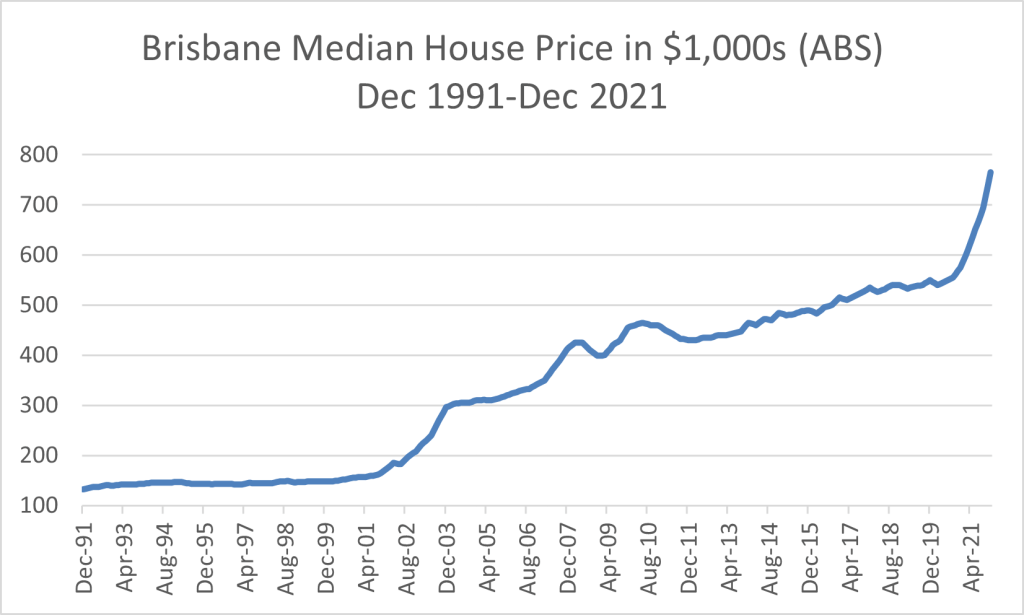

© Copyright Brett Edgerton 2023

“Reset”: Chapter 3 – Reset

Harry Truman, who had been Vice President for all of 82 days on the 12th of April 1945, had just adjourned the day and was sharing a drink in the office of the House Speaker when he got an urgent call to immediately go to the White House. Once there Eleanor Roosevelt informed him that her husband had died. Shocked and humbled, Truman asked if there was anything he could do for the family. In reply Eleanor asked if there was anything they could do for him as he was now the one “in trouble!”

President Truman was sworn in as the 33rd President of the United States of America that evening.

FDR died from a cerebral haemorrhage while he was at his retreat at Warm Springs, Georgia. Americans were heartbroken at the passing of their beloved President who many consider their own personal adviser and confidant for the past thirteen years through one of the most tumultuous periods of their short history as a nation.

FDR’s final words, prepared just a few hours before his death and intended to be delivered by radio the following evening in commemoration of the birthday of Thomas Jefferson, founder of the Democratic Party and author of the Declaration of Independence, summed up what was in his heart until his end:

“Today we are faced with the preeminent fact that, if civilization is to survive, we must cultivate the science of human relationships—the ability of all peoples, of all kinds, to live together and work together, in the same world, at peace.

Let me assure you that my hand is the steadier for the work that is to be done, that I move more firmly into the task, knowing that you—millions and millions of you—are joined with me in the resolve to make this work endure.

The work, my friends, is peace. More than an end of this war—an end to the beginnings of all wars. Yes, an end, forever, to this impractical, unrealistic settlement of the differences between governments by the mass killing of peoples.

Today, as we move against the terrible scourge of war—as we go forward toward the greatest contribution that any generation of human beings can make in this world—the contribution of lasting peace, I ask you to keep up your faith. I measure the sound, solid achievement that can be made at this time by the straight-edge of your own confidence and your resolve.”

The day that FDR died the US Ambassador in Moscow met with Stalin to inform him in person. In the official Embassy communique Ambassador Harriman said that Stalin was deeply distressed, holding his hand for 80 seconds before sitting and asking for details on how the President had passed. Molotov, the Soviet Commisar for Foreign Affairs, who had been present for most of the important conferences, pointed out that Truman was largely unknown to them, in part because he had not given many speeches from which his viewpoints could be ascertained. Harriman assured Stalin and Molotov that Truman was aligned with FDR’s program and “heartily supported all his views”.

FDR was laid to rest at his family’s estate at Hyde Park on the 15th of April. The previous day a military procession with over 500,000 people lining the streets brought his body to lie in repose at the White House before a private service. His wishes were to not lie in State and again proceedings were intentionally less ‘stately’ given the nation remained at war. Elliott and Anna were photographed at Eleanor’s side as FDR was interned in his mother’s rose garden according to his wishes.

Historian William Leuchtenburg described the scenes of the train carrying FDR’s body from Warm Springs until his burial:

“Hundreds of thousands of people, many with tears in their eyes, lined the train route carrying his body from Georgia to Washington, D.C., and then on to Hyde Park, to pay their final respects.”

Just over two weeks later, on the 30th of April, Adolf Hitler committed suicide alongside his wife Eva Braun in a bunker in Berlin as the Red Army rapidly closed in on them, and the German Third Reich unconditionally surrendered a week later.

To say that Truman had to make a steep learning curve is an understatement of monstrous proportions and normalises it, unwisely, with situations many other human beings have confronted, for the situation he confronted was orders of magnitude more complex and fraught than that which almost any other human being has had to contend.

Truman was unaware of the American Army’s Manhattan project to develop a nuclear bomb even though it was ultimately he who made the decision to unleash its catastrophic power on the peoples of Japan to end the war. On 6th August 1945 the first atomic bomb detonation on a human population was carried out by Americans on the city of Hiroshima. To underline the reproducibility of the technology, as some elements of the Japanese military remained resistant to surrender, another nuclear detonation was planned for 9th of August for the Japanese city of Kokura, but poor visibility – due to weather conditions and smoke from conventional bombing – meant that the alternative city, Nagasaki, would forever be remembered in history as the target for the second atomic bomb detonation on human beings.

Stalin, true to his commitments at Teheran and Yalta, had declared the Soviets at war with Japan on 7th of August liberating Manchuria and North Korea, along with South Sakhalin and the Kuril islands which became Russian territory (as agreed to in Yalta even if this could not be made public then as it would effectively be a declaration of war).

The US strategic bombing survey conducted in 1946 concluded that by the end of 1945 Japan would have surrendered in any case even without the US detonation of nuclear bombs or Soviet involvement.

Several weeks earlier in July President Truman met with the Allied leaders in Potsdam in Germany to finalise organisation of the postwar period in Europe. The result of the British election become known during the conference leading to Churchill being replaced by Prime Minister Attlee. It proved to be the only time Truman met Stalin in person, and his initial thoughts were that he could work with Stalin, saying “he is honest – but smart as hell!”

Some argue that FDR was naïve to Stalin’s objectives, or at the very least overestimated his own ability to influence Stalin. Others suggest that FDR, himself, had realised Stalin’s ‘evil’ intent immediately prior to his passing, but this view incorporates a stark cold war perspective that FDR could not have had at the time. Moreover, even if his concerns about Stalin’s agenda might have grown immediately prior to his death, so too had concerns grown about the actions in Greece of the British who he felt had undue influence in American intelligence and foreign affairs organisations leaving FDR not fully trusting in the intentions behind some advice he received.

The one thing that seems certain, however, is that there was a very real connection between the American President and the Soviet Marshall as WWII was approaching a conclusion.

The affect that authentic human connection has on actions and decisions reached is challenging to predict even for brilliant game theorists.

Having been privy to the inner workings of Government and his father’s deliberations and intentions, holding no immediate ambitions of his own for higher office, and concerned to see the world be reminded of what his father was leading Americans and indeed the whole of humanity towards by fighting the ‘survival war’, as FDR had come to refer to it, before the end of 1946 Elliott had published “As He Saw It” – his account of the many discussions he had with his Dad through the war period including at the three conferences he attended as FDR’s aide and personal confidant.

In summation, Elliott wrote:

“I believe that there is one fact which, once grasped and understood leads to clarity and appreciation of all postwar political facts. This one fact is that when Franklin Roosevelt died, the force for progress in the modern world lost its most influential and most persuasive advocate. With his death, the most articulate voice for integrity among the nations of the peoples of the world was stilled. More than that, for people everywhere in the world, he had been the symbol of America, and of freedom, on whom they had pinned their hope of liberation and a now world of peace and plenty; when he died, some of their hope died with him, and their faith.”

It is hardly surprising that some who may have been described by his Dad as “pin-striped pants boys at the State Department” disagreed with some of Elliott’s recollections, finding that the tenor of the book favoured the Soviets over the British. That will always be the nature of recorded history relying on perceptions of what was said and intended, especially when decisions reached during the period were so very consequential.

The leadership vacuum to which Elliott referred was inevitable after the passing of the American President who guided the nation for so long through such troubled times, replaced by a leader who was not only inexperienced, but to whom much of the organisation and operation of the war was unknown, including the Manhattan project.

More than that, with two leaders of the Big Three changing at such a critical moment in history, the potential for misstep or mistake was obvious even if all acted in good faith with the best of intentions.

The foremost physicist of the era, Albert Einstein, who had written to FDR in 1939 recommending that America develop an atomic bomb after becoming aware that the Nazis had already commenced a project with that aim, though who never contributed to the Manhattan project as he was considered by US Army Intelligence a security risk, and who had retired by the end of WWII, was amongst those who recognised the need for others to step up into leadership roles.

Einstein openly admitted his regret for recommending the US develop nuclear technology with the hindsight that the Nazis failed, and he continually warned against an arms race with the Soviets. Moreover, he argued strongly for a world government, telling the New York Times Magazine:

“Today the atomic bomb has altered profoundly the nature of the world as we know it, and the human race consequently finds itself in a new habitat to which it must adapt its thinking. In the light of new knowledge, a world authority and an eventual world state are not just desirable in the name of brotherhood, they are necessary for survival… Today we must abandon competition and secure cooperation. This must be the central fact in all our considerations of international affairs; otherwise we face certain disaster. Past thinking and methods did not prevent world wars. Future thinking must prevent wars.”

Stalin had long been suspicious of the postwar motivations of his Allied partners and believed the anglophone nations would collaborate against Soviet interests. Churchill’s strong continual desire to wage war against the Axis not from the west, nearest Britain, but up through the Balkans had confirmed the British agenda for Stalin (and for FDR). The anglophone nations permitting entry of fascist Argentina into the United Nations heightened Soviet suspicions and in early 1946 Stalin gave a speech in which he suggested that capitalism and communism were incompatible which the hawkes in British and US foreign policy interpreted as hostile.

The next month ex-Prime Minister Churchill gave a speech to students where he suggested “an ‘iron curtain’ has decended on Europe”, and a few days later President Truman demanded Russia pull out of Iran. In many ways, the west’s paranoia at an iron curtain in Europe became self-fulfilling as the cohesion of the Big Three imploded. That was symbolised by the building of a wall through and around isolated west Berlin, a part of the Federal Republic of Germany commonly known as West Germany, from communist East Germany as a part of the United Soviet States of Russia (USSR).

America continued to develop and test nuclear technology and built up an arsenal of nuclear weapons. Within four years of the end of WWII the Soviets also had nuclear technology, in part aided by information supplied by ‘insiders’ which heightened American paranoia. The momentum towards paranoia and divisiveness escalated and found little resistance from progressive political leaders.

The conservative right-wing of the Republican party had long been suspicious of progressive Democrats since the New Deal era under FDR. The 1946 midterms brought in Republican majorities in both the house and the senate which ignited red-baiting – discrediting a political opponent by accusing them of being an anarchist, communist, Marxist, socialist, etc. – which grew in virulence especially in America where it became known as McCarthyism and culminated in investigations by the House Un-American Activities Committee (HUAC) into ‘leftist activity’ in the movie industry and a similar investigation of the Army by Senator McCarthy’s parliamentary subcommittee.

‘The Red scare’, used especially effectively for political gain by future President Richard Nixon, lasted a decade into the late 50’s and was responsible for extreme paranoia and division in American society with a catch phrase of “Reds under the bed” insinuating that a high proportion of public figures and the general public were communist agents and/or sympathisers plotting or waiting to overthrow American democracy.

The economist John Maynard Keynes reshaped economic thought more than any other in the first half of the 20th century, and his policy prescriptions were critical to remobilising Depression-stricken economies and to post-WWI negotiations and renogotiating onerous reparations on Germany. Even when his prescriptions were not adopted by political decision-makers, more often than not over the course of time his ideas were considered correct or at least preferable.

Even though in very poor health due to his enormous work drive to contribute, Keynes was heavily involved in negotiating the new economic order for post-WWII. The 1944 Bretton Woods Conference, in the main, was a contest between the ideas of Keynes and those of Harry Dexter White, the most senior American official. The geopolitical ascendency of America allowed most of White’s ideas to carry the day and Keynes remained concerned that the power imbalance in the economic system overly favoured America, and he argued that insufficient attention had been paid to the economic development of poor nations which was critical to global stability and prosperity.

Keynes’ brilliance was widely appreciated, but most also found him arrogant. Although warmly welcomed at the opening of the International Monetary Fund (IMF) and World Bank, travelling to America against medical advice, he remained deeply concerned and disappointed with the outcomes from the Bretton Woods Conference, and is rumoured to have been working on a paper recommending the British not ratify it when he passed away on the 20th of April, 1946.

The American economist Dexter White went on to be the first US Executive Director of the IMF but in just over a year resigned abruptly and was implicated in Russian espionage including evidence of passing to a Russian spy network highly sensitive information from the State Department written in his own hand.

Hjalmar Schacht, the German economist and central banker who was influential in setting economic policy early in the Nazi period, had been arrested by the Nazis as a suspected co-conspirator in an elaborate attempt to assassinate Hitler in an explosion to stage a coup d’état on the 20th of July 1944. The conspirators aimed to negotiate a cease fire with the Allies, apparently at terms highly favourable to Germany inconsistent with their deteriorating position in the war. Although Schacht earlier enjoyed a good relationship with Hitler, who understood Schacht’s value to war preparations, his arrogant and forthright manner at expressing counter opinions to the way the economy was run for and through war had estranged him from the most extreme Nazis and Hitler had sidelined him in 1943 stripping him of any real authority. He had escaped execution by the Nazis by the end of the war, but within days of German surrender Schacht was arrested to stand trial in the Nuremberg denazification tribunal. He was one of only three to be cleared of charges and released, after cumulatively 4 years of incarceration, but was left broke and his association with Nazism left him diminished as a historical figure then in his 70s. He lived into his 90s in Munich with his much younger wife, Manci, with whom he had two daughters.

Leaving politics after his failed run for the 1940 Democratic nomination, FDR’s former right-hand man, James Farley, led Coca-Cola International for 30 years as Chairman of the board. Through political suasion, no doubt, in WWII Coke was included along with food and ammunition as a “war priority item” shipped to boost morale and energy of fighting men, and after the war the US government paid for Coca-Cola factories to be built and installed throughout Europe as a part of ‘rebuilding’.

While the Soviet Union’s iron curtain finally fell in Europe in 1989 as the economic and societal deficiencies of authoritarian communism became impossible to deny or repress, the capitalist democracies had not resisted the use of war to impose ideology within spheres of influence. Rightwing idealogues always suggested that USSR’s aggressive coercion had to be met with equal opposing force and so that besides the cold war involving nuclear standoff directly with the USSR, including some notable and terrifying close calls, the west was involved in almost continuous actual war against communism since the end of WWII including in Greece, Korea, a 30 year civil war in Vietnam (fought initially by the French and then American and other anglophone nations, and also involving Cambodia and Laos), as well as shorter conflicts in Cuba and Grenada.

A mindset of being in a continuous state of war, apparently the American ‘wholesome’ way of life under siege, resulted in a population that was either desensitised to the atrocities of war, or believed that it will always be necessary to defend the greatest lifestyle that humanity has ever devised, ignorant to the reality that if it were so virtuous and successful it would be sustainable without the bloodshed.

The enduring peace that was fought for in WWII seemed entirely forgotten. The only counter voices were the younger generations, and while they succeeded for a time in bringing an end to the forced conscription of young men from western countries to fight these wars, soon after leaving university they became mesmerised by the riches on offer to the fortunate in the capitalist system and in many ways became the most disappointing of all generations.

While it is true that nobody can ever know the counter factual of fighting against communist forces at that moment in time, predominantly in Asia, whether it resisted a momentum that might have spread like Nazism and imperialist Japan, logic and balance to policy was in short supply. Allies of the powerful American nation offered little in the way of objective counterbalance in their relationship. Instead, a cabal of mostly anglophone nations formed seeking to win favour and economic rewards from supporting America in whatever military conquest its leaders decided was necessary. These nations might even be described as opportunistic appeasers, and certainly the antipodeans have since British colonisaton felt insecure within the Asia Pacific and preferred to believe that they have had a security guarantee from the most powerful anglophone nation of the era – first Britain, then America – even though the guarantee by America has never been made explicit because, ironically, of latent American isolationism. 

By the late 80’s the mindset of the anglophone populations of the world considered the song “Born in the USA” an anthem for Americans, heartily joining in and singing loudly and proudly – especially – the line “sent me off to a foreign land to go and kill a yellow man”, in reference to the American Vietnam war, rather than understanding that it is ballad of regret at the cost of war, and wasted lives and political capital which could instead have been used to do good in the world which ultimately impacted the war veterans in terms of limited economic opportunity.

Moreover, emphasising this contradiction, while the performer, Bruce Springsteen, had the social conscience to write the lyrics, his business acumen and the wealth that flowed from the song limited his desire to underline their real meaning and moral underpinnings to his largely ignorant audiences.

Elliott Roosevelt is a largely forgotten figure in American history, as are essentially all of the descendants of Franklin and Eleanor Roosevelt. In many ways, Eleanor is as widely acclaimed for her contributions to American social culture through her contributions to civil and gender rights as FDR, and to broader humanity in being the first chairperson of the UN Commission on human rights and leading the drafting of the Universal Declaration of Human Rights. When Eleanor died in 1962, however, the influence associated with the Roosevelt name fell precipitously.

Coincidentally, Elliott’s final day in the military was V-J day. After the war he bounced around through jobs, marriages, and cities.

A postwar Senate committee investigated Elliott for his actions and involvement in a procurement contract for reconnaissance aircraft in mid-1943. It was alleged that an official of Hughes Aircraft had corrupted the process by excessively lavishing Elliott and his then girlfriend, Faye Emerson, with entertainment and gifts, even paying for their wedding at the Grand Canyon in December 1944, 18 months after the $39 Million contract had been awarded to Hughes Aircraft. In the two weeks ahead of the final procurement decision Elliott met extensively with FDR and Chief of the Army Airforces, General Arnold, and the latter was said to disagree with the choice.

Elliott represented himself at the 1947 committee investigation and presented evidence that he was on duty overseas on some of the dates when parties that he was alleged to attend took place. Denying the underlying premise of the allegations, Elliott told the committee that “If it is true that for the price of entertainment I made recommendations which would have in any way endangered the lives of the men under me…that fact should be made known to the public.”

Elliott was ultimately exonerated. It was not to be the final time, however, that Elliott’s character would be called into question in political hearings.

Always the favourite child of Eleanor, Elliott was assisted by her financially which may or may not have played a part in the family tensions that grew in latter years with siblings offering alternate views on family relationships to those which Elliott wrote about in books he wrote in the ‘70s.

For a brief period in the late ‘60s Elliott was mayor of Miami. He was linked with organised crime in his business activities and in 1973, after having moved to Portugal, in a Senate subcommittee investigation into corruption was accused by a mob hitman-turned-informant, Louis Mastriana, of attempting to contract him to murder the Bahamian Prime Minister Lynden Pindling in 1968. Mastriana alleged that Elliott, through a “mobster front man”, had paid him a $10,000 downpayment for the contract in retaliation for Pindling not granting a gambling license to an associate. Mastriana had a cheque signed by Elliott which he alleged constituted part-payment. Mastriana did not go ahead with the assassination plot because he believed he would not be able to get off the island without being apprehended. Mastriana also said that in 1970 the US Postal Service had wired him with recording equipment when he discussed with Elliott details of securities transactions.

Again, Elliott appeared in person and denied all allegations. No official actions were taken against him. Living in Portugal where he was breeding Arabian horses, he moved to England when civil war broke out in 1974, before moving back to America.

Elliott married 5 times and had 5 children with three wives, and adopted the three children of Patricia Peabody Whitehead whom he married last in 1980. They were living in Scottsdale, Arizona, in October 1990 as his health failed him. He had said, riley, that his final wish was to outlive his brother James. Elliott Roosevelt was 80 and had heart and liver failure.


Chapter 4 – A Future Of Our Own Making (Next)

Chapter 2 – Rementar (Previous)


Gained value from these words and ideas? Consider supporting my work at GoFundMe
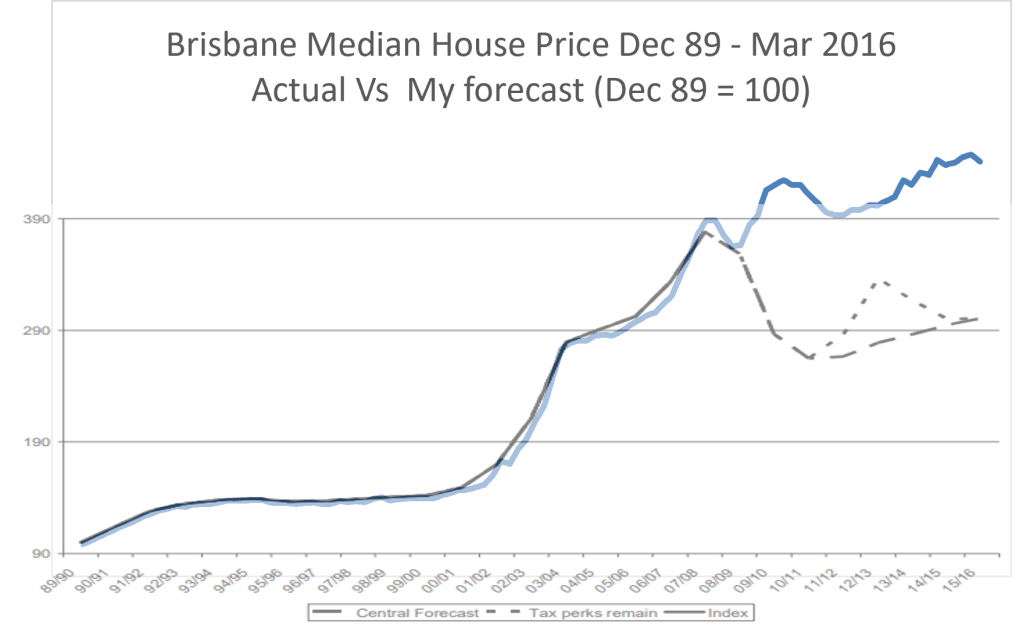

© Copyright Brett Edgerton 2023