I’ve been clear in my writing at MacroEdgo that I was raised to be racist within my family and my insular hometown community of Innisfail in North Queensland. Until the 90s most of the racism that I witnessed and was a part of (when you are 4 or 5 years of age and you say the ‘N’ word in playground rhymes, even if you don’t know the meaning, you are still a part of a culture perpetuating racism) was directed at the many First Nations and Pacific Islanders living in Innisfail. I do recall off comments by my brother in relation to a girl of Pakistani descent and her ‘difference’ was likely the focus of that high school taunting. Earlier Chinese families had assimilated – I now understand (from various writers) that pressure to assimilate was also through the coercion and example of their parents – and second and third generations of Italian, Greek and other European migrants were less ‘conspicuous’ than earlier generations and were included in all our friendship groups. Occasionally I would still hear in my family, however, racist stereotypes and imitations of earlier European migrants who struggled with language in a deeply derisive manner.
In my experience, while individuals were obviously subjected to racism and prejudice, Asian racism as a phenomenon was negligible in North Queensland from the ’70s through until Pauline Hanson arrived on the political scene in 1996. That was likely due to low numbers of newer Asian migrants in the regions. That changed overnight with the arrival of ‘Hansonism’ on the Australian political landscape with much of her vitriol in those early days directed specifically at Asian migrants.
My wife and I were married the year before and it was not long after the emergence of Hansonism that we had the experience of some in my large colonial family, who had come to our wedding, proudly proclaiming their support for her because “she’s just saying what we all think!”
It’s one thing to feel that your extended family are against your partner and your union as a couple, but families can survive that pressure if the young couple feel supported by those closest, especially their parents. That was not to be the case for us.
One example of feeling outcast was when we were at football at Callander Park and my cousin, who had struggled with inclusion in our proud pioneering family his whole life since he was the adopted son of my Uncle from his second wife’s earlier marriage, and had cried to Dad and another brother upset because he felt they had not accepted him, proudly told me he and his wife were Hanson supporters. Mum and Dad sat there and laughed while my wife and I felt singled out and hurt, and felt like crying.
Not long after this my sister-in-law over the Christmas period recounted a story from the shopping outing that day in Cairns with the women of our immediate family, including my wife, where she proceeded to describe how a shop assistant had not served her quickly enough for her liking, then calling the assistant an ‘Asian bitch!’. My wife immediately got up and left the large BBQ gathering with extended family in hurt and disgust and I followed.
Mum could not connect with our hurt and at first denied it was even a racist statement! For no other reason than trying to keep the family together for that Christmas, my mother came and hugged me after I walked away from that conversation crying, but I could feel that she was entirely devoid of empathy for me. In the morning, suddenly my brother’s wife was the one wronged, by having her racism pointed out to her, so that she was packing and not staying for Christmas. We were pressured to go and beg her to stay. If we didn’t, we would have been seen as the cause of ruining that Christmas and my wife felt so conspicuous in her difference that she just wanted the incident over as quickly as possible.
Ultimately we never spent many more Christmases together as a family, and while my siblings will try to put that blame on me and on one specific event, there is no doubt that much of their animosity towards me was a result of their racism. I have not been on speaking terms with my siblings for almost 20 years now, and when I approached them in recent years one final time to see if they were ready to move past things, my brother admitted that much of his animosity towards us stemmed from the ‘Asian bitch’ incident and he continually pressed me to admit that I had upset his wife by letting her know how upset we were by her racist outburst!
My sons have grown up not knowing their uncles, aunts and cousins, and have little connection with their North Queensland heritage, including with their grandparents. My siblings’ daughters have no connection with our family and the only knowledge they have of me is based on unkind narratives that have been created to save their parents and grandparents from examining their own actions.
Hansonism did not create Asian racism in North Queensland or anywhere else in Australia. Hanson did, however, validate that deeply ingrained xenophobia that has always been there and the truth is that no Australian politician since Paul Keating has authentically challenged that xenophobia to actually lead our society towards cohesion. All of them, Labor leaders included, have indulged in blame shifting and scapegoating of migrants and foreigners to save themselves from examination of their ineptitude in dealing with issues such as a three decade long housing affordability crisis.
My parents never actually supported Hanson politically, to my knowledge, as they expressed their far right conservatism through support for Bob Katter. That did not prevent them from absorbing Hansonism within their culture.
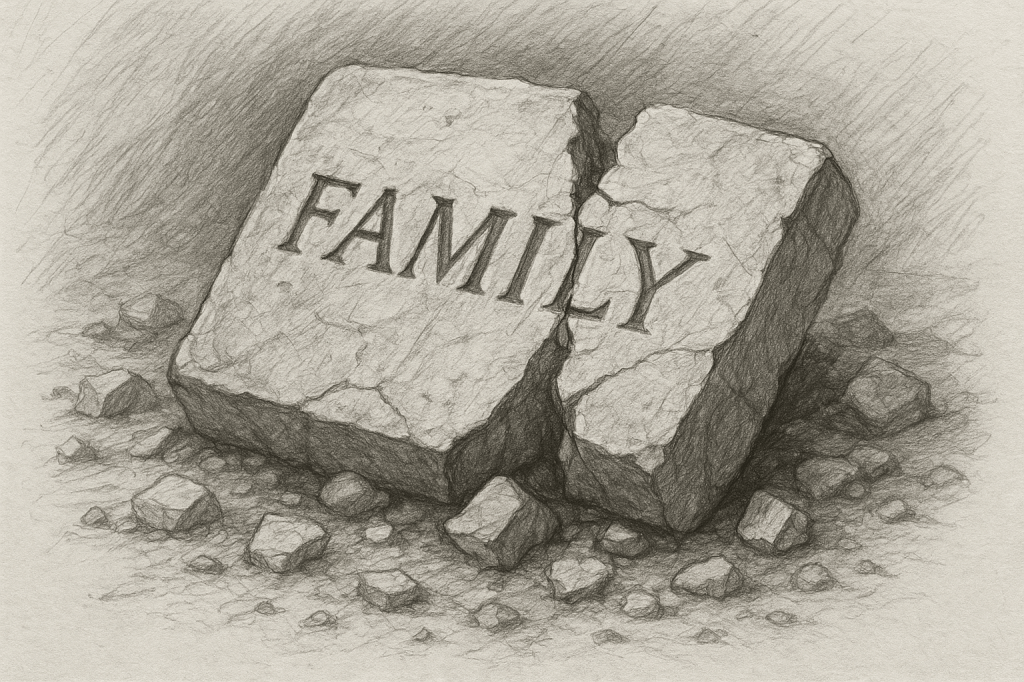
There were a lot of fissures created in our upbringing and Hansonism did not break apart my family, but it worsened the tensions by validating that ingrained racism which played a major part in our family utterly fracturing.
I have become progressively more disconnected, also, from my parents and I am now effectively estranged from them. For a long time I was aware of this chasm opening up between us where we seemed on opposite sides. I came to realise that Mum and Dad effectively felt in the middle, not between their children, but between their son and his family and the small insular community in which they lived. Ultimately they chose connection within that community and far right conservatism (especially Hansonism) over connection with their youngest son, their daughter in-law and their only grandsons.
I also wanted to pass on some experience of what it’s actually like to have been raised to be racist, and how it was that I came to want to unlearn racism. I know the feeling of that stiffening of the backbone in righteousness as you are about to say something racist, and I recognise it when I see it in others. Perhaps that righteous stiffening is peculiarly specific to racism. I see it in Hanson frequently. In fact, I think that’s the reason for her normal stiffened demeanour where it’s even travelled to that tight and bitter mouth.
The truth is that I realised that racism was wrong before I met my wife and I am going to share for the first time that very first moment when I truly realised it. I have said in my writing that I was racist when I went to university after just turning 17, but I gave no specific detail. Here it is, and I remember this so very well because it was a truly foundational moment in my development as a human being.
Now I’ve never been this specific before for one reason – I am truly and deeply ashamed of it. I wish I never said it. The truth is that I had heard my father say what I said very, very many times – within the walls of our home, and amongst friendship and family groups in Innisfail. Maybe First Nations people had even overheard him say it, not that he would ever have the courage to let his true opinions be known to them.
In a group of people sitting around the stairs of my college, University Halls at JCU in Townsville, in my second year Orientation Week I said, “Tasmania had the right idea because they killed all the Abos”. There it is. That’s my shame. I repeated something that I heard my father say since my earliest years on too many occasions for me to possibly even guess how many times I had heard it. I said Australia should have finished the job of genocide, and I said it because I had heard it said all of my life without ever seeing my father pulled up or challenged for making the statement.
As I was about to say those words I felt my back stiffen in the righteousness that it is my prerogative to make a stark comment; that I did not need to be polite or ‘politically correct’.
It’s a democracy, after all, and I have a right to be a redneck bigot if I want, right? Who’s to tell me that I should be so politically correct as to see all human beings as equal? That has always been the subtext of Hansonism. Now it’s wrapped in with a bit of woke-bashing!
The exact moment those words left my lips – that I brought that aspect of my upbringing into my current lived reality at university – everything changed. It was not for anything that was said to me, because nothing was said. Probably it was more impactful on me that I was not made to scramble to defend my statement because the shocked silence amongst those late teenagers there that night said so much. The rest was said in the tears that I saw well reflexively in some of their eyes so confronting was the statement for them.
That moment remained in my subconscious and was chewed around by it for a very long time. I was an insecure young man with a lot of hang-ups from a challenging upbringing and I was suppressing the trauma from stopping my father shooting himself and potentially me and other family members.
The question that my subconscious was struggling with was whether I wanted to be the type of person that hurt people with my words, even if none of the people present then were of First Nations descent. Imagine if some were, unbeknown to me, but that’s always been the dirty secret of the many racists in North Queensland – nice to their faces, but talk about them behind their backs, sometimes saying the most despicable of things. Gutless!
The result of that subconscious ruminating was that I ultimately decided that I did not want to be that person that hurt others with words.
I actually believe that if it came down to it, many xenophobic and prejudiced people would make different decisions over their attitudes if personally confronted with the reality of the pain they cause others through their racism, especially if they are younger and still flexible in their thoughts and habits. That’s why denials of racism are so strong, and others are reluctant to call it out, as if being called racist is more offensive than the racism itself!
Now I want to be clear that nobody in my family agrees with what I have said here. A few years before I fell in love with my wife, in my first year at uni, I developed a crush on an older Aboriginal girl at college. I don’t know why I asked because I knew the answer, but when I did ask my mother whether it would be okay with her and Dad if I brought home an Aboriginal girlfriend, the response was immediate and firm, “obviously we’d prefer it if you didn’t”. I always knew deep down in my heart that when I did bring home my future wife that she was only a bit more ‘preferable’. Being raised within my family, I also knew that in the small insular community of Innisfail my family would feel conspicuous in their ‘difference’ because there was a person, and then people, of colour in our family.
They say that they always accepted my wife. What choice did they have? I didn’t ask this time. I didn’t give them that power because I loved her so much, and I just hoped that they would love her, too. And they did, in their way – in a way that racist people ‘accommodate’ difference – by connecting with the individual without changing their overall view of the group (race, colour, religion, etc). At the same time, to protect my wife from hurt and to give my parents, especially, time to grow as human beings so that the initial tolerance of difference might develop into genuine acceptance, I kept from my wife and then my sons the depth of the racism that I knew my family harboured.
In that recent conversation with my brother he did admit, “yeah, I probably am a bit racist”, which was something. The reality is that none of them truly consider themselves racist and they continually accuse me of taking things too personally. They don’t understand, and don’t want to understand, that when they attack people who look like and/or have similar cultural backgrounds to my wife, and now my children, that they are also attacking my wife’s, our children’s, and our family’s identity. I did ask my brother if he would be offended if I said that someone was a dickhead farmer, and his visceral response showed he clearly took my hypothetical statement as an insult to his perception of identity, even though he was no longer a farmer. But his offense was overwhelming and it overshadowed the obvious point being made which was lost entirely on him.
The truth is, to even want to understand, you first have to care. Nothing stops people from wanting to care quicker than racism.
Finally, since I have been so very personal, which I do in the hope that it helps people connect with authentic emotion around actual events, it is probably worth putting down the exact situation with my parents. It completes the story for people to understand the impact of racism and Hansonism.
Although my father has made the more racist comments than my mother has – including, for example, saying to me a few years back “who would want to live next to Indians!” which cut especially close – I think my forcing him to confront and admit to the darkest moment in his life, and maybe knowing that I forgive him and that I am proud that my bravery gave him another 41 years and counting more of life, has maybe crashed through with him. The last time we spoke some months back he said that he wished I was there to give him a hand, which to be honest is about the nicest thing that anyone in my family has said to me in years. It’s not much but I have so little that I’ll take that little bit of expression of wanting to actually connect with me.
Mum, on the other hand, has made it clear that she will remain bitter towards me to the very end. She feels aggrieved that I have been public about the issues that have torn our family apart without acknowledgment that she would never have done anything about her growing separation from my family and I, anyhow, and that being public was about the only way that anything would ever be genuinely acknowledged as it forced her to accept that there was another version of events other than the one she was clinging to which blamed me for everything so that others never had to examine their own actions.
Going public on family issues is often scorned upon by others. You only need to see how Prince Harry and Meghan Markle have been so derided by many including but not limited to the far right. I believe that is more about the complex feelings most have with regards their own family relationships than the actual events that Harry and Meghan have revealed. Combining this with xenophobia towards their mixed marriage makes them highly visible targets for ridicule.
The simple reality is that public discussion of such issues is only done when it becomes clear that there is essentially nothing left to lose and it is the final Hail Mary attempt, and cry, of the excluded party to achieve reconnection before they finally accept that it’s never going to happen. For most of us there is also the hope that others will learn from and then be saved from the hurt that we have endured.
I will always love my parents and be grateful for them giving me the foundations to grow into the best possible version of myself, not perfect, but striving to do and be good to all others. I will forever be sad that they did not want to know or be connected with me, the person I grew into, because they lost the desire to grow themselves or to even be tolerant of difference. That is the true impact of Hansonism – it validates narrow-mindedness and intolerance, and causes division amongst people, even within families.
“We have learned that we cannot live alone, at peace; that our own well-being is dependent on the well-being of other nations far away. We have learned that we must live as men, not as ostriches, nor as dogs in the manger. We have learned to be citizens of the world, members of the human community.” President Franklin Roosevelt’s 4th Inauguration speech, as WWII drew to an end (he died before the atomic bombs were dropped.).
© Copyright Brett Edgerton 2026


You must be logged in to post a comment.