“Reset” uses a retelling of post-WWII history contrasted with two alternate histories to highlight the choices that humanity has made to arrive at a moment where regionally and globally humanity lacks the cohesion to address the serious issues that we together confront. By highlighting these divergences, told predominantly through the perspective of Elliott Roosevelt, the son of the great American President of that turbulent era, illuminated is the necessary path towards a more optimistic and kinder humanity which is necessary to overcome our challenges of which the climate crisis is foremost.
In Chapter 1: Rücksetzen, the first timeline, isolationists prevail in the 1940 US Presidential election so that America never enters WWII, thus creating a tripolar world at the end of WWII of post-Nazi Europe, Japan-dominant Asia, and a US-Canada alliance in North America, maintained by a cold war with assured nuclear destruction. Rücksetzen is the closest German translation of Reset highlighting the Teutonic nature of society in that timeline.
The second timeline, presented in Chapter 2: Rementar, resumes immediately before the 1940 Presidential election which FDR won followed then by the 1944 election as WWII is drawing to an end. On 12 April 1945 FDR has a health scare but recovers. FDR leads America through to the end of his fourth term thereby steering the implementation of his full vision for the postwar period.
This second timeline portrays a positive period with greater enlightenment and inclusion leading to vast improvements in societal equality within societies and globally. It is far from a utopia, but it involves kinder and less aggressive societies which are less based on domination and winning, and more on co-operation, inclusion, and open dialogue and thought. As such, pressing domestic and global issues are addressed by political and corporate leaders as they are detected by scientists, public servants, and other observant members of societies. Consequently, societies are more cohesive and it is almost universally agreed that, while clearly we are the most influential species ever on Earth, humanity has attained the knowledge and cultural wherewithal to live sustainably and deal with almost any unknown unknown that might be encountered as responsible custodians of the natural world.
Rementar is the closest translation of Reset in Interlingua, an international auxiliary language developed between 1937 and 1951 by the American International Auxiliary Language Association, highlighting the internationally inclusive nature of societies in that timeline.
For the third timeline the reader is brought back to 12 April 1945, the day that FDR died, and an honest, non-nationalistic portrayal of global and domestic events is presented. Titling Chapter 3: “Reset” highlights our contemporary challenges and the need to develop a vastly different character to society to place humanity on a path towards a better and brighter future.
Chapter 4: A Future Of Our Own Making; A father and son fireside podcast is reminiscent of the fireside chats that FDR was famous for during the Great Depression. It provides contemporary context to the current social and environmental crises we confront, while providing a parallel to that earlier difficult period.
The father and son discuss how the features in societies that were present in the early 90s – where the timelines finished – have become entrenched. Factors that have caused this, and ways that humanity could be led back towards the brighter path, are discussed in forthright yet warm and compassionate terms paralleling the relationship between FDR and his son Elliott. Topics discussed include; “Global Inequality”; “Capitalism at an extreme”; “Racism and prejudice – personal experiences”; “Corruption of political processes”; “What separates modern capitalist societies from fascism?”; “How have we humans managed to progress through so much division?”; “The best vaccine against crises is social cohesion”; “Quality globalisation”; “bell hooks showed us how to set ourselves free”; “A changing relationship with work and ourselves”; “Revisiting forgotten ideas”; “The United Nations”; “Projects of vainglorious men”; and “Towards a new universal greeting”.
Chapter 6: “Roosevelt Weather” concludes the story of Elliott Roosevelt and discusses the waning influence of the Roosevelt family in American and broader human society.
On MacroEdgo the complete “Reset” story is available for download in a Word document.
Available to download in toto also is “Reset”: The Movie Treatment which tells the same story in the same fashion but is condensed especially in the “Remantar” timeline and in the “A Future of Our Own Making: A father and son fireside podcast” to be presented to members of the movie industry with the aim of the story being made into a trilogy.
For me this story took root when I bought from Amazon “Speeches That Changed The World” (compiled by Owen Collins, Westminster John Knox Press, 1999) while I was living in Europe in 2001-02. I remember being awestruck especially by the First Inaugural speech by President Washington and his humility, integrity, and authenticity stuck with me. Although it was not published in that book, inexplicably, during this period I also read FDR’s Fourth Inaugural speech and his words of strength, optimism, and love for humanity impacted me deeply at a time when I was undergoing a period of intense personal development.
These were lessons in the power of the written word as spoken at an auspicious moment in history by a great leader.
I visited the site of the Dachau Concentration Camp first in 1998 when I spent a few days touring with Finnish colleagues and friends after we had attended a conference at Augsburg in Bavaria. They did not join me at Dachau as they explained they felt a great sense of shame because Finland was a Nazi ally. Then living in Munich in 2002 I visited Dachau numerous times as I insisted any Australian (especially family) who stayed with us must go there. It is heart-wrenching, for certain, but for some reason there I have always felt more of the light from the love of humanity shining through and over the darkness. Even though the Nazis meticulously and systematically categorised and divided their prisoners as indicated by ‘badges’ sewn on their prison uniforms, ultimately, they were all human beings, sometimes forced into desperate decisions, but more often showing miraculous altruism in their common goal of survival.
Then as many in the Western world objected to the extension of American-led operations in the Middle East into Iraq in early 2003, and even though I was a vulnerable early-career research scientist returned to my home nation without a job, thus unemployed and working tirelessly to develop a job for myself through research grant writing, to my professional email signature I appended the passage from FDR’s speech that appears twice in this text (in the second instance I intentionally degenderised the quote).
It was not a time to be silent or ambivalent.
I have used that same quote on my email signature almost continuously for 20 years and even though at that earlier time I would frequently have someone respond by email along the lines of “how far away from that are we now!”, to me the words remain every bit as relevant as they have ever been over those 20 years, or indeed the almost 80 years since FDR spoke them.
One of my first posts on MacroEdgo in December 2019 was a reproduction of FDR’s Fourth Inauguration speech in full, and soon after that I purchased a copy of “As He Saw It” by Elliott Roosevelt, the son of FDR, published in 1946, and I typed and posted the entire introduction on MacroEdgo in February 2020.
Introducing that extended quote I said:
“Elliott Roosevelt explains why he was the only person who could give an accurate depiction of events, negotiations and deals brokered, and his own father’s viewpoints on these. I think most would agree that a loving son would faithfully seek to have his father’s vision for the world remembered accurately when events transpired which made it clear that promises were broken and that vision was not being enacted.”
Perhaps in some way wrapped up in my own complicated relationship with my father, I always felt there was a duty upon me to remind humanity of these words and events for their enormous contemporary context. However, that would have to wait as I felt an even greater duty to share what I understood about the challenges that a newly discovered coronavirus highly pathogenic to human beings would present to our societies, and Elliott’s book remained half-read on my bedside dresser covered in a deepening layer of dust as I rapidly passed 100 posts on MacroEdgo, many concerned with COVID-19, but many also dealing with the issues discussed in detail herein in “Reset”.
As 2022 drew to a close I shared on social media my cautious optimism that “perhaps 2023 will be when we truly begin to feel ‘normal’ again”, in relation to the pandemic, and the dark tunnel that I and my family had been forced to walk and endure by the unscrupulous acting upon my love which we solved for ourselves, so I was in a place to look forward and seek to produce a more enduring impact for society than I had previously with any of my earlier writing.
After not working in paid employment for nearly 20 years, as I am a stay at home Dad, I applied for a job to work in an organisation committed to pressuring corporations to act responsibly especially in responding to climate change. That act crystallised my preference to not be ‘restricted’ to one organisation or to a subset of the problems humanity faces. Unsurprised when I received notification of being unsuccessful, I was also relieved as I had already commenced my writing of “Reset” in earnest.
“Reset” transports the reader back to World War II to feel the elation and relief that the world had escaped tyranny and disaster, and to open a window to how it felt for humanity to be on the cusp of brighter future than anyone had dared to dream for a decade and half since the 1929 collapse on Wall Street which ushered in the Great Depression.
The deeper questions “Reset” poses is whether we human beings have made the most of the opportunity that we made for ourselves from the sacrifices of many, and if not then why not, ultimately to propose a way back towards a brighter future for all human beings – a Reset.
The story is told through the eyes of Elliott Roosevelt, the son of Franklin Delano Roosevelt, ‘FDR’, and the author of a number of books where he explained his perception of developments from his unique viewpoint, drawing on his father-son relationship with one of the most important leaders of the modern world.
This emotional teleportation is achieved by presenting three timelines from the mid-1930s to early 1990s. Societal characteristics are naturally different in each timeline dependent upon decisions taken by leaders and within broader humanity, and economic features are critical.
The first timeline is dark but not nearly as dark as many other alternate histories around the outcome of World War II because in this story the extremists were eliminated by more moderate forces, and the American experience – though isolated – is even ‘rosy’; the second timeline is the brightest highlighting the most optimistic timeline under the extended steerage of FDR; and the third much closer to the first than the second, in fact it is our modern history, and it is followed by a no-holds-barred discussion of what is required to get humanity back on the track towards a more optimistic future.
Elliott’s own path, also, leading to different ‘versions’ will also be dependent on the decision he and others reach, and influential economists of the time, especially Hjalmar Schacht of Germany and John Maynard Keynes of Britain, are also key characters sometimes with vastly different outcomes in their lives dependent on broader circumstances within humanity.
Key dates, especially deaths of important characters, repeat through the timelines imbuing a sense of destiny.
The concluding part focuses on a potential future still within grasp, but only just, in the form of a father and son podcast somewhat reminiscent of the fireside chats that FDR was famous for during the Great Depression. It provides contemporary context to the current social and environmental crises we confront, while providing a parallel to that earlier difficult period.
The father and son discuss how the features in societies that were present in the early 90s – where the timelines finished – have become entrenched. Factors that have caused this, and ways that humanity could be led back towards the brighter path, are discussed in warm and compassionate terms paralleling the relationship between FDR and his son Elliott.
This story is the most important to be told at this moment in time.
It is the story that humanity needs to hear right now, and it can’t wait.
There have been other engaging pieces spanning non-fiction, documentary, science-fiction, and outright fiction which have had impact, certainly. But none has put the whole story together – instead we talk about actions of people within societies without truly highlighting the ‘why’.
If we can understand the ‘why’ as well as the ‘how’ we came to be in this position, the keys to doing the best we can from here become clear and harder to ignore.
Then there is a chance that we will leave all in the future generations a semblance of the quality of life that previous generations, especially in rich Western nations, have been fortunate to experience.
Besides the influences already mentioned, in the early stages of writing I bought and read “Confessions Of ‘The Old Wizzard” (1956) By Hjalmar Horace Greeley Schacht. Midway through writing I bought and read “Economists At War: How a handful of economists helped win and lose the world wars” (2020) by Alan Bollard, and as I completed writing I bought and read “Hitler’s Shadow Empire: The Nazis and the Spanish civil war” (2015) by Pierpaolo Barbieri. All of these helped me considerably in honing my historical understanding of events and providing finer details, but most importantly they confirmed for me that my ideas were sound and that my alternate histories were plausible.
Then as I finished writing I bought and began reading “Utopia: The influential classic” (2021) by Thomas More with an introduction by Niall Kishtainy. It was the first time I had read More’s classic written 500 years ago, and here I must make a serious confession which is a pointer to my (almost non-existent) literary education and my broader outlook. Truthfully, I am not what would be commonly considered ‘well read’ at all. Moreover, I have intentionally avoided reading the classics because I wanted to be certain that my thoughts were my own, well as much as we can in a media-saturated world where ideas of earlier thinkers pervade common social norms and thought along with their continual contemporaneous adaption. Undoubtedly this speaks to a certain level of arrogance on my part and a strong desire to be ‘original’ indicative of my natural contrarian impulse.
I found it fascinating to compare More’s thinking, he heavily influenced by classic Greek and Roman philosophers, with mine in “Reset” and specifically the tug of war through human history between wealth and power on one hand and on labour on the other. Moreover, reading More’s Utopia made me all the more confident in saying that herein I have not proposed a utopia in the second timeline nor in the fireside podcast, but a realistically attainable world.
Having said that, I realise that the features for a better humanity that I propose, many of which others no doubt have before me, if more disparately or outside contemporary context, will not be instantaneously, and are even unlikely to be rapidly, implemented. I do believe that these features encapsulate the general direction of human progress and I expect that from the vantage point of 500 years in the future most if not all of what I have described will have come to pass. In actual fact, I would expect that much of it will be in place in under 80 years as the next (Gregorian) century dawns, in large part because it needs to be for humanity to continue to progress socially and technologically.
As a thinker – in modern parlance, a thought leader – I admit to continuous frustration for how long it takes for the masses to catch up, and I lay a large part of that blame at the feet of the human beings elected and entrusted to lead, especially when so much damage is being done to human beings and to the natural world in that delay.
I also made extensive use of publicly available resources via the internet including Wikipedia.
All text was written and researched by Brett Edgerton.
Quotes in the ‘Historical record’ sections are mostly taken from “As He Saw It” by Elliott Roosevelt published in 1946.
All pencil sketches were produced by generative AI (Dall-E) from text prompts by Brett Edgerton.
On MacroEdgo the complete “Reset” story is available for download in a Word document.
Available to download also is “Reset”: The Movie Treatment which tells the same story in the same fashion, but is condensed especially in the “Remantar” timeline and in the “A Future of Our Own Making: A father and son fireside podcast”, to be presented to members of the movie industry with the aim of the story being told in a trilogy.
But you need to be honest with yourself above all else
I think it is only natural that people want to believe that they are good contributors to humanity. But what to do when humanity appears to ‘turn on you’, once working for an employer and/or doing a role which you perceived many around you in society valued, now feeling almost like a pariah?
In such cases people often argue the case for their employer, increasingly erratically as the writing is on the wall – after all, as a lay person, how can you even begin to argue against human induced climate change when 99.9% of the human beings on Earth who chose to specialise and spend their life understanding and researching the relevant science are united against those views?
We human beings are wonderful at seeing what we want to see, and not seeing what we don’t, even in the face of overwhelming evidence to the contrary.
That is exactly why scientific practice incorporates processes to eliminate biases, overriding impulses we typically submit to in our normal lives.
I can understand that there is a desire amongst those who work in oil and gas companies to believe that they are so safety conscious that they would not continue to engage in activities that put the whole of the world at risk. From many I have heard examples of the extreme lengths that such companies go to to report and manage safety issues.
But those who are prepared to be honest to themselves will realise very significant contradictions.
In one such office that on occasions went to extremes on safety and wellbeing, like instructing adults on how to travel to work safely, there was a woman who was made extremely unwell by the misogynist, racist and prejudiced character of the workplace culture, and senior executives – even the CEO of this multinational company – knew of her challenges, which were reported through official grievance channels, but NOTHING was done to address the issue, prevent her condition from worsening, or assist the woman to regain her health.
Others suggest that perhaps climate change observations are really only now being detected because of this western, cautious mindset, and that these changes (like increased incidences of climatic events such as severe cyclones and droughts) might not have been otherwise detected.
Yet these are hardly subtle or minor events, and the science is damning.
The point is that even in apparently sophisticated businesses, people will only see what they want to see, and the culture within the business will have a large impact on what its people actually want to see.
Oil and gas absolutely remain necessary for human society, but for ours and future generations to be healthy and happy or content we know we must significantly decrease its usage and quickly.
If you work in the oil and gas industry, and your workplace culture is one of compassion and inclusiveness, and you have confidence that your business is working towards an energy transition, then you can hold your head high knowing you are serving humanity well.
If after honest reflection you know it to not be the case, then you need to consider your actions e.g. you can influence from within or depart for greener pastures.
A high income cannot extinguish a guilty conscience…
Gained value from these words and ideas? Consider supporting my work at GoFundMe
To those who argue schools should not have closed – with full hindsight of what happened through the COVID pandemic rather than in the heat of moment not yet having a clear indication of the infection fatality rate (IFR), nor lifestage susceptibility variances, let alone long term implications from single or multiple infection, which we are still learning – I suggest reading this article quietly and reflecting.
Then realise that the next pandemic pathogen will have different characteristics.
The one thing I believe we can all be grateful for about COVID is that impacts on young were not so severe.
But that was not the case in 1918.
It is very common in epidemic disease that vulnerable lifestages – the very young and old – are impacted more severely.
Running retrospective reviews are only worthwhile when not run with pre-determined outcomes and/or subconscious bias – that may be the case in some commentary I have read.
Implying anything about how we manage in the next pandemic all-of-life risks to young people – including mental health, education, and so on – from the COVID pandemic must be done very cautiously.
When we inevitably face another pandemic, all issues, again, will require deep consideration in real-time, and it would be best done without carrying over false narratives.
Still think that in the next pandemic schools should not be closed unless and until we are certain that it is necessary to protect the life and long-term health of children?
What is always the case in a pandemic is less healthy individuals living in environments which increase the likelihood of exposure are more severely impacted.
For disadvantaged children to make use of the education all progressives desire strongly for them to lead better lives than their parents, they must first survive, and better survive in good health without long-term health issues.
In the heat of the pandemic it was suggested by some that people like me self-identifying as progressive belied our conservatism as evidenced by the biosecurity measures for which we argued.
Simplistically suggesting that somebody who would argue for closing borders, for example, notably damaging the university sector, is conservative without any consideration of the context is intellectually rigid, and together with the inherent self-interest, is in actuality indicative of conservatism.
Australians have a great deal to be proud of in the way we responded to the COVID pandemic, and those who followed me at MacroEdgo, or have since acquainted themselves with my writing of February 2020, know that the strategy for which I argued strongly was what delivered this result – using our geographical advantage and biosecurity know how to protect as many lives as possible while we waited for our brilliant scientists to provide protective vaccination.
Who else remembers Morrison saying, with exasperation, something like “There are some who argue that we should just close our borders and wait for a vaccine!”.
That was me he was talking about. I don’t say that I was the only one, but you will be hard-pressed to find others saying so publicly in a verifiable manner.
The Albanese Labor government can acknowledge this because we all know that PM Morrison was dragged kicking and screaming against it all the way – and if they need support, just look at more of my writing including my open letters to Morrison, as I held him to account even when left of centre media fell in behind him (just when he was beginning to gather his ‘extra ministries’).
The one aspect of my strategy that was not adopted was to renounce vaccine nationalism because, as a progressive, I spurn nationalism in all its forms.
Sadly many who consider themselves progressive really lost their way on that one!
If the hard and fast lockdowns perfected in the Labor states was followed in NSW, we could have continued to maintain biosecurity protection of our citizens for a few more months – while planning for very rapid vaccine rollout prior to Winter 2022 – allowing our nation to be global humanitarians vaccinating more of the global poor.
It was at this point in time that Mr Morrison tried out one of my phrases – “it’s not a race” – and we know how that worked out for him, because he had not developed any of the reasoning for why we should not race to vaccinate as I had done.
I was disappointed that Labor chose to take full political advantage of this, but that’s politics for you… and I am in no doubt that in this case some will argue that the ends – of getting rid of a societally damaging PM – justified the means.
However, it is a shame that so many self-labelled progressives flipped to such a strongly conservative stance… touché 😉
Gained value from these words and ideas? Consider supporting my work at GoFundMe
Those truly seeking productive workforces need to fit a bell curve to work tasks – not workers – to eradicate value-destroying, demoralising work
There has been much talk recently of how organisations still adhere to the Jack Welch strategy of fitting a bell curve to performance of a workforce to pressure employees to increase productivity.
A manager at Activision Blizzard quit when he refused to mark an employee’s work performance down to fit a bell curve based on a stacked or forced ranking system.
Many executives say they apply this employee ranking system even while understanding the negative impact on employee morale and health, having a deleterious impact on longer term productivity, and thus being counterproductive to the bottom-line objectives of the organisation. This is all proven by research.
When this forced ranking system intersects with unconscious bias and outright prejudice and racism, well the outcome is obvious and the consequences are only now being openly discussed. No doubt it is an important factor in why 6 in 10 woman of colour in Australia experience discrimination in workplaces.
With unionism long threatened with extinction, and through a prolonged period of Extreme capitalism where white collar employees have been convinced to trade increasing proportions of their best time and energy of their lives for envy-producing goods (status symbols and experiences), executives and managers seem bereft of other ideas to wring more production out from their employees.
Well there is a really, really obvious strategy to improve productivity, but very few Executives or Managers have the mental framework to recognise it let alone implement it.
Below I explain what is this ‘miracle’ strategy to improve productivity and why it is that most executives and managers simply don’t ‘get it’ even though most in the lower levels of hierarchy understand it implicitly.
Q. So what is this miracle strategy to increase productivity?
A. Apply that bell curve (of distribution) to all of the work tasks that managers’ subordinates perform, not just to regular tasks in a prospective or planning manner, but also in a retrospective manner to capture all of that ad hoc work – which I call ‘just in case’ work – to identify wasted effort on tasks that add little or no value to the bottom line outcomes of the organisation, or even detract from it.
The importance of collecting data on the ad hoc work cannot be overstated because it is in this once fertile field that the toxic sludge from a half century of increasingly extreme capitalism built on unrelenting self-interest is buried; it captures the work performed ‘just in case’ a manager might have a chance to impress those who might have an influence on their career advancement chances, or alternatively to quell the tirade of an overbearing, bullying superior to survive another day.
I say once fertile because that was where the nuggets of value used to lie in a workforce that was not overworked and overwrought from organisational restructure after restructure in the name of increased productivity which in reality destroys it because workers are burnt out and do not have the bandwidth to carry out necessary tasks to the best of their ability let alone have the energy and clear-headedness to notice those rare but oh so precious golden opportunities to add value for the organisation.
The most surprising of all of this is that it is not subtle or ambiguous.
It’s not like it hasn’t been discussed, either.
That is why there have been books written like “Bullshit Jobs” by David Graeber and “The No Asshole Rule: Building a civilized workplace and surviving one that isn’t” by Robert I. Sutton.
How much work – either ‘bullshit’ or ‘just in case’ – is performed just for each level of the management hierarchy to claim some level of ownership – and credit – over it, but adds no or minimal value to the output?
How much work is performed in haste at the behest of managers that ultimately is edited out of a text, or skipped over quickly in a presentation due to time constraints?
If it is not going to make the cut down the track, or is deemed insufficiently significant enough to mention, then why was that call not made earlier to cut it, preferably filtered out by the manager immediately who thought of it recognising that the level their group is currently working at means that a high bar for potential value-add should be applied to what ad hoc work they forward on to their subordinate group.
The reality is that nobody knows how much pointless ‘bullshit’ and ‘just in’ case work is done for ‘asshole’ managers, managers scared of ‘asshole’ managers, and just plain lost managers trying to survive in a system that they feel controls them rather than vice versa.
Interestingly those data never seem to warrant collection.
I would point, however, to the success at improving productivity by organisations participating in trials of and/or switching to 4 day work weeks and/or reduced employee work hours without pay reduction.
Note also that organisations open to such changes in employee conditions are likely to be some of the better employers, raising the likelihood that workplaces with cultures less open minded to employee work-life balance would likely enjoy even greater productivity fillips.
I know I hardly need to give examples of these behaviours because everybody who has read to this point will have been flooded with recollections of (probably) both their own actions and those of their managers past and present.
But people like me (having been out of the workforce for 20 years) and Brian Birmingham (the manager who quit his job at Blizzard Entertainment) are relatively rare nowadays in being prepared to speak out openly as most fear implications to their careers. So I will give a personal example.
One of my few genuinely paid ‘gigs’ as a scientist (i.e. with a professional salary rather than subsistence level stipends and fellowships) was as a Government biosecurity policy risk analyst and I was recruited by the head of animal biosecurity after she had completed a one year sabbatical in the group where I completed my PhD. She was a strong, intelligent woman, and at a personal level I enjoyed her company. But professionally she was incredibly controlling even though she was very senior, so much so that she would literally re-write everything that came out of the unit. At the time I had published a widely acclaimed PhD thesis, and at least 10 peer-reviewed journal articles as well as consultancies and magazine articles, and was frequently praised by reviewers for my writing (which was intentionally more concise than my writing on MacroEdgo). None of my immediate managers did this, nor the person who replaced her. It was a complete and utter waste of her time and mine, it was demoralising to be treated in such a way to mechanically sit there and carry out her editing exactly (because it was all done with red pen on typed pages), and it added no value whatsoever to the output of the unit.
The documents were no better or worse, just different. All it did was utterly stamp her mark on the output of the team and put everybody in their place.
In truth having taken the time to write that I now feel it is petty and of limited value. But that is a reflection of the nature of what occurs, and again – this happens to everyone, in one form or another, and it is petty and pointless!
These behaviours destroy productivity over the short, medium and long term.
To the bell….
It is my strong contention that if a distribution were fitted to the quality (in terms of potential value-add to the bottom-line outcomes of the organisation) of tasks asked of employees in most contemporary organisations it would have a strong positive skew as shown below.
Figure 1: Positively skewed distribution of the potential value of work tasks asked of a theoretical ‘typical’ employee – the distribution has a long, fat tail to the right comprising tasks of increasingly marginal and questionable value.
This graphic is taken from The Wall Street Oasis website with the accompanying description:
In investing or finance, a positively skewed distribution tells us that an investment or portfolio is expected to experience frequent small losses and few large gains.
In this case we are talking about investments in human capital in the form of employees’ time, and even more critical, their energy.
Does that positively skewed distribution not explain the work experience for very many?
This sort of statistical comprehension is taught in all business schools. It’s taught in first year undergraduate degrees, for Pete’s sake. It’s Finance 101!
So here’s the thing – if all of this is so obvious, why don’t all of these MBA brightsparks just change and start implementing a bell curve to the tasks they have their subordinates carry out rather than to the rankings from their perception of their subordinates’ performance to improve productivity?
First observation, of course, is that fitting a bell curve to performance is a top down process, whereas fitting a bell curve to tasks, including retrospectively, has a large element of bottom up to it, and that runs counter to the power structure in modern organisations.
Related to this point, Executives and Managers are products of this current system and most of us humans have a natural aversion to doing away with a system that we have succeeded within. Moreover, maintaining the system produces more of the same types of managers ascending the escalator behind them, and that gives them comfort and embeds affinity bias.
Most importantly, though, bell hooks was entirely correct when she highlighted the significance of and corrosion caused by domination within our contemporary societies and at work, including by women over other women, emanating from our historical system of white-supremacist patriarchy (see relevant quotes in this article and preferably read “The Will To Change: Men, masculinity and love”)
The type of significant culture change that this represents is always resisted because the ranks of executives and managers are full of the products of the existing system, and that is a very significant problem to overcome.
Those who truly want to achieve productivity gains, however, need to weed out the Managers who select for mini-me aggressive types, who for example, recognise themselves in actions which place a manager’s self-interest ahead of their subordinates and then smirk (almost in admiration) when informed by that subordinate.
Leaders who weed out the assholes, no matter how highly placed in the hierarchy, will be rewarded with significant leaps in productivity which endures because it is the product of a cohesive and engaged community of employees.
What will be observed is that when a compassion imperative supersedes the profit imperative, productivity, and thus profits, are actually improved as a consequence.
Pre-empting the disagreement… (Note, this is getting right into the reeds, so readers without a strong intellectual interest in this area might prefer to skip to the final passage for some masterful lyrical imagery…)
In conducting my desktop research and due diligence for this post I came across an interesting riposte of David Graeber’s “Bullshit Jobs” thesis by researchers from the universities of Cambridge and Birmingham which they claim counter many of Graeber’s main points.
Their research suggested that indeed there was significant psychological harm to someone from working in a role that they perceived as being pointless.
However, the researchers largely discounted all of the other points of Graeber’s thesis finding that surveys show only around 5% of workers in European countries feel that they were not doing useful work.
I would hope, having read to this point, that the flaw in their argument is apparent.
What the researchers actually did was bury down into workers who answered ‘rarely’ or ‘never’ to the statement: “I have the feeling of doing useful work”.
I am not surprised that only 5% of workers feel that they do work that is of no use. Not at all, because, as the researchers agreed, that is really destructive to mental health so people who feel that way are going to try to move on before long to another role. In nations with social safety nets they will likely quit or find another way to exit the job.
More importantly, however, note that I talk about pointless tasks not a job as in a position or role occupied by an employee. Even ‘jobs’, as in ‘bullsit jobs’, can be a synonym for ‘tasks’, as can the term ‘roles’.
But these researchers approached the questions based on the employee’s whole job or role as the empirical unit for examination, even though in their journal publication they frequently quoted Graeber’s comments in relation to ‘tasks’.
The reason why Graeber’s thesis captured so much attention is because many, many people – most likely very nearly everybody – does, and has often done, tasks (or ‘jobs’ or ‘roles’) as employees which they considered pointless.
Note, then, that the research did not examine the proportions of employees who felt that some of the tasks that they performed were pointless, so of course there was no opportunity to analyse proportions of their tasks that they performed that they perceived as pointless.
The problem with this analysis is highlighted in the below passage from the “Methodology”.
Figure 2: First paragraph of the “Methodology” section from Soffia, Wood and Burchell (2019) “Alienation Is Not ‘Bullshit’: An Empirical Critique of Graeber’s Theory of BS Jobs”. Work, Employment and Society, 36(5), 816–840
The researchers apply a very absolute measure for a ‘useless’ job – essentially the feeling of being totally and utterly devoid of use, or extremely close to it – which in turns sets a very, very low bar for what is a ‘useful’ job, that being the employee sometimes has the feeling of doing useful work. They then go on to argue that they are not (further) lowering the bar by discounting “don’t know” responses, asserting that they achieved some sort of equivalency with Graeber.
I simply do not agree with the authors. These words are meant to create conversation, and Graeber’s certainly did, a point which the authors ultimately seem to appreciate. Okay, whenever anybody writes like this it is impossible to scrutinise every single sentence, phrase and word for law-like precision. Graeber’s words should not be approached as a legal document to be proved beyond a shadow of doubt. Neither, do I suggest, they should just be accepted at face value. It is the thesis that matters and this research, in my opinion, does little to address the true underlying concept or spirit of the thesis. And, importantly, there are some data there that could be drilled down into by the authors, unfortunately that was not done.
Moving on, noting closely that this research was based on pre-pandemic data, it was also interesting to observe that one major issue of apparent contradiction with Gaeber’s thesis was that he listed garbage collectors, and cleaners and helpers as having critical non-BS jobs whereas the survey found that these workers ranked highly for feeling that they did useless jobs (almost 10% in some cases which I find truly saddening).
I would suggest that this shows a level of self-perception, as a reflection of broader societies’ perceptions, on the value of these roles, and this whole issue was put under the spotlight early in the COVID-19 pandemic. It would be interesting to see whether these workers’ self-attitudes have changed through and after the pandemic.
Moreover, we cannot ignore that much of this attitude is associated with a dismay that society does not value these roles significantly enough to ensure that remuneration reflects the value they add to society in comparison to other roles occupied especially by white collar workers. As Prof. Michael Sandel told us in his meritocracy discourse (discussed on MacroEdgo here in Part 1 and Part 2), it is not just the elites through this long period of Extreme capitalism (my words) that have come to believe that their efforts truly merit their fortunate position within society, but less fortunate people have been forced to accept widening wealth outcomes which have gradually infiltrated their own perceptions of their value to society so that they (sometimes painfully, other times angrily) accede to the view that the situation is a result of them not ‘achieving’ or being ‘meritorious’.
Interestingly the authors arrive at a similar viewpoint to mine, however, when they attribute the social suffering from the feelings associated with useless work to social interactions at work, especially with managers, finding relevance for Marx’s writings on alienation.
It is disappointing that in their study they set the limit for that suffering too low by discounting people so disengaged they did not know whether they ever had the feeling of doing useful work and those who only sometimes have that feeling.
I do not consider that this discourse by the UK researchers dispels what I have written on the subject, nor the underlying premise within Graeber’s thesis, and certainly not Sutton’s discussion of assholes with which they may largely agree.
Finally, I consider it telling that the authors use their perceived debunking of Graeber’s thesis to outright dismiss the need for a universal basic income while at the same time coming out in support of unions. This is a feature of left-wing writing over the past decade that I have noted previously.
Ultimately, I cannot escape the sad reality that working people at all strata of society are poorly served by the political structures with which we entered the 21st century, for the right is motivated to exploit them, and the left to recruit them into unions to staunch their losses from the past half century.
Thus, both sides of the political divide are conflicted, and neither side is truly reflecting the reality of where we are heading in this new era which highlights why this area requires the greatest Reset.
I leave you with the full lyrics to “High Hopes” by David Gilmour and Polly Samson from “The Division Bell” Album by Pink Floyd because they seem somehow incredibly appropriate…
Beyond the horizon of the place we lived when we were young In a world of magnets and miracles Our thoughts strayed constantly and without boundary The ringing of the division bell had begun
Along the Long Road and on down the Causeway Do they still meet there by the Cut
There was a ragged band that followed in our footsteps Running before times took our dreams away Leaving the myriad small creatures trying to tie us to the ground To a life consumed by slow decay
The grass was greener The light was brighter When friends surrounded The nights of wonder
Looking beyond the embers of bridges glowing behind us To a glimpse of how green it was on the other side Steps taken forwards but sleepwalking back again Dragged by the force of some inner tide At a higher altitude with flag unfurled We reached the dizzy heights of that dreamed of world
Encumbered forever by desire and ambition There’s a hunger still unsatisfied Our weary eyes still stray to the horizon Though down this road we’ve been so many times
The grass was greener The light was brighter The taste was sweeter The nights of wonder With friends surrounded The dawn mist glowing The water flowing The endless river
Forever and ever
Gained value from these words and ideas? Consider supporting my work at GoFundMe
To err is human; but contrition felt for the crime distinguishes the virtuous from the wicked.
— Vittorio Alfieri
This past week it appeared that the Reserve Bank of Australia (RBA) aimed to distinguish their actions through the pandemic from those of the wicked.
Dr. Lowe’s contrition did not exercise my thoughts, however, in part because he clearly needed to ‘fess up’, and also because it was clear to me very early that extraordinary measures were required of central banks as I said on 11 February 2020 (note carefully how early in the pandemic that was):
I expect that central banks will try absolutely extraordinary actions (as opposed to the already “extraordinary” actions that we have become desensitised to over the last decade). The problem will be how to safeguard the economy by creating activity when most activity runs counter to the best way to reduce the spread of the virus. We hardly want more people out and about shopping, or even working together. As I said above, I believe most workplaces will need to either put people on paid leave or working from home.
I was more focused on the release of the report of the Hon Virginia Bell’s Inquiry on Prime Minister Morrison’s secret ministries and reflecting back on my own writing and actions from that time.
And the former Prime Minister’s lack of contrition was not even the major issue I was pondering, after all, such behaviour is true to type in my long-held view of him.
It is clear, in social media feeds especially, that my two main sources for articles I choose to share are the Guardian Australia and Bloomberg.
But even these sources I do not hold back on criticising when it is warranted.
In the days after Morrison realised he should not go to the 2020 NRL opening round, and as we now know, about the time he took on his first extra ministry, on 20 March 2020 I published the article “The First Victim Of War Is The Truth“.
(Note, from 3 February through March 2020 here at MacroEdgo I published 12 posts dealing specifically with COVID-19 along with a detailed daily “Coronavirus Outbreak” report from February 9 and to refresh on the context of the events and my writing I recommend reading these, especially “COVID-19 Elephants In The Room“, the post immediately before the one mentioned above which I published 10 days earlier.)
In “The First Victim Of War Is The Truth” I allowed my sheer frustration with the media, and over the voices that were given space, and were not, to come out in response to an article in Guardian Australia. I had been arguing solidly for weeks to close the border before the pandemic got away from us like it was in the process of doing in Italy.
Then for the Guardian Australia’s political commentator Katharine Murphy to come out and say words to the effect that she was falling into line behind Morrison and giving him a pass to do what he felt was needed, while forgiving his failings from early in the pandemic, well it was all too much.
I really felt like I was a lone voice of reason in the nation!
I had been sending the editor of Guardian Australia everything I had written, a practice I have continued through to now, but will cease from here on, and I was disappointed with the editorial decision not to publish me.
This falling in behind Morrison, when his comments showed he was still inclined to follow his US and UK ideologues in Trump and Johnson, got the better of me.
Both the US and UK were clearly following a ‘let it rip’ path and the UK in particular found a convenient ‘strategy’- herd immunity from natural infection – to justify their inaction out of concern for economic impacts from measures necessary to minimise human loss.
I suggest that anybody who looks back dispassionately now with what we know occurred and what Mr. Morrison was doing in secrecy, well I think most will agree that the Guardian Australia editors made the wrong call and could have done a better job of serving their readership.
After all that has happened over this period, that dispassionate analyst knows that the prescience of my commentary has earned me the rare right to point out these failings. Not wishing to join any ‘team’ or be encumbered by a ‘label’, though, I realise that I will find little support.
Publishing several opinion pieces from someone who then in the Washington Times said, “One of the greatest scams ever inflicted on the workplace is COVID-19 hysteria“, that just proved to me how the Guardian’s editorial decisions can be found wanting. I must confess, however, it does sometimes make me wonder whether there really is such a great difference between media establishments.
I certainly will not be donating to the Guardian again, especially given how much I have promoted their writing over the past 3 years.
Still, I will say this: Now that we have seen a little contrition from the RBA, it would not be out of place to see a little from Guardian Australia, but I am gaining the impression that all within the ‘Fourth Estate’ are above such humility.
Finally, like for television media, I will be taking an extended break from blogging over the holiday season.
For those who celebrate and/or recognise annual milestones around this period, please receive my very best wishes.
The one affect that the COVID-19 pandemic has had for all of us, I believe, is to add punctuation to our perception of time.
Before 2020 the years seemed to fly by, but now it seems like time has slowed in many ways. For me, compared with 2019 it felt like 2020 was slowed around 10x, 2021 about 5x, and 2022 still about 3x (i.e. it felt like 3 of ‘pre-2020’ years had passed when I thought back to events from early 2022).
It is difficult to believe that around this time last year ABC breakfast were celebrating the recommencement of interstate travel (shortly followed by their apparent shock at surging COVID-19 cases) – it seems like years ago.
As a father of two young men becoming increasingly independent, I must confess that I do not regard the perception of slowed time as a negative.
Nonetheless, I do want to say that I believe that in 2023 we will all take more significant steps into our post-COVID realities and I see no foreseeable reasons why it will not be better than 2022.
I just suggest we all try to keep hold in our hearts of the Reset opportunity we were all presented with, and many of us have acknowledged and lived, and use that to continue working towards a better, more cohesive humanity living sustainably through smart, efficient and hasty progress.
Gained value from these words and ideas? Consider supporting my work at GoFundMe
In recent decades Australian politicians have been delinquent in their leadership* and this means that the Australian public has been slow to understand the myriad issues surrounding the energy transition even if recent election results show that concern over the climate crisis is growing rapidly.
Perhaps the most critical aspect of the energy transition is that those in charge of resources and equipment which are vital in bridging humanity with still necessary fossil fuels to a sustainable future through the energy transition are constructive.
It is not necessary that they, themselves, transition the businesses they lead to producing renewable energy – that is a business strategy decision for them to make – but they must not act to undermine or impede the transition.
In short, they must accept the stranding of their fossil fuel assets at an optimal rate commensurate with the development and deployment of energy from renewable sources to minimise further harm to the climate and all life on the planet.
It is here where the major fossil fuel extractors with integrated energy businesses have lost trust with many in the broad global community.
There is a perception that the leaders of these businesses over several decades have used the power and influence that goes hand in hand with such a geopolitically significant industry to impede the transition first by obfuscating the scientific evidence which proved its necessity.
For many close observers it is impossible that they would ever trust these businesses again, no matter who leads the organisation. Consequently, there are activists arguing for the majors to be bought by Governments to nationalise their assets to control their phasing out.
Governments adopting such a nationalisation strategy would run counter to the manner in which our increasingly Extreme capitalism has worked over recent decades. It would, indeed, be a major Reset.
With the profit (above all else) imperative so deeply enmeshed in our Extreme capitalism, often sidelining weakened bureaucratic regulation, and with political influence itself lightly regulated in our contemporary democracies, the more common approach in similar situations has been the adoption of a ‘good bank/bad bank’ strategy where the ‘bad’ parts are separated off and sold to businesses that seek to maximise those profits irrespective of the broader negative impacts.
Often these businesses are less well known and, because their brand is not critical to the making of their profits, societal perspectives on their actions are insignificant in their operations.
This is a critical difference from large, well-known, often publicly-listed companies. For instance, Shell plc (formerly Royal Dutch Shell) puts a dollar value on its company emblem the ‘pecten’ and values its brand and reputation highly.
Of course, all businesses are just groups of human beings, and business strategies, actions and behaviours are the result of decisions made by human beings.
In Extreme capitalism there are many human beings prepared and permitted to choose self-interest above the greater good for all of humanity. And the significant profits made from these ‘bad’ businesses provides them with the opportunity to exert much political influence which may be used to protect profits.
In recent years private equity businesses have been buying up fossil fuel extraction resources often in concentrated portfolios. One such private equity establishment is EIG Global Energy Partners which over several decades has come to control a portfolio of over 60 energy businesses with a very high weighting towards oil and gas extraction.
Last month, through a new Australian business created by it named MidOcean Energy, EIG paid Tokyo Gas US$2.15 Billion to acquire its Australian assets which include stakes in the highest profile gas extraction projects in the country (including Gorgon LNG, Ichthys LNG, Pluto LNG and Queensland coal seam gas). EIG is now aiming to buy a further stake in Queensland coal seam gas in Origin Energy’s stake in APLNG by joining with another private equity establishment in Brookfield Energy which will take over Origin’s electricity generation business.
EIG states the investment thesis behind its gas assets is that it is “a critical enabler of the energy transition and [because of the] growing importance of LNG as a geopolitically strategic energy resource”.
Gas is a destination, not a bridge to anything else. Over time, its share of the global energy mix will increase. It will eventually undermine all the subsidies for renewables.
If Mr. Thomas still has the same view, and it has driven the investment decisions EIG has made under his leadership up to the present day, there is clear potential for this increasingly important player in Australian and global energy supply to be less constructive towards the critical energy transition than many well-informed observers would prefer.
Given those observers are already sceptical over the willingness of the publicly-listed energy giants to assist in the stranding of their assets through an energy transition, and the demonstrated willingness of the industry to lobby elected officials aggressively, we really need to carefully consider whether the situation is being made worse, and the energy transition at risk of being (further?) undermined, by these assets moving into opaque and concentrated private equity ownership structures led by people who we know very little about.
Postscript, I intentionally made this ‘personal’ because it is easy to treat businesses as amorphous entities which is to deny the reality. The impacts of climate change are personally felt by all of us, and so we need to ensure that we talk about the causes and responses in personal terms. This is epitomised by the passion of John Kerry, the US Special Envoy On Climate Change, in this interview with Bloomberg during COP27 where he called for the declaration of war against climate change (echoing my own call from January 2020).
* As additional indication of delinquent leadership by Australian politicians I also offer this transcript dated February 2020 from an interview by Leigh Sales on 7.30 with former Liberal Treasurer Joe Hockey:
LEIGH SALES: Do you think that ministerial standards are at the same height that they were 20 years ago?
JOE HOCKEY: I mean, it’s all changed, Leigh. Social media has changed everything. Social media has made the voice of the critic much, much louder than the voice of the advocate.
And the second thing that’s changed is disruption.
Everyone keeps calling for government to initiate reform, but really, what’s happening is the private sector is initiating reform, on a scale that we’ve never seen before.
LEIGH SALES: Is there something fundamentally wrong with that though, if Government is not leading?
JOE HOCKEY: No. Because it empowers individuals and we all believe that individuals should be their best.
Gained value from these words and ideas? Consider supporting my work at GoFundMe
The perfect blossom is a rare thing. You could spend your whole life looking for one, and it would not be a wasted life
Katsumoto from the motion picture ‘The Last Samurai’ from Warner Bros
I am not the writer who coined the term ‘the Great Resignation’.
More significantly, I am the writer who sort to coin the new era in human development which we have entered of which the ‘Great Resignation’ is but one of many wide-ranging demographic and societal changes emerging. I refer to it as the ‘Great Reset’ era, and have done so since writing my seminal essay “The Great Reset” which I published 30 March 2020 at MacroEdgo.com.
Within this context, the ‘Great Resignation’ is indicative of broader changes in individuals’ identity and association with paid employment.
Now I am presenting you with the opportunity to read the most important article you will read this year. I know that sounds like a sales slogan, or at the least arrogant in the extreme, but I admit I want to grab your attention. This is no campaign for subscriptions or anything of the like. I just want the opportunity to capture your thoughts for a moment so that together we might participate in making our existences immeasurably better.
All of the changes we are witnessing as a part of the Great Reset era revolve around a growing dissatisfaction with the individual rewards from the extreme form of capitalism as it had been ‘practiced’ in the new millennium and as we entered the paradigm-altering COVID-19 pandemic.
I foresaw this new era earlier than others for one simple reason – although now a stay at home Dad, I am a former research scientist with a background in infectious disease (in aquatic animals). By some coincidence, I count Dr Shi Zhengli of the Wuhan Institute of Virology – famously referred to as the ‘Batwoman’ for identifying bats as the primary hosts for the SARS family of coronaviruses – as a former colleague and a personal friend, though I did not re-establish our connection (which was lost when I retired from science in 2004) until after I had begun to write on my concerns about the imminent pandemic on 3 February 2020 in “Social Cohesion: The best vaccine against crises” published at MacroEdgo.com.
Understanding what lay ahead for humanity, and now with broader interests ranging from socio-economics to investment markets, I realised that the pandemic would cause a psychological shock to survivors that would result in major changes in our societies in ways that war, famine and pestilence have throughout human history. In those early days of February and March 2020 I countenanced a possibility where the mortality rate from infection may be as high as 4% – just over 3 times greater than that which was observed in the first year of the pandemic in wealthy nations with societies having older age structures – and given the human loss, suffering and social disruptions experienced, we all should be incredibly grateful for each of those three percentage points of lower virulence!
(It is important to understand that the mortality rate for the original SARS virus was 10%, and for the similar middle eastern respiratory virus it was 50% – ponder for a moment on that…).
From February 2020 I implored all readers to accept that our world had changed and to think forward to how we wanted to emerge from this serious challenge, especially with the larger looming threat of the climate crisis. I especially challenged my own Federal Government in Australia to think broadly to offer greater optimism for our younger generations by making substantive progress on these major issues.
Our relationship with work is changing for good
We have all emerged from that cognitive dissonance of the early pandemic period to understand that we are living a ‘new normal’. Few, however, really understand the breadth of change that has been experienced, fewer again understand the directions those changes are taking our societies, and yet fewer again have the capacity to think forward and discuss how we all might want to engage with those changes to bend the ark of change for the betterment of all of humanity.
That is what I am aiming to do here in what I believe is one of the most critical aspects of the changes that are occurring in our society – the fundamental shift in the way we identify with ourselves through what we do to earn a living. And, yes, the conditions for many of these changes were in place as we entered the pandemic, but the psychological reset caused by collective ‘pandemic reflecting’ is interacting with these trends to cause major change and thus an opportunity for significant improvement from a path that was growing increasingly toxic for the majority.
I sincerely believe that we are on the cusp of a tidal wave of health issues, especially mental health issues, stemming from poor psychological safety at work that will lead to claims on corporate and public institutions the likes of which capitalism has never seen. It will dwarf any other collective claims for damages that can be thought of, and it is in plain sight and obvious for all to see.
When I explain it, the natural thought process will be disbelief because it is the way things have always been – power disparities, from feudal overlords to toxic bosses and managers bullying and harassing subordinates, has been part and parcel of what humans associate as ‘work’ since humans first gathered into societies.
Similarly, I wonder how many people even in the 90s would have thought that concussion would be something that ‘football’ codes, of the type that carry the ball in the hands, in all of the major Anglophone nations are struggling with. After all, concussions – and much worse – were no doubt commonplace many hundreds of years ago when our British ancestors first carried the pig skin “through town and village streets over fields, hedges and streams” (see “History of Rugby Football“)
(Even fewer would have pre-empted the need to address concussion in professional female rugby competitions 😉 – if you ‘missed’ the ‘joke’, it is a reference to the rapid progress on gender equality in rugby codes undoubtedly taking many by surprise.)
The point is that when society recognises that something must be corrected, especially with the threat of huge financial if not societal imposts in capitalist societies, then change can happen very swiftly so that many find it difficult to believe that conditions were ever any other way.
Moreover, any organisation that fails to recognise the significance of the change may find itself a victim of ‘creative destruction’, or more accurately the ‘invisible hand’ gently guided by good governance aimed at better outcomes for the human beings that make up our societies.
What makes me so certain of this bold statement?
I am close with 3 individuals whose mental health in recent years has been very severely impacted by their careers, or more specifically their relationships within their workplaces, and most significantly with their managers. After all, organisational culture forms from the cumulative actions of many individual human beings.
Now three people does not sound like a lot, I accept, but I have to be clear that this is a very high proportion of my closest social contacts. In our adult lives together my wife and I knew we were not the type of people who wanted to spread ourselves thinly spending time and energy socialising with large numbers of acquaintances. Instead we preferred to connect deeply with a few special people who deserve our love and full attention, and that has been especially the case as we raised our family, and even more so in recent years as stresses have taken a toll on our energy reserves and resilience.
Friendship is a privilege that is earned and re-earned through empathy and selfless giving, and it is never taken for granted. And deep connection of the type that nourishes the soul is only possible between two higher-order beings (I did not want to exclude the vital connection some humans feel with their companion animals).
These three people are all authentic, compassionate, highly intelligent and accomplished people. All reside now in Australia but were born overseas, two in developing nations (and are people of colour), and one is a female.
I worry for each one of them because I know the toll that these stresses have had on their mental health. All of them have hung on for prolonged periods in these toxic conditions in the hope that key personnel changes might alleviate the situation. They each perceive themselves as vulnerable, in my view accurately, for at least one reason. Though not a trained psychologist, I fear that the threat to their psychological safety that all have experienced will have lasting impacts as well as to those nearest to them.
I am certain that in the situations that have been described to me, my close connections are not the only people in these toxic situations that are suffering. I know that their colleagues are also suffering working under the same conditions. And I am certain that even the aggressive and/or bullying managers are hurting and that must be affecting their own mental health as well as those closest to them.
What these close connections of mine describe is a workplace culture that is so toxic that survival strategies are necessary for all. Those who are authentic face the metaphorical equivalent of hitting their heads against concrete and we all have a breaking point in such situations. The danger is that perspective is lost so that these authentic human beings become trapped, almost institutionalised (as do long term prisoners), and Australia’s high personal debt levels make people more vulnerable and susceptible to this.
It must be acknowledged, however, that financial vulnerability is commonplace throughout the developed world as well as the developing, and it has increased in recent decades in many modern societies through extremely high personal debt levels or where lower and middle-class incomes have not nearly matched those of the elites.
Less authentic individuals compromise their integrity inside the workplace culture believing – from observed and learned experience – that it is the only way to succeed. Those same individuals within fairer, more compassionate workplace cultures would likely have chosen a better path.
Ultimately those who succeed, perhaps more accurately are perceived to succeed, in toxic workplaces do so at a cost to their mental health because many know that they have come to view treating people poorly as acceptable. After all, no parent teaches their child to behave with psychopathic/sociopathic traits, instead what is taught to children typically is co-operative, ideal (what ultra conservatives might describe as idealistic) sharing and caring behaviours, even if much less ideal behaviour may be role modelled to their children as parents have ‘carried’ their work stress with them into broader society for example at sporting events, in supermarkets, or when behind the wheel of their car.
Early in the pandemic I recognised that elites in society would want everything to return as near as possible to pre-pandemic conditions as soon as possible as they wanted to reinforce the privilege to which they had grown accustomed in the system that had favoured them so greatly (see “What Really Scares The Global Elite“). I also understood that everyday people, off the hamster wheel even for a brief period, would reflect on their existence and may decide that it is falling short on what they had hoped for or perhaps even expected in societies that relentlessly promote hard work and ‘side hustles’ to grease a cycle of material accumulation and ever-growing aspiration.
As lockdowns wore on people, in both nations that followed an elimination or heavy suppression strategy and those that balked at strong measures only to find them necessary to prevent the total breakdown of their health systems, we heard much about growing mental health concerns as if this were caused solely by lockdowns. I do not minimise the social anguish that minimalised human connection caused, but I do suggest that there was much more to it.
I believe that many saw a binary nature to the situation, the only problem being that neither option was all that fulfilling let alone enriching to them.
A life isolated to a dwelling is sustainable only for a period, but how much room to grow into the person that they wanted to be was available to them before the pandemic?
So we entered the Great Reset era, and others recognised the ‘Great Resignation’ which many elites have sort to trivialise, minimalise or outright dismiss as a normal delayed rotation ever since the phrase was first uttered. Again this an attempt to influence perceptions amongst society to take things back as close as possible to how things were pre-pandemic.
Is it really a surprise that individuals and families, especially in urban areas (with less opportunity or access to resources for self-sufficiency), require an income (usually incomes) to survive and/or pay down high levels of personal debt, and thus sort another job after resigning?
Is that a triumph for contemporary extreme capitalism? I think not.
Those who wish to see that as part of a normal rotation, I say fine, let them believe that, or at least let them publicly express that as being their belief.
Those who lead organisations and reject the message that many are sending place their organisations at risk of obsolescence or outright failure. What is more, a recent Bloomberg article found that the largest number of CEOs, themselves, left their (US) posts between January and May 2022 since records began in 2002 (see “The West Is Facing a Followership Crisis“). And of course Sheryl Sandberg, one of the most ‘successful’ and influential female corporate leaders as Facebook COO and former Google executive, and the author of “Lean In”, was one of the most famous adopters of the Great Resignation.
It is clearly a case of needing to observe actions rather than be influenced by meaningless words.
Workplaces in the Great Reset era
A manager is a human being who manages at least one other human being at work.
Already there are AI robots that are hiring and firing human beings. And a human being does not ‘manage’ robots or software – these roles have been around a long time and they are described as that of programmers and technicians.
In many ways it is irrelevant how technically competent somebody is – if they are not capable of connection, compassion and kindness, then they are not capable of being a manager.
Good managers select quality team members to carry out technical aspects of workflows.
Every human being has stresses and concerns in their normal lives – their children, parents, other personal relationships, health, their pets, etc, etc.
In every single interaction we as human beings have with another human being we need to have this in mind, and that is especially the case with people whom we interact with on a regular, often daily, basis.
If we do not, and we see other human beings purely on a transactional basis, in terms of workflows or tasks that are being performed ultimately for our benefit, then we are treating each other as if we are all machines.
Generally the current crop of managers that have been selected through the extreme capitalist system see subordinates’ problems purely in terms of impacts on them – how they will achieve their own KPIs or otherwise impress superiors when this person is not ‘leaning in’ to the workload that has been allocated for them.
Clearly such an environment is not conducive to bringing the best out of every individual working within that organisation. In fact, such a culture is dehumanising and antithetical to individual development and achievement.
Rather than being a warm and fuzzy concept of a future utopia where nobody is ever mean to another person, as in the movie “Demolition Man” with Sandra Bullock and Sylvester Stallone, it should be clear that as well as beneficial to broader society, workplaces with healthy, compassionate cultures are organisations which are set free to maximise their potential by allowing their true greatest asset – their people – to be the best they can be.
And the culture I refer to does not involve sitting in a circle and singing songs, religious or otherwise. Of course if there are groups that want to do that, it should be respected. But inclusion is recognising, respecting and embracing diversity.
What matters most is the authenticity of the compassion we show each other.
The pendulum swung far
I recently viewed an interview on Bloomberg Television with Bernard Loonie, CEO of BP, where he discussed the workplace culture he fostered. What Loonie said superficially sounded promising and progressive, but after stating the compassion ‘credentials’ of that culture, he felt the need to assert that this culture does not preclude difficult discussions about performance.
Well of course it does not, but the fact that Loonie felt the need to be explicit in this shows that this frame of reference is coming from someone who is concerned about appearing ‘too soft’ – or ‘insufficiently dominating’ – to certain factions of stakeholders, presumably within the investor community.
Every human being searches for meaning in their lives. We all want to believe that what we do matters. When it comes to paid employment, what we do is very important to us because in our current lives it still consumes the majority of quality energy and time of our lives, and that is why ‘what we do’ is so critical to our identities.
Therefore, dissatisfied employees is nearly always a failure of leadership and management, even though self-interested and egocentric managers often blame ‘lazy’ subordinates for ‘underperformance’.
Managers’ perceptions of ‘under’ performance are thus related to unmet expectations of those managers through either ‘over’ expectation or a mismatch between the worker and the role. Of course there are many reasons, relating to both managers and workers, on why a mismatch might occur. However, when there are issues on the worker’s side then the most compassionate course that a manager can take with them is to counsel empathetically to unearth whether the mismatch can be resolved or whether the best course of action for their wellbeing is to move on to another role.
Now I know that a lot of current managers will read the above and say something like “I don’t have the time to hold the hands of my subordinates and treat them like children”. Any manager who had those thoughts should perhaps devote some reflecting time on whether they are mismatched in their own role. The reason for why I expect a lot of current managers, both male and female, and even potentially those of diverse genders, will be of this opinion is because they have been selected through a long history of “imperialist white-supremacist capitalist patriarchy” workplace cultures in which “denomination is the organising principle” which has only become more extreme since bell hooks first began to use those words (as in “The Will To Change: Men, masculinity, and love” which I read recently – I must confess that I was only introduced to the writing of bell hooks after her passing).
The problem within organisations over recent history has been how to reward those who are technically very competent but are not necessarily passionate about managing others. The easy answer to retaining these technicians, to justify promotion and higher salaries, has been to promote them into managerial positions in spite of their lack of proven competence at managing or even relating with people. Higher managerial remuneration itself is acknowledgement that those with a genuine capacity to manage others is a high value add to organisations. However, promotion into management due to technical competence without competence or passion for developing personal relationships is a sure fire way towards value destruction, and ultimate disillusionment of subordinates and the manager, themselves.
Again, what ‘we do’ has been critical to our identity and self-esteem, and even a superficially impressive job title does not compensate for the truth that all individuals know whether or not they are doing that job well.
While the damage to the organisation is significant, the damage to individuals – and thus society – is even more important to consider as the impacts may be extreme. Recently I read about a man with a young family who became ‘locked in’ from work stress, entirely unresponsive to those nearest him, and thus depriving him of almost all of his quality of life.
Amongst my personal connections I have personally witnessed chronic decaying of personal wellbeing in the form of mental health deterioration expressed in work-related nightmares, depression with bouts of extreme depression, physical cramping, feelings of helplessness and catastrophising, isolation and disengaged/disconnection from loved ones and support networks, loss of self esteem, loss of energy to perform normal daily and personal tasks, and general reduction in capacity and decision-making. Another connection has spoken of altered personality including yelling at colleagues and atypical irritability with loved ones. Perhaps the most concerning connection is the one who is reserved about how they are feeling when the stress and pain is obvious when looking into their eyes.
I must also be clear that rather than worsening the situation, the at first forced, now desired, separation from the workplace through working from home initiated early in the pandemic has had a positive impact on my connections, generally. Certainly in the case of one of my connections it prevented an acute period of trauma from resulting in a nervous breakdown. Still for each connection it is true that even certain names at the header of an email, or flashing up on screen for an incoming telephone call, is enough to retraumatise them and send adrenaline coursing through their bodies as their autonomic fight or flight response is activated.
“I’ve seen the trauma and the damage done, a little part of it in everyone; but every toxic workplace is like a setting sun”*
Workplace safety is said to be paramount in all contemporary workplaces. Yet the resistance by many leadership teams towards attempting to genuinely address psychological safety in workplaces exposes the reality of the triumph of lip-service over substantive action.
There is no doubt that every mention of toxic workplaces in the press must elicit Pavlovian responses in the major injury law firms and it is a virtual certainty that background work is already in progress. Group actions will provide a safer avenue for redress for many victims of toxic workplaces.
Once there is a major win, there will be an avalanche of collective claims.
Moreover, the option to join a group claim will be a relief for many victims as the stress of individually standing up to bullying is so much more intense, let alone the retraumatisation inherent in prosecuting a case, with the added prospect of judgement by external parties, surely prevents the majority of victims from taking individual action. Most who manage to gather sufficient courage and strength to move away from the toxic environment surely spend the majority of their reserves in doing so, and wish to move on with their lives and not risk prolonging injury and impacts from retraumatisation involved with taking further action including legal action.
Those who have found the courage to stand alone are rare, impressive human beings who deserve all of our respect, support and love. One need only consider the extreme stress under which the brave women in Australia who stood up to blow the whistle on toxic workplaces in parliament house – Brittany Higgins and Rochelle Miller – and in Australia’s resources industry.
These brave individuals surely are massively outnumbered by the silent victims. However, just as the #metoo movement encouraged other brave individuals to come forth and discuss their pain, class actions involving very large numbers of victims will encourage many to stand collectively and expose wrong-doings.
Of course, those wrong-doings affect not only those directly exposed to the behaviours but impact others dependent on and closely connected with the primary victims.
In October 2021 Tesla was ordered to pay a 12 figure sum as compensation to an employee who was subjected to a racially hostile environment for under one year (see “Tesla must pay $137m to racially harassed former worker“). Although that figure was reduced subsequently to an 11 figure sum – which the former employee, given two weeks to accept, has rejected – it is clear that potential liabilities from toxic workplaces are more than ‘material’.
Conservative futurism – now there’s an oxymoron!
I cannot leave this discussion without a brief mention of Elon Musk, CEO of Tesla and SpaceX, who is thought of by some as one of the most important contemporary futurists. While the progress of teams working on the energy transition and space industries – which themselves seem at odds to me – under his leadership is clearly impressive, his own views expressed sometimes hint at a deep vein of conservatism. Or was it just propitious at that moment, when his move on Twitter was still in the works, to appeal to conservatives at that point in the political cycle?
Musk’s recent forceful comments supporting presenteeism – stating that Tesla employees not prepared to be present in the office on a full time basis should look for work with another organisation – is hardly befitting of a leader of people in the new Great Reset era. Either Musk entirely misunderstands the future that workers are articulating, or he intentionally aims to subvert their desires for greater work flexibility because it is antithetical to his own views and perceptions of what is best to achieve his own aspirations.
Moreover, with much recent discussion of digital surveillance to enforce presenteeism even when working from home, I certainly hope that workers take the opportunity to consider who might be better employers. For example, Atlassian co-founder Scott Farquhar took the opportunity to respond to Mr. Musk and highlight his flexible work conditions philosophy.
In my view, the Tesla founder has shown himself to be a very ‘conservative futurist’.
A futurist from 100 years ago by the name of Henry Ford had a far better understanding that what was good for his workers was best for him when he instituted the 48 hour work week which he further reduced to 40 hours shortly afterwards (see “Labor Day: During FDR’s New Deal, America debated between a 30-hour and 40-hour workweek“). It is truly amazing to think how little progress has been made in this important aspect of society in the intervening century!
Feedback channels in workplaces
Any genuine attempt to address workplace culture must involve feedback channels that operate with the aim of protecting worker psychological safety rather than acting as an information gathering exercise to protect the organisation from reputational or legal liability.
Another aspect worthy of consideration is how there can be feedback channels broader than employees directly, especially for support networks when they are aware that their loved one’s managers are the cause of the toxic environment.
I have even heard an ‘urban legend’ story of a partner who became so concerned for the mental health of their partner that they sent a book on Asian prejudice in Australia to the CEO of a huge multinational because they knew, from what their partner had shared with them, that no local executive was able to look beyond their own self-interest and had little concept of inclusion. Back-channel communication then alerted the CEO to the toxic work environment in their Australian ‘outpost’.
Not everyone has that level of chutzpah to write to a CEO, and not every CEO would be open-minded enough to listen. So there must be easily accessible channels for loved-ones to mention their concerns so that organisations abide by their duty of care to their employees.
There also needs to be thought given to how to care for those without strong support networks, including those who ostensibly appear well supported with families, an increasing issue as two-income families deal with the pressures from maintaining two stressful careers.
This is a global issue
It has always been my belief that all of this holds internationally, and there have been mentions of the Great Resignation in most western media. In China a related phenomenon is referred to as “lying flat“.
Recently through the privilege of joining with an international community (of local Italians and European ex-pats) I have made new connections and those, too, have similarly struggled. One quit due to stress-related health issues after a 30+ year career in what many would have perceived as significant success in a ‘dream job’. Colleagues even rang them in hospital while they were being treated for these issues asking for more work-related tasks to be performed. Another connection quit while on vacation out of utter frustration that colleagues were calling them frequently for work-related assistance.
This also shows how modern ubiquitous communication has broken down barriers that naturally separated work and personal lives, and desensitised colleagues to the desirability, if not need, for such separation.
One of my closest connections in recent years supported colleagues on parental leave by taking on their duties for extended periods. Although my connection was not fortunate to have benefitted from such support themselves in their own career, they enforced a strong separation ethic so that the family was able to maximise their bonding through this special period, and never contacted them for assistance. There are always ways to achieve the necessary outcome as long as the colleague is prepared to take the extra care and time to respect the separation rather than taking the easiest option of contacting their colleague and intruding on their personal time.
A pendulum has greatest potential energy at its extreme
Burnout has long been recognised as a serious issue in workplace cultures. It is important to define burnout as mental exhaustion, not just from the quantity of work expected of someone, but also from the quality of work tasks which must be performed, and any additional stresses from workplace culture. Increasingly it is understood that minoritised people expend much emotional energy just proving that they belong or deserve a place in many workplaces.
Early in the Great Reset era, the Great Resignation is proving that burnout is an issue that can no longer be ignored because it has become so widespread that it must be a serious consideration for organisations, and because it has such serious impacts on individuals.
Again, workplace culture is the environment created by past and present employees of organisations. It is a result of behaviours by human beings.
As a fan of the television show “Survivor” I am often taken by how many cast members state that on the show they behave in a manner which they never would in their ‘normal lives’. Through the evolution of the show, however, it has increasingly become ‘acceptable’, even respected by other contestants and fans, to use stronger and stronger psychological manipulation to achieve one’s goal of progressing in the game ahead of others. It is difficult to ascertain whether this is reflective of change in society which has become more accepting of such behaviours, whether contestants are increasingly less concerned about post-airing perceptions (in the age of increased scrutiny and public discussion through social media with very binary outcomes of either fandom or infamy), or whether such television shows are both reflecting and influencing these changes.
What is particularly interesting with “Survivor” is how its creators are so obviously embracing many of the themes of the Great Reset era of diversity and inclusion, and ultimately compassion and caring, and how that plays out against these other trends will be fascinating to view as the Great Reset era progresses. The societal ‘discussion’ is certainly obvious in the social media feeds for the show!
In my essay “How Society Will Change If A COVID-19 Vaccine Is Elusive” published 9 July 2020 at MacroEdgo.com I said:
“The Great Reset… has already begun and it is irreversible. High quality, effective leadership will nurture it so that the best outcomes are realised to the benefit of humanity. Scoundrels will try to harness it to bend society to a more warped and less inclusive version. We all must show leadership and engage with the process to achieve the best outcome for ourselves and those we love, and those who succeed us. And we should all prepare to be flexible and supple in thought to make the best decisions that we can with the information that we have as we emerge from the shock of our altered existence and as our future comes into clearer focus.”
I think everyone now can agree that there is a very obvious and intense competition to set the agenda in the post-COVID world as I foresaw before most understood that we were entering the first truly global pandemic in a century. Perhaps the timing was opportune for American conservatives in that the most backward-looking of all recent politicians was the American President at the time. Yet his actions (and inactions, especially in responding without urgency to the pandemic) only served to enforce for many people around the globe all that is wrong with conservatism and the extreme capitalist system they supported and which played a role in bringing Trump to power (interestingly that final link may be faltering as Trumpist ideological messages fit better with less well educated and thus less wealthy voters than the powerful, wealthy business interests).
I am not as pessimistic as many may be following the Supreme Court’s overturning of Roe v Wade which was certainly a blow to female rights and thus progressivism. In my own country our recent Federal election was a choice between a self-described bulldozer (i.e. a dominating male of my own generation, Gen X) and an obviously more caring candidate who is an inclusive team-builder. We chose the inclusive candidate and their first few weeks in Government have been a breath of fresh air that I believe all Australians have felt, none more so than Australian women and minoritised people!
The insurgency at the US Capitol on 6 January 2021 and the overturning of Roe V Wade may give the appearance that the Conservatives are in the ascendency over societal progress. Indeed conservative members of the Supreme Court of the United States have stated that they aim to turn back other rights long enshrined in US law.
It is my view, however, that these are the final gasps of this period of aggressive conservatism. In fact, I suspect the haste to undo these laws is in many ways a sign that these extreme conservatives know that their time has passed.
Nonetheless, my warnings at the very start of the Great Reset era from March 2020 stand – if we want change then we must be prepared to act with enduring commitment, and pacifism I might add for clarity, because in human history privilege has never been ceded easily.
Earlier I quoted a passage from “The Will To Change: Men, masculinity, and love” by bell hooks. In the same title bell hooks tells us:
“Men who make a lot of money in this society and who are not independently wealthy usually work long hours, spending much of their time away from the company of loved ones. This is one circumstance they share with men who do not make much money but who also work long hours. Work stands in the way of love for most men then because the long hours they work often drain their energies; there is little or no time left for emotional labour, for doing the work of love. The conflict between finding time for work and finding time for love and love ones is rarely talked about in our nation [America]. It is simply assumed in patriarchal culture that men should be willing to sacrifice meaningful emotional connections to get the job done. No one has really tried to examine what men feel about the loss of time with children, partners, loved ones, and the loss of time for self-development. The workers Susan Faludi highlights in ‘Stiffed’ do not express concern about not having enough time for self reflection and emotional connection with self and others.”
AND
“As women have gained the right to be patriarchal men in drag, women are engaging in acts of violence similar to those of their male counterparts. This serves to remind us that the will to use violence is really not linked to biology but a set of expectations about the nature of power in a dominator culture”.
This is essentially a restatement of the arguments I am making within this essay, that work in our extreme capitalist system is dehumanising, but since contemporary women are almost as likely to be working as hard in paid employment, and surveys show even harder relative to men at unpaid work (especially during the acute phases of the COVID-19 pandemic), all genders are struggling with these issues and are prone to these behaviours as a consequence of working within dominator workplaces.
Consequently, all are vulnerable to severe impacts from these toxic work environments which worsened through the era of extreme capitalism.
The right wing political ideology surrounding individualism and aspiration was articulated on “7.30” (on ABC Television) by former Australian treasurer and Ambassador to the United States, Joe Hockey, as the ‘novel coronavirus’ was spreading globally in February 2020 unappreciated by most. When justifying the fall in ministerial standards during the new millennium, and the lack of leadership shown by Governments, Hockey said that it was now all about the individual, that “we all believe that individuals should be their best”. However, because that is also wrapped around the right wing ideology of aspiration, in our extreme capitalist system what is really being encouraged is self-interest, greed and never-quenched desire for ‘more’ of everything.
This is the nature of individualism in extreme capitalism and it goes hand in hand with domination of others.
Hockey is correct in that the individual must be the basis of our society, but it must be because our society recognises the value in each and every individual, and that we each are at our best as individuals when we care for each other and our collective societies, and especially our global village.
Some final words…
As I said at the beginning, I am not pushing for views or subscriptions to monetise my ideas and opinions. I do have a gofundme page, but it’s yet to receive a deposit, even though I am well aware that I influenced money managers and many others who passed themselves off early in the pandemic as all-seeing and knowing, never acknowledging the stay at home Dad in Brisbane that shook them out of their entrenched dissonance (for example, see comments from 6 Feb 2020 on this article, and in my comments on “The Conversation” site from 20 Feb 2020 and there again a week later when the views that I expressed ultimately formed the basis of Australia’s policy response rather than those expressed in the article by the politically well-connected authors).
My influence led to changed and saved lives, and no award or reward could ever match the satisfaction and pride I feel for the role I have played.
Progress is achieved with humility, compassion, determination, and clear-eyed thinking, not self-interest and slavish devotion to a mythical present or near past.
I understand that it might be seen as absurd that an unknown keyboard diplomat in the suburbs of Brisbane – a nobody stay at home Dad – could be such an ‘upstart’ as to tell everyone that there is a better path to follow to a better life for all. But I am certain in my discernment and in my written words, and more importantly, I trust my ideas will outlast all of us. What is important is that you spread those words, and if not the words, at least the ideas. And that you, yourself, live them to make your existence better, positively impacting those closest with you, and ultimately making humanity the best we all can be and securing a sustainable planet.
Written with love and in unity
I must close with a confession. None of my connections know of this piece and this has been a moral quandary for me. I know that there is retraumatisation for them involved in reading and even acknowledging trauma has occurred, and I wished to spare them that. This guilt is a burden I must bare alone. While it is true that my close connections will recognise themselves in a few key passages, it is also true that very many others will recognise themselves – that is the major point of the article. I have faith that my close connections will trust in my love for them and in my intention to do good for them, for those we and they love, and for all of humanity.
I’m just sitting here watching the wheels go round and round, I really love to watch them roll.
No longer riding on the merry-go-round, I just had to let it go
Most of my writing at MacroEdgo.com relates to the Great Reset era, but the following essays are specifically from my The Great Reset series (in chronological order)
“The world is not driven by greed. It is driven by envy”.
Charlie Munger, Feb 2022, aged 98, Vice Chairman Berkshire Hathaway, Chairman Daily Journal Company, Billionaire, Genius.
The pandemic-time reflecting that I first foresaw in February and March 2020 and discussed here at MacroEdgo revolves a great deal around envy.
Envy has become integral to our modern identity – how we see ourselves, and especially whether we are ‘worthy’ of envy by others, and how we identify others, or how we perceive our relative ‘envy-worthiness’ in comparison to others.
Pandemic reflecting was always going to revolve around two things – first, what sacrifices have we been making to be more envy-worthy, and then are these sacrifices really worth it and ultimately are they making ‘me’ content in my life and proud of who I am.
I believed that the answer to that final question for very many would be ‘No’, and that is why I predicted a ‘Great Reset’ in attitude and behaviours.
Since much of this reflection revolved around envy, which obviously is intimately involved with income and employment, this Reset has involved a progression of observed worker behaviours from the Great Resignation, then Great Reshuffle, then Quiet Quitting, and now the Great Breakup.
This is where greed intersects with envy, and especially how the greed of the Global Elite 1% intersects with and encourages the envy of many of the remaining 99% of us or 7.92 Billion people (note that the global population right now is surpassing 8 Billion!)
I expressed this view in my brief essay “What Really Scares The Global Elite“, as humanity was beginning to struggle with the consequences of the first truly global pandemic in over a century, on 14 April 2020:
What the Global Elite really fear is you developing insufficient ASPIRATION to acquire all of those things [defined earlier as impressive life experiences and things that may create envy in others]!
That in this time of solitude, with painful loss experienced by so many families, when the Jones’s who must be kept up with are less visible to us, societies of people might reflect on what it is that nourishes souls and gives meaning, and that we collectively might decide that is not continual wasteful mindless consumerism hand in hand with higher consumer debt.
The Global Elite fear what I have termed “The Great Reset” because they know that major global events often are accompanied by this psychological reset.
That is why the Global Elite are so concerned to end the lockdowns as soon as possible. They want to get everyone back on their hamster wheels – of working more and more to earn more and more to buy more and more things with the aim of impressing others – before those habits are lost for a generation.
I concluded that piece by imploring people to continue their honest reflections and not be manipulated back into that downward spiraling envy cycle.
Still two and a half years later we are doing just that en masse as the Global Elites – exclusive of Charlie Munger and his partner Warren Buffett – try all of the tricks at their disposal to get us back on our hamster wheels, imbalanced, discontent, many angry others hurting for reasons they do not understand…
Gained value from these words and ideas? Consider supporting my work at GoFundMe
I am always up for a real talk – whether it be ‘gritty’ or ‘feel good’.
And I think it is wonderful you shared your depth of emotion, Georgie Dent, in this post – I appreciated it greatly. I also wish to express gratitude for you working so hard to gain progress for families which the expanded parental leave [announced in the Australian Federal Budget on 25 October 2022] undoubtedly is.
In my writing I regularly express my vulnerability over what my family has faced, also, but for good reasons I cannot be as open as I want to be. Not at present, anyhow.
Let me just say, in total and complete honesty and sincerity, I don’t think we (all) would have survived what we have been through these past 3 years (totally unrelated to the pandemic) somewhat ‘intact’ if I were not a fulltime home parent and able to give all of my support and energy to keeping our ‘pieces together’ at home.
If I were carrying my own work stress on top of what we have faced, I am certain the impacts of what we confronted (and still do as recovery remains uncertain) would have been even more devastating, especially to our sons.
Yesterday I wrote in an email that when I think of what happened to Aishwarya Venkatachalam I am just grateful we are all still together. It then struck me what a profound statement that is to make.
What we faced, perhaps, was extreme, but the very high rates of burnout occurring globally show very many are struggling with contemporary work-life imbalance.
However, this discussion needs to be much broader than just about burnout and work-life balance.
While facing these extreme challenges I also contributed to society through blogging about and impacting policy around the COVID-19 response due to my highly relevant prior professional experience.
And before that I volunteered extensively at our sons’ primary school where they are increasingly dependent on the shrinking pool of school hours volunteers to give the children special and rich experiences from excursions to swimming lessons to sports carnival food stands to classroom learning in reading, maths, crafts, etc.
These are critical contributions which are necessary for these opportunities to go ahead for the students since regulations are necessitating increased adult participation and/or oversight while at the same time parent volunteering is decreasing.
Hand on heart, on behalf of my family, as a fulltime parent I have contributed fully to society and to the next generation.
Where are the voices to support those of us who make these contributions?
Where is the support, including from two-income families whose children have benefitted greatly from these voluntary contributions, to reduce precarity and reduce the financial impacts on families that make these sacrifices forgoing income?
It seems there is a delusion that time spent in paid employment earning for the individual, including individual families, is more valuable than time spent contributing to all.
Why is work + family always about both parents working more hours, meaning more hours disengaged from family and community?
Ultimately that is what the extra parental leave aims to achieve, also.
Why do we not give greater support to investment in families and community in the form of greater engagement, and not just for their early years but for the whole of a child’s schooling?
If I wanted to be extra ‘gritty’ I would say that it seems to me that contemporary feminism has been subverted by this virulent form of Extreme capitalism that says everything is about money and winning.
We cannot lose sight of the truth that a mother does not need to work to prove they are a ‘real’ feminist any more than a father must work to prove he is a ‘real’ man.*
I consider both views equally toxic and derivatives of toxic masculinity since the system remains an “imperialist white-supremacist patriarchy based on domination” as bell hooks told us in “The Will To Change: Men, masculinity, and love”.
I have considerable sympathy for single parent families, and I know there are a lot of sad stories out there that mean that working long hours in paid employment is necessary and was not a choice for many.
But a lot of Australians with two new(ish) cars in the garage of million dollar plus homes will tell you they have no choice but for both parents to work long hours in paid employment.
The truth is there was a choice, and it was made based on parents’ priorities.
Moreover, plenty of parents say that they would go ‘around the bend’ staying home fulltime with kids; that for themselves they require the extra stimulation from working.
That’s an admission that fulltime parenting is a challenging sacrifice to make.
I agree. I have found it extremely difficult at times.
I just wonder why it is that that sacrifice is no longer respected or valued in our society?
And, perhaps most importantly, I do note that worker-led phenomena in this new era, including the Great Resignation, Quiet Quitting, and the Great Breakup, suggests that many have serious concerns that they were indeed heading ‘around the bend’ in any case trying to balance a ‘normal’ life with the demands of working in Extreme capitalism.
Please note that this post is not directed at any individual – I just hope that we can be open-minded enough for a real conversation to emerge.
And please take extra careful note Prime Minister Anthony Albanese and Jim Chalmers, if you do not broaden your approach on this you leave yourself (and all of us) susceptible to a culture war over family values led by the conservatives, and that would be a very unfortunate circumstance…
* As a Caucasian, heteronormative, middle-aged man I probably would not have had the courage to make such a statement if I did not have the words of bell hooks in “The Will To Change: men, masculinity, and love” to support my views.
In truth, I agreed almost entirely with this work even before I knew it existed – before I had even heard of bell hooks (which was at her recent passing).
On page 55 (first paragraph of “Chapter 4: Stopping male violence”) bell hooks says “As women have gained the right to be men in drag, women are engaging in acts of violence similar to those of their male counterparts. This serves to remind us that the will to use violence is really not linked to biology but to a set of expectations about the nature of power in a dominator culture”.
With another 2 decades of Extreme capitalism since these words were first written, many of hooks’ points of criticism have worsened in an increasingly dominator culture.
Her “Chapter 6: Work: What’s love got to do with it” is incredibly valuable to the reader. I thought to include large swathes of it here but will suffice to pull out a few key passages and implore all readers to buy the book or reread it.
“Work stands in the way of love for most men then because the long hours they work often drain their energies; there is little or no time left for emotional labor, for doing the work of love. The conflict between finding time for work and finding time for love and loved ones is rarely talked about in our nation. It is simply assumed in patriarchal culture that men should be willing to sacrifice meaningful emotional connections to get the job done.”
I would suggest that final sentence now stands accurately gender-neutral.
Later in the same discourse: “Most women who work long hours come home and work a second shift taking care of household chores. They feel, like their male counterparts, that there is no time to do the emotional work, to share feelings and nurture others. Like their male counterparts, they may simply want to rest. Working women are far more likely than other women to be irritable; they are less open to graciously catering to someone else’s needs than the rare woman who stays home all day, who may or may not caretake children.”
I truly wonder at how many contemporary parents working fulltime – irrespective of gender – this passage resonates with. Answers are always looked for in terms of the other parent working more in the home, or to access more and better childcare, and while I have little doubt that these are important considerations, I do wonder how many people are truly capable of assessing the real and full causes of these feelings.
Perhaps, just perhaps, the answer lies in working less hours in paid employment by one or both parents…
Finally, I cannot leave this without acknowledging one of the few areas where I think bell hooks is not so much wrong, but missed an opportunity to be more expansive in her views. Then again we all have the benefit of hindsight of viewing in the intervening 2 decades how Extreme capitalism has worsened these trends.
Further in this discourse bell hooks points out:
“Sexist men and women believe that the way to solve this dilemma [of mother exhaustion from working in paid employment and at home] is not to encourage men to share the work of emotional caretaking but rather to return to more sexist gender roles”.
So she is highlighting the point that I make to our left wing Government, that they failing to be more open-minded on this issue invites a culture war from the conservatives.
She goes on “Of course they do not critique the economy that makes it necessary for all adults to work outside the home”.
I have done “the work of homemaking and child rearing” – and yes, I have had to put up with stigma that it “is still viewed as ‘unnatural’ by most observers”. From some it stung, like from my father, but I mostly ignore it because I am so confident in my choices knowing how my family benefits from these decisions.
However, I have never suggested that I am doing any more than anybody should do in a loving, caring relationship.
In fact, I am critiquing not just the economy but the society that has led people to believe that it is necessary for all parents to work outside the home.
And I will say this: I say proudly but with humility that I believe that if bell hooks knew us she would think that we are a good, well-functioning family that lives a life close to that which she describes as the way forward for society.
I share our experiences not to boast or to lecture but to help when I see that many are struggling, not just day to day, but to understand why they feel tired and discontent when by all appearances they have so much.
Published first on LinkedIn on 24 October 2022
Gained value from these words and ideas? Consider supporting my work at GoFundMe


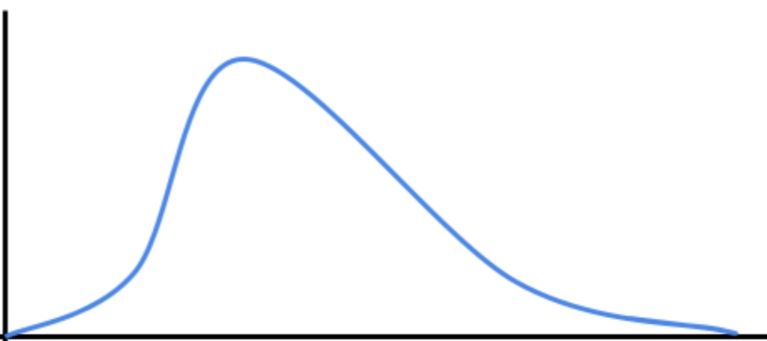




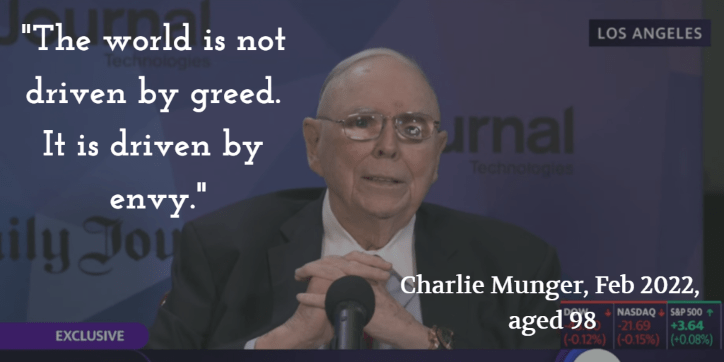

 MacroEdgo
You must be logged in to post a comment.