On the 25 year Bastardisation of Rugby League to Appeal To People Who Do Not Love the Game

In 1996 I sat in the restaurant of Stockland Stadium amongst a group of Cowboys foundation members listening to then coach Graham Lowe talk about the season ahead.

I remember it for what Lowe said, which was, to paraphrase: “There have been a lot of rule changes made to speed up the game. I don’t like them. I don’t agree with them. I believe it will change the game and not for the better. But I have to coach for those changes and that is what I will do.”

Lowe did do just that, and even though the Cowboys took time to find their feet, they soon unearthed a superstar excitement machine in the name of Matty Bowen who together with Aaron Pane in dummy half revolutionised the speeding up of the game, or the ‘touch footballification’ of rugby league.

Before the 2021 season started I told my family how I struggled at times to maintain my interest in rugby league, that the DNA of the game had been lost in the speeding up of the game. That ‘athletes’ now play, not necessarily ‘footballers’, and that many forwards can play any position in the forward ‘pack’ (barely worth that description any more) or indeed any position on the field outside of the specialist roles that make up the ‘spine’.

It was nothing new for my family to hear my protestations, and my wife has heard me saying it even before Graham Lowe admitted aloud his own fears.

I have said all along that the commercialisation of the game, which players and ex-players still closely involved in the game have been complicit in because it has afforded them higher and higher incomes from the gravy train, has been to attract those with a marginal interest in the game to expand viewership at the expense of those who grew up loving the game. The way that has been achieved has been to make it faster with more flashy tries, enabling more advertising opportunities, so that it now more closely resembles touch football than the rugby league game of the late 80s/early 90s which I personally consider the pinnacle of the game of rugby league.

So at the start of this season, knowing that the rule changes again were going to speed up the game even more, e.g. the continuous tackle count reset, whilst grumbling more to the family about it all I thought to myself that I would like to see an experiment done at the end of the year. 

It would be really interesting to see a game refereed under the conditions that prevailed in the late 80s/early 90s with 4 reserves and thus only 4 replacements allowed in the whole match (though thought would be need to be given to how HIA would be dealt with), 5m rule instead of 10m (that was in reality set at around 7-8m), and more latitude to defenders to stay on the tackled player especially when they were dominant.

I will say it loudly – actually I am going to say it how I really feel – I HATE THAT IN RUGBY LEAGUE NOW A GAME GOES FROM END TO END IN THE FIRST 10 MINUTES WITH UNCREATIVE, ONE-OUT RUNNING! I dislike that in rugby league an attacking player with the ball will jump on the ground to get a quick play the ball, resembling in touch football how an attacker will touch the defender to enable a play the ball – this is anathema to our game! 

When is the last time you heard about the ‘softening up’ period of a game when the big, strong, powerful forwards went at each other to wear each other down so that the game would open up in the latter stages of each half? And note, the softening up period did not relate to cheap shot thuggery.

When is the last time you witnessed a genuine ‘arm wrestle’? Instead we have games where you know that a side will need to score at least 5 tries to win because the opposition is almost certain to score at least 4 tries.

Real rugby league fans of yesteryear enjoyed games where no tries were scored as much as games where each side scored plenty, but we are denied of those genuine arm wrestles because it is not the ‘commercial product’ that is sort.

For years I have thought about writing something like this but never did – who do you send it to – the media that has been central to the bastardry? 

But something has really gotten my goat this past fortnight. Listening to the ex-players in the media go on NOW about the loss of ‘their game’ – how they’re ‘fans’ of the game, too.

What I want to know is where have they been for the past 20 years?

The only thing that has changed in the last few weeks has been the cracking down on contact with the head, and now they want to say that accepting that head contact happens in the game is the critical element that separates league from touch football.

Give me a break!

These guys are proving the need for the changes with every word they say – they’ve all had too many head knocks to be able to see the logic before them. Then again, there are none so blind as those who do not wish to see, and dollars have always provided a lot of incentive to not see.

The problem is not clamping down on contact with the head. Any and all efforts to reduce the risk of long term damage to the health of players which can seriously impair their ability to lead full and healthy lives once they have retired from playing the game should be supported without question.

The real problem is in the speeding up of the game so that collisions are faster and more powerful for most of the game (even as those who have not been interchanged for a while fatigue), and coaches are continually striving to counteract the speed of play so players are taught to tackle high around the ball leaving an impossibly small margin of error which goes awry for any number of reasons (especially change in position of attacking player so their head position/centre of gravity changes abruptly). 

So I say this to all ex-players with a voice. If you really love the game as you say you do, then you will start to speak up to ensure that the real issue is addressed. Everybody who loves a sport should want the players of that sport protected – no State of Origin or Premiership win is worth long term damage to the health of any of the players, even if we must accept (as we all do through our lives) that accidents will happen from time to time. 

Matty Bowen would always have been an excitement machine in rugby league no matter what era he played in because of his elusive footwork and blistering acceleration. But I wonder whether Wally Lewis, my all-time football hero, would have had anywhere near the impact he did if he played over the last 20 years. Think about that for a moment…


Gained value from these words and ideas? Consider supporting my work at GoFundMe


© Copyright Brett Edgerton 2021
Full Thoughts on Prof. Michael Sandel’s Meritocracy Discourse: Part 1

I have now finished reading “The Tyranny of Merit: What’s become of the common good?” by Prof. Michael Sandel which I purchased after watching his panel at the WEF Davos Agenda.

It is brilliant and one of the best-written books that I have had the pleasure of reading.

Firstly let me say that from my perspective Prof. Sandel is accurate on the major points in his book. I believe that I have stated many of the same or very similar views in my own writing, and his conclusions are not only consistent with mine, they are also in tune with my values. However, he brings these points together to form his narrative far better than I have and ever could, and he backs up his views with sound reasoning drawing on his extensive academic experience as an economic philosopher. 

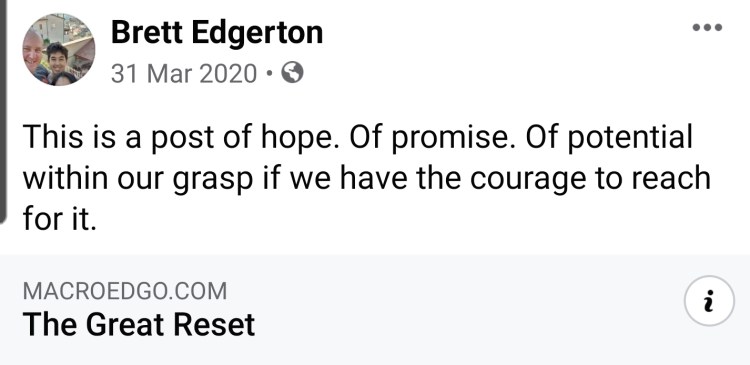
To be clear and forthright, I agree that a society centred on authentic merit, if it were ever truly possible, in the absence of a deeper commitment to social cohesion, is unsustainable on several levels (as discussed previously in much of my writing e.g. “Social Cohesion: The best vaccine against crises” and “The Great Reset“). Thus I agree that the ideal situation for humanity is for social cohesion to be the overriding factor in how we organise our societies. To do that we must continue to work towards eliminating all forms of bias and prejudice, along with all forms of corruption that exist to acquire advantage over others. That is the only way that our various and infinite lots in life are due to unadulterated luck rather than unfairness, and so that the consequences of experiencing less favourable outcomes (fortune) than others are not nearly as significant as they are now.

It is my firm belief that we are in the midst of taking a significant step towards that future in this the Great Reset era, and I believe that the timing of Prof. Sandel’s publishing of “The Tyranny of Merit” was particularly propitious and will prove to be a key event and resource.

Before I go on to discuss some critical issues raised by Prof. Sandel, however, I need to make an important admission.


Like many, I am certain, his compelling reasoning has made it intellectually and emotionally impossible to deny something to myself. Prof. Sandel has shown me that I have become a biased elitist even though I congratulate myself on being less elitist, by virtue of my humble upbringing and my conscious effort, than many who have developed the same level of credentials, and the associated skills, as me.

Understanding how unconscious bias slips into our rationalising I must accept that my writing to this point invariably contains an elitist subconscious bias.

I realised emotion around credentialism from early in my postgraduate studies in the early 90s. On one occasion I realised that I had been describing myself as “only” a student. I noticed how as I continued in my PhD program I began using more complex language with less slang from my regional upbringing and it was beginning to irritate one sibling in particular. Perhaps instead of balancing my academic life with my broader life I allowed the former to dominate in my behaviours which some found confronting. 

I also began to notice how a simple statement about my own educational credentials, a minor detail in a story I was recounting, usually was what people took from the recount and mirrored back at me: “Oh you are studying for / have a PhD – I never went to uni”, said with emotion indicating regret, or with defiance often with a hint of righteousness.

For a while, noting that this truth – if not highly significant for me – invoked negative emotions for the person to whom I was speaking, I began to withhold such information. If I did mention it, in a longer conversation where it appeared ‘safe’ to mention my credentials if relevant to an anecdote or story, I would immediately seek to minimise or even downplay my achievements.

Being a strong empath, I have often observed myself doing such things to minimise emotional impacts for others. But then I have realised that downplaying all of my achievements, for the benefit of others, ultimately impacts me by negatively impacting my own self esteem.

At some point I decided I cannot be responsible for others’ life disappointments or feelings of regret while I am authentic and humble in my dealings with others.

Nonetheless I must admit that my own views of lesser credentialled groups had drifted less favourably and unhelpfully, especially as the cultural gap widened and as a growing proportion of the lesser credentialled became more angry and aggressive. At the same time I recognised the growing lack of humility and compassion amongst many elites.

The genius of Prof. Sandel’s writing is in showing the link between these developments, and in doing so allows greater empathy and understanding by those who seek to remain open to other points of view.


I am extremely pleased that I read this book because it expands on arguments that were mentioned only briefly or not at all in Prof. Sandel’s videos I had watched and discussed in “Merit and Morals: WEF Davos Agenda panel with Prof. Michael Sandel“.

Nonetheless I consider that my commentary in that piece remains highly relevant to the discussion of Prof. Sandel’s views on meritocracy as presented in all of these media.

The fuller picture gained from my reading of his book, moreover, provided the impetus to pick up on some additional points where either I slightly disagree with his view (e.g. the most important factor in the appeal of populists and also views surrounding the future importance of work in society) or where my preference would been for him to have expanded on his views in other critical contexts at the micro (e.g. surrounding the importance of families in society) and macro levels (e.g. surrounding the importance of a global framing of society). 

Particularly pertinent to the latter point is that it is not until page 213 (of 227 pages of text) that discussion turns to suggested remedies and alternative ways of organising within society to achieve cohesion. Perhaps it is understandable that much effort must be expended to counter the deeply entrenched ‘winner takes all’ philosophy to contemporary societies. And as a writer, myself, I often state that I do not have all of the answers – in part to show humility and lessen perceptions of righteousness, and in part because these issues are so complex that no one person can possibly know all answers. As I often say of myself, while he may not be able to provide specifics, his writing provides a robust context to the way we must move forward.

Nonetheless it is a little disappointing that Prof. Sandel did not devote more pages to society moving forward with greater cohesion. Perhaps a sequel is already in the planning.


My first point is minor but still worthy of mention. On credentials, Prof. Sandel highlights how the ‘elected class’ are even more removed from the majority in society on an educational basis now than when higher education was limited to ‘old money’ aristocracy, and draws a direct link to the disaffection with societal progress from many of lesser educated. Substantial examples of highly effective politicians from the past century, without tertiary education, are used to support his contention that people from all walks of life can and should feel able to engage in decision-making, and that when this occurs it is better for social cohesion.

Ultimately I agree with this viewpoint but I believe it relevant to highlight that, while still in most societies more people do not have tertiary degrees than do, a far greater proportion of people now do study for tertiary degrees. In 1982 as I entered high school only 8% of females aged 25-34 had university degrees, while it was 13% for males. I recall by the time I was applying for university how much it was being stressed that we needed to attain high tertiary entrance marks to be selected for our preferred university course such was the competition relative to the number of available places. By 2018 45% of females and 34% of males in this age group had university degrees.

So the relative proportions have changed substantially over that time, and it is little wonder that shows up in the backgrounds of elected decision-makers.

Still, that around half of society (more in some countries, slightly less in others) on an educational basis is entirely unrepresented in the ‘elected class’ is a poor reflection on society, and it definitely does suggest to non-university educated members that their value to society is lesser than the tertiary-educated. This is clearly something that must be addressed since it is self-evident that representative Government should genuinely represent and mirror the society it governs. Moreover, I agree that more diverse decision-making groups will make better decisions for society.


On my first major point, I found especially interesting the discussion at the conclusion of the ‘Credentialism’ chapter on the challenges to achieving consensus on the most significant issues facing societies when some, perhaps a large, proportion of society “do not trust government to act in their interest, especially in a large-scale reconfiguration of the economy, and do not trust the technocratic elites who would design and implement this configuration”.

This is something that I have pondered and written on, most recently in “The Great Reset: Building the bridge” where I essentially stated that we need to regain our respect in and our trust of each other to perform the roles that we have taken up in society. I have also pondered on this in relation to the centrality of the rejection of ‘Obamacare’ to Trumpism, especially in the 2016 election, and I think that most of us fortunate to experience high quality, relatively cheap universal health care in other countries find this difficult to reconcile. I often think to myself, “Why would those who stand to gain the most by the measures most vehemently oppose reform and become the ‘foot soldiers’ to undermine it so that the benefit is lost to them?”

I agree with Prof. Sandel that a backlash against credentialism and the inclination towards technocracy are partly at fault. However, I cannot escape a conclusion that more relevant is the more direct relationship between increased inequality and the extreme form of capitalism that has developed in the US over the last half century (as I discussed in “The Magic Sauce Of American Economic Dynamism Is Not Based On Personal Greed“, “Your Life: Something the elites have always been prepared to sacrifice for their ends” and “How Might Milton Friedman Respond To The COVID-19 Pandemic“). That extreme form of capitalism is more a result of the corruptibility of power and the influence of wealth and greed than of credentialism. 

While I agree that trust in Government is the key issue, I consider that the erosion of trust is more directly related to the increasing precariousness of the lives of many. The ‘have nots’ have witnessed the increase in wealth amongst the elites, and have perceived that it relates to increasing greed by them to skew even further the distribution of wealth and power within society in their favour, so much so that they have become fearful that they might lose what little safety net or societal benefits from being a US citizen remain. In fact, they have become so fearful of a further progression in this direction that they can not even countenance that reforms would improve their lot in life because it is the opposite of their lived experience. That suspicion makes the disaffected highly vulnerable to influence by populists.

Certainly the ‘unrelatability’ of the disaffected to the technocrats, i.e. the senior bureaucrats and their subordinates who are charged with implementation of policies and regulating their use, is an important aspect of perception of a high degree of ‘regulatory capture’ due to power and influence, and ultimately greed, by the wealthy elites meaning that all reform proposals ultimately are viewed as being aimed at increasing their advantage. However, credentialism is likely a minor factor. What really embeds the perception is that all in these groups (politicians, bureaucrats, wealthy elite businesspeople) have undergone the same communication skills training, including for video-rich media, and thus speak the same vernacular, in the same manner, and even use the same or similar (usually forced) mannerisms especially hand gestures. All this does is emphasise to all the heightened state of ‘political spin’ deployed now to benefit the ‘political class’ and the wealthy elites which the middle class and the less wealthy perceive to be at their cost.

In other words, the ‘show’ has trumped substance and authenticity, and those less practised in these skills consider those who are a part of the ‘show’ are fake and insincere. That is why the populists are listened to – they are perceived to be authentic and thus honest about the views they express. It is true that Trump is perhaps one of the greatest ‘showmen’ politicians of recent times, but he has developed his own unique style of show and vernacular, including his own style of hand gestures, which separates him from the others, and his followers believe he is authentic and honest about his views.

It is all of these developments over recent decades that have emphasised that the groups within society that once balanced the ‘greater good’ with the influence of power and wealth in a more equitable manner have been corrupted to favour the elites. Importantly that perception pertained to both sides of the political aisle. Trump took this growing perception of the link between wealth and political power, which of course is real and many academics agree it has grown in most developed nations, and he turned it on its head. He told the disaffected that he was on their side. Moreover, he told them that by virtue of his wealth, only he was so powerful that he could stand up to the ‘political class’ and other wealthy elites, which he referred to as the ‘swamp’ and which he excluded himself from, to drain away from them their power and influence.

Trump told the disaffected that he would save them from the tyranny of greed by the elites as did Robin Hood, and they loved him for it.

The emergence of the populists was aided by both sides of the aisle in another very critical point which relates to the technocratic style of governing.


A technocratic style of governing is an obvious consequence of the narrowing of the ideological differences between political foes. If both the left and right agree that free market capitalism, with minimal government regulation, is the preferred manner for society to organise, then the political discourse is reduced to arguing about less and less significant issues of only tangential relevance.

Leaving aside for a moment whether the majority of society truly believes that the consensus actually delivers for them in the manner they expect, let’s examine in isolation how society perceives the actions of the political class and the consequences of that perception. 

If all of the major debates have been had and are settled, then the only truly relevant work is that of the technocrat in making the minor adjustments at the periphery to ensure that the system stays fit for purpose, through technological changes for example.

So if the ‘machinery’ of society has reached its final ‘perfect’ design and only routine ‘maintenance and servicing’ is required, is there any longer a serious purpose for the designers – the decision-makers – and if not, what exactly are they doing with all of that power and influence that still resides in their hands?

It is my contention that these questions are behind the growing perception globally that there has been a dearth of political leadership in recent decades. I began writing about this in Australia over a decade ago and had a letter read out on our 60 Minutes television program in 2010.

Last year, much to my surprise – no, to my amazement – an Australian elite from the ‘political class’ confirmed all of this for us in a very public manner, but little has been made of it in the Australia press. Joe Hockey was a Minister in the Howard Government for 6 years, was Shadow Treasurer for 4.5 years, and was Treasurer of Australia for 2 years under Prime Ministers Abbott and Turnbull. Mr. Hockey was then the 28th Ambassador to the United States for a four year term until January 2020.

Speaking on 7.30 shortly after his return to Australia from his Ambassadorial duties he had the following exchange with Leigh Sales:

LEIGH SALES:  Do you think that ministerial standards are at the same height that they were 20 years ago?

JOE HOCKEY:  I mean, it’s all changed, Leigh. Social media has changed everything. Social media has made the voice of the critic much, much louder than the voice of the advocate.

And the second thing that’s changed is disruption.

Everyone keeps calling for government to initiate reform, but really, what’s happening is the private sector is initiating reform, on a scale that we’ve never seen before.

LEIGH SALES:  Is there something fundamentally wrong with that though, if Government is not leading?

JOE HOCKEY:  No. Because it empowers individuals and we all believe that individuals should be their best.

So one of the most important political decision-makers of the recent era in Australia admitted that the Government has essentially given up on leading and have left the future of the nation to the ‘market’ or the (social media) ‘mob’. Now most close observers had long suspected this; that readings from social media and focus groups in the mornings were setting the agenda for the day. But for it to be confirmed was rather astounding.

This opens up a number of important issues. Firstly, if the ‘political class’ no longer leads then they are not really making the critical decisions for society like they did in the past because they no longer see that as their role. If that is no longer their role than why as a society should we spend so much on the political administration of the nation – surely we could save significantly by reducing the number of MPs and associated staff, as well as by reducing their remuneration. After all, Mr. Hockey has admitted that they have left the leadership of the nation to the private sector. So all those who are occupying positions that formerly were ‘decision-makers’ are clearly enjoying the trappings of their status while not adding value for the nation. If they object and say that they are indeed working hard, then who are they working for since they are not working for the ‘common good’ – working at maintaining their status in Government is not the ‘common good’.

These are obvious and uncomfortable questions that should be put to the Government as a consequence of Mr. Hockey’s comments.

In recent weeks Peter Dutton has threatened that he will pursue users of social media for what he considers defamatory statements and has initiated one such action. Besides the obvious mismatch of power, I find this an especially troubling development given that these political ‘non-leaders’ have now admitted (with Hockey’s comments) that social media is the new form of governing. As such, when debating political issues, a certain level of parliamentary privilege should be afforded to bloggers trying to have their voices heard amongst the mob. Frankly a politician who can not stand up to that level of scrutiny only proves my point above – that they are not nearly worth the money we are paying them.

Journalists have not really taken on these issues as yet, notwithstanding the other serious issues going on in the world right now, but it would be letting Mr. Hockey and the remainder of the political class off lightly to just centre on those questions. Of course there have been serious issues that have required leadership all along over the last few decades, from all of the factors that affect a cohesive society right through to the greatest long term challenge humanity faces in climate change. Mr. Hockey’s final speech to parliament provided a perfect example of this where he admitted all of things that he and the Government that he was a part of should have done.

What sort of leadership is that, setting out a vision on the way forward as he heads out the exit, never to be in such a strong position again to argue for his vision and effect the necessary change? 

The lack of willingness from the ‘political class’ to even set out a vision for the future has deep implications for societies, in my view.

I suggest that without a real contest of ideas by the political leaders of many nations the majority in society feel insecure. Everybody is well aware that technology has brought on significant and rapid change, and can easily predict that it will continue to do so. The lack of leadership creates a perception in society that we are on a rudderless ship where nobody has any real idea on where we are heading. Worse still, nobody is speaking up with conviction to outline a plan on where it might be good to head, let alone displaying any suggestion of possessing the wherewithal to lead us there. The majority agree on a direction to head in the morning, and that decision is open for revision at lunch and in the evening (for the 24 hour news cycle), and it is little wonder that many suspect that we are meandering directionless in the middle of the ocean.

Representative democracy is a wonderful gift to humanity, but it only works if leaders are courageous enough to spell out a vision for the future and argue for it, accepting that they may fall out of favour with the citizenry if they fail to convince enough of the virtues of their vision. Those elected to lead have largely set out to be small political targets – the least bad option – and have outsourced decision-making to the masses. 

As I said in “How Might Milton Friedman Respond To The COVID-19 Pandemic“:

I see social media platforms as modern day arenas; Facebook the Colosseum… The truth is that individuals can not fill that void and that is creating widespread insecurity and thus anxiety (no matter how much I and others, like Brene Brown, might attempt to inspire and\or cajole all to have the courage to lead). That is why behaviour on social media often resembles that of a mob.

This lack of contest of ideas and leadership, and the anxiety that it caused within society, made many nations ripe for the emergence of populists. Populists like to be political targets as it plays to their strengths and allows rapid, widespread and cheap promotion of their platform. Trump stood up and proclaimed he had a vision and that he was not afraid of being a target – in fact he said that he was so powerful that he could withstand being a really big target, which only emphasised to his growing legion of supporters of how ‘right he must be’. 

Ultimately I consider the lack of trust in technocratic government to be more a consequence of the withdrawal of leadership by the political class than suspicion of the highly educated.


As with any good book, I was left wanting more. I believe that Prof. Sandel’s discourse is an excellent portrayal of where societies could have been at this point in time, thus pinpointing where we departed from the better path. However, the ‘more’ that I wanted to read related to the future with an understanding that the conditions underlying society are changing rapidly and can reasonably be expected to do so for the foreseeable future. 

I believe that all sobre-thinking people realise that solidarity and cohesion in society is absolutely vital for humanity to address the serious challenges that we must to ensure sustainability. However, it is important that it be understood that that cohesion must be at all levels from regional right through to the global society, and so I respectfully suggest that Prof. Sandel has chosen the wrong great US President to champion – instead of highlighting JFK’s more domestic focus (in his dignity of work theme), we need to focus on FDR’s more global focus (in highlighting that we are foremost ‘citizens of the world, members of the human community‘).

Then again, thinking globally we must act locally, not just in relation to the environment but in the values that we choose to live our lives by. 

This is where I felt Prof. Sandel missed an opportunity to ensure that “The Tyranny of Merit” was even more impactful. Perhaps a sequel is already planned to give more specific indications of Prof. Sandel’s views on how society can achieve that solidarity.

In the second and final part of this essay I offer three specific areas important for consideration in achieving more cohesive societies, two discussed by Prof. Sandel in education and the workplace, and another area left untouched by Prof. Sandel, the family.


Gained value from these words and ideas? Consider supporting my work at GoFundMe


© Copyright Brett Edgerton 2021
Australia Must Pivot To COVID-19 ‘Normality’ Once All Residents Are Offered Vaccination

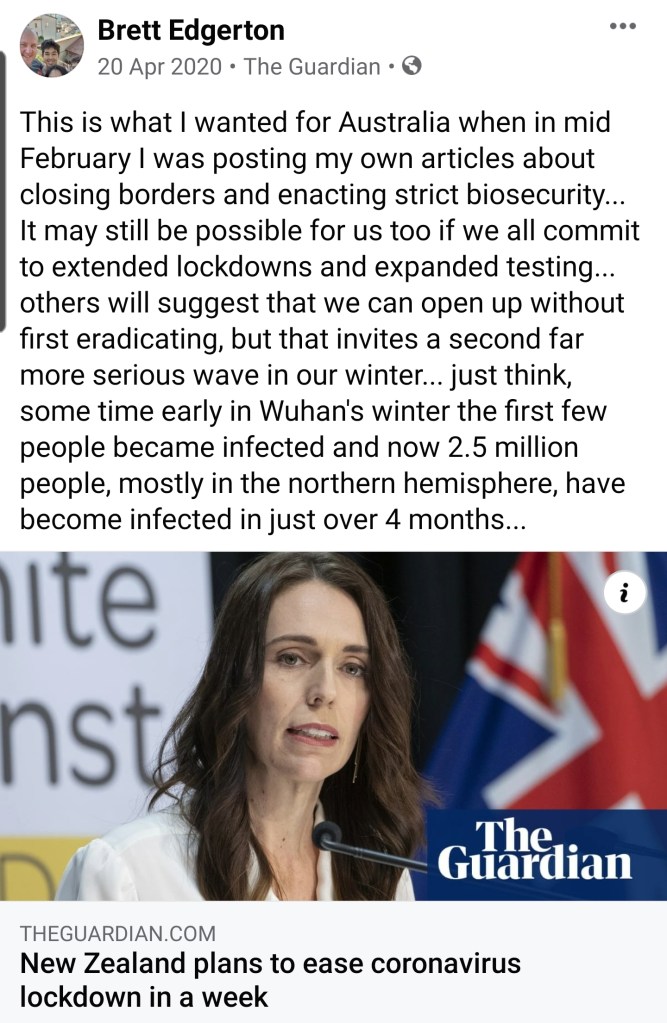
In February 2020 I was one of the first to speak publicly of the need for Australia to shut the borders and aim to eliminate what was then referred to as ‘the novel coronavirus’.

In my first post on the topic published 3 February “Social Cohesion: The best vaccine against crises” I highlighted the unique situation we faced and what were the likely consequences:

Writing in Australia, in the southern hemisphere, the outlook is somewhat more frightening if I am correct in my analysis that the virus will not be eradicated this northern hemisphere winter. I would be unsurprised if more draconian measures were introduced in Australia than elsewhere in an attempt to prevent its introduction as we will endure a full cold and flu season without any chance of administering a broad vaccination program. This will produce a great deal of anxiety amongst Australians.

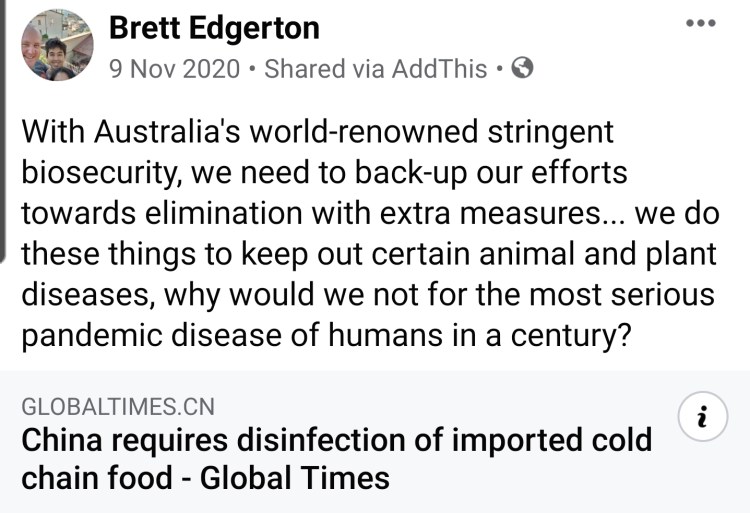
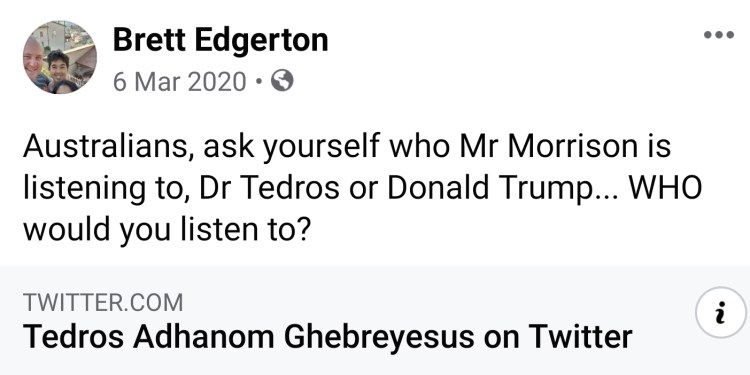
As the Australian Government was slow to react, I drew on my experience in biosecurity policy and underlined how our approach to this very serious disease of humans was inconsistent with our approach to diseases affecting primary industries – i.e. for some animal and plant disease we follow what is essentially a zero risk policy, yet with this shaping up to be the most serious pandemic of our time we were even flirting with following a herd immunity strategy after Boris Johnson’s lead in the UK (which I mentioned in my FB post above from 16 March 2020). 

Thank goodness for our federal system and for our independently-minded State leaders whose instincts were more compassionate and whose leadership is most responsible for our favourable position through the pandemic to this point.

I have sort to maintain pressure on all decision-makers to work towards minimising human impacts on a range of issues from arguing against a herd immunity strategy (highlighting that the full human impacts were not at all understood, including long term impacts), in favour of following an elimination strategy, to monitoring abattoir workers and managing risks with cold storage chains, to discussing the risks posed by the broad host range of the virus, to factors around vaccines and their rollout in Australia.

At the same time I tried to be a contributor to the discourse on the Australian economy, and more importantly, on seeing humanity progress through the Great Reset era in a more inclusive and fair manner to produce cohesive societies which are necessary to address the major issues we confront.


From my earliest posts on COVID-19 I stressed the importance of seasonality in the global and Australia’s experience of the pandemic.

Even though at that early stage seasonality was not understood with the newly emergent pandemic disease, the similarity of symptoms to other respiratory viral diseases suggested it likely would be an issue, and even if not, the co-occurrence with those seasonal respiratory viruses would create management issues and create a general level of anxiety in society.

I stated those concerns frequently in my daily “Coronavirus Updates” from early March, including on March 5:

It is clear that all European countries are desperately hoping that warmer summer will arrive and provide some respite, give health authorities time to regroup and get ready for the presumed re-intensification in autumn sic (fall), and hope (or pray as the case may be) for an effective vaccine to be administered in the northern hemisphere before the depths of the next winter.

As I have been saying from my very first report, this is something that we in the southern hemisphere cannot even dare to hope for – this will be a long, tense winter down under.

And on March 9:

I want to address something specifically in what I have been saying about the “special” circumstances that Australia faces being unique amongst the developed countries being situated in the southern hemisphere, and thus heading into the cold and flu season of winter instead of heading out of it. The WHO has been careful to ensure that it is understood that there is no evidence that the pandemic will let up in the northern hemisphere as the weather warms up. I have said frequently that if the northern hemisphere countries are fortunate then they will have a seasonal reprieve.

The reality is that they will receive a benefit regardless of whether spread of the coronavirus that causes COVID-19 slows in warmer months in that we already know that cold and flu viruses certainly will. Thus, even if COVID-19 continues to spread in warmer conditions – and I won’t get into the probability of that because I cannot contribute anything of value other than to add that I do not know how valuable observations are that COVID-19 appear not be spreading in countries with more equatorial climates – the reduction in other respiratory infections will aid in detection and thus containment efforts.

Again, this is something that Australia will not experience as we are heading into the flu and cold season. That is why I have stated all along that Australia must be advanced ahead of all other nations in the fight against COVID-19, and I have been clear in my views that our federal Government has not made the most of our opportunities.

I draw particular attention to my post “Australian ‘Followship‘”, posted on 23 March 2020, to give full effect to the situation at the time and my efforts to see Australia’s response improved.

I humbly suggest that the reader consider these arguments now in the light of what has occurred in the northern hemisphere and especially in Europe since I wrote those passages.

Europe did experience a reprieve with much lower pandemic pressure during the warmer months of Summer 2020, but the pandemic exploded again as weather cooled in Autumn. 

The re-emergent pandemic has been traumatic to a level that much of Europe has been almost continuously in some form of lockdown for the last 5 months.

The current situation in Europe is summed up well in this article and there are real concerns that Europe will not be ‘open’ this Summer as it was last.


Australia has experienced lesser impacts from the pandemic than very many other nations to this point. That is because the measures that I argued for from those first few weeks of the pandemic were ultimately adopted, primarily because the State political leaders and health officials supported them and/or enforced them in their own jurisdictions.

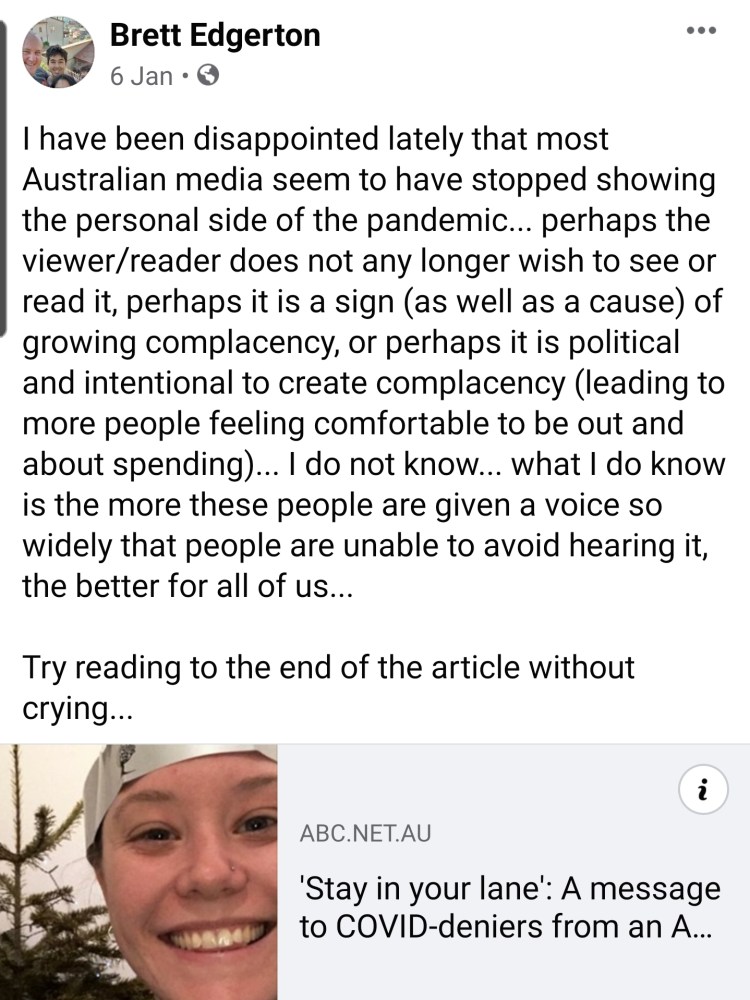
Having observed closely the spread and impacts of COVID-19 globally I have continually warned of the need for Australia to not become complacent to the very serious risks we continue to confront. Realising that even Europe had slipped into complacency in Summer 2020, partly out of the desire for economic reasons to have a more normal intra-European tourism season, I warned against complacency in Australia and proposed awareness programs for the public and businesses.

State Premiers together with their respective health officials have very effectively contained the outbreaks of COVID-19 that have occurred over this Summer (with all sources being returning Australian residents in quarantine or in hospitals), quickly moving to enact lockdowns and masking mandates, and using contact tracing to contain chains of transmission. Undoubtedly the warmer weather with more people spending more time outdoors has benefited our containment efforts.

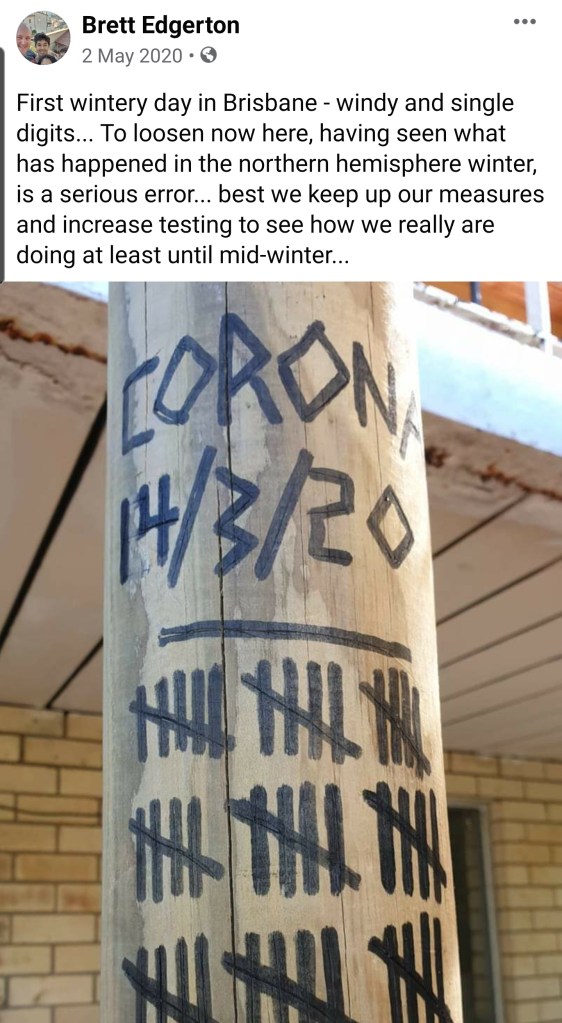
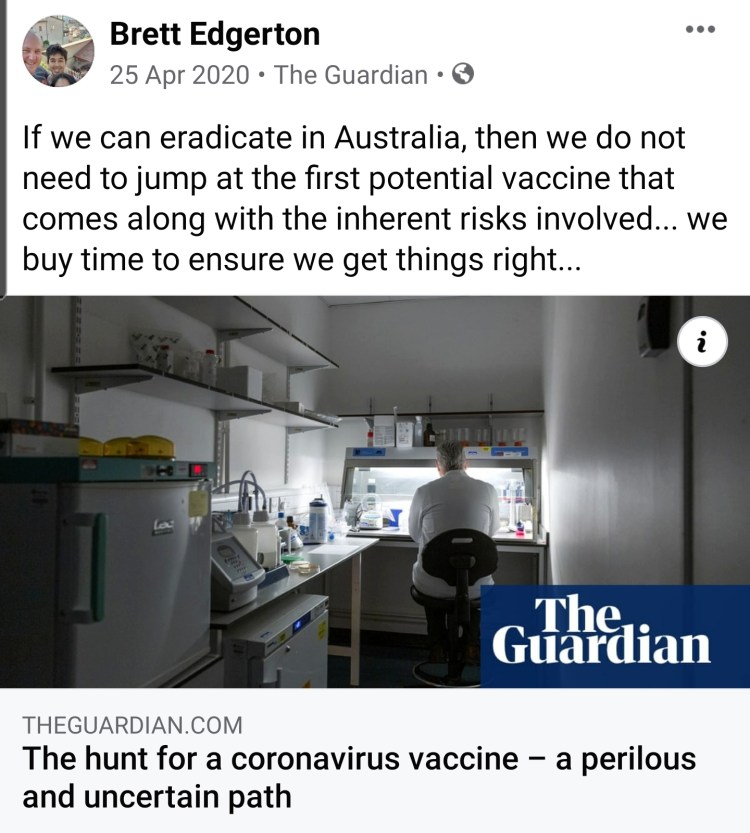
One of the major benefits of success at containing COVID-19 in Australia, that I have continually highlighted from early in the pandemic (see the FB post on 25 April 2020 in the slideshow above), is that we have bought time and flexibility in terms of how we continue to respond to the pandemic, especially in relation to vaccines.

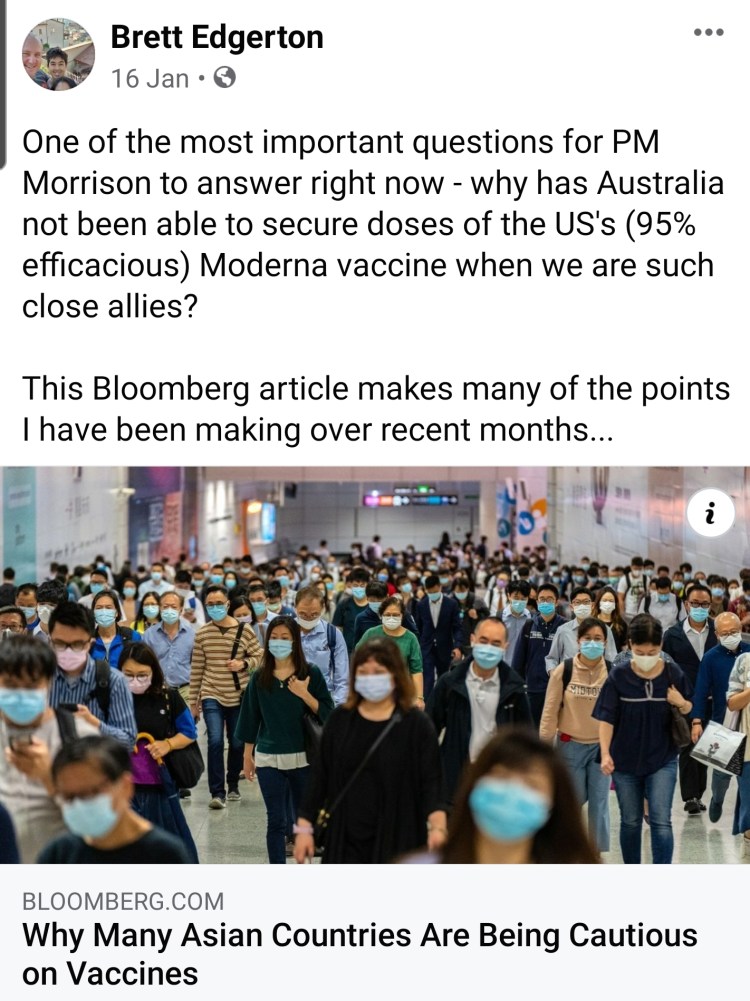
The timetable for the rollout of vaccinations in Australia has become a political issue, much to my disappointment, but what is emphasised mostly are comparisons to vaccine rollouts in other countries and the risks to the Australian economy from further shutdowns. Those country comparisons barely acknowledge that these other nations, especially the US and UK, have been severely impacted and needed to roll out vaccines quickly to protect lives due to inadequate response measures to the pandemic. Moreover, these countries have suffered more serious impacts to their economies, while still suffering much more loss of life.

The well-publicised complications with the AstraZeneca and now the Johnson & Johnson vaccines due to blood clots has meant that Australia has limited the use of the former vaccine to over 50s and will not seek to order the latter (even though the latter is a one-shot vaccine, and if the likelihood of clots forming after each injection was equivalent would mean a reduction of risk by 50% using the Johnson & Johnson vaccine). The bulk of the almost 54 million doses of the AstraZeneca vaccine Australia has ordered will be produced on-shore by CSL which is already producing doses.

When the blood clotting issue was first discussed by Dr Michael Kidd, Acting CMO, he sort to explain the situation using probabilities of adverse outcomes – he said that the probability of developing a blood clot after receiving the AstraZeneca vaccine was 1-2 per million, but that the probability of death if infected with the virus causing COVID-19 is 1-2 per hundred. Thus in a nation where the probability of being infected with the virus is high the reward of significant protection from serious disease after vaccination is well worth the very low risk of developing blood clots from the vaccination.

Since Dr Kidd delivered this explanation, however, European officials have suggested that the risk of blood clotting in young adults following AstraZeneca vaccination is 1 in 100,000. Moreover, in a nation where through adept biosecurity measures there is not a high likelihood of being infected, as in Australia, the risk-reward balance is starkly different to where the incidence of the virus is high.

Even in Europe, however, where official figures record one million lives have been lost in the COVID-19 pandemic, national health officials have sort to better balance the risks of taking the AstraZeneca vaccine with the benefits by introducing restrictions. Think about that for a moment – with a population around 750 million, more than 1 in 1,000 Europeans have died from COVID-19.

However, whereas Australia’s limit for recommending against using the AstraZeneca vaccine is 50 years, most of these European countries more impacted by COVID-19 have set more stringent recommendations either discontinuing its use or limiting its use to those older than 60.

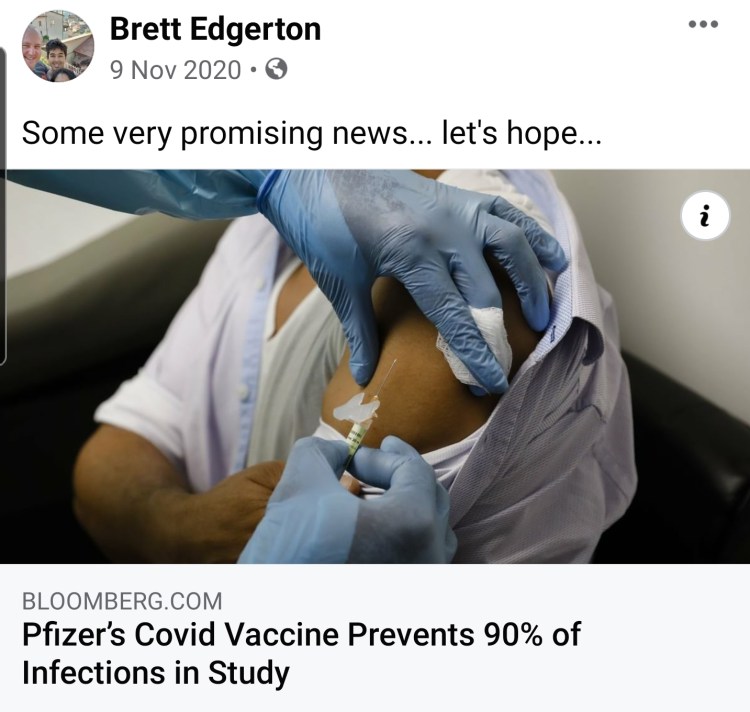
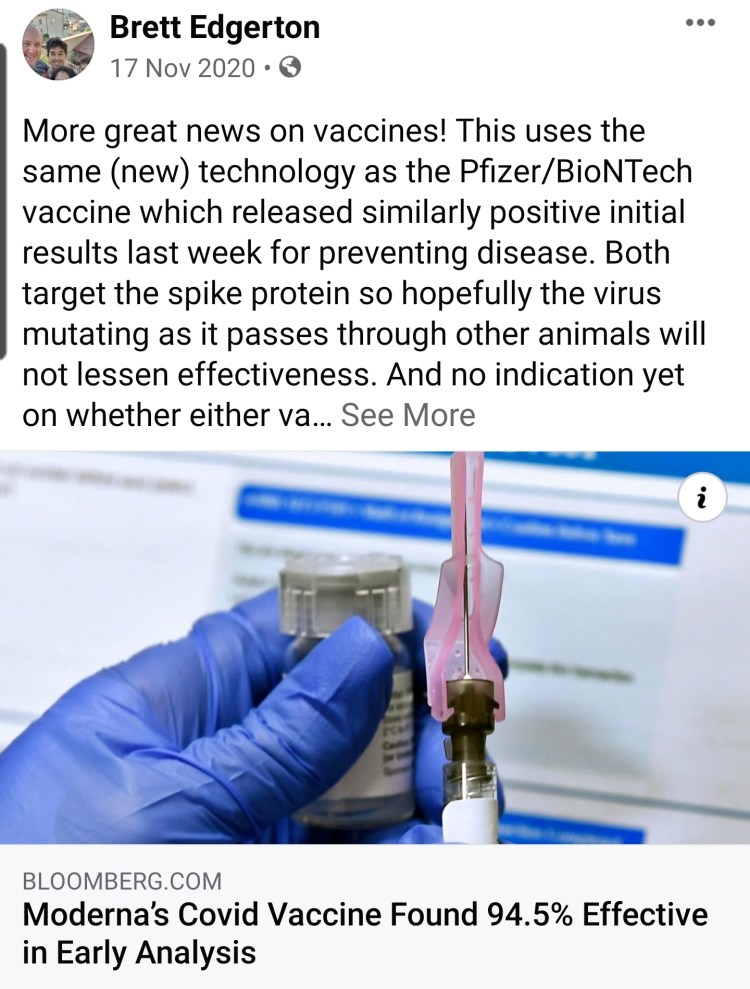
The mRNA vaccine from Pfizer/BioNTech will be recommended for under 50s resident in Australia and now 40 million doses have been ordered which is enough to vaccinate 20 million. This and the other mRNA vaccine developed by Moderna has proven to be highly effective, and have been used predominantly by wealthy countries (that can handle the cold-chain logistics required) and especially the US. Australia will receive the bulk of the 40 million doses late 2021.

The other highly prospective vaccine currently being rolled out is by NovaVax and Australia has orders for 51 million which will also be delivered late in 2021, and may be produced on shore by CSL.

So residents of Australia, while being mostly unvaccinated this southern hemisphere Winter, can have a reasonable expectation of being vaccinated prior to Winter 2022.

That is in strong contrast to low-income countries, most of which have been severely impacted by COVID-19, one exception being Rwanda which largely followed the MacroEdgo playbook of ‘throwing the kitchen sink’ at minimising spread, that have received just 0.2% of all COVID-19 shots given to this point. Even Europe has had an “unacceptably slow” vaccine rollout according to the WHO regional office.


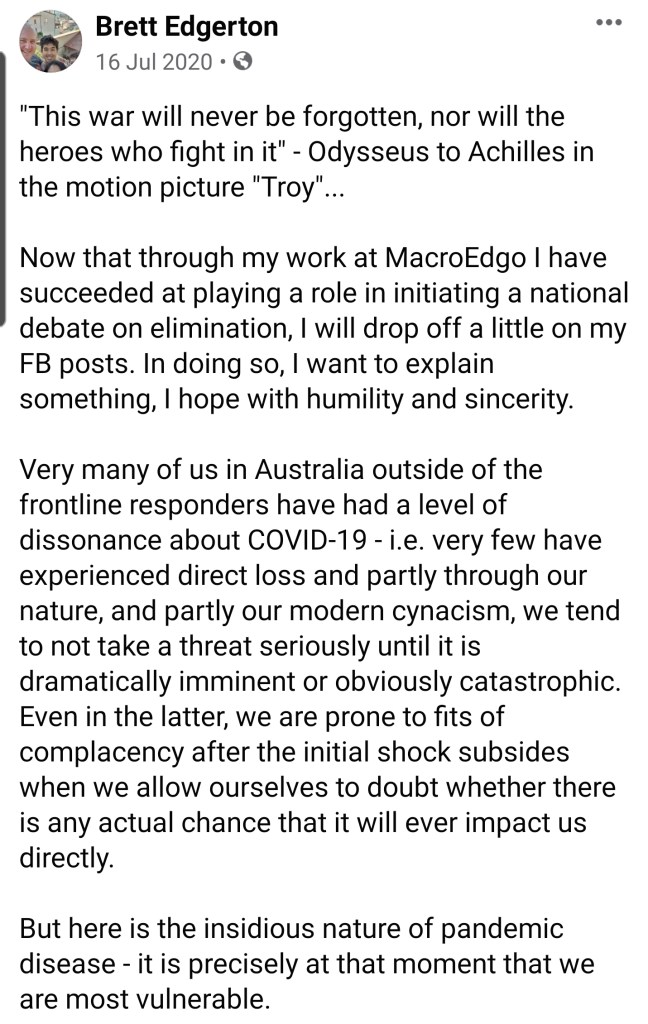
I knew very early in the pandemic that our world had changed, and I spelled out that humanity had a difficult challenge ahead. I stressed that we needed to be on a war footing to respond to the pandemic.

I implored all to hope with their hearts, for an attenuation in the virulence of the virus or for speedy and effective vaccines, but to prepare for the worst. In my “Coronavirus Update” of 11 March 2020 I explained it this way:

In my SMSF positioning paper I said that I hoped, for the sake of humanity, that I was wrong but I had to invest with my head and hope with my heart. Unfortunately my head was right but my heart still hopes for the quickest vaccine or pharmaceutical remedy in the history of mankind.

In many different avenues I stressed that this is “the battle of our lives” and that we all would remain vulnerable while others remained vulnerable.

Our scientists – from Dr Shi Zhengli, whose group rapidly detected and isolated the virus, through to the vaccinologists, all standing on the shoulders of humanity’s curiosity and enduring thirst for knowledge – responded wonderfully and we are in about as favourable a position with vaccines as anybody would have dared dream.

When I look back at what I wrote in February 2020 about scientists rushing to have a vaccine by the next northern hemisphere Summer, some times I have questioned myself on how deluded I was to think that might even be possible (out of shock at the size of the challenge humanity faced). Yet our scientists did achieve just that!

Still, the simple reality is that vaccines are not likely to eradicate this virus because it is likely to continue mutating faster than vaccines can be produced and delivered across the globe. In fact, present indications are that it will take several years to deploy the first generation of vaccines to the original strain even though variants are already more common in most regions. 

Humanity finding a better way to balance the loss of human life with the profit imperative of the pharmaceutical companies using their legal rights to prevent broader manufacture of vaccines with the capacity that already exists, and which could be used but for enforcement of intellectual property rights, would certainly speed up the process. Even so, while better for humanity in terms of reduced loss of life and economic impacts on poor nations, eradication would still seem unlikely.

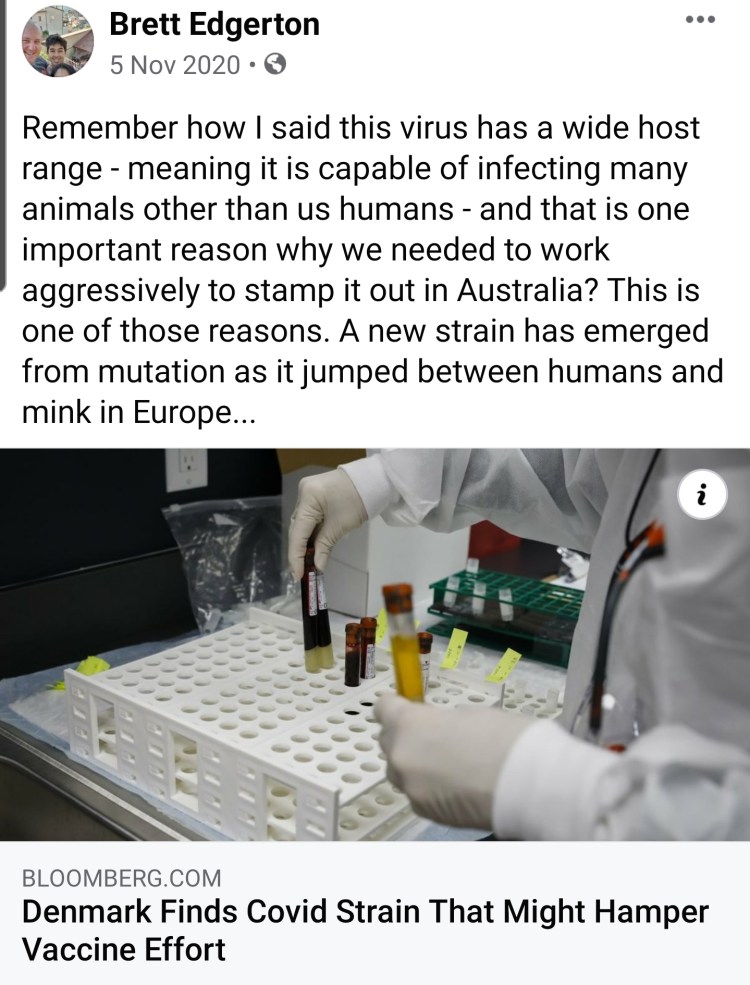
Hopefully the vaccines will confer a reasonable level of protection as the virus mutates, but measures to reduce the spread of COVID-19 are likely to be with us for many years and COVID-19 will be associated with deaths, concentrated in some regions, perhaps seasonally, and perhaps worse in some years if significant mutation occurs, for example, by passing through animal hosts.

The point is this, unlike in wars where there is a definite conclusion with the declaration of peace, there is unlikely to ever be a moment when we will all be able to claim victory against this foe.

There will be no joyous day where people dance in the streets with confetti drifting and floating through air laden with laughter and music, and young effervescent and ebullient people rush to embrace the heroes of this war with careless abandon.

The scars of this period will not be soothed in any way. We will just move forward in the knowledge that humanity is as vulnerable as any other organism on our beautiful planet.
With that in mind, we in Australia cannot live indefinitely as we have since March 2020; we will need to pivot to our ‘COVID normality’.

We are very fortunate to live in these times with the tools we have had at our disposal to fight this ultra-microscopic foe, as well as to have developed such highly effective vaccines so quickly.

There is the hope that broad-spectrum coronavirus vaccines or treatments may be developed in the future, but we cannot know when or even if these will be successfully developed.

At some point, however, we will need to go about our lives accepting a certain level of risk above what we did, or at least most were aware of, pre-COVID. The exact level of risk we each accept, as always, will be determined by individual decisions and behaviours, within a framework that society accepts as sufficiently protective of broad society while providing civil liberties and freedoms that are broadly accepted.

I would suggest that that point for Australia would be early to mid Autumn 2022 by which time most people resident in Australia should have had the chance to be vaccinated.

While the original vaccine rollout strategy envisioned an October 2021 completion date, the truth is – as has been our experience this past Australian Summer – pandemic pressure is lessened over the warmer period and our biosecurity know-how has proven adept at protecting our residents.

In other words, since few Australians will be protected this Winter, and because we have proven ourselves adept at protecting ourselves over Summer, we need to think altruistically and compassionately for other people suffering far greater impacts than us in the COVID-19 pandemic.

Australians have a rare opportunity to stand up and be a beacon for good for humanity. In a global community where co-operation has given way to vaccine nationalism, we can tell vaccine suppliers that we will wait. Furthermore we can divert vaccine supplies produced onshore to poor nations directly and/or via the COVAX program.

And we should speak loudly and proudly of our actions, and forthrightly let it be known that this is how things should be done, and that we are in this fortunate and privileged position to help humanity because we are a progressive and innovative nation that understood early the implications of the pandemic and we decided to put the protection of lives at the centre of our response.

If over the next 6 months these actions led to the vaccination of perhaps 20 million people, then we will have saved thousands of lives.

To make that decision we need to accept a little more risk, accept a higher likelihood of additional measures impacting economic activity, and exercise patience.

For a nation with a growing ‘image’ problem for being slow and even obstructionist on addressing climate change, thus being increasingly viewed as conservative and lacking an innovative and forward-thinking culture, such altruism and innovative-thinking will certainly help with our international relationships and attract significant goodwill.


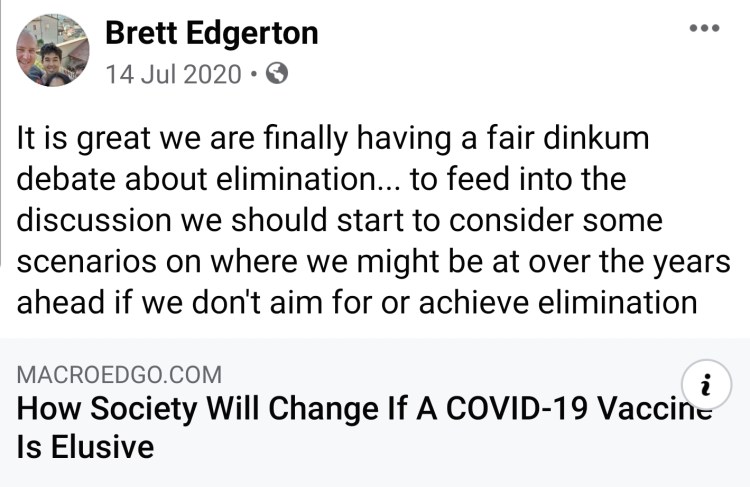
While maintaining a positive attitude since the beginning of the pandemic towards the chances of humanity’s scientists achieving effective vaccines, in my seminal post “How Society Will Change If A COVID-19 Vaccine Is Elusive” I allowed myself to contemplate a future where humanity must continue under the shroud of a prolonged COVID-19 pandemic.

If we are very fortunate at least one of the 140 vaccine candidates currently being developed might be effective. Or perhaps a protocol with one or several might be effective. However, as we approach the end of this year, as the northern hemisphere enters autumn (fall), then I expect that we will begin to hear more honest assessments of the chances of success.

If success seems to be more elusive than humanity has dared to hope, then we will move into a new phase for society and individuals to deal with the challenge…

In the event that at the end of the year assessments of the likelihood of herd immunity being achieved by a mass vaccination program are not optimistic, then everyone will need to begin to consider exactly how we will go about our lives for an uncertain but prolonged period with COVID-19 severely impacting us increasingly as we age.

As hinted at in that final sentence, I went on to discuss how people would need to accept that life expectancy would fall for the first time in modern history in many nations, and as a consequence middle-aged people would confront their own mortality as the first generation in many that are unlikely to live longer than their parents.

Humanity’s scientists have excelled and we are in the fortunate position of highly effective vaccines being rolled out within a year of the pandemic commencing.

On the other hand, the virus is so widespread, and the variants that I feared have emerged, and it remains unclear how that will affect current vaccines and whether the virus has developed the “characteristic of mutating sufficiently within a year so that immunity from prior infection does not make the person refractory or immune to infection when exposed the following year”.

Even though we are going to live with this uncertainty for a number of years ahead, and while I realise many have considered me extremely risk averse, and so may be surprised by this view, I believe that once all Australians have been offered vaccination than we need to pivot to opening back up to the world.

When I argued passionately for a strong biosecurity response by Australia to COVID-19 in late February 2020 I was clear that measures must be temporary:

Australia’s isolation really is a huge advantage for us, and it is time that we made use of that very significant advantage. As COVID-19 begins to rage globally, we should strongly consider whether we should close our borders to people flows and tightly manage vessels carrying freight to and from Australia.

It really is as simple as that; we could close our borders and significantly cut down the opportunity to reintroduce the virus while we threw everything at containing the virus within the country. That would minimise the human cost while we wait for a vaccine to become available.

There is no doubt that we have the biosecurity know how to manage a very significant program.

The politicians just have to decide to enact that program…

Being very much a globalist and extremely pro multiculturalism, I do not say such things lightly. These measures need to be enacted in a way that makes it clear to the world that in this time of crisis we are doing our best to combat the disease not only for our people but for all of humanity. As comments from the World Health Organisation make clear, every country has a responsibility to all other countries to proactively manage this outbreak in their own country. Where we can, we should also assist other countries that could do with the help as the WHO has been pleading.

So in enacting any such program it must be made crystal clear that this is absolutely an extraordinary and temporary measure, and that when the pandemic is over we will proudly open up and take in even more people from the rest of the world, especially our brothers and sisters from our Asian neighbourhood, to continue proudly building one of the most successful multicultural societies in the world.

It was always my view that humanity deserved the chance to be protected from the pandemic in buying time for our scientists to apply all of the knowledge and tools we have at our disposal. However, once that is done we must again acknowledge that we cannot live risk-free lives, as we human beings have always needed to accept.

Once everyone in the nation has been offered vaccination, which should be possible ahead of the southern hemisphere Winter 2022 by an intensive vaccination program over Summer, by that time around 2 years after the pandemic began, would be an appropriate time for us to collectively accept that our scientific knowledge and skill has been applied to its fullest. At that point we should pivot to our form of ‘COVID normal’ which will be based on individual perceptions of risk and consequent behaviours, and how that feeds through to Government policy.

One of the most challenging risks to consider and manage will be international movements of people. In many ways the degree of risk that we will accept when travelling in our new ‘COVID normal’ world will be, I imagine, much as it was 40-50 years ago when mass international travel really ‘took off’ after the development of the jumbo jet. Less risk averse people, or those who perceive greater rewards from international travel, for personal or professional reasons, will be first to travel internationally. Extra biosecurity measures are a certainty and will likely include mandatory masking during travelling, attestation of vaccination, testing for COVID-19, possibly quarantine periods, and there might even be a seasonality applied to travelling to and from certain regions.

Exactly how many measures and for how long they are applied will depend on the success of the international vaccine campaign. How quickly poor nations can get access to vaccines and how humanity deals with the intellectual property challenges will be a key determinant.

In my personal view, humanity needs to question how much of that intellectual property belongs to all of humanity from the thousands of years of curious people and through the centuries of scientific endeavour which have culminated in our present understanding of DNA/RNA, virology and immunology. In other words, during times of crisis normal business protections need to be modified to acknowledge that all businesses have and must make sacrifices for the greater good, and that it is to the ultimate benefit of the business community.


In Australia, PM Morrison has shown interesting developments in recent weeks which at first glance might suggest a change of attitude towards greater risk aversion with respect to the pandemic, for example warning Australians that cases would reach the thousands per week if borders were opened. Certainly it is clear that his political challenges, dealing with outpourings of public concern for a broad range of issues from gendered violence and sexual harassment to indigenous deaths in custody, have resulted in him seeking out any and all opportunities to augment his public image with empathy and sincerity. Far be it from me to criticise anybody from seeking to undergo personal growth as a consequence of recent experiences exposing personal shortcomings, and he has certainly been humbled by the damage to his political reputation. Nonetheless, it is entirely possible that the apparent changed attitude is in fact a crafty attempt at using reverse psychology to encourage Australians to think forward to how they really want to live going forward in our COVID normality.

It is of little consequence, however, because the public has squarely laid the blame for the widely held perception of a stalled COVID-19 vaccination program at PM Morrison’s feet, a perception of his own making given earlier remarks about the vaccination timetable, so that politically his Government is certain to pay a very high price for any serious incursions.

Even though business stakeholders continue to seek certainty and rapid progress towards reducing measures which have protected Australians from experiencing the personal loss residents of other nations have experienced in the pandemic, it will be necessary that stringent measures are maintained until the critical Winter period has passed and until all resident in Australian have had the opportunity to be vaccinated. Then, and only then, must we pivot to our ‘COVID normal’ existence knowing that we are more vulnerable than we were, or at least realised we were, before the COVID-19 pandemic. That is the nature of our existence and always will be, and that is what we must accept in the knowledge that we have learned before, that we must be ‘citizens of the world, members of the human community‘.

The first World War lasted four and a half years and the second lasted six. We are just over one year into our generations’, and though it seems an eternity, as the actual wars must have, this will likely last longer even if the intense period may be over in much of the developed world in the next year.

We must maintain flexibility – of thought and in action – if we are to maintain our hard-won advantage over this foe. What we have achieved thus far, and what we must do in the future, has an underlying humanitarian truth – that human life is more cherished and valued by society than percentage points of national GDP (gross domestic product, a questionable measure of economic output in any case) or the financial earnings of our legacy ‘national carrier’ and dividends paid to shareholders. Even if the rate of growth of GDP of the US surpasses ours in the next few months, who honestly, in the absence of the largest of life’s enticements being love, family or career, would rather have been there over here in Australia in safety in a society that has shown that it values human life above wealth?

The long term benefits to our society and economy from our compassionate actions through the COVID-19 pandemic are incalculable.

Over the next few months and years there will be times when it feels like we are experiencing a genuine victory day, like the opening of a travel bubble, then there will be hiccups such as news of a new variant reducing vaccine effectiveness or the waning of vaccine immunity more rapidly than hoped. Nothing will be smooth or easy, and little will be predictable, so nothing can be certain or set in stone. Flexibility has been our great ally thus far, and for us to continue to be successful then it must remain our ally for the foreseeable future.

Out of the shock and hurt of the COVID-19 pandemic emerges a significant opportunity for Australia which is so rare that it would be squandered only by the most inauthentic of non-leaders.

For a nation of people, especially its men, lost amongst outdated, non-inclusive, patriarchal, white-washed imagery of a colonialist outback frontier, larrikin bravery of past war heroes from a century earlier, and a fictional crocodile-wrestling caricature, let this be the moment Australians stand in our modern truth and where we live up to the ideals of authentic bravery and generosity of spirit.


Gained value from these words and ideas? Consider supporting my work at GoFundMe


© Copyright Brett Edgerton 2021
More Evidence of The Great Reset Era In Action

Australia is in the midst of “the biggest uprising of women’s power [the nation] has ever seen” following repeated revelations of sexual assault and harassment by male politicians and staffers.

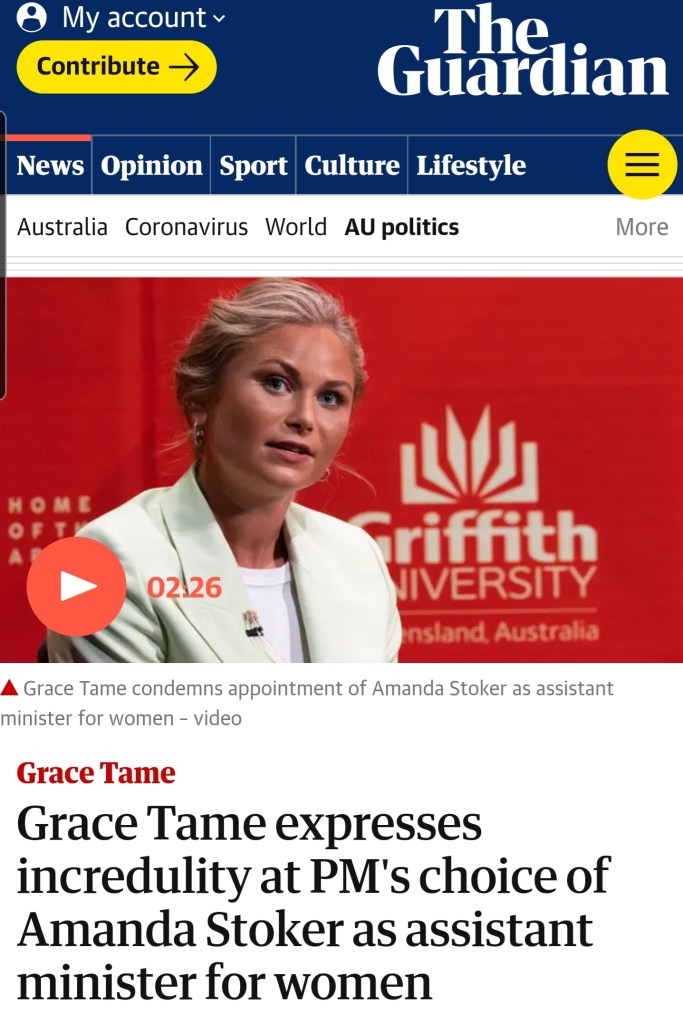
Grace Tame, Australian of the year, an advocate for sexual assault survivors, said comparing responses to the pandemic and to women’s rights:

we can’t fix morals with money and masking [and] we can’t boost humanity with stunts and stimulus packages. Now that our collective focus has extended beyond economic disruption to issues of morality, we are seeing leaders for who they really are.

Grace Tame expresses incredulity at PM’s choice of Amanda Stoker as assistant minister for women, The Guardian, accessed 31 March 2021

This is a clear articulation of the Great Reset era-thinking in action.

Go Grace!


Gained value from these words and ideas? Consider supporting my work at GoFundMe


© Copyright Brett Edgerton 2021
My COVID-Related FB Posts

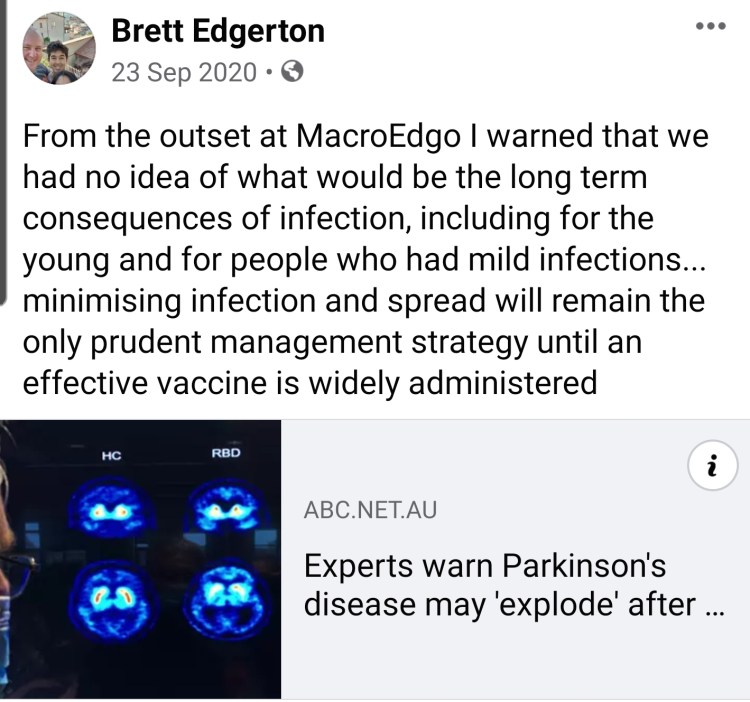
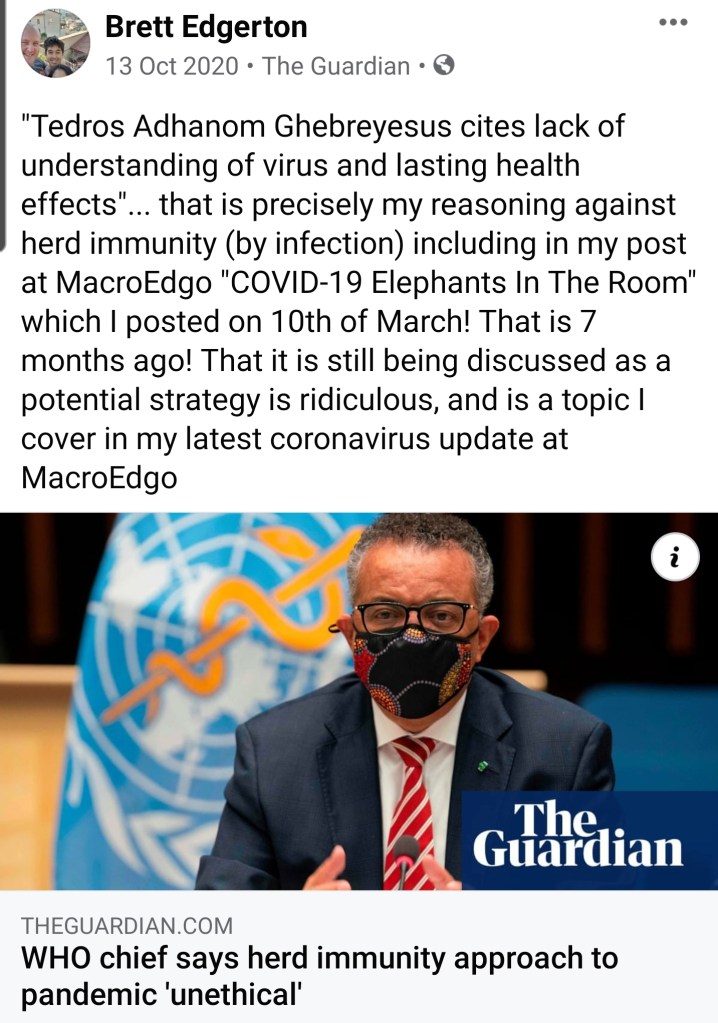
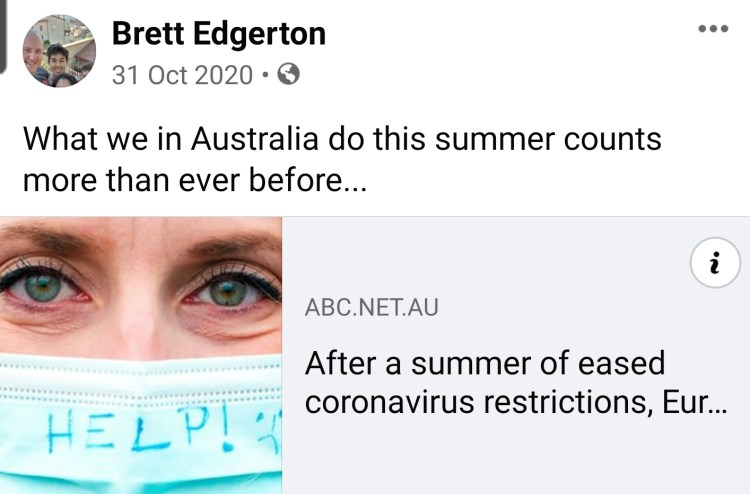
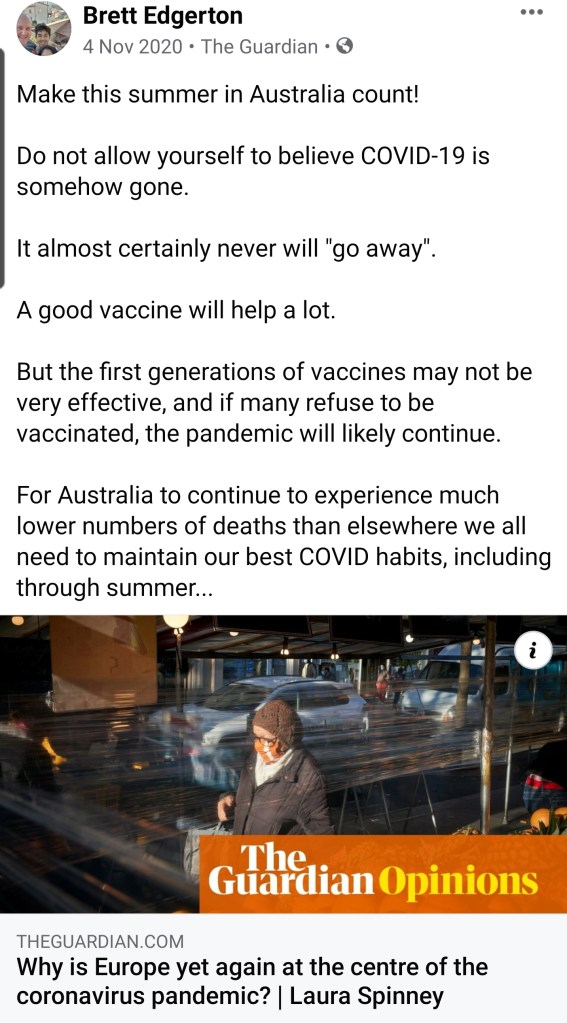
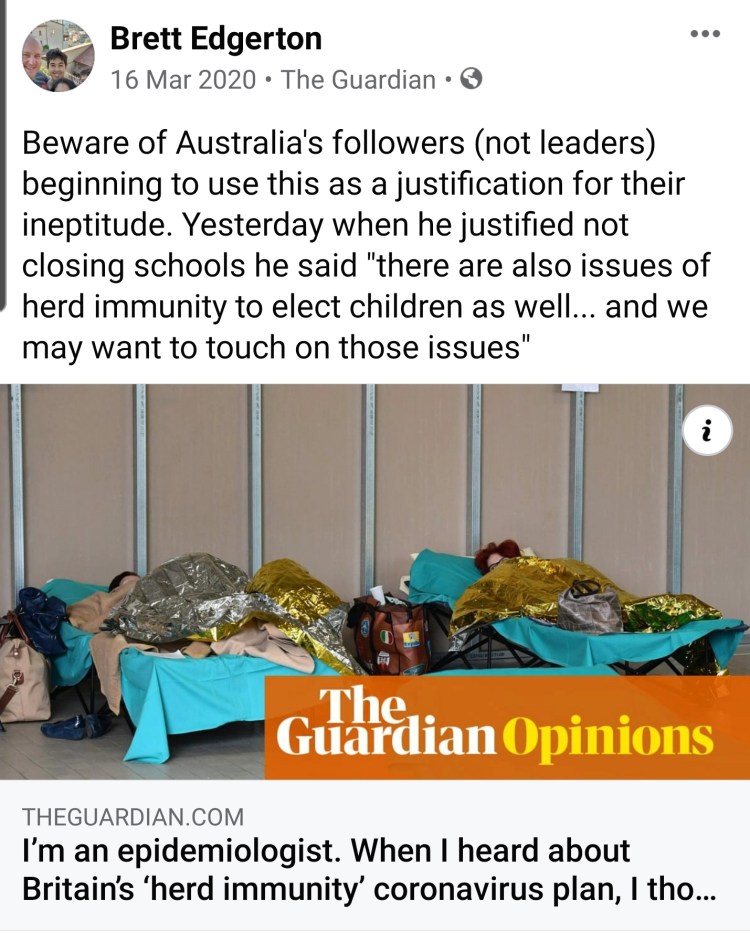
This is the heading of another COVID-related post that I am drafting, but in case readers are browsing over the Easter weekend, I thought this tells an interesting picture (especially when consideration is given to the dates at the head of most of the posts)


Gained value from these words and ideas? Consider supporting my work at GoFundMe


© Copyright Brett Edgerton 2021
Navin’s Beautiful Memoir For His Courageous Mother

To celebrate the 100th post on MacroEdgo I am honoured to publish for the first time the work of an extremely talented young man who is destined to make a real difference for humanity, my 12 year old son. This is a school assignment which was just too good to not be read by a wider audience.

Coming to Australia

By Navin Edgerton

As I saw the figure that I least wanted to see rise on the horizon of the school cricket pitch, my feet stuck to the ground, high pitched noises piercing my ears. My head got dizzy, I became disoriented. It felt like seconds ago that my grandmother had been crying on my porch, in Sri Lanka about my Australian citizenship being approved. My whole life had been left behind other than my parents and brother. It had not been long since I had moved to Australia and being asked to a fight wasn’t a great start. The words that dreaded figure had spoken to me rang in my ears, “You and me, fight”.

The teasing hope of the possibility that my father’s advice would work taunted me. The previous day I had come home and asked my father what I should do. It was difficult to talk about it before breaking out in tears. In my new school here in Mackay, there were only six black people, I had encountered much racism in the few weeks I had been in Australia. I tried to avoid it but deep inside I knew that the reason this girl asked me to fight was because she was prejudiced, the thought of my skin colour making me not an equal made my lip tremble. She got closer and closer, my near constant heartbeat was threatening to stop my body functioning.

As she finally approached me, I started feeling my legs give way. She bent over next to me and whispered, “Meet me at the water tank after school”. My bones shivered once again threatening my collapse, the soft grass certainly felt like an amazing escape from this reality. I had to face her though. The water tank was the place known for fights. I summed up the courage to use the advice that my father had given me. I hesitated. I couldn’t stop thinking about the possible backlash. I remembered all that I had left behind. “No, let’s fight now”. I had done it, a gush of wind knocked me, but I was confused because it was a still day.

I quickly realized that the gush of wind had come from the fleeing of the girl that asked me to fight. I tried to move but I couldn’t. My father’s advice had worked. For the next few weeks, I thought about it. I couldn’t get why she ran. Years went by and I didn’t hear from her. She was still at the same school, but she seemed to always perfectly avoid me. Although I was able to face one bully, I knew I would never be able to escape racism. What this made me realize though, is that bullies aren’t strong, they speak confidently and act strong to cover the hole in themselves or their confidence.

Note: This story is about my mum. She still encounters lots of racism to this day, and she is undervalued because of that. She is the strongest person I know for putting up with that daily.


Gained value from these words and ideas? Consider supporting my work at GoFundMe


© Copyright Brett Edgerton 2021
The Great Reset: Humanity demands leaders walk while chewing gum in the 21st century

The criticism most often levelled at President Franklin D Roosevelt – President of the United States from 1933 until his death in 1945 – is that he did not tackle racism and inequality.

Excuses are made that the Great Depression and then World War II were such serious issues that political capital and attention had to be focused there at the expense of progress on other worthy issues.

There are many parallels between then and now in this what I have termed the Great Reset era.

Climate scientists are rightfully concerned that the longer the battle humanity necessarily wages against the COVID-19 pandemic the more focus may be diverted from battling the Climate Crisis, which if left unchecked may render the planet uninhabitable for much of extant life on Earth, including humanity. 

Moreover, many top-level international bureaucrats believe that a robust recovery from the COVID-19 pandemic is imperative to provide the economic platform to support the necessary restructuring to address climate change.

Actors in the civil rights space, now some 90 years after commencement of the Great Depression, are concerned that both issues will divert focus from finally addressing diversity and inclusion even though both crises have highlighted inequality as a major vulnerability for worsening and perpetuating them.

In the US in recent months it has become apparent that even though ethnic minorities have been disproportionately impacted in the COVID-19 pandemic, disproportionately high numbers of Caucasian Americans have been vaccinated early in their programs.

In other words, even with the social justice campaigns including Black Lives Matter raising awareness to unprecedented levels, systemic biases have led to Caucasian Americans being favoured to receive protective vaccines ahead of minorities due to insufficient foresight or effort gone into addressing these biases.

There is no medical or scientific advantage to this. On the contrary, an argument could be made that a vaccination program aimed at reducing the impacts of the pandemic most promptly would result in minorities being favoured for early vaccination.

If on a social cohesion basis this were considered untenable, for fear of an uproar about “reverse racism” – there’s that timidity about being frank about what is (and what is not) racism – at the very least care should have been taken to ensure that the vaccine rollout occurred proportionately across society.


Recent events prove that there is much to do to address diversity and inclusion within society – systemically in our bureaucratic systems, in our workplaces, in our education systems and especially in early education, and broadly throughout society.

Just as in FDR’s time, it first requires committed key leaders amongst our political, bureaucratic and private enterprise leaders to drive that change.

It will not be a quick and easy path, however. Like the climate change response and pandemic preparedness for future challenges, developing sustainably cohesive, diverse and inclusive societies is a multi-generational process.

Some nations have started down that path already even though the challenges remain significant. It is noteworthy that there is a parallel between those progressive nations acting on diversity and inclusion and those nations that acted compassionately to save lives during the COVID-19 pandemic and in doing so placing their societies and economies in the best of positions for recovery.

Other nations seem to be held victim to some form of virulent toxic masculinity which has prevented their leaders from authentic recognition of the severe human impacts from the pandemic, as well as affecting their response to other key issues, because vulnerability is the last character these leaders are comfortable expressing publicly.

Note, I like many others credit mostly our State leaders for Australia’s fortunate position with COVID-19,  and from early in the pandemic I voiced serious concerns at the PMs ability to manage the national response.


As I predicted in March 2020, shortly after COVID-19 was declared a pandemic by the World Health Organisation, humanity has shown in so many ways that it will not settle for returning to the status quo within political and civil society that prevailed as 2019 closed.

Even before then my writing consistently highlighted that cohesion was the necessary ingredient to combat the major challenges humanity faced.

This Great Reset era is a time of change – it is inevitable. Unlike earlier periods, though, it is not just activism by the young and ‘naive’ – naive because their optimism has yet to be squashed by the “politics is the art of the possible” narrative.

No, this period of change is for all to be involved, even the less young and the cynical, because we have already proven just what can be achieved when we really set our minds to it!

Who would have thought we could do the things we have in society to protect each other? Who would have thought within a year of the pandemic commencing some people would already be vaccinated with vaccines 95% efficacious!

Who will accept now that change is not possible or that it must be iterative and slow with so little momentum as to be continually susceptible to reversal?

Yet the pandemic has opened up the fissures in our society revealing the underlying racism, prejudice and bias, and the brutality of those with an inhumane sense of privilege and power.

It is true that there have been catalysts that have led to collective action on a scale not seen in decades. Of course I allude to the Black Lives Matter protests in the US, Australia and throughout much of the developed world, as well as actions to protest against gendered violence, along with other issues.

I wonder, however, if the scale of the responses would have been so great if we were not in an era where people, having experienced the most significant shock to humanity since WWII, collectively are saying “we do not accept that we must return to the status quo that prevailed before last year – we are not satisfied with leaders who say that change is not possible!”

I wonder whether the scale of the responses would have been nearly as strong and deeply resonating if we were not already in the Great Reset.

Leaders who attempt to sweep change back under the mat suggesting that their attention must be prioritised, as if they can not walk and chew gum at the same time, in this day and age with the technological sophistication and human capital at our disposal, do themselves and all of us a great disservice.

In this charged climate of the Great Reset such incompetent leaders run the risk of tripping on their own gum and falling down the chute (or snake) without a redeeming ladder in reach…


Gained value from these words and ideas? Consider supporting my work at GoFundMe


© Copyright Brett Edgerton 2021
Racial Prejudice and Bias: A matter of degrees

Bias and prejudice is expressed in varying degrees across society, and that makes combatting it challenging as detection is often problematic even for those it is directed against.

Why is it that a salesperson treated you with condescension?

Why was your application to rent a home rejected even though you are an executive in a high-paying industry?

Why did that person in authority lose their temper with you when you did nothing and you have seen others behave or speak towards them in a truly marginal manner without invoking a response?

Why did this group of workers express extreme frustration during your presentation as a manager when other managers never experienced such an emotional response? And 

Why do you keep getting overlooked for promotion when other lesser experienced and skilled colleagues are moved ahead in their careers, sometimes even suggested as an effort to address workplace diversity?

These are all examples from the lived experience of members of my family or friends, or events we have personally witnessed.

In “Racism and Political Correctness” I stated that a major issue in Australia is the political correctness around calling out racist behaviour. It is obvious that a problem will never be dealt with if it is rarely identified let alone discussed.

Another critical issue is in identifying individual instances of racial prejudice, or even repetitive racial prejudice against one or a number of people, when plausible deniability exists.

As I said in “Quotas Are Necessary To Address Workplace Diversity” the insidious nature of prejudice in society, including in the workplace, is that it can be detected relatively easily at the aggregated top-level by under-representation and/other disparities in measurable parameters such as income, while granular detection – unless explicit – is extremely challenging.

How can a particular event be examined and it be determined to what degree that outcome is due to prejudice and what part was played by other factors that creep into the natural complexity of human interaction?

For example, those workers definitely showed a lower level of respect for your high position in the organisation, lower than ever expressed towards another in that same or similar position in recent corporate experience, but how much is that due to you having a different skin colour and cultural background to the majority, and how much was it due to the circumstances (including the general buildup in emotion across society and in the workplace in challenging times), and how much was it due to your communication skills generally and how you employed them there and then (dependent on your own emotional state at the time)? 

That’s part of the reason why bias and prejudice is so oppressive – the subject of the prejudice or bias will always naturally question why they were not “good enough” on this occasion – leading to questions such as:

What was it about my experience that led me to not be a contender for the role?

Did I not answer the interview questions well enough? or

In my presentation to staff did I appear less empathetic or was I unclear in my answers and that caused their frustration to boil over?

On the other hand, sometimes we learn about people who have reached very high level positions in influential organisations who have risen through the ranks while maintaining inappropriate views which translate to antisocial and destructive behaviours.

One recent example was a zoom presentation by Australian-expat Bill Michael, KPMG UK Chair, paid a 1.7 million pound annual salary, when he said:

Now is the time to say: do you care enough? Right, I don’t think this point of, what do you call it, unconscious bias? I think unconscious bias is complete crap, complete and utter crap for years, it really is. There is no such thing as unconscious bias, I don’t buy it. Because after every single unconscious bias training that has ever been done, nothing’s ever improved.

According to the article there were some in the audience who took exception to his comments – clearly as otherwise it would not have been publicised – but his were not mild or marginal comments, nor were they made in person to a small number of like-minded peers.

One wonders the volume of other inappropriate comments this senior executive has made on his long and “successful” career, to whom and to how many, within this organisation and others including amongst his privileged social circles, and what impact that has had on promulgating and embedding prejudice and bias within those cultures.

The subjectivity of interpreting comments, however, was even on display over the reporting of Mr. Michael’s expressed views when another writer in the left-wing ‘Guardian’ said:

[KPMG] regularly appears in lists of the best firms to work for, and boasts about its flexible working schemes. So it is possible that Michael was being held to a higher standard than many other bosses.

Perhaps this ‘Guardian’ writer is correct, perhaps managers in other organisations are not held to the same standard, on diversity and inclusion along with workplace flexibility, but if that is true it just proves the point. If this type of commentary is acceptable by a manager in any organisation then it is a sad indictment on the state of that workplace.

I do suspect, however, that there is a large element of truth to this writer’s inference, that strong scepticism towards the existence of subconscious bias and thus prejudice is commonplace in workplaces, especially in the major Anglophone countries, and I discussed elements around this, including the selection for sociopathy, in an early MacroEdgo article “The Authenticity Piece For Leadership Is Right In My Wheelhouse“.

The reality for most of the subjects of instances of bias and prejudice is that, unless the degree of behaviour exhibited by perpetrators makes it explicit, they will be unaware of the bias. The level of frequency they are the subject of bias then becomes a major factor in detecting the prejudice.

There comes a point where it becomes clear that outcomes are consistently unfair, and the likelihood that other factors, effected by the subject themself, have played a significant part in this repetitive behaviour is exceedingly low. While people who refute the existence of prejudice and bias often suggest that “would-be victims” are quick to blame others for their lack of success, in my experience the subjects of this behaviour are reluctant to accept that such unfairness would be perpetrated against them. It hurts them to acknowledge it because they want to believe that they are fully accepted and safe to be themself in the environment where they spend the most and best energy of their days.

At that point the victim has essentially eliminated all other potential causes for the repeated outcome – such as being passed over for employment opportunities or having their work performance rated harshly – but what can be done about it? Even if there is a channel to make a complaint, how can they prove repeated prejudice or bias when so much of that assessment is subjective?

Moreover, if proven somehow, what can be done retrospectively and restoratively to remedy all of those instances of prejudice which have impacted their career and income, and worse still their sense of value and contribution to the organisation and to broader society?

The complexities around this issue allows nongs like Mr. Michael, who have experienced privilege throughout their lives, including in the workplace, to have a long and influential career without any appreciation of the privilege they have enjoyed and the impacts that has had on others.

I would place this in a similar category to a manager telling staff – individually or in a group – that they ‘believe all lives matter’ as I discussed in “An Explanation Of Black Lives Matter“.

It is easy for many to dismiss these behaviours as rare or of little significance. They are neither, and the consequences of bias and prejudice is significant at the individual level. Moreover, across societies and economies it wastes significant amounts of valuable human capital. 

Of course bias and prejudice affects various groupings of people, from women to ethnic minorities to religions to sexual orientations or gender identity to age and more. As I explained in “Quotas Are Necessary To Address Workplace Diversity” some people will be subjected to multiple prejudices. Hereon I will concentrate specifically on racial prejudice, discussing indications of its existence in contemporary Australian society.


The Scanlon Society has conducted surveys on attitudes towards multiculturalism in Australia since 2007. Their surveys conducted in the second half of 2020 found that:

  • 84% agreed with the statement that “multiculturalism has been good for Australia”, 
  • 82-83% agreed that “immigrants improve Australian society by bringing new ideas and cultures”, 
  • 81-83% agreed that “immigrants are generally good for the economy”, and
  • 71% agreed that “accepting immigrants from many different countries makes Australia stronger”.

That is all extremely positive, but the survey also pointed at some deeper currents. Over one-third answered that Australia has been accepting too many immigrants (and that measure has remained above that level in recent years) and 60% agreed that “too many immigrants are not adopting Australian values”. 

Over half of the one-third who thought that Australia has been taking too many immigrants – i.e. around 20% or 1 in 5 of all those surveyed – agreed that “immigrants take jobs away”.

Clearly the survey suggests there is a large swathe of the Australian population with negative feelings towards migrants in society and in workplaces.

Moreover, that such a large proportion (60%) wanted migrants to work harder at assimilating is suggestive that even a significant proportion of the 84% who had positive views of multiculturalism (and agreed with the benefits of immigration) harboured some level of disapproval at recent migration. Likely some of this is due to earlier migrants and their families, e.g. post-WWII, believing that their migration was beneficial while harbouring feelings that more recent migration is not so positive.

In the most recently published Government data on migration (to 30 June 2019) 30% of all Australians were born overseas, and at the most recent census (in 2016) the proportion of migrants and their next generation born in Australia amounted to almost 50% of the population.

Prejudice and racism by earlier migrants, many of whom were themselves subjected to ethnicity-based bullying and prejudice and bias, is an issue rarely discussed in Australia but I believe it to be a significant factor from anecdotal observations.

In response to my posting on FaceBook of my explanation of Black Lives Matter to a long-time friend, which formed the basis of my MacroEdgo post, a conversation developed with a post-WWII migrant from central Europe who was defending the views supported by our mutual friend and was criticising the Black Lives Matter movement.

He had several concerns with BLM; the initial one that it was divisive. I made some initial points on FB and my post “The Lie Of Reverse Racism” was a more detailed response. He ultimately agreed with my points and complimented me for my writing.

What came next, however, was a rich learning experience for us both. He tapped into how he felt in those early years not being accepted into the broader Australian society in northern Queensland, and said “all my mates were indigenous growing up and we were ‘all in this together’!”.

Sadly he then retreated behind a blanket statement that BLM is a marxist movement because the website for one group stated those beliefs. 

I wondered aloud to him, privately, whether that might just be a convenient excuse, and I suggested that perhaps “the fear of being different, again, when you are now accepted into broader society, prevents you from speaking up about what you know, including from your own personal experience, within the community?”

Naturally sympathetic and appreciative of what he shared, though, I added “I have no idea how difficult that must have been, but I genuinely feel guilty that my ancestors may have played a role in making you feel unwelcome.”

It is a real shame when those who have personally experienced racism and prejudice do not speak up and teach us all, including their own descendants, about the dangers and personal consequences of it. While perhaps the long-lasting emotional consequences of being subjected to social exclusion and bullying and prejudice explain a reluctance to be conspicuous, it does not excuse becoming indifferent, or worse still, taking on those racist and prejudicial views and behaviours against others.

It seems to me that there is an element of thinking that “our migration was good for Australia and we integrated, but more recent migration has not been as good for Australia because these recent migrants are different and are not integrating”. Of course that was the common refrain of those objecting to earlier waves of migration.

Besides the inherent bias in those views, the prejudice and bias of Australians is highlighted by the contradiction visible within the wording of the survey questions. That is, if over 80% of people agreed that diversity leads to changes beneficial to society and to the economy, why would 60% of people want that diversity lost by assimilation to a homogenised pre-existing society?

To this point I have concentrated on what might be considered reasonably strong bias as a result of racial prejudice. To emphasise the varying degrees of bias I am going to discuss one example of how what might be considered more mild bias, not necessarily based on prejudice but more on ignorance or just plain lack of understanding or appreciation for difference, which can have serious impacts on the significant number of people it affects.


Like for a lot of people of Asian ancestry in Australia, experience from my wife’s family and friends has shown that many people do not naturally have a good appreciation of their age. Several times when approaching her 40s colleagues stated extreme surprise at the fact that my wife had two children which raised the question of exactly how old they thought she was.

A friend had a more remarkable experience. She was an academic also in her late 30s and during orientation week a workman on campus asked her “Are you lost young one?” indicating that he had confused her for a first year less than half her actual age. 

While at a personal level these professional women recognise the humour in these instances, they are also acutely aware that there are more serious consequences to these grossly erroneous assumptions.

Their natural small frame and skin tone confuses many in Australia as to their age. In the workplace a subconscious assessment of age and life experience will have consequences on subconscious perceptions relevant to relationship-building and functioning within workplaces.

Just like small men fight against instinctive reactions to their size, often resulting in suggestions they displayed behaviours consistent with a theorised inferiority complex often referred to as a “Napoleon complex” or “small man syndrome”, small younger-looking women have to battle a perception of cuteness and immaturity. And if they are in fact a strong personality in a small body, they are especially prone to being patronised and demeaned as being “feisty” by males and females alike. 

Moreover, in a society that highly prizes as attractive fit and youthful looks, insecure individuals may be prone to ill-feeling towards them. That may be exacerbated if the female prefers to present herself in a way which emphasises her femininity while still expressing professionalism. 

How a female chooses to present herself can draw strong emotional responses from others. It has no bearing on their performance or their ability to perform in the workplace, but that does not mean it does not affect perceptions of them which introduce biases affecting such assessments. Moreover, how people prefer to present themselves is deeply personal, and this article is a wonderful example of how this relates to prejudice against and personal power for young African-Australian women.

Undoubtedly difficult to manage, these factors can introduce biases which impact significant numbers of workers, especially around perceptions of their professional experience and maturity to take on higher roles, and so critically impedes workplaces, broader economies and societies from experiencing the full benefits from multiculturalism.


A few days ago I had an epiphany as I listened to my wife explain her earliest  experiences of racism to our youngest son. He was interviewing his mother for a school assignment on somebody he knew who has faced challenges in their life.

As she explained to our son that she did not have any concept of what was racism until she migrated to Australia when she was a little younger than he, I already knew all of the information. I knew that in her country of birth, Sri Lanka, as a child she found that Caucasians in the country were treated as if they were special. Perhaps that was emphasised in her household as her grandfather was a strong supporter of the British and had taken on much of the British culture in eating at a dining table with properly set cutlery, and so on. Sadly for him, his love for sharing his interest in Shakespeare and English literature with his grandchildren set them up ideally to move out from under his roof and emigrate.

(Please note I do not suggest that prejudice is absent in Sri Lankan society as it certainly does exist there between cultures and castes and more.)

As my wife discussed that it had never occurred to her that people in Australia would treat her differently, I realised that, all these years later, with all she has experienced, in many aspects she remains naive to what underlies racism.

In the past I explained in my writing why it is that Anglo-Celtic Australia truly understands the breadth, if not necessarily the depth, of racism and prejudice in our society. It is people like me that grew up frequently witnessing the hushed conversations or jokes in the street, often preceded by a quick glance around to see who is nearby, that I discussed in “The Lie of Reverse Racism“. It is a critical point of great relevance to this discussion which many still refuse to concede. (I do accept, however, that others might not have witnessed racist attitudes to quite the degree I did in northern Queensland*.)

After a shared life together over 30 years, this has been a watershed year for us. Several things have coalesced – the step up in civil rights actions, events and realisations of relevance to our family and friends as discussed above, and especially an apparent reduction in the willingness of my own parents to be tolerant of diversity (and by extension ours) – that have led to me being more open about what is the real nature of the racism and prejudice that I witnessed and participated in as a youth.

My epiphany was that partly out of shame, and partly out of loyalty to my parents as well as not wanting for my wife to feel hurt and less connected to them, I have been politically correct in not explaining to my wife the deeper core beliefs underlying racism. But I now realise that it is important that she understands exactly what this belief system is that has impacted her life in Australia so greatly, and will impact our children, and what are the widespread but less visible signs of it.

We recently discussed, for instance, how prejudiced people will argue that suspicion of strangers is “natural” and biologically hard-wired into animals including human beings. Along with a belief that non-Caucasian “races” are inferior (and there are historical “scientific” papers attempting to argue that point including by Darwin himself and even the “moral superpower” Swedes), racists and prejudiced people will justify their beliefs and actions by inferring that racism is natural. Consequently they believe, either consciously or subconsciously, that all attempts to counter racism – from their perception of a top-down imposition of “political correctness” through to explicit measures at progressing diversity and inclusion goals – are ultimately doomed to fail.

From my early life I heard it said that indigenous Australians – Aboriginal and Torres Straight Islanders – were lazy and not good employees, and that on the sporting field they lacked courage and grit (in my experience many Australians consider grit and steely determination the preserve of Caucasians). This seems constant no matter how many hard-fought premierships and State of Origins are won by diverse sporting teams! I also learned from others in my community to be suspicious and a bit fearful of people who looked and behaved differently – I recently recalled to my children how I was even anxious on my first trip outside of Australia as an adult, to Singapore of all places, when I was 25 and on my honeymoon.

These were the views and fears that I was taught in and by my community as a child and into my youth, but I learned differently when I entered a more diverse community beginning at university.

I learned that strangers do not stay strange for long when you have an open mind.

I also learned and experienced that an open mind is not dependent on the possession of a passport, or a university degree, but on an open heart. 

For this same reason the possession of a passport or degree does not guarantee an open mind.

So the question is how to open the minds of those who, like the highly paid Australian executive Bill Michael, have chosen to keep theirs closed?

Because the problem is systemic, so must be the answer. National anti-racism and anti-prejudice/anti-bias programs must encompass all aspects of life from early education, the workplace and into every dark and difficult-to-reach corner of our society.

Earlier I asked what can be done restoratively about all of those instances of bias and prejudice in workplaces. I partly answered that in one of my earliest articles on MacroEdgo “Quotas Are Necessary To Address Workplace Diversity“:

some times an applicant from the unfavoured group with less experience will be given a chance to prove themself in a position above someone from the favoured group with more experience. After all, some of that extra experience was gained at the expense of other individuals who did not really have equal opportunity. What is important is that when somebody is chosen to correct diversity that that person is authentic and of a high calibre, and is not necessarily somebody who shares more in common with the favoured group rather than the unfavoured group.

That may translate to giving multi-level promotions to and/or accelerating the development of talented and authentic leaders from minority subgroups. Without a culture change, however, such measures will be susceptible to undermining by antagonists, in many forms, because the need for the measures is not deeply appreciated and accepted. Herein lies another reason for why a perfect meritocracy is not ideal for a healthy society as argued by Prof. Sandel – because it would embed all of the advantage and disadvantage that exists.

All Mr. Michael’s comments prove is that a tremendous amount of work is required to address subconscious bias in workplaces and broader society, as well as how little effect the corporate training to this point has had especially if his employer KPMG is indeed one of the more advanced organisations.

What is needed is honesty over what is the cause of biases along with individual honesty over retained prejudicial attitudes.

To be effective, the aim of diversity and inclusion training must be to assist all to stand in the truth of their own individual degree of racism, prejudice and/or bias as well as their privilege.

That training needs to be deep, diverse and persistent because some of the most impactful biases are subtle and the degree to which they exist challenging to detect.

Now that is what we should all care about. Surely there are many more ‘Mr. Michaels’ in corporate Australia and elsewhere. It is to be hoped that diversity and inclusion training would reform their faulty perceptions, or at the very least create a culture which reinforces to all – no matter what their position – that expressing scepticism towards the existence of subconscious bias, which actually is a subconscious effort on their own part to perpetuate their privilege, is completely unacceptable and will be dealt with in the strongest terms. 

It is patent that Mr. Michael did not care nearly enough about combatting prejudice and bias. 

If KPMG are authentically progressive he will pay a justifiably heavy price.

And to demostrate how the answer to Mr. Michael’s rhetorrical question is obvious, infact children’s logic (often the most brilliantly direct), I leave it to the genius of Dr. Seuss from “The Lorax”:

 “Unless someone like you cares a whole awful lot, nothing is going to get better. It’s not.

But that in itself is ironic since it is now accepted that the author of Dr. Seuss, Theodor Seuss Geisel, while ahead of his time on understanding environmental issues, did not show enough care himself over diversity and inclusion in some of his books.


*I realise that I will be challenged on this because the common refrain of many in northern Queensland is to reject the notion that racism is an issue there – instead of reeling off all of the instances of racism that I recall witnessing and later in life being offended by, and in all honesty they are too numerous, I will simply recount one particular interaction because it says a lot about the common culture (the attitude and the feeling of impunity with which highly offensive racist comments can be made – this person did not bother to check who was nearby). In my first professional position after completing my PhD I worked for the Queensland State Government and a very high level ranking member of staff (second in charge at the facility) said to me as we walked to the staff room together discussing a Category 5 cyclone out in the Pacific, in response to my concern for the poor people living near it, “Nah, nothing to worry about mate, there’s only coons in grass huts out there!” I was entirely taken aback, even with my upbringing, because I never expected anybody in a workplace to make such an offensive statement let alone somebody in such a high position. I was so shocked that I never responded, and was disappointed in myself, but I stayed ready whenever I spoke to him and did not have to wait long. I was in the photocopy room with two others, including a colleague whom completed his PhD with me, and the secretary came in to say that somebody from our former university department had called and wanted to know whether we had left any biological samples in the freezer. They were trying to ensure the material was not hazardous before discarding it. As the secretary left this same high level Government employee said “they should just suck it up into a syringe and inject it into some gooks, they’ve got enough of them out there now”. The other two were silent, but I was quick to say that he should not assume that others would agree with his vile and offensive comments and walked off, later informing my direct boss of the interaction. I should have made a formal complaint but did not out of concern for career implications.


Gained value from these words and ideas? Consider supporting my work at GoFundMe


© Copyright Brett Edgerton 2021
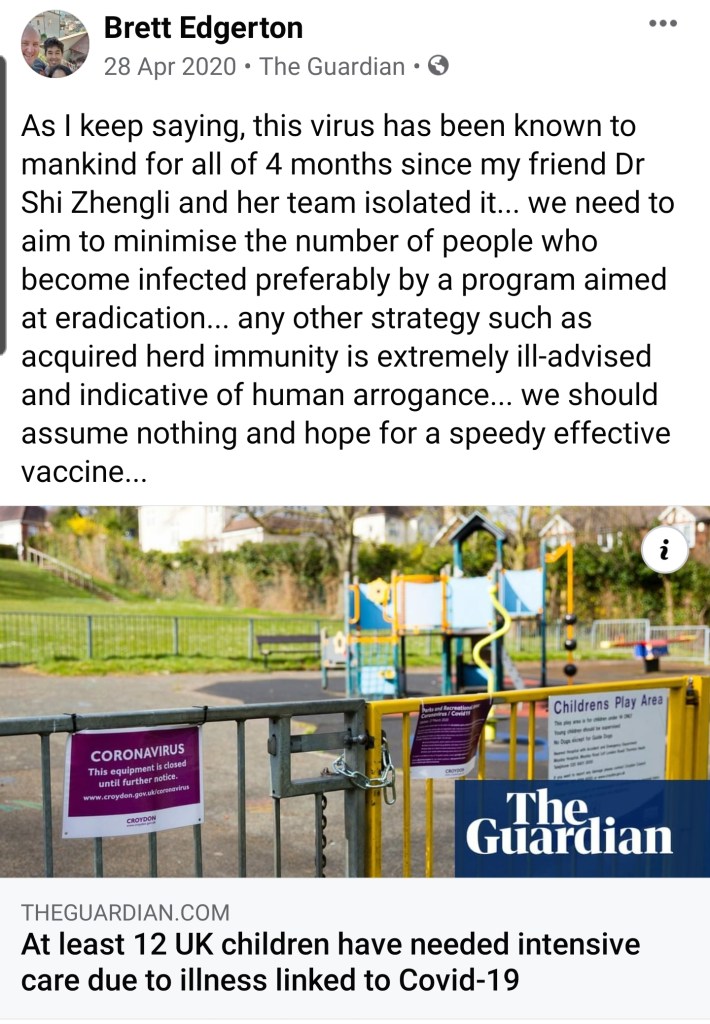
Merit and Morals: WEF Davos Agenda Panel With Prof. Michael Sandel

Being on the other side of the Earth from the majority of partipants at the WEF Davos Agenda, I fell behind on the video feeds of their discussions.

I combed through the remainder of talks the following week and I found very interesting this discussion between moderator Ngaire Woods and panellist Michael Sandel “Renewing The Moral Foundations Of A Post-COVID World“.

Woods stated that in large part the discussion concentrated on the ideas that Sandel, a Professor at Harvard University, presented in his book “The Tyranny Of Merit”, published September 2020, and also in this TED talk.

(I have ordered the book which has not yet arrived, but I have a backlog of reading – I am currently reading “In Defence of Open Society” by George Soros and “COVID-19: The Great Reset” by Schwabb and Malleret, the latter to see how closely the ideas fit with my essay published several months before it “The Great Reset”)

The essence of Prof. Sandel’s views is that the people considered successful in our modern society do not comprehend the degree of luck that they experienced in their “success”, leading to a humility deficit from the “winners” and a pervasive view that underprivileged “losers” are responsible for their challenged life circumstance which even they believe.

I found a great deal of common ground with Prof. Sandel including in my writing about my own career, especially in comments from several years ago before launching MacroEdgo, and in other relevant musings in various places and in my essays including “Your Life: Something the elites have always been prepared to sacrifice for their ends“, “The Magic Sauce Of American Economic Dynamism Is Not Based On Personal Greed“, “People Before Money“, “What Really Scares The Global Elite“, “Why The Rush Messrs. Morrison And Frydenberg“, and “How Might Milton Friedman Respond To The COVID-19 Pandemic“. 

In actual fact my musings were very similar at times as evidenced, for example, in this writing from February 2018 which I reposted early at MacroEdgo in “Smarties To Exploit Monetarily (STEM): Australia does not value human capital“:

I made [this point] to my son’s teachers when I accompanied their class to the Queensland primary school leadership forum two years ago [in 2016]. (Now being a stay at home dad, I am fortunate to have these wonderful opportunities to help out teachers, the children and my sons.)

An amazing assemblage of “winners” was put together to inspire the children – including the young scientist that was in the running to go to Mars – and they were all keen to share the secrets of their “success”, many even having the humility to admit that fortune was indeed a factor. But it was clear that none truly understood just how big a factor it was (perhaps it is only natural to focus on what we actually contributed to our “success”).

I suggested to the teachers that we only heard from the “winners”, and while their messages were very worthwhile, the children would also do well from hearing from some of the many equally talented and equally resilient people that for any number of reasons did not quite “make it”. The teachers gave polite affirmation to the comment, but it’s probably something that one can not fully appreciate unless you can truly understand it from personal experience or from observing it at close hand.

And in my Coronavirus Update published 18 March 2020, just one week after the WHO “made the assessment that COVID-19 could be characterised as a pandemic“, I stated:

Finally, I might make mention of sports stars. I understand the arguments being made about them being concerned about their families as well as their own health if they are going about their usual lives routinely and playing professional sport. But there are two points here. That is no different to those people working in vital services who are at far higher risk. What is more, generally they get paid much, much less than professional sports people in high profile sports. The simple reality is that sports people are able to earn such high incomes because they provide distraction from the modern reality for people. And there has never been a greater time for the need of distraction as we are about to experience most of the developed world in lockdown. In the sport that I follow most closely, rugby league, in big matches they talk about “going to war”. I really think these people need to give very careful consideration to why it is that they have such a privileged position within our society. And I will say this, if in this hour of need they do not find the courage to play the role for which they are so handsomely rewarded, then I think once this is all over we need to make some major changes. They should not be taking home income that is many, many multiples of the income of people who make real differences in the lives of people while putting their own in jeopardy. Undoubtedly the revenue is there in the sports, but there needs to be some sort of equalization taxation so that that income flows through to real heroes of society.

Prof. Sandel believes that the febrile politics of the moment has its origins in this winners versus losers mentality. I agree, but there is also an element of belief amongst the disadvantaged that the “game” never was fair for various reasons.


I largely agree with Prof. Sandel that this competition is unhealthy and in my writing I tend to refer to it as “toxic aspiration” rather than tyrranical merit.

Prof. Sandel made the point in his WEF panel, as he does in his TED talk, that at Harvard there are more students from just the top 1% of wealthy US households than from all of the bottom 50%, highlighting the benefits that accrue to the elites and entrench their inter-generational advantage. Obviously I agree strongly with this view.

In “Your Life: Something the elites have always been prepared to sacrifice for their ends” I made the point that the elites that I respected “are those who authentically understand the privilege that they have enjoyed, usually from birth by virtue of the luck of being born in a developed country or into middle class even if they consider themselves ‘self-made’, as well as respect and appreciate relationships with other human beings especially the people who loved and guided them.”  I elaborated a little further on what is admirable behaviour amongst elites in  “How Might Milton Friedman Respond To The COVID-19 Pandemic“.

Where I departed slightly from Prof. Sandel’s views was his discussion of “merit” and meritocracy where he seemed to suggest that the advantage that those in the top one percent of wealth received ended at their acceptance into university as if merit then took over as the main determinant of their “success” from that point on.

If this is an accurate perception of Prof. Sandel’s views then they are entirely analogous to this depiction of the situation of advantage and disadvantage in America, “The $100 race” – an exercise that I deeply appreciate and often talk about and/or mention in my commentary – where after the advantaged are given greater and greater advantage dependent on their own personal circumstances, being more of a head start in a sprint race, and then the race is run freely without further advantage applied through the race.

It is a brilliant demonstration of the challenges disadvantaged young Americans face in their lives, making the point that irrespective of those disadvantages these people still need to run their own race to the best of their abilities. It also demonstrates to the advantaged young Americans how much fortune has favoured them even before their race began, no matter how much they wish to claim their successes as being due entirely or mostly to their own unique combination of hard and smart work.

While it is a good representation, and can teach both the advantaged and disadvantaged important lessons, the truth is that is not a perfect model.

In both cases – the $100 race and Prof. Sandel’s example of meritocracy – it needs to be reflected that the relative advantage does not work to a certain point after which outcomes are determined on merit from innate characters and learned skills. Just as the system was not a genuine meritocracy through to that point, the same factors act to ensure that merit after that point is not the determining factor in outcomes.

If somebody has an enormous advantage on being accepted into a prestigious university based on family connections, those same connections will work to their advantage for their entire life.

Throughout societies we know prejudice and bias acts to affect outcomes on groups of people for entire lives.

I discussed this in “Quotas Are Necessary To Address Workplace Diversity“, with the following concept diagrams (of the level of positions within a profession with the very broad base being the lowest level positions and the peak being the very highest positions that can be attained), and I pick up again on the theme in the companion essay to this one “Racial Prejudice And Bias: A matter of degrees” which I will post imminently.

Advantaged Subgroup

Entire Group

Disadvantage Subgroup

For the $100 race to accurately reflect this lifelong advantage, after everybody was advanced (i.e. handicapped) according to the relative privilege they were born into and experienced in their youth, the disadvantaged would be hobbled or carry additional weight to varying degrees while the advantaged would run with various strength rocket boosters fitted to shoes which added to their favourable situation through the entire race.

As I reflected on this during drafting I realised what a good model the children’s board game “Snakes and Ladders” (“Chutes and Ladders” in some countries) was for the real life situation. This was confirmed as I researched the game. 

From Wikipedia:

The game is a simple race based on sheer luck, and it is popular with young children.[2] The historic version had its roots in morality lessons, on which a player’s progression up the board represented a life journey complicated by virtues (ladders) and vices (snakes)

The wiki does a great job of explaining the odds of the game:

Any version of snakes and ladders can be represented exactly as an absorbing Markov chain, since from any square the odds of moving to any other square are fixed and independent of any previous game history.[5] The Milton Bradley version of Chutes and Ladders has 100 squares, with 19 chutes and ladders. A player will need an average of 39.2 spins to move from the starting point, which is off the board, to square 100. A two-player game is expected to end in 47.76 moves with a 50.9% chance of winning for the first player.[20] These calculations are based on a variant where throwing a six does not lead to an additional roll; and where the player must roll the exact number to reach square 100 and if they overshoot it their counter does not move.

Again there is the same shortcoming, however, and it is highlighted in the description of probabilities here, “from any square the odds of moving to any other square are fixed and independent of any previous game history.” In real life this is not the case. For example, by changing only the name on a resume – indicative of different ethnicities – the likelihood of being selected to progress further in the selection process for a job can be very significantly altered.

Thus we must recognise that, for the standard “Snakes and Ladders” game as an analogy for lives lived, there are a multitude of different boards which we play on. The most advantaged in society have a board with a greater proportion of more positive life events – i.e. more and longer ladders. People born into disadvantage have a board which has proportionately more and larger snakes or chutes and fewer ladders to reflect the reduced odds of “success”.

What board we play on is determined before our birth.

That is not merit or even our own fortune, for those who like to believe statements like “we make our own fortune”.

As I reflected further on this I realised that this could be reflected in a modified “Snake and Ladders” board with the slight problem that there is no natural end to the game because there is no common goal – or square – that we all arrive on when the goal relates to “success” as measured by wealth. That is fitting, however, because all of our paths are different and we all reach different endpoints. Moreover it allows for infinite wealth because that becomes the reality for many fortunates or advantaged in that no matter how much “success ” at accumulating wealth is achieved they still are driven to achieve more.

On this board, the game starts at -10 months reflecting that chance exists at the moment life is conceived. There are an infinite number of squares because the vertical axis (“success towards wealth”) is infinite, but as we all know, the horizontal axis of time (“age”) is finite. Of course the game progresses from left to right – as yet we have found no wormholes to take us back in age! 

On conception the player immediately moves to a square, but unlike in the traditional game, the higher your position on the board – i.e. the more fortune you have experienced – the more likely you are to experience even more good fortune. The higher up the board your trajectory the higher the proportion and the longer the ladders are and the fewer, shorter snakes or chutes, increasing the probability of a rapid climb. And so on it goes upwards towards infinity.

We know that children conceived to parents in the poorest countries are far more likely to suffer adverse outcomes from the moment of conception and in some countries infant mortality is such that 10% of babies die before 5 years of age.

Below are a few stylised examples of lifepaths on this modified “Snakes and Ladders” board. First is a stylised indication of the average middle class American born around 1960 (note this has became an increasingly less common pathway as the middle class has been hollowed out with the trajectory of more moving lower rather than higher). Perhaps we can say at that line the snakes/chutes and ladders are as per the standard board, and as indicated on the figure, the further above or below this line the more the proportions shift in a favourable or unfavourable manner. Note that all healthy babies born in the developed world start out at or above the line on the x-axis because of the societal resources available, whereas only the healthy babies born to the most wealthy in the developing world are above that line.

Following are examples of life paths, including for:

I did not know anything about Bezos’ early life before reading this, and while his achievements are commendable given the challenges he faced very early in life, together with his mother, nothing there changed my views on the validity of these arguments. He may be an extremely intelligent and driven guy, but he is also the ultimate “winner” in the “success towards wealth” game – being the wealthiest person on Earth at present – and one only needs to wonder how an unborn baby, with all the same potential as he had, would progress if conceived to a poor rural Angolan family. 

Can you just begin to imagine how much human potential is lost globally because of inequality?

While these paths are presented as lines on a graph, the reader should consider that if they zoomed into those lines or elsewhere on the board – as if increasing the magnification of a microscope – then the intricate grid with snakes/chutes and ladders would be revealed (whereas on a microscope slide with greater magnification the view can change from a whole invertebrate animal, then to organ systems and finally to individual cells).

Of course there are very many facets to a human life, and in many ways that is what Prof. Sandel alludes to, as do I in placing “success” within inverted commas. One of those concepts is happiness and some nations are even attempting to account for this in their decision-making.

If a third dimension or axis were added – for “contentment with life” (in my view a deeper appreciation for life than simply “happiness”) – research suggests that the relationship between it and “success towards wealth” breaks down rapidly above a certain level of wealth which is further evidence that this competition and “toxic aspiration” is indeed unhealthy. But that is another conversation.

Finally, Prof. Sandel speaks to the need for renewing the dignity of work and placing it at the centre of our politics. The quote (above) from my Coronavirus Update on 18 March shows that I, too, am passionate on this point. I certainly agree that dignified work has been an important factor for humanity to this point in our development and it will remain so. I believe, however, that the changes that humanity has reached with the fourth industrial revolution is going to affect our relationship with work as artificial intelligence and automated equipment increasingly carries out necessary functions for societies. I discussed this in detail in “Theme 6: More Time For Personal Fulfillment” on my Investment Themes page.

This enormous change is and will continue to necessitate a major adjustment in society in how we contribute and what are our perceptions of those contributions. After reading Rutger Bregman’s “Utopia For Realists” I immediately became a supporter of the concept of Universal Basic Income (UBI) and I believe it must be central to affording a dignified life for all.

I am a little concerned, however, that the attachment of those on the left of politics with the dignity of work meme may cause them to misunderstand these profound changes . Humanity does not need more work for work’s sake out of anxiety that people will not cope with the change. Societies need to embrace the concept of participation including personal reflection and development, as well as other altruistic activities. My experience is that this inflexibility creates a bias against and rejection of UBI by many on the left which I find disappointing as it could be an integral aspect of inclusion in a dignified society.


In doing my ‘due diligence’ prior to publishing this post – my new practise since writing “The Great Reset: Momentum builds with the World Economic Forum agenda” – I learned that others have associated the boardgame “Snakes and Ladders” with Prof Sandel’s views. The theme was incorporated into this animation and it was the title of this book review but it was behind a paywall so I could not read what was written. These are the only two instances of association that I identified in my brief Google search.


I consider Prof. Sandel’s to be a significant contribution to understanding contemporary politics and socioeconomics. 

“The Fallacy of Merit” could very well have been chosen as the title for his book and related works, but to do so would miss the point that Prof. Sandal’s view is that a perfect meritocracy, if achieveable, should not be the end goal for society.

As an avid Bloomberg viewer the repetition of their advertisements can grow tiresome  and at present the interview between David Rubenstein and Oprah Winfrey has been overplayed. It grates with me for one reason in particular. I have a generally positive view of Winfrey and, without knowing very many specific details about her life, I have a vague perception that she overcame significant personal hurdles to achieve her success which allows me to relate to the general admiration western society has for her. Moreover, there is no doubting she has used her enormous profile to advance many important issues especially relating to women and civil rights.

Rubenstein encourages Winfrey to talk about her early career as a journalist, and Winfrey recounts how her best friend thought it was great that at 22 years of age she was earning $22,000 and excitedly suggests that she might be earning $25,000 when she is 25. Winfrey turns to the audience and sarcastically says “that would be great, I’d be earning around 60 by now – 62”. 

This suggests that Winfrey has lost some connection to the reality of life for the majority of Americans. In 2018 the median income of a 3 person American household was $74,600 meaning that more than half of all American families, many working more than 1 job per adult in the household, and raising a child, was earning less than $75,000.

For me this supports the views of Prof. Sandel but it goes even further to say that in a society where it is difficult to achieve financial security, and so success at building wealth is venerated, even those that overcame challenges to be very successful can lose connection with those struggling to have a dignified life and consequently lose (some of) their humility.

Of course, if I, myself, harbour insecurities over my own career – which I probably do – then this will serve to lower my threshold for annoyance at these comments by some degree – though my wife agrees with me, also 🙂  (and there’s a veiled reference to my upcoming post).

The ideas that Prof. Sandel shares are powerful and provide an excellent reference point, amongst others, to contribute towards the fairer and more sustainable, diverse and inclusive communities that humanity desperately needs to emerge from The Great Reset era on a surer footing.

While I wholeheartedly agree with the importance of dignified work for all, along with fair pay and recognition for it, I also recognise that the changes that humanity is currently experiencing through the fourth industrial revolution will likely decrease the importance of work in our feelings of connection and contribution to society. Other sources of connection and participation will need to increase in significance within a supportive policy framework. 

Further to Prof. Sandel’s appeal for a “more generous public life”, the concept of “dignity” must apply to all our lives, in toto, overarched by political policy that promotes respect for the contributions that all current and previous human beings play in all our lives. 

To achieve that globally we must act locally. In doing so we will show that finally “we have learned to be citizens of the world, members of the human community”, the vision President Roosevelt was leading humanity towards as World War II was concluding. 


Gained value from these words and ideas? Consider supporting my work at GoFundMe


© Copyright Brett Edgerton 2021

The Lie Of Reverse Racism

The lie of reverse racism is one of the chief tools of the racist to create division and draw people to their side.

I realised this early when I first began to reflect on the racism which I learned from my upbringing in conservative northern Queensland.

“Oh they receive so many hand-outs from the Government and free housing, and did you even know they get free taxis – it’s just not fair!” is an accurate paraphrasing of many conversations I heard non-indigenous Australians have when I was a child.

Of course there was no discussion of the realities of what it was like for indigenous Australians as their lands were occupied by Europeans, they were killed or moved to missions, and their children stripped from them to “assist” in assimilation into the European-based society enforced on them.

I strongly doubt whether any of the gossips had the slightest idea of what Government assistance indigenous Australian actually received, but it sure bonded the “us” and drove in the wedge further from “them”.

Hansonism has ensured that this narrow-minded division has also been applied to recent migrants with darkened skin, especially those from Asia and Africa.

When I wrote my explanation of Black Lives Matter, specifically when I explained the inferred 4th word, I was thinking of addressing what the racists suggest is that word – instead of at the end “Also” they suggest the movement is saying “more”, or even at the front “only”.

That is utterly preposterous given the history of racism in our and other nations, and the deeply ingrained inequity and systemic racism embedded in our systems.

The concept of reverse racism is wrapped up in white privilege, and it is patent in the objection to Black Lives Matter. “Why only say black lives matter, are you not being divisive (yourself)?” is the question of the racist or the ill-considered privileged. 

To divide assumes that first we must be whole.

When in Australian history, or American, have we ever been whole or all equal? That is precisely what Black Lives Matter is all about – making us whole – making us all equal.

But the only ones who do not realise that are the ones who have enjoyed a privileged position their entire life, even though many prefer to see themselves as victims because of other changes in society associated with, for instance, automation and globalisation.

The power in Black Lives Matter, and leaving the 4th word silent, is in assertion. It says that irrespective of what others who have enjoyed privilege in their lives say or think we assert that black lives Do matter. 

Now, in this assertive tone, even placing an emphatic “Do” is a disservice.

Black Lives Matter.

To many of us who have enjoyed that privilege our entire lives even the concept of equivalence shocks them so greatly that they immediately misread that for preference, and then scream “reverse racism”.

They confuse assertion for aggression, and their fight or flight stress response is activated – often leading to responding in kind with the aggression that they erroneously perceived – rather than placing themselves in others’ shoes and considering what it must be like to live in a society where for hundreds of years your life and the life of your family, ancestors, loved-ones and friends have not been valued as equal or as important. 

As the father of two black lives, and the husband of another, you better believe we, too, assert that their lives matter! Just as much as any human being that has ever walked this Earth!

Is that not all our birthright as human beings?

It is not lost on me, either, that some might perceive that I may be expressing my own white privilege insisting that my own blood and loved-ones would enjoy the same privilege that I have enjoyed. But that leads to a whole other discussion which I am currently working on for a post on the racist undertones to much of the reporting on Prince Harry and Meghan Markle.

I must admit one thing, however. I Do enjoy spending time with migrants and/or people who have spent a significant proportion of their life outside of Australia because many are humble, considerate, appreciative and sincere, the characters we valued and upheld before entitlement and anger grew so strong…


Gained value from these words and ideas? Consider supporting my work at GoFundMe


© Copyright Brett Edgerton 2021